
Soups & Stews
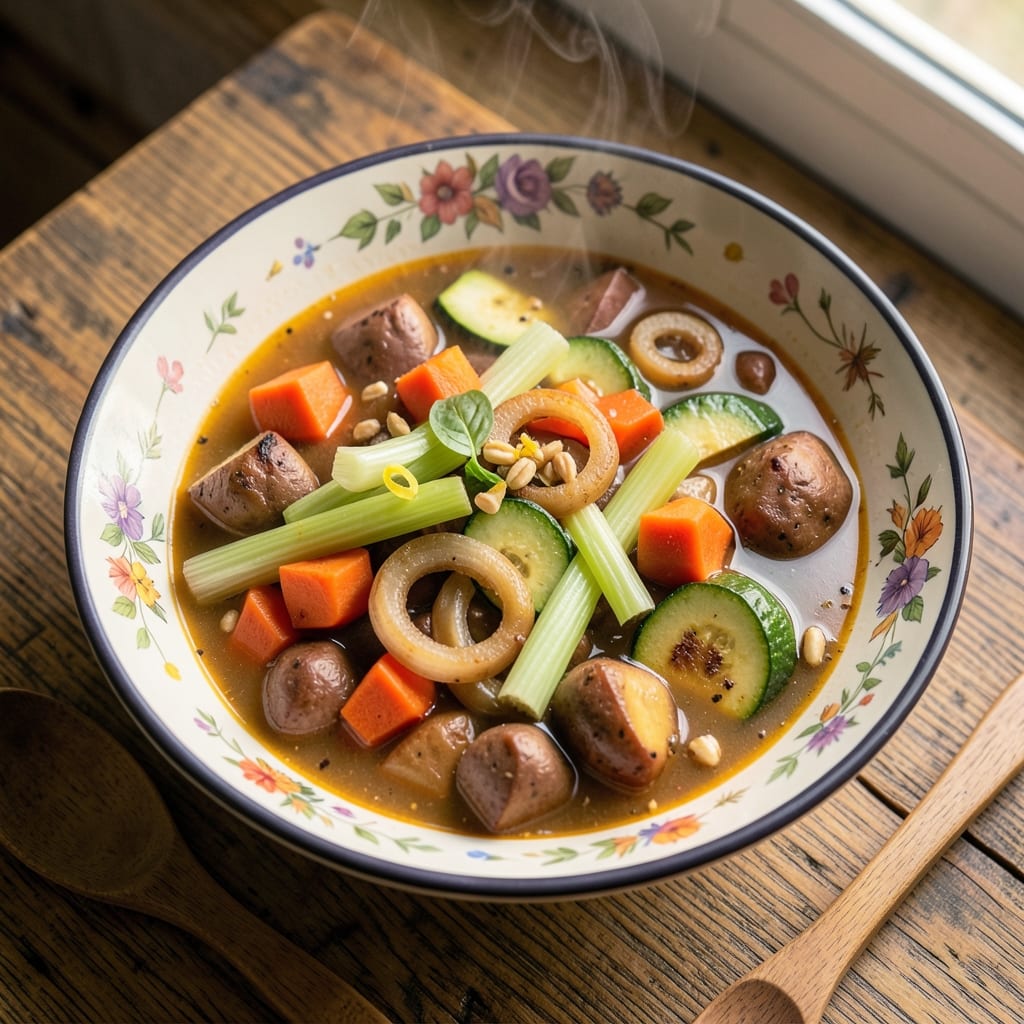
This 12-vegetable soup recipe transforms humble ingredients into a vibrant, nutrient-packed meal that simmers to perfection in just 25 minutes. The secret lies in layering flavors—herb-infused broth, tender root vegetables, and fresh greens—while keeping prep simple enough for weeknight dinners. No fancy techniques required, just a pot, a knife, and a willingness to let vegetables shine. What sets this recipe apart is its adaptability: swap seasonal produce without sacrificing balance, and customize the broth (vegetable, chicken, or mushroom) to fit dietary preferences. The result is a soup that’s naturally vegan, hearty enough for a main course, yet light enough for lunch. Every spoonful delivers a symphony of textures—creamy carrots, crisp celery, and delicate spinach—all harmonized by aromatic herbs. The beauty of this recipe is its flexibility. Use it as a base for meal prep, a comforting weeknight staple, or a showstopper for dinner guests. Garnish with fresh parsley, a drizzle of olive oil, or a sprinkle of toasted nuts to elevate the presentation. It’s the kind of soup that tastes even better the next day, as flavors meld and deepen. Perfect for cozy nights in or sharing with friends, this recipe proves homemade soup doesn’t require hours or complicated steps. Let’s get cooking—your taste buds (and leftovers) will thank you.
Ingredients for 12 vegetable soup
Twelve vibrant vegetables meet aromatic herbs for a nutrient-packed soup that simmers to perfection in 25 minutes.
| Ingredient | Amount | Notes |
|---|---|---|
| Vegetable Broth 💧 | 4 cups | Low-sodium preferred, homemade or quality store-bought |
| Carrots 🥕 | 3 medium | Peeled, cut into 1/2-inch slices |
| Celery Stalks 🧅 | 3 whole | Trimmed, cut into 1/2-inch pieces |
| Russet Potatoes 🥔 | 1 lb | Peeled, cut into 1-inch cubes |
| Sweet Potatoes 🍠 | 1 medium | Peeled, cut into 1-inch cubes |
| Zucchini 🥒 | 1 medium | Cut into 1/2-inch half-moons |
| Yellow Onion 🧅 | 1 whole | Diced, yellow or white |
| Garlic Cloves 🧄 | 4 cloves | Minced, fresh preferred |
| Fresh Spinach 🌿 | 2 cups | Chopped, loosely packed |
| Canned Tomatoes 🍅 | 1 can | 14.5 oz, crushed or diced |
| Fresh Parsley 🌿 | ¼ cup | Chopped, for garnish |
| Extra-Virgin Olive Oil 🫒 | 2 tbsp | For sautéing vegetables |
| Fresh Thyme 🌿 | 1 tbsp | Chopped, or 1 tsp dried |
| Fresh Basil 🌿 | 1 tbsp | Chopped, for garnish |
| Salt 🧂 | 1 ½ tsp | Diamond Crystal preferred |
| Black Pepper 🌶️ | ½ tsp | Freshly ground preferred |
The foundation of this soup lies in its vegetable selection and quality. Organic produce from the farmers market delivers superior flavor, but conventional vegetables work well too—just ensure they’re fresh with vibrant color. For the broth, Pacific Foods or Imagine brands offer excellent low-sodium options, or make your own from vegetable scraps. Sweet potatoes should be firm with no soft spots, and zucchini should feel heavy for its size—indicating freshness. The spinach adds a delicate finish, so use the freshest leaves you can find; if wilted, avoid it entirely.
No fresh thyme? Dried thyme at one-third the amount works in a pinch, though fresh imparts a brighter flavor. Substitute sweet potatoes with regular potatoes if needed, though the natural sweetness enhances the dish. For the tomatoes, San Marzano canned tomatoes provide the best quality, but any high-quality canned tomatoes will suffice. The olive oil matters here—use a high-quality extra-virgin with fruity notes to elevate the soup’s depth. If you’re short on time, pre-chopped frozen vegetables can be used, though fresh yields better texture.
This soup reheats beautifully—simmer gently on the stove or microwave until warmed through. Stores for 4-5 days in the fridge, with flavors deepening overnight. For longer storage, freeze portions in airtight containers for up to 3 months. Garnish with fresh basil and parsley just before serving to maintain vibrant color and freshness. The broth can be made ahead and stored separately for up to 1 week, simplifying last-minute prep.
Why You'll Love This Recipe
- Foolproof Chopping: I swear by the "soak-and-slice" trick for celery and carrots—just dunk them in cold water for 10 minutes, then chop while they’re still damp. No knife slips, no tiny bits flying everywhere. The russets and sweet potatoes? Toss them in whole—peels on, no fuss—and they’ll break apart perfectly as they simmer.
- Sweet-Savory Balance: That first spoonful of broth simmered with carrots and celery? It’s like a hug in a bowl. The sweet potatoes add natural depth, while the russets keep it hearty. Honestly, I’ve made this with store-bought broth and it’s still ridiculously good—no fancy ingredients needed.
- Meal-Prep MVP: This soup tastes better the next day, which means I can make a giant batch on Sunday and have lunch sorted for four days. The potatoes soften just right, the veggies meld into flavor heaven, and it reheats in minutes. (Yes, even on a Tuesday night when you’re exhausted.)
- Budget Magic: A single bag of carrots, a stalk of celery, and a couple potatoes stretch into so many servings. I’ve fed my whole family plus a neighbor for under $8. Plus, vegetable broth is cheap, and you can even make your own from scraps. Practical? Absolutely. Life-changing? For my wallet, yes.
Step-by-step instructions for herb-infused vegetable soup
This method delivers a vibrant, herb-forward vegetable soup with balanced flavors in record time.
Sauté the Aromatic Base
Heat the 2 tablespoons extra-virgin olive oil in a large pot over medium heat until shimmering. Add the diced yellow onion and cook for 3-4 minutes until translucent and slightly softened. This foundational step develops sweetness in the onion that carries through the entire soup.
Add the minced garlic cloves and cook for 30 seconds until fragrant but not browned. The garlic should perfume the kitchen noticeably—this is your cue it's ready. Immediately add the chopped fresh thyme and chopped fresh basil, stirring for 10 seconds to release their essential oils. These herbs will infuse the broth with bright, aromatic depth.
Cook the Hearty Vegetables
Add the 1 lb russet potatoes and 1 medium sweet potato (both cut into 1-inch cubes) to the pot. Stir to coat them in the aromatic oil mixture, then add the ½-inch slices of carrots and ½-inch pieces of celery stalks. Cook for 5 minutes while stirring occasionally to prevent sticking.
Next, add the ½-inch half-moons of zucchini and the crushed canned tomatoes. Stir well to distribute the tomatoes evenly—their acidity will help balance the sweetness of the potatoes. Pour in the 4 cups vegetable broth and bring to a gentle boil. Reduce heat to medium-low and let it simmer uncovered for 10 minutes until the potatoes begin to soften.
Season and Simmer to Perfection
Add the 1.5 teaspoons salt and ½ teaspoon black pepper, stirring to dissolve the salt completely. Taste the broth—it should be seasoned but not yet fully developed. This is the moment to adjust seasoning before adding the delicate spinach. The soup should have a bright, herbaceous flavor with a touch of sweetness from the carrots and tomatoes.
Simmer for another 8-10 minutes until all vegetables are fork-tender and the potatoes can be easily pierced with a fork. The soup should have a thick, velvety consistency with the vegetables holding their shape but yielding slightly. If it's too thick, add ¼ cup water to reach your desired texture. Real talk: this is where the magic happens—the flavors meld and deepen during this final simmering phase.
Finish with Spinach and Garnish
Remove the pot from heat and stir in the 2 cups chopped fresh spinach until just wilted, about 1-2 minutes. The spinach should soften completely but retain its vibrant green color. This is the final touch that adds freshness and visual appeal to the soup.
Ladle the soup into bowls and garnish each serving with 1 tablespoon chopped fresh parsley. The parsley adds a bright, fresh finish that cuts through the richness of the other ingredients. Serve immediately while hot, as this soup tastes best straight from the pot when the herbs are at their peak aroma. The combination of sweet potatoes, russet potatoes, and tomatoes creates a naturally sweet base that the herbs elevate to new heights.
Pro Tips For Making 12 Vegetable Soup
- Cut Celery Lengthwise First: I learned this the hard way—splitting celery stalks down the middle before chopping saves time and keeps your knife sharp. The tough strings stay intact, and you end up with cleaner, more uniform pieces for your soup. (Yes, even if you're impatient like me.)
- Add Potatoes Last: Russets and sweet potatoes take longer to soften than carrots or celery. Toss them in 10 minutes before the soup finishes—this guarantees they don’t turn to mush while the broth reduces. I used to add them all at once, and the texture always suffered.
- Salt the Broth Early: Seasoning the broth right at the start (about 1 teaspoon per quart) lets the flavors meld better. If you wait, you’ll end up chasing salt at the end, and the soup will taste flat. Trust me, your taste buds will notice the difference.
- Rough Up Sweet Potatoes: Skip the peeler—scrub them clean, then cut into rough chunks and score the skin with a knife. This speeds up cooking and keeps them from curling into dense, unappetizing clumps. (Your future self will thank you.)
Essential equipment for this dish
Pot Selection
A heavy-bottomed Dutch oven (like Le Creuset or All-Clad) is my go-to for this soup—it distributes heat evenly and prevents scorching. If you don’t own one, a large stainless steel pot with a lid works perfectly. Avoid nonstick pots for simmering soups—they can’t handle the heat and may release harmful fumes when boiling. For electric stovetops, I recommend a pot with a flat base for better heat conduction. 🔥
Knife Essentials
Invest in a sharp chef’s knife (I use Mercer Culinary Genesis) and a mandoline for uniform vegetable slices. The mandoline speeds up prep for carrots, potatoes, and zucchini—just be sure to use the safety guard! A cutting board with non-slip feet (like OXO Good Grips) prevents sliding while chopping. For garlic, a garlic press or microplane saves time compared to mincing by hand. 🌟
Broth Prep Tools
If you’re making homemade broth, a fine-mesh strainer (like OXO Good Grips) is essential for filtering out impurities. For store-bought broth, a liquid measuring cup ensures you’re using the exact 4 cups called for. I also keep a small whisk handy to stir in herbs and salt smoothly. For extra flavor, a mortar and pestle lets you crush whole spices (like cinnamon or coriander) directly into the pot. ✨
Simmering Accessories
A wooden spoon (I love OXO’s silicone-coated version) won’t scratch your pot and helps stir gently. For testing doneness, a fork or skewer works better than a knife—it pierces vegetables cleanly. A ladle with a strainer makes serving easier, especially if you want to remove spinach stems. And don’t forget a timer—this soup needs precise simmering times for perfect texture. ⏱️
Garnish Tools
Fresh herbs deserve special attention! A small pair of kitchen shears (like Mercer Culinary) trims parsley and basil stems effortlessly. For toasted nuts (optional garnish), a dry skillet over low heat works best. A fine-mesh sieve helps drain excess water from wilted greens if you’re prepping ahead. I also keep a small bowl nearby to hold garnishes while serving. 🌿
Nutrition facts
Frequently asked questions
Can I make this soup with fewer than 12 vegetables?
The recipe is designed to be flexible. If you're short on time or ingredients, focus on 6-8 core vegetables like carrots, celery, potatoes, onions, garlic, and spinach. The flavor balance will still work beautifully—just adjust the broth quantity to maintain the right consistency. For example, use 3 cups broth for 6 vegetables instead of 4 cups.
How do I adjust the soup for a vegetarian or vegan diet?
This recipe is already vegetarian and easily vegan! Just ensure your vegetable broth is plant-based (look for labels like "vegan" or "made from vegetable stock"). The olive oil, herbs, and all vegetables are naturally vegan. For extra richness, stir in 1 tablespoon nutritional yeast at the end—it adds a cheesy flavor without dairy.
Can I prep this soup ahead of time?
Yes! Prep is a great time-saver. Chop all vegetables and store them in airtight containers in the fridge for 2 days. The broth can be pre-made and refrigerated separately for 1 week. When ready to cook, simply sauté the aromatics, add everything, and simmer. For best results, add fresh spinach and garnishes just before serving to keep them vibrant.
Why does my soup taste bland after reheating?
Reheating can dilute flavors, but this is easy to fix! When reheating, add 1-2 tablespoons of water or broth for every 2 cups of soup, then simmer uncovered for 5-10 minutes. Taste and adjust seasoning—add a pinch of salt, a splash of lemon juice, or a pinch of red pepper flakes to revive the flavor. Stirring in fresh herbs at the end also makes a big difference.
What's the best way to store leftovers?
Store in an airtight container in the fridge for 4-5 days. For longer storage, freeze portions in single-serving containers for up to 3 months. When reheating from frozen, thaw overnight in the fridge first, then simmer gently on the stove. Avoid microwaving—it can make the soup watery. Garnish with fresh parsley after reheating to brighten the flavor.