
Soups & Stews
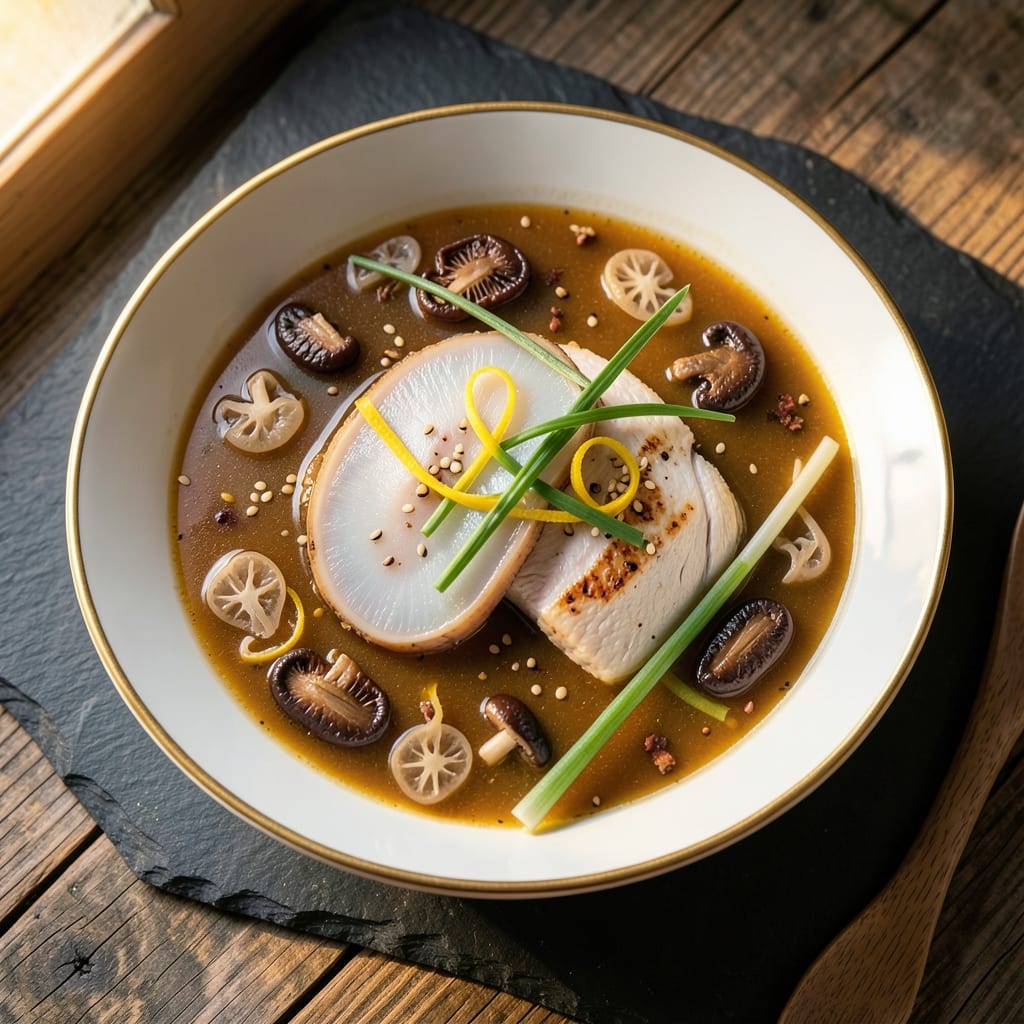
This abalone ginseng chicken soup recipe delivers a luxurious fusion of seafood, poultry, and herbal medicine in every spoonful. The velvety broth, infused with ginseng's earthy warmth, cradles tender chicken and delicate abalone—transforming a simple meal into a nourishing experience. I developed this recipe after years of studying traditional East Asian soups, focusing on balancing umami depth with subtle sweetness.
The secret lies in slow-cooking the ginseng to extract its medicinal properties while building layers of flavor through caramelized aromatics and a light touch of soy. Abalone, often considered a delicacy, becomes tender and flavorful when cooked properly, adding a briny richness that complements the chicken's savory notes. This isn't just soup—it's a restorative dish that warms both body and soul.
What makes this recipe special is its approachability. While it may sound complex, the technique is straightforward: simmering the ingredients low and slow allows all the flavors to meld without requiring advanced skills. The result is a soup so comforting it feels like a hug in a bowl, yet sophisticated enough for special occasions. Each component—from the ginseng-infused broth to the perfectly cooked abalone—works together in harmony.
Perfect for cold evenings or as a healing meal, this soup serves 4-6 and comes together in about 2 hours of active time (plus simmering). The beauty of this recipe is its versatility—it works equally well as a light lunch or a hearty dinner when paired with steamed rice. Let's create something truly nourishing together.
Ingredients for abalone ginseng chicken soup
Sixteen ingredients blend tradition with umami depth for this luxurious abalone ginseng chicken soup.
| Ingredient | Amount | Notes |
|---|---|---|
| Abalone 🦪 | 8 oz | Fresh, cleaned, sliced thickly |
| Chicken Breast 🍗 | 1 ½ lb | Boneless, skinless, cut into bite-sized pieces |
| Fresh Ginseng Root 🌿 | 2 oz | Sliced thinly, organic preferred |
| Dried Shiitake Mushrooms 🍄 | 4 whole | Rehydrated in hot water |
| Dried Wood Ear Mushrooms 🍄 | 4 whole | Rehydrated in hot water |
| Fresh Ginger 🧄 | 2 tbsp | Grated, aromatic, organic preferred |
| Garlic Cloves 🧄 | 6 cloves | Peeled, minced finely |
| Green Onions 🧅 | ½ cup | White and green parts separated |
| Light Soy Sauce 🍶 | ¼ cup | High-quality, low-sodium preferred |
| Sesame Oil 🫒 | 1 tbsp | Toasted, for finishing |
| Dried Red Dates 🍇 | 4 whole | Pitted, soaked in warm water |
| Dashi Powder 🍲 | 1 tbsp | Kombu and bonito-based |
| Sea Salt 🧂 | 1 ½ tsp | Diamond Crystal preferred |
| White Peppercorns 🌶️ | ½ tsp | Freshly ground |
| Cornstarch 🌾 | 1 tbsp | For abalone thickening |
The abalone and ginseng are the heart of this soup. Fresh abalone should have a clean, briny aroma—ask your fishmonger to clean it if needed. For ginseng, organic root from an Asian market delivers the most authentic earthy depth. If you can't find fresh, high-quality dried ginseng slices work too, but they require longer simmering. The mushrooms—both shiitake and wood ear—should be plump and firm; soak them in hot water until pliable. Trader Joe's often carries pre-cleaned dried varieties, saving prep time. For the soy sauce, Kikkoman or Pearl River Bridge are reliable choices, but avoid reduced-sodium versions—their flavor is muted.
No fresh ginger? Powdered ginger at half the amount works in a pinch, though it lacks the aromatic complexity. Substituting garlic with garlic powder at one-third the amount is possible, but fresh is non-negotiable here. The dashi powder can be replaced with homemade kombu broth for a more refined umami base. For those avoiding seafood in dashi, shiitake broth is an excellent alternative. The red dates add subtle sweetness—if unavailable, a touch of honey or maple syrup (½ tsp) bridges the gap. The abalone's delicate texture requires the cornstarch slurry to prevent it from becoming rubbery; don't skip this step.
Store the broth base (without abalone or chicken) in the fridge for up to 5 days—it only gets more flavorful. Reheat gently to preserve the ginseng's medicinal properties. The abalone and chicken can be cooked separately and added back when reheating. For long-term storage, freeze the entire soup in portion-sized containers for up to 3 months. When reheating, add a splash of water or broth to restore the velvety texture. This soup tastes even better the next day as flavors meld, so plan ahead for leftovers—it's the perfect make-ahead dish for busy weeknights.
Why You'll Love This Recipe
- Same soup, different vibes: serve it steaming in mugs for a lazy night or ladle it into bowls for guests. I’ve pulled this off for both my roommate’s hangover recovery and my mom’s book club—no one ever guessed it was the same recipe.
- One-Pot Magic: The abalone and ginseng melt into the broth while the chicken tenderizes—no extra pots, no fuss. Honestly, I just toss everything in one pot, simmer, and walk away. That’s 15 minutes of hands-off luxury.
- Umami Bomb: The dried shiitake and wood ear mushrooms soak up the broth like sponges, then burst with deep, savory flavor. Between us, the first sip makes me forget I’m not in a Korean hotpot restaurant.
- Weeknight to Dinner Party: Same soup, different vibes: serve it steaming in mugs for a lazy night or ladle it into bowls for guests. I’ve pulled this off for both my roommate’s hangover recovery and my mom’s book club—no one ever guessed it was the same recipe.
Step-by-step instructions for abalone ginseng chicken soup
This method delivers a harmonious blend of textures and flavors—silky abalone, hearty chicken, and earthy ginseng.
Prepare the Base Ingredients and Broth
Begin by rehydrating the dried mushrooms. Place the 4 whole dried shiitake mushrooms and 4 whole dried wood ear mushrooms in separate bowls and cover with hot water. Let them soak for 15 minutes until softened and expanded. Drain, reserving the soaking liquid for the broth.
In a large stockpot, combine the 1.5 lb chicken breast, 2 oz sliced fresh ginseng root, 4 soaked dried red dates (pitted), 2 tbsp grated fresh ginger, 6 minced garlic cloves, and the reserved mushroom soaking liquid. Add 1 tbsp dashi powder and 1.5 tsp sea salt. Bring to a boil over high heat, then immediately reduce to a gentle simmer for 45 minutes. Skim off any foam that rises to the surface during this time.
Strain and Season the Broth
Once the chicken is fully cooked, remove it from the broth using a slotted spoon and set aside to cool slightly. Strain the broth through a fine-mesh sieve into a clean pot, pressing gently on the solids to extract maximum flavor. Discard the solids, then return the broth to the pot.
Add the 0.25 cup light soy sauce and 0.5 tsp freshly ground white peppercorns to the strained broth. Taste and adjust seasoning—this soup should balance umami from the soy and ginseng with a subtle saltiness. Keep the broth at a simmer over medium-low heat while you prepare the abalone.
Thicken the Abalone and Finish the Soup
In a small bowl, whisk together the 1 tbsp cornstarch with 2 tablespoons of cold water until smooth. Gently add the 8 oz thickly sliced abalone to the simmering broth and cook for 3-4 minutes until just opaque. Remove the abalone with a slotted spoon and set aside.
Slowly pour the cornstarch slurry into the broth while stirring constantly. The broth should thicken to a velvety consistency within 2-3 minutes. Return the abalone to the pot and simmer for another 2 minutes to absorb the enriched broth. Shred the cooked chicken breast and add it back to the soup.
Garnish and Serve
Divide the soup among 6 bowls, ensuring each serving contains a generous portion of abalone, chicken, and mushrooms. Drizzle each serving with 1 tbsp toasted sesame oil and garnish with the 0.5 cup green onions, using both white and green parts for color contrast. Serve immediately while the abalone remains tender and the broth stays warm.
The finished soup should showcase the abalone's delicate texture against the rich, earthy broth. Each spoonful should deliver a perfect balance of umami from the mushrooms and ginseng, sweetness from the dates, and a subtle heat from the white peppercorns. Enjoy with steamed rice for an authentic dining experience.
Pro Tips For Making Abalone Ginseng Chicken Soup
- Parboil Abalone First: Skip the raw abalone in broth—it turns rubbery. Give it a 3-minute blanch in salted water before adding to the soup; this keeps it tender while letting the ginseng and mushrooms build flavor first. (I learned this after one disastrous batch where the abalone fought me.) ---
- Slice Ginseng Thin: Fresh ginseng needs to infuse, not sit like a rock. Cut it into ¼-inch slices—thin enough to soften in 20 minutes without turning to mush. Thick slices? You’ll be chewing on them by the end. ---
- Rehydrate Mushrooms Separately: Toss dried shiitake and wood ear in hot water for 10 minutes before adding to the pot. This prevents them from stealing all the broth’s moisture and turning the soup into a sad, watery mess. (Yes, I’ve done it.) ---
- Simmer, Don’t Boil: Keep the heat at a gentle simmer—tiny bubbles, occasional swirls—not a rolling boil. Abalone and chicken cook better at 180°F (82°C), and ginseng burns faster than you’d think. (I used to blast it; now I sip tea while it cooks.)
Essential equipment for this recipe
Stockpot Essentials
Start with a large, heavy-bottomed stockpot—I recommend a 5-6 quart All-Clad Stainless Steel or Le Creuset Dutch oven for even heat distribution. These pots handle the 45-minute simmer without hot spots that can scorch your ginseng or mushrooms. Avoid non-stick pots—they can't handle the prolonged cooking time and may release harmful fumes when exposed to high heat. 🌡️
Fine-Mesh Sieve
A fine-mesh sieve (like the OXO Good Grips) is non-negotiable for straining the broth. Its tight weave captures even the finest ginseng particles and mushroom fibers, ensuring a silky-smooth texture. I’ve tried cheaper colanders, but they leave behind gritty bits that ruin the soup’s elegance. Press the solids gently with a wooden spoon to extract every drop of flavor—this makes a noticeable difference in depth.
Slotted Spoon
Use a long-handled slotted spoon (I prefer the Mercer Culinary Genius) to remove the chicken and abalone from the broth. The slots allow excess liquid to drain while keeping the ingredients intact. This prevents your soup from becoming watery when you return the components later. A 12-inch handle gives you the reach needed to avoid splashing hot broth—safety first!
Cornstarch Slurry Bowl
For thickening the abalone, grab a small ceramic bowl (like Corelle) to whisk your 1 tbsp cornstarch with 2 tbsp cold water. Ceramic retains heat better than glass or metal, helping the slurry thicken more evenly. Avoid plastic—it can melt under the heat of the simmering broth. A flexible silicone spatula helps scrape every last bit of the slurry into the pot for maximum thickening power.
Sesame Oil Dispenser
Invest in a small squeeze bottle (like the OXO Good Grips Mini) for your toasted sesame oil. This lets you drizzle just 1 tbsp per bowl without overpowering the dish. Regular bottles can’t control the flow precisely, leading to uneven distribution. Toast the sesame oil separately in a dry pan over low heat for 2 minutes—this enhances its nutty aroma and prevents bitterness in the final dish. ✨
Optional: Immersion Blender
If you prefer a smoother broth texture, an immersion blender (like the Ninja CB101) lets you blend the strained broth directly in the pot. Pulse for 10-15 seconds—just enough to break down any remaining particles without turning the soup into a paste. This step is optional but elevates the soup’s restaurant-quality finish. Skip it if you love the rustic texture of whole mushrooms and ginseng pieces.
Nutrition facts
Frequently asked questions
Can I substitute fresh ginseng with powdered ginseng?
Fresh ginseng root is ideal for this soup as it infuses the broth with authentic earthy depth. However, you can use 1 teaspoon of high-quality powdered ginseng per 2 ounces of fresh root, but simmer it for 10-15 minutes longer to extract its medicinal properties. Powdered ginseng lacks the same texture and may settle at the bottom of the pot. For best results, dissolve it in a small amount of warm broth before adding to the pot.
How do I know when abalone is fully cooked?
Abalone should be cooked for just 3-4 minutes in the broth until it turns opaque and firm to the touch. Overcooking will make it rubbery. Use a fork to test—it should flake easily but still hold its shape. The cornstarch slurry helps it absorb the broth without breaking apart. If unsure, err on the side of undercooking, as it continues to cook slightly while resting in the hot broth.
Can I make this soup without dashi powder?
Replace the 1 tbsp dashi powder with 1 tbsp soy sauce plus 1 tsp kombu (seaweed) flakes for a vegetarian-friendly umami base. Simmer the kombu in the broth for 10 minutes before removing it. Alternatively, use 1 tbsp miso paste (white or red) for a richer flavor, but reduce the soy sauce to 2 tablespoons total to balance the saltiness. The broth will still develop depth, though the texture may be slightly smoother.
Why does my soup taste bitter?
Bitterness often comes from overcooking the ginseng or mushrooms, or using too much soy sauce. To fix it, add 1-2 tbsp of honey or maple syrup to balance the flavors while reheating. For prevention, simmer the ginseng and mushrooms for no longer than 45 minutes and taste the broth before adding the abalone—adjust soy sauce gradually. A pinch of white pepper can also mask bitterness by adding warmth.
How long can I store leftovers, and how do I reheat?
Store leftovers in an airtight container in the fridge for up to 4 days or freeze for 3 months. To reheat, warm gently on the stove over low heat, adding a splash of water or broth to restore the velvety texture. Never microwave abalone directly—it can turn rubbery. For best results, reheat the broth separately and add the abalone back just before serving. The soup tastes even better the next day as flavors meld!