
Soups & Stews
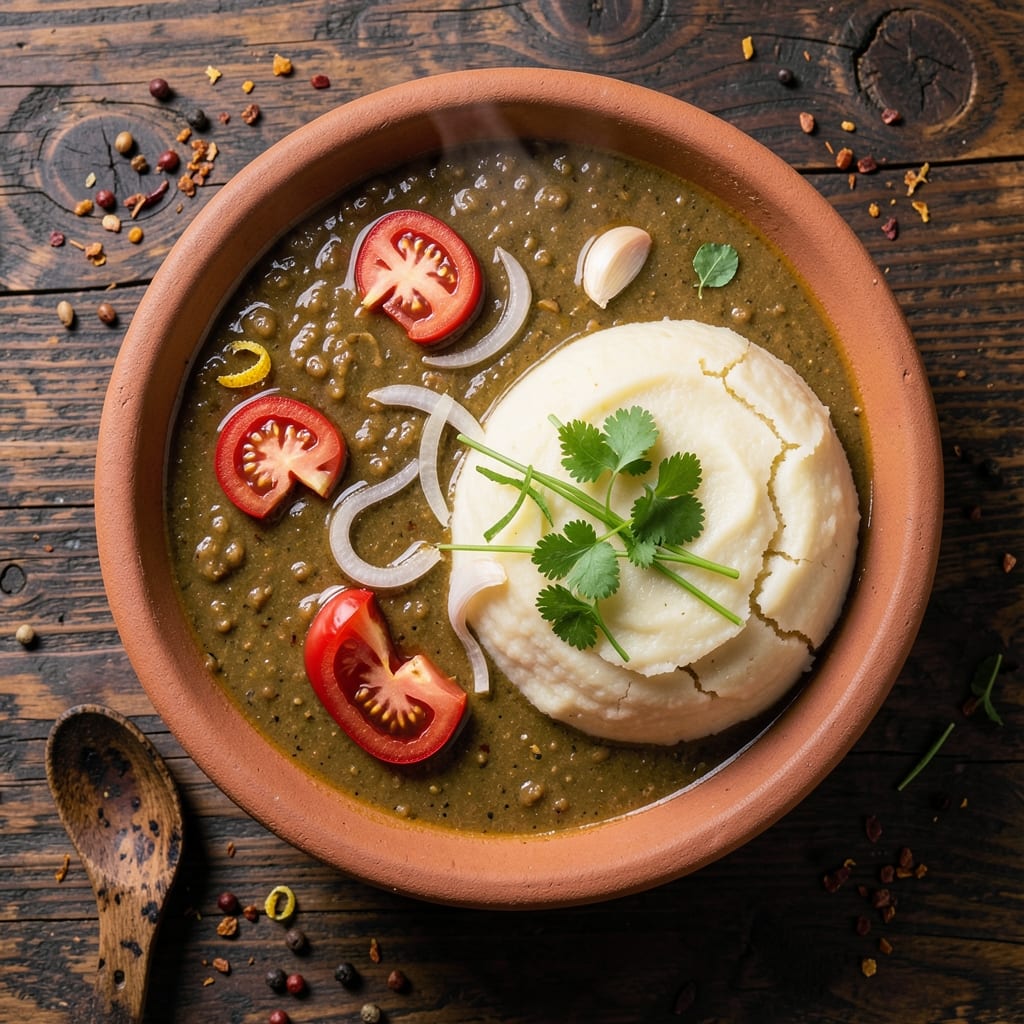
This African Egusi Soup and Fufu recipe brings the rich flavors of West Africa to your kitchen with a vegetarian twist. 🌟 The nutty, earthy taste of toasted egusi seeds forms the heart of this soup, while the smooth, stretchy fufu provides the perfect textural contrast. What makes this dish truly special is how the two components come together—creamy, satisfying soup paired with a dough that melts in your mouth.
The egusi soup starts with lightly roasted seeds blended into a velvety base, then simmered with fresh vegetables and aromatic spices. Meanwhile, the fufu is crafted from boiled cassava and yam, pounded into a smooth, dough-like consistency. This combination delivers a meal that's both hearty and comforting, perfect for family gatherings or special occasions.
What you'll achieve is a restaurant-quality dish that balances bold flavors and satisfying textures. The soup's nutty depth pairs beautifully with the neutral, doughy fufu, creating a meal that's as visually appealing as it is delicious. Whether you're serving it as a main course or sharing with friends, this recipe promises a taste of West African tradition.
For those who prefer a more traditional approach, you can easily add meat or fish to the soup without altering the fufu preparation. The recipe's flexibility makes it suitable for various dietary preferences while keeping the authentic experience intact. Let's get started on this flavorful journey!
Ingredients for african egusi soup and fufu
Toasted egusi seeds and starchy cassava-yam fufu create this West African vegetarian masterpiece.
| Ingredient | Amount | Notes |
|---|---|---|
| Egusi Seeds 🌰 | 1 cup | Toasted lightly for nutty flavor |
| Fresh Tomatoes 🍅 | 4 whole | Medium-sized, chopped |
| Red Bell Peppers 🌶️ | 2 whole | Chopped, any color works |
| Onions 🧅 | 1 whole | Yellow or red, chopped |
| Fresh Cilantro 🌿 | ¼ cup | Chopped, for garnish |
| Garlic Cloves 🧄 | 4 cloves | Minced, for depth |
| Scotch Bonnet Peppers 🔥 | 1 whole | Adjust for heat preference |
| Vegetable Oil 🫒 | ½ cup | For sautéing |
| Cassava Tubers 🥔 | 2 lbs | Peeled and boiled |
| Yam Tubers 🍠 | 2 lbs | Peeled and boiled |
| Salt 🧂 | 1 ½ tsp | Kosher or sea salt |
| Black Pepper 🌶️ | ½ tsp | Freshly ground |
| Ground Cumin 🌿 | 1 tsp | Toasted for warmth |
| Ground Ginger 🌿 | ½ tsp | Freshly ground preferred |
| Vegetable Broth 💧 | 4 cups | Low-sodium preferred |
Egusi seeds are the soul of this dish. Look for them in African markets or online—brands like African Foods Direct or African & Caribbean Foods carry high-quality seeds. Toast them in a dry pan until fragrant, about 3-4 minutes, then blend into a smooth paste. The seeds should be whole and clean, with no signs of moisture or mold. If you can't find fresh seeds, pre-ground egusi works in a pinch, but toasting enhances flavor dramatically. For the fufu, cassava and yam are non-negotiable—they give that signature stretchy texture. Most grocery stores carry cassava, but yam might require a specialty market or online order.
No scotch bonnet? Jalapeño or habanero at half the amount keeps the heat but changes the flavor profile. Fresh tomatoes can be swapped for 1 can (14 oz) diced tomatoes, but fresh adds a brighter taste. The vegetable broth can be homemade or store-bought—Imagine or Pacific Foods brands are reliable. For the fufu, if you can't find yam, plantains or sweet potatoes work in a bind, though texture will differ slightly. The ground spices? Toast the cumin and ginger whole in a dry pan for 30 seconds before grinding—this deepens their flavor. And if you're short on time, pre-boiled cassava and yam from the frozen section save you 30 minutes of prep.
The egusi paste keeps for 3 days in the fridge, covered tightly. The fufu dough is best used immediately, but you can shape and refrigerate it for up to 2 hours before serving. For leftovers, store the soup in airtight containers for 3-4 days, and freeze the fufu dough for up to 1 month. Reheat the soup gently on the stove, adding a splash of water if it thickens. The fufu reheats best in a steamer basket over boiling water—just a few minutes until pliable. I always make extra fufu dough and freeze portions for quick meals later in the week.
Why You'll Love This Recipe
- No-Fuss Prep: I swear by this—just toast the egusi seeds until fragrant, then blend with tomatoes, onions, and bell peppers. No peeling, no fancy techniques, just chop and simmer while you handle everything else.
- Earthy-Rich Depth: Between the nutty egusi, the smoky bell peppers, and that fresh cilantro finish, every spoonful tastes like a hug from your favorite auntie. Honestly, the way the flavors build? It’s the kind of soup that makes you slow down.
- Weeknight Crowd-Pleaser: This feeds six without breaking a sweat—perfect for game days, potlucks, or when your in-laws drop by unannounced. The fufu soaks up the soup like a dream, so no one leaves hungry.
- Budget Meal Magic: Egusi seeds stretch further than you’d think, and the rest of the ingredients? Pantry staples. I’ve made this for under $10 and still had leftovers for lunch the next day—no takeout needed.
Step-by-step instructions for African egusi soup and fufu
Here's how to make this hearty West African classic with rich nutty soup and smooth fufu.
🍳 Step 1: Toast the Egusi Seeds for Maximum Flavor
Heat a dry skillet over medium heat and add the 1 cup egusi seeds. Toast them for 3-4 minutes, stirring constantly until they turn a light golden brown and release a nutty aroma. This step is crucial—it enhances the flavor and prevents a raw taste in your soup.
Watch closely as they toast—they go from pale to golden quickly. When you see the seeds begin to darken slightly and smell deeply nutty, immediately transfer them to a bowl. Set aside for the soup base. This quick toasting ensures you capture that signature African nutty depth without burning them.
🍳 Step 2: Sauté the Aromatic Vegetables
In a large pot, heat 0.5 cup vegetable oil over medium heat. Add the chopped 1 whole onions and cook for 3 minutes until softened and translucent. Add the chopped 2 whole red bell peppers and cook for another 3 minutes until they begin to soften.
Now add the 4 cloves garlic cloves and 1 whole scotch bonnet peppers (seeded if you prefer less heat). Stir for 1 minute** until the garlic becomes fragrant and the scotch bonnet releases its signature heat. This aromatic base forms the flavor foundation of your soup.
🥘 Step 3: Build the Soup Base with Tomatoes and Spices
Add the chopped 4 whole fresh tomatoes to the pot and cook for 5-7 minutes, stirring occasionally, until they break down into a thick paste. This process releases their juices and intensifies their flavor. Stir in the 1 tsp ground cumin, 0.5 tsp ground ginger, 1.5 tsp salt, and 0.5 tsp black pepper.
Cook the spice mixture for 2 minutes to toast the spices slightly and deepen their flavors. Then pour in the 4 cups vegetable broth and bring to a gentle boil. This creates a flavorful broth that will carry all the ingredients together beautifully.
🍳 Step 4: Incorporate the Egusi and Simmer
Gradually whisk the toasted 1 cup egusi seeds into the simmering soup, stirring constantly to prevent clumping. The soup will thicken noticeably as the seeds absorb the liquid. Reduce heat to low and let it simmer for 20-25 minutes, stirring occasionally.
You'll know it's ready when the soup reaches a thick, porridge-like consistency with a rich, nutty aroma. The egusi should be fully incorporated, creating that signature African texture. Taste and adjust seasoning if needed—this is where all the flavors come together.
👨🍳 Step 5: Prepare the Fufu Simultaneously
While the soup simmers, peel and boil the 2 lbs cassava tubers and 2 lbs yam tubers separately until tender (about 20-25 minutes each). Drain well and mash each type separately until smooth and elastic. Combine the mashed cassava and yam, then knead vigorously with your hands until you achieve a smooth, stretchy dough.
Here's the thing—fufu should be stretchy and slightly sticky. If it feels too dry, add a little warm water and knead again. The ideal fufu should hold its shape when you press it between your fingers but still be soft enough to eat with the soup.
🍽️ Step 6: Serve the Perfect Pairing
Once your soup reaches the perfect thick consistency and the fufu is ready, it's time to serve. Ladle the hot egusi soup into bowls and place a generous portion of fufu beside it. Garnish with the chopped 0.25 cup fresh cilantro for a pop of freshness and color.
The magic happens when you dip the fufu into the rich, nutty soup. The smooth, stretchy fufu contrasts beautifully with the thick, flavorful egusi soup, creating the perfect balance of textures and tastes. Serve immediately while the fufu is still warm and pliable.
Pro Tips For Making African Egusi Soup And Fufu
- TOAST EGUSI FIRST: Skip the raw grind—lightly dry-toast the egusi seeds in a dry pan for 2-3 minutes until fragrant. This removes bitterness and deepens the nutty flavor, which makes a real difference in the soup’s richness. (Yes, even if you’re impatient like me, don’t rush this.)
- BLEND TOMATOES COLD: Pulse the fresh tomatoes in the blender after they’ve cooled for 10 minutes. Warm tomatoes make the soup watery fast, and you’ll end up chasing consistency instead of building layers of flavor. I learned this the hard way—my first batch turned into a sad, thin broth.
- STIR CONSTANTLY AT BOIL: Once the soup hits a rolling boil, keep it moving with a wooden spoon—no breaks. Egusi thickens unevenly, and letting it sit too long on the bottom burns the seeds, turning them acrid. This isn’t the prettiest method, but it’s the tastiest.
- ADD PEPPERS LAST: Toss the red bell peppers in after the soup has simmered for 20 minutes. Their sweetness softens over time, but adding them early makes them mushy and dull. Save the fresh cilantro for garnish—it’ll stay bright and add brightness to every bite. (Your future self will thank you.)
Serving suggestions for this dish
Garnish Game-Changers
Fresh cilantro isn’t just for color—it brightens the soup with its citrusy notes. I chop ¼ cup finely and sprinkle it right before serving to wake up the nutty egusi flavors. For extra flair, add thinly sliced scallions or red onion rings—they add a crisp contrast to the creamy fufu. 🌿
Spicy Dipping Sauces
No West African meal is complete without a fiery dip! My go-to is a mix of ½ cup blended tomatoes, 1 tbsp palm oil, 1 tsp ground crayfish (if available), and a pinch of scotch bonnet pepper. Serve it warm in small bowls for dipping fufu. For a milder option, try shito (African pepper sauce) or a simple lemon-garlic aioli.
Vegetable Sidekicks
Balance the richness with a crisp mango-avocado salad or grilled plantains. Toss 1 cup diced mango and ½ avocado with lime juice and salt. For plantains, grill until caramelized and serve with a sprinkle of flaky sea salt. These sides cut through the soup’s intensity while keeping the meal vibrant and fresh.
Protein Add-Ons
While this is vegetarian, you can easily upgrade with grilled shrimp or smoked fish. Sear ½ lb shrimp in 1 tbsp palm oil until pink, then toss with ½ tsp smoked paprika. For fish, try tilapia marinated in lemon and ginger for 30 minutes before grilling. Add these to the soup in the last 5 minutes of simmering.
Beverage Pairings
Cool down with hibiscus tea (zobo)—it’s tart, refreshing, and traditional. For something stronger, pair with a light lager like Guinness or a dry white wine like Sauvignon Blanc. Avoid heavy reds; they’ll clash with the soup’s nutty depth. A simple sparkling water with lime works too if you prefer non-alcoholic options. 🍹
Leftovers Reinvented
Turn tomorrow’s soup into egusi-stuffed peppers. Hollow out bell peppers, fill with leftover soup, top with breadcrumbs, and bake at 375°F for 20 minutes. For fufu, shape into small balls and pan-fry in oil until crispy—great as a snack! Store both in airtight containers for up to 3 days.
Nutrition facts
Frequently asked questions
Can I make this egusi soup without fresh egusi seeds?
Yes! If you can't find fresh egusi seeds, use 1 cup pre-ground egusi paste (available in African markets or online). Just skip the toasting step—pre-ground paste is already processed. For best results, look for brands like African Foods Direct that sell pure, unsweetened paste. The flavor won't be quite as nutty, but it'll still work in a pinch.
What's the secret to perfect fufu texture?
The key is consistent kneading until the dough becomes smooth and elastic. Start with boiled cassava and yam, then mash separately before combining. If the mixture feels dry, add 1-2 tablespoons warm water at a time while kneading. The fufu should hold its shape when pressed but still be soft enough to eat. Over-kneading can make it tough, so stop when it's just slightly sticky.
Can I substitute plantains for cassava in the fufu?
You can try, but the texture will be different. Plantains add natural sweetness and a slightly firmer consistency. Use 3 cups ripe plantains instead of cassava, boil until tender, then mash and knead with yam. For a closer match, reduce the yam to 1 lb and add ½ cup grated coconut for moisture. The result will be less stretchy but still delicious.
Why did my egusi soup turn too thick?
This usually happens when the egusi absorbs too much liquid. To fix it, whisk in ½ cup warm vegetable broth gradually until you reach your desired consistency. For prevention, stir frequently while simmering and reduce heat if needed. If the soup still separates, blend it briefly with a little extra broth to create a smoother texture.
How do I store leftovers properly?
Store the soup in an airtight container in the fridge for up to 3 days, and reheat gently on the stove. For fufu, wrap portions in plastic wrap and refrigerate for up to 2 hours (it hardens when cold). Freeze fufu dough for 1 month—thaw in warm water before reheating. Never freeze the soup as it can become grainy.