
Soups & Stews
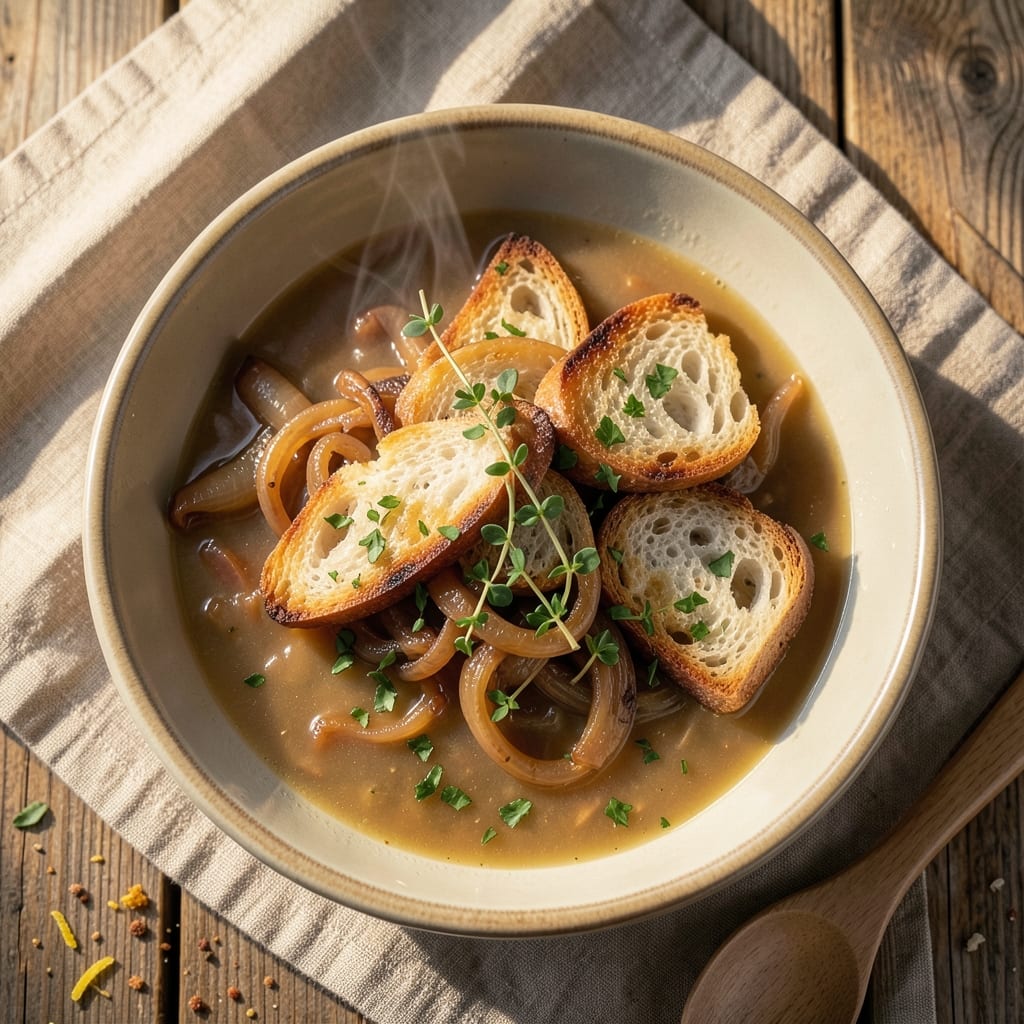
This alcohol-free French onion soup delivers all the caramelized depth of classic versions without a single drop of wine. The secret lies in slow-cooked onions and beef broth that build rich, savory layers—perfect for cozy nights or special gatherings. What makes this recipe work is the patience in caramelizing onions until they're deep golden, creating that signature sweetness that defines French onion soup.
We'll use a simple beef broth base (or vegetable for a lighter option) infused with garlic and herbs, then top it with crispy toasted baguette slices and melted Gruyère cheese. The result is a comforting bowl that's just as satisfying as traditional versions, with none of the alcohol content. This method ensures every spoonful is packed with umami flavor from the onions and aromatic herbs.
The beauty of this recipe is its versatility—it works equally well as a weeknight dinner or an impressive appetizer for guests. The caramelized onions develop complex sweetness that pairs perfectly with the savory broth, while the toasted bread adds a satisfying crunch. Whether you're avoiding alcohol for dietary reasons or simply want to enjoy this classic comfort food without wine, this version delivers authentic French onion soup experience.
Serve immediately with fresh parsley for color and freshness, or store leftovers in the refrigerator for up to 3 days. The flavors actually improve as the onions continue to meld with the broth overnight. This is French onion soup done right—rich, comforting, and completely alcohol-free while maintaining all the classic characteristics that make it beloved worldwide.
Ingredients for alcohol free french onion soup
Rich caramelized onions and aromatic herbs form the heart of this comforting, alcohol-free French onion soup.
| Ingredient | Amount | Notes |
|---|---|---|
| Yellow Onions 🧅 | 4 large | Peeled, sliced thinly |
| Beef Broth 🥫 | 6 cups | Low-sodium preferred |
| Vegetable Broth 🥫 | 2 cups | For lighter option |
| Garlic Cloves 🧄 | 4 cloves | Minced finely |
| Fresh Thyme 🌿 | 2 tbsp | Leaves only, chopped |
| Fresh Parsley 🌿 | ¼ cup | Chopped, for garnish |
| Unsalted Butter 🧈 | 4 tbsp | Cold, cubed |
| Gruyère Cheese 🧀 | 1 ½ cups | Shredded, aged |
| Baguette 🍞 | 1 whole | Crusty, sliced thick |
| Olive Oil 🫒 | 2 tbsp | Extra-virgin preferred |
| Salt 🧂 | 1 ½ tsp | Diamond Crystal preferred |
| Black Pepper 🌶️ | ½ tsp | Freshly ground |
| White Wine Vinegar 🍶 | 1 tbsp | For acid balance |
The onions are the star—yellow onions with a good balance of sweetness and bite. Whole Foods or local farmers markets often carry the sweetest varieties, but any yellow onion will work if it's fresh. Caramelizing them properly takes patience: start with a cold pan, low heat, and frequent stirring to develop that deep golden color. The Gruyère cheese should be aged at least 6 months for optimal melt and flavor—Murray's or Cowgirl Creamery are excellent choices. For the broth, low-sodium options prevent over-salting later, though you can always adjust.
No beef broth? Mushroom broth creates a similarly rich base, while low-sodium chicken broth works in a pinch. Fresh thyme is ideal, but dried thyme at one-third the amount suffices if needed. The white wine vinegar might seem odd, but it mimics the acidity of wine while keeping the dish alcohol-free. For the baguette, day-old bread toasts better than fresh—it's less likely to burn. If you can't find Gruyère, Comté or Emmental provide similar melting properties. The olive oil should be extra-virgin for best flavor, though regular olive oil works in a bind.
This soup tastes even better the next day as flavors meld. Store in the fridge for up to 3 days, reheating gently on the stove. For make-ahead prep, caramelize the onions and store them in the fridge for 2 days before adding broth. The toasted baguette should be assembled and baked just before serving to maintain crispness. Freeze the assembled soup (without bread) for up to 3 months
Why You'll Love This Recipe
- One-Pot Magic: I swear by this recipe—just chop the onions, slow-cook them until they’re caramelized, and let the broth and thyme work their magic. No extra pans, no fuss, and honestly? The kitchen stays cleaner than my usual attempts.
- Caramelized Gold: That deep, sweet crunch from the onions? It’s the star here. I start them in a cold pan, letting them melt down for 45 minutes while I prep the rest. The beef and veggie broth blend so well, giving it a rich, savory depth that’s hard to beat.
- Weeknight to Dinner Party: Between us, this is my secret weapon for busy nights or when unexpected guests show up. Serve it with crusty bread for a cozy meal, or double the batch and freeze half for later. (Yes, even on a Tuesday night.)
- Budget-Friendly Luxury: Onions and broth are cheap, but the flavor feels expensive. I make a big pot, portion it out, and reheat leftovers for lunch the next day. Three meals for the price of one—plus, the thyme keeps it fresh-tasting even after reheating.
Step-by-step instructions for alcohol-free French onion soup
A rich, caramelized onion base builds the foundation of this classic soup without relying on alcohol.
Develop Deep Caramelization in the Onions
Heat the 2 tablespoons olive oil and 4 tablespoons unsalted butter in a large Dutch oven over medium-low heat. Add the 4 large yellow onions and cook, stirring occasionally, until completely softened—about 15 minutes. This is where patience pays off; the onions should transform from translucent to deep golden brown.
Once the onions begin to color, reduce the heat to low and continue cooking for another 30-40 minutes, stirring frequently. The goal is to develop a rich, jammy texture with deep caramelized flavors. If the onions start to stick, add a splash of beef broth to deglaze, then stir until the liquid evaporates. This step is critical—rushing here will result in a pale, watery soup instead of the rich, velvety base you want.
Build Flavor with Aromatics and Broth
After the onions have fully caramelized, add the 4 cloves minced garlic cloves and cook for 30 seconds until fragrant. Stir in the 2 tablespoons chopped fresh thyme and cook for another 1 minute to release their essential oils. This infusion of aromatics will elevate the soup from simple to sophisticated.
Pour in the 6 cups beef broth and 2 cups vegetable broth, scraping up any browned bits from the bottom of the pot. Bring to a gentle simmer, then add the 1.5 teaspoons salt and 0.5 teaspoon black pepper. The soup should smell deeply aromatic—like a warm, spiced autumn day. Let it simmer uncovered for 20-25 minutes to allow the flavors to meld. If the soup reduces too much, add a little water to maintain the proper consistency.
Balance and Finish the Broth
Stir in the 1 tablespoon white wine vinegar and taste. The acidity will brighten the rich, caramelized flavors and cut through any heaviness. Adjust the seasoning if needed—this is your chance to fine-tune the balance of salt, sweetness, and acidity. The broth should be deeply flavorful, with the onions' caramelized depth shining through.
Keep the soup warm over low heat while you prepare the baguette toasts. This step ensures the soup remains at an ideal serving temperature without overcooking or developing a skin. The vinegar is key here—it mimics the acidity traditionally provided by wine, giving the soup a well-rounded finish without alcohol.
Assemble and Melt the Cheese
Preheat your broiler to high. Slice the whole baguette into ½-inch thick pieces and arrange them on a baking sheet. Brush the tops lightly with olive oil and broil for 2-3 minutes until golden brown and crisp. Watch closely to avoid burning—you want a toasty, not charred, finish.
Ladle the warm onion soup into 4 oven-safe bowls, placing 2-3 baguette slices in each. Top each serving generously with ½ cup shredded Gruyère cheese, dividing the 1.5 cups total evenly. Place the bowls under the broiler for 2-4 minutes until the cheese is fully melted, bubbly, and golden brown on top. The cheese should stretch slightly and create a luscious, gooey blanket over the soup.
Garnish and Serve Immediately
Remove the bowls from the broiler and let them sit for 1 minute to allow the cheese to set slightly. Garnish each serving with 1 tablespoon chopped fresh parsley for a pop of color and freshness. The parsley not only adds visual appeal but also a bright, herbal note that complements the rich onion and cheese flavors.
Serve the soup immediately, encouraging diners to dip the crispy baguette toasts into the cheesy, caramelized broth. The contrast of the warm, gooey cheese with the crispy bread and the deep, sweet-savory onions creates a harmonious balance that defines this classic dish. Each spoonful should deliver layers of flavor—sweet caramelized onions, rich broth, and the sharp, nutty bite of Gruyère.
Pro Tips For Making Alcohol Free French Onion Soup
- CARAMELIZE ONIONS LOW AND SLOW: I learned this the hard way—rushing the onions with high heat turns them bitter. Use medium-low and let them cook for 40-50 minutes until deep brown and syrupy, stirring occasionally. The longer they cook, the sweeter and more complex the flavor becomes.
- SLICE ONIONS EVENLY: Thin, consistent slices caramelize uniformly. Use a mandoline for precision, or hand-slice into ¼-inch rounds—thicker pieces burn on the edges while staying raw inside. Uneven slices mean uneven cooking, and that’s a flavor disaster.
- DON’T SKIP THE BROTH BOIL: Simmer the broth vigorously for 5 minutes after adding onions to dissolve any stuck-on bits. A quick boil loosens fond from the pan, so you’re not scraping burnt bits into your soup later. (Yes, even if you’re impatient like me.)
- UPGRADE WITH ROASTED GARLIC: Peel whole garlic cloves, drizzle with olive oil, and roast at 400°F (200°C) for 20 minutes until soft. Mash it into the broth instead of raw minced garlic—it adds a mellow, sweet depth that raw garlic can’t match. Worth the extra 20 minutes.
Essential equipment for alcohol free french onion soup
Dutch Oven Essentials
A large Dutch oven with a tight-fitting lid is the single most important tool for this recipe. I recommend a 5-6 quart enameled cast iron Dutch oven like the Le Creuset Signature or Lodge 5.5-Quart—both distribute heat evenly and handle temperature changes gracefully. The enameled coating prevents sticking during the long caramelization process, while cast iron retains heat beautifully for even cooking. If you don't have one, a heavy-bottomed stainless steel pot with a lid works in a pinch, though it may require slightly more attention to prevent burning. 🌡️
Broiler-Friendly Baking Sheet
For crispy baguette toasts, use a rimmed baking sheet that fits comfortably under your broiler. I prefer half-sheet pans (13x18 inches) from USA Pan or Wilton—they provide plenty of space for even browning. The rim prevents cheese drippings from spilling onto your oven racks, making cleanup easier. If your broiler is particularly hot, place the baking sheet on the middle rack to avoid over-browning. A wire cooling rack placed over the sheet helps the bread crisp up faster by allowing air to circulate underneath. ⚡
Cheese Tools Matter
For perfectly shredded Gruyère, use a box grater with medium holes—Microplane or OXO Good Grips models work best. Pre-shredded cheese often contains anti-caking agents that prevent proper melting, so fresh grating is key. A small offset spatula helps spread the cheese evenly over the soup before broiling. For portioning, a measuring cup ensures each bowl gets the same amount of cheese. If you're short on time, pre-shredded Gruyère from Murray's (which is pre-shredded without anti-caking agents) is a good alternative. 🧀
Heat-Resistant Bowls
Choose oven-safe ceramic or tempered glass bowls that can handle both stovetop simmering and broiler finishing. I love Corelle Stoneware or Pyrex bowls—they distribute heat evenly and are easy to clean. Avoid thin glass or plastic, which can crack under high heat. For extra insurance, place bowls on a heat-resistant pad or silpat mat before broiling to protect your countertops. If you're serving directly from the Dutch oven, use heatproof wooden spoons to ladle the soup. 🔥
Optional: Immersion Blender
While this recipe doesn't require blending, an immersion blender like the Ninja CB1000 comes in handy if you want to create a smoother onion base. Pulse briefly (3-5 seconds) after caramelizing to break down the onions slightly while keeping some texture. This isn't traditional, but it adds a velvety quality that some home cooks prefer. For the classic experience, skip blending—stirring the onions into a jammy consistency is what gives authentic French onion soup its signature depth. ✨
Nutrition facts
Frequently asked questions
Can I make this soup without beef broth?
For a vegetarian version, use 8 cups vegetable broth (made from mushrooms, carrots, and celery) and add 1 cup red wine vinegar to deepen the flavor. The caramelized onions will still shine, and the vinegar mimics the acidity of wine. For extra richness, stir in 2 tablespoons nutritional yeast after simmering.
How do I prevent the cheese from getting too crispy or burnt?
Watch the broiler closely—2-3 minutes is ideal for medium-brown cheese. If your broiler runs hot, place bowls on the middle rack and check every 30 seconds. For extra insurance, tent bowls loosely with aluminum foil during the last 1 minute of broiling. The cheese should be melted and bubbly, not browned.
Can I prep this soup ahead of time?
Yes! Caramelize the onions and store them in the fridge for 2 days or freeze for 3 months. Reheat gently with broth, then add fresh thyme and vinegar. Toast the baguette just before serving—it crisps best when fresh. The cheese topping should always be added fresh to maintain its perfect texture.
What's the best cheese substitute if I can't find Gruyère?
Use a mix of Comté and Emmental for similar melting properties. For a sharper flavor, try Parmigiano-Reggiano (use 1 cup extra to compensate for less melt). Avoid pre-shredded cheese—it contains anti-caking agents that prevent proper melting. Freshly grated cheese makes all the difference!
Why does my onion soup taste bland?
Bland flavor usually means the onions weren't caramelized enough or the broth needs more seasoning. Cook onions until deep amber (60+ minutes total), then boost flavor with 1 tbsp soy sauce or 1 tsp smoked paprika during simmering. Taste before serving—adjust with salt, pepper, or a splash of vinegar. Patience with caramelization is key!