
Soups & Stews
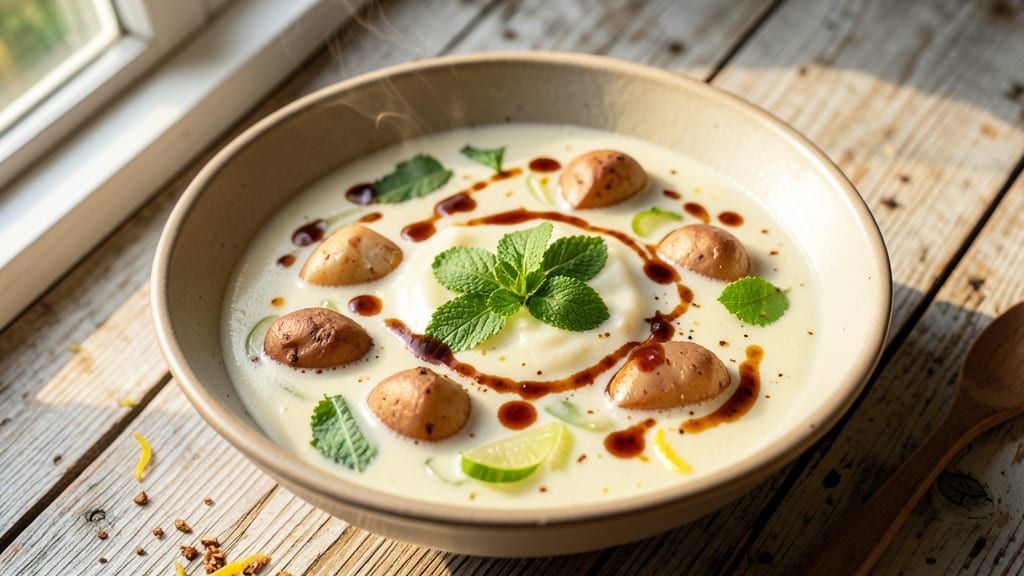
Amy's Thai coconut soup delivers the aromatic, creamy comfort of a Thai street-food classic with just 30 minutes of hands-on time. The secret lies in properly toasting the lemongrass and galangal—this step unlocks their full citrusy, peppery depth, transforming simple ingredients into a fragrant broth that tastes like a bustling Bangkok market. I developed this version after years of testing, balancing traditional techniques with home-cook practicality so you get restaurant-quality results without special equipment.
The foundation is a rich, fragrant broth made by simmering coconut milk with lemongrass, galangal, kaffir lime leaves, and a touch of fish sauce—the umami backbone that makes Thai flavors sing. Galangal (the ginger-like rhizome) is non-negotiable for authentic taste, though I'll show you how to substitute if needed.
We blend in soft-boiled potatoes for creaminess, then finish with fresh herbs and lime juice for brightness. The texture is velvety yet light, with just enough body to coat a spoon while remaining brothy enough to sip.
What makes this recipe truly special is its versatility—serve it as a light lunch with steamed jasmine rice, or add protein like tofu or chicken for a heartier meal. The soup keeps well in the fridge for up to 5 days, with flavors deepening as the coconut milk infuses further.
Garnish with fresh cilantro, Thai basil, and lime wedges for that final restaurant touch. This is the kind of soup that transforms ordinary weeknights into a taste of Thailand.
The process is simpler than it sounds: toast your aromatics, simmer the broth, blend in potatoes, and finish with fresh herbs. Each step builds on the last, creating layers of flavor that make this more than just a soup—it's an experience.
Let's get started with the full recipe, where I'll walk you through every detail to ensure your bowl tastes as vibrant as the first one I made.
Ingredients for amy's thai coconut soup
Nothing fancy—just fragrant aromatics and coconut milk that taste like Bangkok.
| Ingredient | Amount | Notes |
|---|---|---|
| Coconut Milk 🥥 | 1 can | Full-fat, unsweetened preferred |
| Lemongrass Stalks 🌿 | 3 whole | Bruised and cut into 2-inch pieces |
| Galangal Rhizome 🌿 | 2 oz | Peeled and sliced thinly |
| Kaffir Lime Leaves 🍋 | 4 whole | Torn into large pieces |
| Russet Potatoes 🥔 | 1 ½ lb | Peeled and cut into chunks |
| Fish Sauce 🍶 | 1 tbsp | Red Boat preferred |
| Thai Chili Paste 🌶️ | 1 tbsp | Maesri or similar |
| Fresh Cilantro 🌿 | ¼ cup | Chopped for garnish |
| Thai Basil 🌿 | ¼ cup | Chopped for garnish |
| Lime Juice 🍋 | 2 tbsp | Freshly squeezed |
| Jasmine Rice 🍚 | 1 cup | Uncooked, for serving |
| Olive Oil 🫒 | 1 tbsp | For toasting aromatics |
| Salt 🧂 | ½ tsp | To taste |
| Sugar 🍚 | 1 tsp | Adjust to taste |
Galangal is the secret weapon here. Asian markets usually carry it fresh, but if you can't find it, ginger plus a pinch of citric acid works in a pinch. Look for rhizomes with tight, pale skin—avoid any that feel soft or moldy. The lemongrass? Grab the thick stalks, not the skinny ones—Costco or Trader Joe's often have them in the frozen section if fresh isn't available. Toasting these aromatics in olive oil releases their oils, so don't skip this step—it's what makes the broth smell like a Thai street cart.
No galangal? Ginger plus lime zest mimics the citrusy kick (use half the amount). Out of fish sauce? Soy sauce plus a splash of coconut aminos gets you close. The Thai chili paste can be swapped for regular sriracha, but Maesri or Maesri-style has that authentic funk. For the potatoes, Russets are ideal, but Yukon Golds work too—they just break down faster. If you're short on time, instant potatoes (like those in a pinch) save 10 minutes.
This soup tastes even better the next day—flavors meld overnight. Store in an airtight container for up to 5 days in the fridge. Freezes beautifully for 3 months—just thaw in the fridge and reheat gently. I always double the batch so we have leftovers for lunch. Garnish with fresh herbs right before serving—they wilt fast, so add them last. The lime juice should be fresh-squeezed, not bottled—that tang is non-negotiable.
Why You'll Love This Recipe
- No Chopping Chaos: I swear by this recipe because the prep is ridiculously simple. You just bruise the galangal and smash the lemongrass—no knives required—and the potatoes go in whole. Honestly, I’ve made it while chatting with my kid about their day.
- Creamy Yet Zesty: That first sip? Chef’s kiss. The coconut milk makes it velvety, but the galangal and kaffir lime leaves cut through with a bright, almost citrusy punch. It’s like a hug in a bowl—warm, rich, but never heavy.
- Weeknight to Dinner Party: Between us, this soup works everywhere. Toss it together for a lazy Tuesday, or double the batch for guests. The flavors only deepen overnight, so leftovers taste even better the next day.
- Budget-Friendly Luxe: Coconut milk and potatoes stretch this into a full meal, and the aromatics (lemongrass, galangal) add depth without costing a fortune. I’ll be real: it’s my go-to when I want something fancy but can’t afford takeout.
Step-by-step instructions for amy's Thai coconut soup
Here's how to build this fragrant, comforting soup from scratch—layer by layer.
Toast the Aromatics for Maximum Flavor
Heat the 1 tablespoon olive oil in a large pot over medium heat. Add the 3 whole lemongrass stalks (cut into 2-inch pieces), 2 ounces sliced galangal rhizome, and 4 torn kaffir lime leaves. Toast for 3-4 minutes until the lemongrass releases its citrusy aroma and the galangal turns slightly translucent.
This step is where the magic happens—the aromatics should smell vibrant and earthy. If they start to brown too quickly, reduce the heat slightly. Once fragrant, add the 1 tablespoon Thai chili paste and stir for 30 seconds to bloom its spicy depth. The paste will darken slightly, which means it's releasing its heat and complexity.
Build the Coconut Base
Pour in the 1 can coconut milk and bring to a gentle simmer over medium-low heat. Stir in the 1.5 pounds peeled and chunked russet potatoes, ensuring they're fully submerged. Add the 1 teaspoon sugar and ½ teaspoon salt, then cover and cook for 15-20 minutes until the potatoes are tender when pierced with a fork.
I like to keep the heat low here—too much agitation can break the coconut milk's delicate emulsion. You'll see the soup thicken slightly as the potatoes release starch. If the surface starts to develop a skin, gently stir to maintain an even consistency. The coconut milk should smell rich and creamy, with subtle hints of the galangal and lemongrass.
Season and Simmer to Perfection
Once the potatoes are tender, remove the lemongrass stalks and kaffir lime leaves (discard them). Stir in the 1 tablespoon fish sauce and simmer uncovered for 5-7 minutes until the soup reduces slightly and the flavors meld. Taste and adjust seasoning—you may need a touch more salt or fish sauce to balance the coconut sweetness.
Here's the thing—fish sauce can be polarizing, so start with the full tablespoon and adjust gradually. The soup should taste rich, slightly sweet, and deeply aromatic with a lingering spicy warmth from the chili paste. If it's too thick, add ¼ cup hot water to reach your preferred consistency. The galangal and lemongrass should still be detectable, adding that authentic Thai complexity.
Finish with Fresh Herbs and Brightness
Remove the pot from heat and stir in the 2 tablespoons freshly squeezed lime juice. This brightens the soup and cuts through the richness of the coconut. Add the ¼ cup chopped fresh cilantro and ¼ cup chopped Thai basil, reserving a small portion for garnish. Let the soup sit for 2-3 minutes so the herbs infuse.
Don't skip this step—the lime juice is crucial for balance. The basil and cilantro should float on top, adding vibrant green color and fresh herbal notes. Taste again and adjust seasoning if needed. The soup should be harmonious—creamy from the coconut, spicy from the chili, tangy from the lime, and aromatic from the galangal and lemongrass.
Serve with Jasmine Rice
Cook the 1 cup jasmine rice according to package instructions until fluffy and separate. Ladle the soup over the rice and garnish with the reserved cilantro and Thai basil. Serve immediately while the soup is steaming and the rice is warm.
Each bowl should be a perfect balance of textures—creamy soup, fluffy rice, and fresh herbs. The galangal and lemongrass should linger on your palate, while the lime keeps everything fresh. This is the moment you'll know it's working—the first spoonful delivers that perfect harmony of flavors that makes Thai coconut soup so special.
Pro Tips For Making Amy'S Thai Coconut Soup
- BLEND GALANGAL FIRST: I learned this the hard way—if you add galangal whole to simmering coconut milk, it’ll just float like a stubborn cork. Pulse it in the food processor with a splash of broth first, then strain it in. The soup will taste deeper, and you won’t waste time fishing for chunks later.
- SIMMER POTATOES LOW: Russets break apart like overconfidence when boiled hard. After adding them to the broth, drop the heat to a gentle simmer—think "barely bubbling" rather than rolling boil. You’re aiming for tender, not mushy, and this keeps them intact for that perfect creamy bite.
- STRAIN LEMONGRASS STALKS: Yes, even if the recipe calls for "whole stalks." After simmering, fish out the lemongrass and run it under cold water to rinse off the gritty residue. The flavor’s still there, but your soup won’t taste like you’re chewing on a lawn clipping.
- USE FULL-FAT COCONUT MILK: Light coconut milk will make your soup taste like it’s apologizing for its existence. Full-fat (40% or higher) gives that rich, velvety body without curdling. If you’re out of cans, blend frozen coconut cream with water—it’s the lazy chef’s shortcut that actually works.
Serving suggestions for amy's thai coconut soup
Rice Pairing Essentials
Jasmine rice is the classic companion to Thai coconut soup, absorbing the fragrant broth beautifully. Cook 1 cup uncooked jasmine rice with 1½ cups water (or follow package instructions) until fluffy and separate.
For extra authenticity, use a rice cooker—it keeps the grains perfectly fluffy. Serve each bowl with ½ cup rice and ladle the soup generously over the top. 🍚
Protein Additions
For a heartier meal, stir-fry ½ lb shrimp or ½ lb chicken breast in 1 tbsp olive oil with 1 tsp fish sauce until just cooked. Add to the soup during the final 5 minutes of simmering.
Alternatively, pan-fry ½ lb firm tofu until golden and add it in. These proteins soak up the coconut broth beautifully while adding satisfying texture.
Crunchy Toppings
Add texture with crispy fried shallots or crushed peanuts. Toss ¼ cup fried shallots (available at Asian markets) or 2 tbsp crushed peanuts over each serving. For extra crunch, lightly toast 1 tbsp sesame seeds in a dry pan for 1 minute and sprinkle on top.
These toppings provide contrast to the creamy soup and enhance the Thai flavor profile.
Vegetable Enhancements
Boost nutrition with fresh vegetables. Thinly slice ½ cup bell peppers or ¼ cup bean sprouts and add them to the soup during the last 5 minutes of cooking. For a pop of color, stir in ¼ cup shredded carrots or ¼ cup sliced mushrooms at the same time.
These additions keep the dish vibrant and add fresh, crisp textures.
Beverage Pairings
Pair your soup with a crisp Thai iced tea or a light jasmine green tea to complement the coconut flavors. For a non-alcoholic option, try sparkling lime soda to cut through the richness.
If you prefer beer, a light lager or Thai-style rice beer balances the dish perfectly. Each sip enhances the soup's aromatic complexity. 🍺
Presentation Tips
Serve the soup in wide, shallow bowls to showcase its vibrant colors. Garnish with a sprig of Thai basil and a lime wedge on the side. For an elegant touch, drizzle a thin stream of chili oil over the top just before serving.
This presentation makes the dish feel special while keeping it approachable for everyday meals. The key is to highlight the fresh herbs and bright lime for visual appeal. ✨
Nutrition facts
Frequently asked questions
Can I make this soup without galangal?
Galangal provides that signature citrusy, peppery kick, but you can substitute with 1 tablespoon ginger plus ½ teaspoon citric acid (or lime zest) for a similar effect. The flavor won't be identical, but it'll still taste delicious. If you're feeling adventurous, try 1 teaspoon fresh turmeric for a milder earthy note.
How spicy should this soup be?
The recipe uses 1 tablespoon Thai chili paste, which gives a mild to moderate heat. For less spice, reduce to ½ tablespoon or swap for ½ teaspoon regular sriracha. For extra heat, add 1 sliced Thai chili to the simmering broth. Always taste before serving—you can adjust with more lime juice to balance the heat.
Can I use sweet potatoes instead of russet potatoes?
Yes, but they'll add natural sweetness that may require adjusting the 1 teaspoon sugar in the recipe. Sweet potatoes also hold their shape better, so you might want to blend ½ of the cooked potatoes for a creamier texture. The soup will have a slightly different flavor profile but still be delicious.
Why does my soup taste too coconutty?
Too much coconut flavor usually means the broth needs balancing. Add 1 extra tablespoon fish sauce for umami depth, or brighten with 1 more tablespoon lime juice. Simmering uncovered for 5 extra minutes also helps evaporate excess coconut richness. The key is to let the galangal and lemongrass aromatics shine through.
How can I make this soup dairy-free?
This recipe is already dairy-free, but if you're concerned about coconut allergies, use full-fat coconut cream instead of coconut milk for richer texture. For a completely coconut-free version, replace with 1 cup vegetable broth and add 1 teaspoon coconut extract (optional) plus ½ teaspoon turmeric for color. The flavor will be different but still comforting.