
Soups & Stews
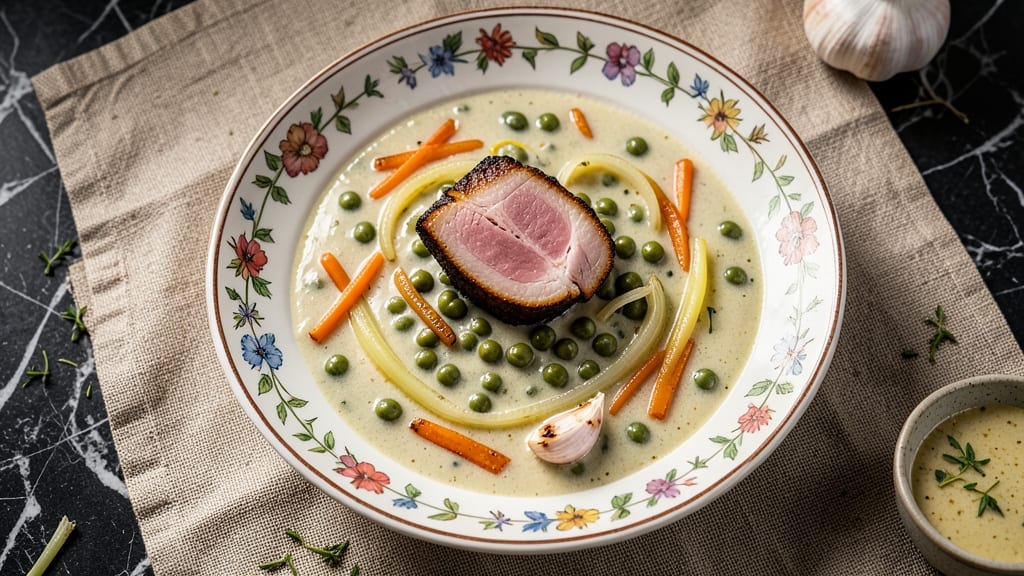
Andersen’s pea soup with ham delivers the kind of hearty, slow-simmered comfort that feels like a hug in a bowl. 💛 The secret lies in crispy ham bites that melt into the creamy pea broth, creating a balance of savory, smoky, and tender flavors that define classic Danish soups. This recipe transforms simple ingredients into a restaurant-worthy dish with minimal effort—just patience and a few key techniques.
The foundation starts with a rich ham broth that infuses the peas with deep, savory notes. While traditional methods rely on stovetop simmering, modern adaptations—like pressure cooking or slow-cooker versions—make this recipe accessible for busy weeknights.
The ham isn’t just a garnish; it’s the star, crisped to perfection before being submerged to release its flavor into the soup.
What you’ll end up with is a velvety pea soup where each spoonful delivers tender peas, tender ham, and a broth so rich it coats your spoon. The crispy edges of the ham add a satisfying contrast, while herbs like thyme and bay leaf tie everything together with aromatic warmth.
This is the kind of soup that tastes even better the next day—ideal for meal prep or cozy gatherings.
Whether you follow the classic stovetop method or adapt it for a slow cooker, the result is the same: a soul-warming bowl of Andersen’s pea soup that’s as comforting as it is delicious. Let’s get cooking!
Ingredients for andersen's pea soup recipe with ham
Simple ingredients that build layers of savory, smoky, and creamy richness in every spoonful.
| Ingredient | Amount | Notes |
|---|---|---|
| Dried Green Peas 🌱 | 1 ½ cups | Uncooked, no need to soak |
| Bone-in Ham Hock 🥓 | 1 lb | Smoked preferred, skin on |
| Yellow Onion 🧅 | 1 whole | Medium size, peeled |
| Carrots 🥕 | 3 medium | Peeled, cut into chunks |
| Celery Stalks 🌿 | 3 whole | Trimmed, cut into pieces |
| Garlic Cloves 🧄 | 4 cloves | Peeled, lightly crushed |
| Fresh Thyme 🌿 | 1 tbsp | Leaves only, chopped |
| Bay Leaves 🍃 | 2 whole | Dried or fresh |
| Chicken Bouillon Cube 🍲 | 1 whole | Low-sodium preferred |
| Heavy Cream 🥛 | ½ cup | Full-fat for richness |
| Salt 🧂 | 1 ½ tsp | Kosher or sea salt |
| Black Peppercorns 🌶️ | ½ tsp | Freshly ground |
| Butter 🧈 | 2 tbsp | Unsalted, for crisping ham |
The ham hock is non-negotiable here—it delivers that deep, smoky flavor that defines Andersen’s pea soup. Look for smoked ham hocks at your local butcher or specialty grocer like Whole Foods or Kroger—they often carry them. If you can’t find smoked, regular ham works, but the flavor won’t be as authentic. The peas should be dried, not canned—Green Giant or Great Northern are reliable brands. For the carrots and celery, baby carrots or pre-cut celery sticks save time, but fresh is always better when you’ve got it.
No ham hock? Substitute with smoked ham steak or bacon, but you’ll miss that deep broth flavor. Fresh thyme is ideal, but dried thyme at one-third the amount works in a pinch. The bouillon cube adds umami—Knorr or Maggi are widely available. For extra richness, swap heavy cream with half-and-half or coconut cream. The butter is for crisping the ham—European-style butter has more fat and makes it extra crispy, but any unsalted butter works. If you’re short on time, skip the bouillon cube and use 1 cup chicken broth instead.
This soup tastes even better the next day as flavors meld. Store leftovers in an airtight container in the fridge for up to 5 days. Freeze portions for up to 3 months—just thaw overnight in the fridge before reheating. For meal prep, double the recipe and freeze half. The ham can be crisped ahead and stored separately, then added back when reheating. The cream will separate when chilled, so stir it in just before serving.
Why You'll Love This Recipe
- One-Pot Magic: I swear by this recipe for lazy Sundays—just toss dried peas, ham hock, and chopped veggies into a pot, cover with water, and let it simmer. No fancy techniques, no stress, just perfect texture when the peas are tender.
- Ham Hock Magic: That smoky, salty ham hock? It’s the star. The broth gets rich and deep, while the meat practically falls off the bone—crispy edges, tender center—like a flavor bomb you didn’t have to work for.
- Weeknight & Holiday: Between us, this soup is my go-to for both tired Tuesday nights and Thanksgiving leftovers. The same simple base works for a quick lunch or a potluck crowd—just adjust the portions.
- Budget Feast: Dried peas and a ham hock stretch this into days of meals. I’ve made it last five days, freezing portions for when I’m too wiped to cook. Plus, it’s cheaper than takeout—way cheaper.
Step-by-step instructions for Andersen's pea soup with ham
Master this classic technique for velvety pea soup with irresistible crispy ham bites.
🔥 Step 1: Crisp the Ham Hock and Sauté Vegetables
Pat the 1 lb bone-in ham hock completely dry with paper towels. This step is crucial—moisture prevents crispy skin. Place it skin-side down in a large Dutch oven over medium-high heat. Add the 2 tbsp butter and let it melt completely, about 2 minutes. The ham should sizzle and begin to brown immediately.
Once the butter foams, carefully flip the ham hock and cook for another 3-4 minutes until the skin turns a beautiful golden brown. Remove the ham and set it aside on a plate. In the same Dutch oven, add the 1 whole yellow onion, 3 medium carrots, and 3 whole celery stalks, all cut into ½-inch chunks. Cook for 5-6 minutes until the vegetables soften slightly and begin to caramelize. You'll see the edges turn translucent—that's your signal to move forward.
👨🍳 Step 2: Build Flavor with Aromatics and Bouillon
Add the 4 cloves garlic cloves (lightly crushed) and 1 tbsp fresh thyme to the Dutch oven. Stir for 30 seconds until fragrant—you should smell that fresh garlic aroma filling your kitchen. Pour in 6 cups cold water and add the 1 whole chicken bouillon cube and 2 whole bay leaves. Bring to a gentle boil, then reduce heat to medium-low until it simmers steadily.
Here's the thing—this simmering step is where the magic happens. The bouillon cube dissolves completely, and the vegetables begin to break down, releasing their natural sweetness into the broth. Keep the soup at a barely simmer for 15 minutes before adding the dried peas. This prevents the peas from becoming mushy later. If the liquid reduces too much, add a splash of water to maintain the level.
🥘 Step 3: Simmer the Peas to Perfect Tenderness
Add the 1.5 cups dried green peas and 1.5 tsp salt to the simmering pot. Stir gently to distribute the peas evenly. Return the heat to medium-low and let it simmer uncovered for 45-50 minutes. You're aiming for peas that are tender but still hold their shape—they should be soft enough to crush between your fingers but not falling apart.
I check for doneness by tasting a pea after 40 minutes. If they're still firm, cover the pot and let them cook another 5-10 minutes. The peas should absorb the rich, savory broth while maintaining their individual integrity. Don't walk away—this is where attention to detail pays off. The soup should smell deeply aromatic with notes of ham, thyme, and caramelized vegetables.
⏰ Step 4: Finish with Cream and Crispy Ham
Return the ham hock to the pot and let it simmer for another 10 minutes. This allows the ham to reabsorb some of the flavorful broth. Using tongs, carefully remove the ham hock and let it cool slightly. Once cool enough to handle, use a sharp knife to cut it into ½-inch cubes, preserving those crispy edges. Return the ham cubes to the pot.
Stir in the 0.5 cup heavy cream and 0.5 tsp black peppercorns (freshly ground). Simmer for 5-7 minutes until the cream is fully incorporated and the soup reaches a luxuriously creamy consistency. Taste and adjust seasoning—you might need a pinch more salt to balance the richness of the cream. Remove and discard the bay leaves before serving.
🍽️ Step 5: Rest and Serve with Crispy Ham Bites
Let the soup rest for 10 minutes before serving. This allows the flavors to meld completely and the cream to fully integrate. The ham cubes should maintain their crispy texture, adding a delightful contrast to the creamy soup. Ladle into bowls and garnish with additional freshly ground black pepper and a sprinkle of chopped fresh thyme for a pop of color and aroma.
Each spoonful should deliver a perfect balance of creamy richness, tender peas, and those irresistible crispy ham bites. Serve with crusty bread to soak up every last drop of this comforting classic. The secret to this soup lies in the slow simmering and crispy ham—don't rush either step, and you'll achieve restaurant-quality results at home.
Pro Tips For Making Andersen'S Pea Soup Recipe With Ham
- SOAK PEAS OVERNIGHT: Dried peas need serious hydration—toss them in cold water for at least 8 hours (or up to 12) before cooking. I learned this the hard way when my soup turned out grainy and undercooked; soaked peas absorb flavor and soften evenly, making the texture creamy without extra starch.
- BROWN THE HAM HOCK: Don’t just toss the ham hock in—sear it skin-side down in a hot pot until deeply golden, about 8-10 minutes. That crust locks in flavor and prevents the broth from tasting bland later. (Yes, even if you’re impatient like me, resist the urge to rush this.)
- CHOP VEGETABLES UNIFORM: Cut onions, carrots, and celery into roughly ½-inch pieces—no smaller, no larger. Consistent sizing means they cook at the same rate, so you’re not left with mushy celery or crunchy carrots. My grandmother swore by this, and she was right: lazy chopping = uneven soup.
- SKIP THE BOILING START: After adding the soaked peas, water, and ham hock, bring the pot to a gentle simmer—not a rolling boil. Boiling too hard scatters peas and makes them tough; a low simmer keeps them intact and lets the ham render slowly. Sounds weird, but it works: the soup stays cohesive and rich.
Common mistakes when making this recipe
Skipping the Crisp
One of the biggest mistakes is skipping the ham crisping step entirely. That golden-brown skin is what delivers the smoky depth and textural contrast that makes this soup special. If you rush this step or don’t dry the ham thoroughly, you’ll miss out on that irresistible crunch and flavor complexity.
I’ve seen people skip it to save time, but trust me—those crispy edges are worth the extra 3-4 minutes of patience. 🔥
Overcrowding the Pot
Adding all the vegetables at once or using a pot that’s too small can lead to steaming instead of browning. When you crowd the Dutch oven, the vegetables release moisture instead of caramelizing, which dulls their flavor. For this recipe, a 5-6 quart pot is ideal.
If you’re using a smaller pot, cook the vegetables in batches—first the onions, then the carrots and celery. This ensures they develop that sweet, caramelized flavor that’s essential to the soup’s depth.
Undercooking the Peas
Peas need time to absorb the broth and become tender, but many people pull them too soon. If your peas are still firm after 45 minutes, don’t just add more heat—they’ll turn mushy. Instead, cover the pot and let them steam for another 5-10 minutes.
The goal is al dente peas—soft enough to crush between your fingers but still holding shape. I always taste-test a pea at 40 minutes to avoid overcooking. 🌱
Adding Cream Too Early
Stirring in the heavy cream before the soup has fully simmered can cause it to separate or curdle. The cream needs the soup to be at a gentle simmer for at least 45 minutes to stabilize its proteins.
If you add it too soon, the high acidity or heat can break it down, ruining the creamy texture. Always add the cream in the last 5-7 minutes of cooking, and stir gently to avoid creating lumps.
Ignoring the Resting Time
Skipping the 10-minute rest before serving might seem like a small detail, but it’s crucial. This step allows the flavors to meld completely and the cream to fully integrate into the broth.
If you serve it immediately, the ham cubes might lose their crispiness, and the soup could taste uneven in texture. I promise, those extra 10 minutes make a world of difference in the final result. ✨
Using Low-Quality Ham
The ham hock is the flavor backbone of this soup, so don’t cut corners. If you use lean ham or pre-cooked ham, you’ll miss the deep, smoky richness that defines Andersen’s pea soup. Look for a bone-in, skin-on ham hock—preferably smoked—from a trusted butcher.
Brands like Smithfield or Hormel often carry good options, but ask your local butcher for recommendations. The better the ham, the more complex and satisfying your soup will be.
Nutrition facts
Frequently asked questions
Can I make this soup without a ham hock?
Yes! For a similar flavor, use ½ lb smoked ham steak or 6 slices thick-cut bacon instead. Cut the ham into large chunks and crisp them in the same way before adding to the pot. For a vegetarian version, swap the ham with smoked tofu or mushrooms and use vegetable bouillon.
How do I adjust the recipe for a slow cooker?
Add all ingredients except the cream to your slow cooker and cook on low for 6-7 hours or high for 3-4 hours. Stir in the cream during the last 15 minutes of cooking. The low-and-slow method enhances the ham's flavor while keeping the peas tender.
Why did my soup turn out too thin?
This usually happens when the peas release too much starch or the broth reduces too much. For a thicker texture, mash ¼ cup of the cooked peas against the pot sides or stir in 1 tbsp cornstarch mixed with 2 tbsp cold water and simmer for 2 minutes. If it's too thin from the start, reduce the water to 4 cups next time.
Can I prepare this soup ahead of time?
Make the soup up to 2 days ahead and store it in an airtight container in the fridge. Reheat gently on the stove, stirring in the cream only at the end. For crispy ham, add it back when reheating. The flavors actually improve overnight as everything melds together.
What's the best way to serve leftover pea soup?
Leftover soup makes fantastic pea soup croquettes or open-faced sandwiches! For croquettes, mix the cooled soup with 1 egg and ½ cup breadcrumbs, shape into patties, and pan-fry until golden. Serve with a dollop of sour cream or extra crispy ham on top.