
Soups & Stews
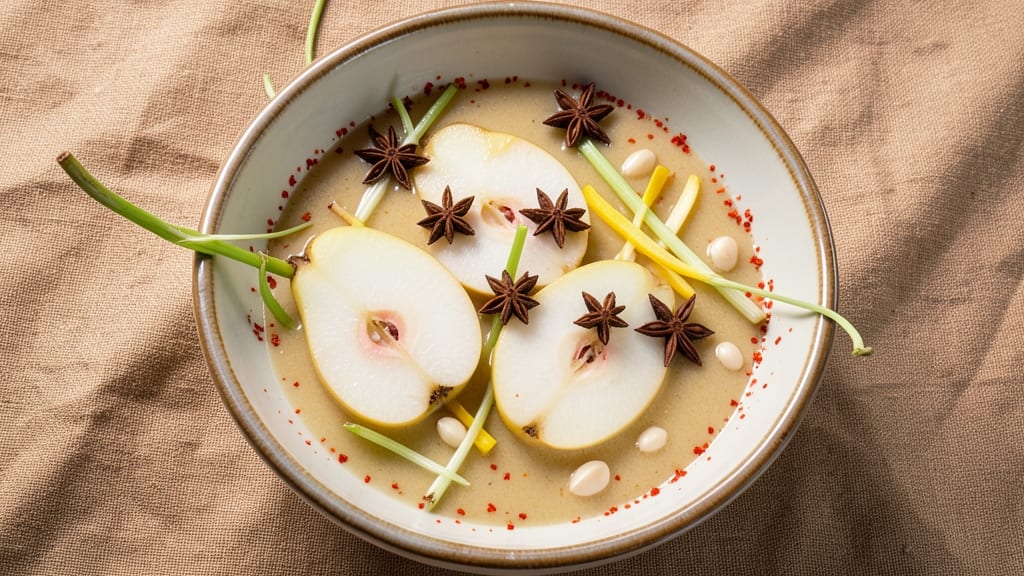
This fragrant Asian pear soup recipe transforms simple ingredients into a velvety masterpiece that balances sweetness, spice, and herbal brightness. The secret lies in simmering ginger, lemongrass, and star anise to create a fragrant broth that cradles tender pears and silky swirls of puréed pear.
I developed this recipe after years of refining the perfect harmony between sweet and savory—where the pears melt into the broth while keeping their subtle floral notes intact.
The broth builds depth through slow simmering, where ginger and lemongrass infuse the liquid with aromatic warmth, while a touch of chili adds subtle heat. The pears soften just enough to release their natural sweetness without turning mushy, creating a luxurious texture that feels both comforting and refined.
This isn't just soup—it's a meditative bowl that starts with fragrant steam and ends with every spoonful dissolving on your tongue.
What makes this recipe special is its adaptability: swap in jasmine rice for a creamy base, add coconut milk for richness, or keep it light with just broth and puréed pears.
The technique is straightforward—simmer, blend, and garnish—but the result is restaurant-quality. Perfect for chilly evenings or as a palate-cleansing starter, this soup delivers elegance with minimal effort.
Serve it steaming hot with a sprinkle of toasted sesame seeds and fresh cilantro, or chill it for a refreshing summer version. The balance of flavors makes it universally appealing, whether you're introducing someone to Asian flavors or simply craving a comforting bowl of warmth.
Let's create this fragrant, silky soup together.
Ingredients for asian pear soup
Simple ingredients elevate to restaurant-quality soup with fragrant ginger and lemongrass.
| Ingredient | Amount | Notes |
|---|---|---|
| Asian Pears 🍐 | 4 whole | Firm but ripe, peeled and cored |
| Fresh Ginger 🧄 | 2 tbsp | Thinly sliced, peeled |
| Lemongrass Stalks 🌿 | 3 whole | Bruised, cut into 2-inch pieces |
| Star Anise Pods 🌟 | 2 whole | Lightly crushed |
| Garlic Cloves 🧄 | 3 cloves | Peeled, lightly crushed |
| Red Chili Flakes 🌶️ | ½ tsp | Adjust for heat preference |
| Jasmine Rice 🍚 | ¼ cup | Optional for creaminess |
| Vegetable Broth 💧 | 4 cups | Low-sodium preferred |
| Coconut Milk 🥥 | ½ cup | Full-fat for richness |
| Fresh Cilantro 🌿 | ¼ cup | Chopped, for garnish |
| Toasted Sesame Seeds 🌱 | 1 tbsp | For garnish |
| Salt 🧂 | ½ tsp | Adjust to taste |
| White Pepper 🌶️ | ¼ tsp | Freshly ground |
| Honey 🍯 | 1 tbsp | For subtle sweetness |
The pears are the heart of this soup—choose Asian pears for their floral sweetness, but Bosc or Anjou work in a pinch. Look for firm but yielding fruit at Whole Foods or your local Asian market; they’ll keep for up to 2 weeks in the fridge. Ginger and lemongrass are non-negotiable for that signature aroma—fresh is essential, not powdered. If you can’t find lemongrass, substitute 1 tsp lemongrass paste (found in Asian grocery freezer sections), but fresh is worth the hunt. Star anise adds depth without overpowering—buy whole pods and crush lightly to release flavor.
No lemongrass? Double the ginger and add 1 tsp lime zest for brightness. Coconut milk can be swapped for more broth or a splash of cream if you’re avoiding dairy. For a lighter version, skip the rice entirely—blend 1 cup of the broth with puréed pear for silky texture. Chili flakes are optional but recommended; adjust to taste—this soup should tease with heat, not overwhelm. The honey balances acidity, but maple syrup works for vegan versions. Garnishes like cilantro and sesame seeds are traditional, but fresh mint or basil add a modern twist.
Store leftovers in airtight containers for 3-4 days—the flavors deepen overnight. Reheat gently on the stove, adding a splash of water if it thickens. For a summer version, chill completely and serve over ice with sparkling water for a refreshing twist. The broth freezes beautifully—portion into ice cube trays for quick future batches. Toast your sesame seeds in a dry pan for 30 seconds until golden; they’ll add crunch and aroma to every bowl.
Why You'll Love This Recipe
- I swear by this trick: just slice the Asian pears in half and drop them whole into simmering broth—they soften perfectly without peeling or dicing. That ginger? One quick grating, and the lemongrass? Bruise the stalks with the flat side of your knife—no mincing required.
- No-Chop Needed: I swear by this trick: just slice the Asian pears in half and drop them whole into simmering broth—they soften perfectly without peeling or dicing. That ginger? One quick grating, and the lemongrass? Bruise the stalks with the flat side of your knife—no mincing required.
- Hidden Depth Bomb: The star anise and lemongrass might sound fancy, but they’re actually the secret weapons here. That first sip? Bright, earthy, and just sweet enough—like a hug in a bowl, but with actual umami from the garlic and ginger’s slow simmer.
- Weeknight to Weekend: Make a big pot on Sunday and it’ll still taste fresh for days. The pears hold their shape, so it’s perfect for lunchboxes (yes, even my picky teen eats it cold) or as a light dinner when guests drop by. Just reheat and serve—no stress.
Step-by-step instructions for fragrant ginger-lemongrass Asian pear soup
This velvety soup balances sweet pears with aromatic ginger and lemongrass for a harmonious broth.
Build the Fragrant Broth Base
In a medium pot, combine the 4 cups vegetable broth, 2 tbsp fresh ginger, 3 whole lemongrass stalks, 2 whole star anise pods, 3 cloves garlic, and 0.5 tsp red chili flakes. Bring to a gentle simmer over medium heat. The broth should smell vibrant—like a tropical garden with a hint of spice. Let it simmer uncovered for 15 minutes to allow the aromatics to infuse fully.
I like to bruise the lemongrass stalks by rolling them on a cutting board before adding—this releases more oils. Strain the broth through a fine-mesh sieve into a clean pot, pressing gently on the solids to extract maximum flavor. Discard the strained solids. This step ensures a smooth, aromatic base without any fibrous bits.
Simmer the Pears and Jasmine Rice
Add the 4 whole Asian pears (peeled, cored, and cut into ½-inch chunks) and the 0.25 cup jasmine rice to the strained broth. Return to medium-low heat and simmer gently for 20-25 minutes, stirring occasionally. The pears should soften until they yield slightly when pressed with a spoon—this indicates they're tender but still hold their shape.
Here's the thing—if the pears break apart too quickly, reduce the heat slightly. You want them to maintain their delicate texture while infusing the broth with their natural sweetness. The rice will absorb some of the liquid, creating a subtle creaminess without needing coconut milk.
Finish with Creamy and Sweet Elements
Stir in the 0.5 cup coconut milk and 1 tbsp honey, then simmer for an additional 5 minutes. The coconut milk should blend seamlessly, adding a velvety richness to the broth. Taste and adjust seasoning with 0.5 tsp salt and 0.25 tsp white pepper—the broth should be balanced between sweet, savory, and aromatic.
If the soup feels too thick, add ¼ cup hot water to reach your desired consistency. The pears should float gently in the broth, and the aroma should now combine sweet pear, citrusy lemongrass, and warm ginger. Remove from heat and let it sit for 5 minutes to allow flavors to meld.
Garnish and Serve
Ladle the soup into bowls and garnish each serving with 1 tbsp toasted sesame seeds and 1 tablespoon chopped fresh cilantro. The sesame seeds add a nutty crunch, while the cilantro brightens each spoonful with freshness. Serve immediately while the broth is still steaming—this ensures the aromatics are at their peak.
For extra presentation, I sometimes drizzle a thin stream of coconut milk over the top just before serving. The contrast between the silky broth and the delicate pear chunks makes every bite feel special. This soup tastes even better the next day as the flavors deepen, so consider making a double batch for leftovers.
Pro Tips For Making Asian Pear Soup
- Slice Pears Evenly: Asian pears stay intact better if you cut them into ½-inch thick rounds—thinner slices turn mushy, thicker ones stay stubbornly whole. Use a sharp knife and work quickly; these pears bruise fast.
- Blanch Ginger First: Toss fresh ginger slices into boiling water for 30 seconds before adding them to the pot—this softens the fibers and keeps the soup from getting gritty. I learned this the hard way after straining out chunks I missed.
- Simmer Star Anise Low: Drop those pods in early, but keep the heat at a bare simmer (180°F/82°C). High heat burns them, turning the broth bitter. If you’re impatient, remove them 10 minutes before serving—just don’t skip this step entirely.
- Toast Lemongrass Before Chopping: Run the stalks over a gas flame (or under a broiler for 2 minutes) until fragrant—this deepens the citrusy aroma without overpowering the pears. Chop while warm; the fibers release oils that make the soup smell like a street cart.
Regional styles of this dish
Thai-Inspired Lemongrass
This version swaps jasmine rice for 1 cup cooked Thai jasmine rice (or ½ cup uncooked) and adds 1 stalk of galangal (rhizome, like ginger) for a citrusy kick. Simmer the galangal with the lemongrass and star anise for 20 minutes to infuse that signature Thai aroma.
Finish with 1 tbsp fish sauce and 1 tsp palm sugar—trust me, the umami depth changes everything. Garnish with thinly sliced Thai basil and crushed peanuts for texture. 🌿
Japanese Miso Pearl
For a Japanese twist, replace the coconut milk with ½ cup white miso paste and add 1 cup small mochi pearls (found in Asian markets). Simmer the miso into the broth for 10 minutes before adding pears and rice.
The miso adds a fermented depth that pairs beautifully with the pears' sweetness. Top with pickled ginger and scallions for brightness. This version feels lighter but equally comforting. ✨
Vietnamese Chay (Vegan)
Skip the honey and coconut milk, then add ½ cup coconut cream (instead of milk) and 1 tbsp agave syrup for sweetness. Boost the broth with 1 tbsp soy sauce and 1 tsp black pepper for umami.
Garnish with toasted coconut flakes and fresh mint. This version keeps the soup rich and satisfying while being entirely plant-based. 🥥
Korean Ginseng
Infuse the broth with 1 tbsp Korean red ginseng (available in Asian markets) alongside the star anise and ginger. The ginseng adds a subtle earthy warmth that complements the pears.
Finish with 1 tsp gochujang (Korean chili paste) and a drizzle of sesame oil before serving. Garnish with thinly sliced scallions and toasted sesame seeds for a sophisticated touch. 💛
Modern Fusion Twist
For a contemporary take, blend 2 cups of the pear broth with ½ cup Greek yogurt for a creamy swirl effect. Add 1 tsp cardamom to the broth for warmth and finish with edible flowers (like pansies) for garnish.
This version feels elegant and unexpected—perfect for dinner parties. The yogurt adds a tangy contrast that balances the sweet pears beautifully. 🌸
Nutrition facts
Frequently asked questions
Can I use regular pears instead of Asian pears in this recipe?
Yes, you can substitute Bosc or Anjou pears—they'll work well, though Asian pears have a slightly floral sweetness that's more traditional. For best results, choose firm but ripe fruit and simmer them for 5-10 minutes less than Asian pears, as they soften more quickly. The texture will be slightly less delicate but still delicious.
How do I make this soup spicier?
For extra heat, add 1 tsp gochugaru (Korean chili flakes) or ½ tsp cayenne pepper to the broth while simmering. You can also stir in 1 tbsp sambal oelek or ½ tsp chili crisp at the end for a smoky, fiery kick. Start with less and adjust to taste—this soup should complement, not overpower, the sweet pears.
Can I make this soup ahead of time?
This soup tastes even better the next day as flavors meld. Store leftovers in an airtight container in the fridge for 3-4 days. Reheat gently on the stove, adding a splash of water if it thickens. For a summer version, chill completely and serve over ice with sparkling water for a refreshing twist.
What if I don't have lemongrass?
No problem! Double the ginger (4 tbsp) and add 1 tsp lime zest or ½ tsp citric acid for brightness. For deeper flavor, use 1 tsp lemongrass paste (found in Asian grocery freezer sections) or ½ tsp lemongrass extract. The soup will still be aromatic, though the citrusy notes will be slightly different.
How can I make this soup vegan?
Skip the honey and coconut milk, then use ½ cup coconut cream and 1 tbsp agave syrup for sweetness. Boost the broth with 1 tbsp soy sauce and 1 tsp black pepper for umami. Garnish with toasted coconut flakes and fresh mint instead of sesame seeds. The result is rich, satisfying, and entirely plant-based!