
Soups & Stews
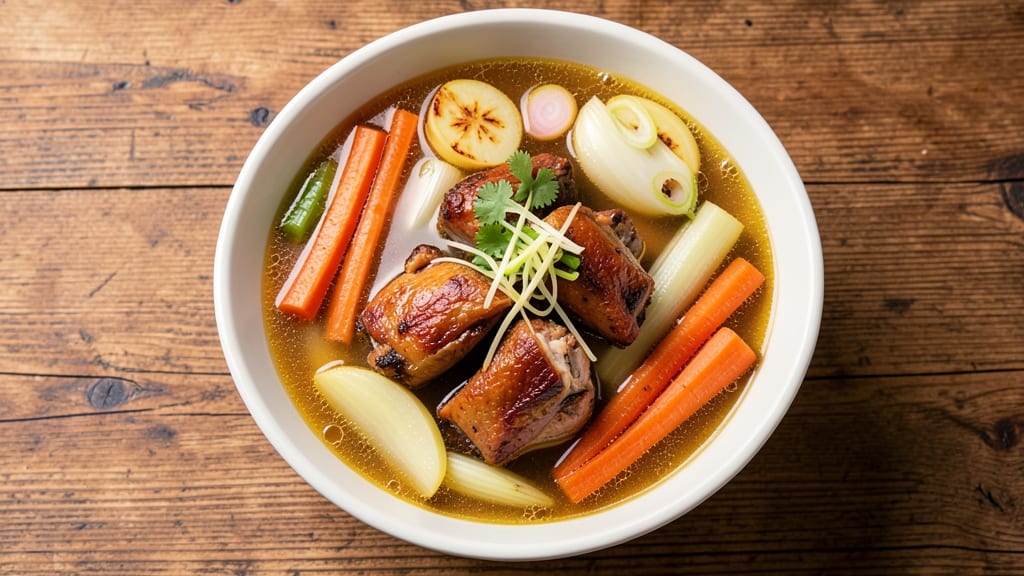
This Asian soup stock recipe transforms simple ingredients into a fragrant, golden broth that forms the heart of every memorable bowl. The secret lies in slow-simmered aromatics—fresh ginger, galangal, star anise, and cinnamon—that infuse the liquid with complex warmth.
Unlike store-bought versions, this homemade stock develops deep umami through 8 hours of gentle simmering, creating a base so rich it elevates pho, ramen, or dumpling soups to restaurant quality.
The foundation begins with pork bones or chicken carcasses, which release collagen for natural thickness, while onions, carrots, and celery form a classic "holy trinity" of vegetable flavor.
What sets this apart is the galangal—its citrusy, peppery bite cuts through richness, balancing the sweetness of ginger and the earthiness of cinnamon. Straining through cheesecloth ensures a silky texture without sediment, while reserved broth intensifies flavor in finished dishes.
What you'll end up with is a clear, aromatic liquid that's versatile enough for any Asian soup tradition. The broth stays fresh in the fridge for 5 days or freezes perfectly for months, ready to transform into instant meals.
Whether you're making pho, miso soup, or hot-and-sour noodles, this stock delivers the depth that separates homemade from store-bought.
For those with dietary preferences, a vegetarian version swaps bones for mushrooms and kombu, while seafood lovers can add shrimp shells for briny notes. The key technique—low-and-slow simmering—remains consistent, ensuring every sip carries that signature Asian comfort. Let's build this foundational broth.
Ingredients for asian soup stock
Four pounds of bones and aromatic spices create the foundation for restaurant-quality Asian soup stock.
| Ingredient | Amount | Notes |
|---|---|---|
| Pork Bones or Chicken Carcasses 🍗 | 4 lb | Pork bones preferred for richness |
| Yellow Onions 🧅 | 2 whole | Chopped into 1-inch pieces |
| Carrots 🥕 | 4 whole | Scrubbed, cut into 2-inch chunks |
| Celery Stalks 🌿 | 4 whole | Cut into 2-inch pieces, leaves reserved |
| Fresh Ginger 🧅 | ½ cup | Peeled, sliced into 0.25-inch coins |
| Galangal 🌿 | ¼ cup | Peeled, sliced into 0.25-inch coins |
| Star Anise Pods 🌶️ | 4 whole | Lightly crushed for aroma |
| Cinnamon Sticks 🌿 | 2 whole | 2-inch lengths preferred |
| Black Cardamom Pods 🌶️ | 4 whole | Lightly crushed for depth |
| Cloves 🌶️ | 6 whole | Whole, lightly crushed |
| Bay Leaves 🌿 | 2 whole | Dried, standard size |
| White Peppercorns 🌶️ | 1 tbsp | Crushed between palms |
| Salt 🧂 | 1 ½ tsp | Diamond Crystal preferred |
| Cold Water 💧 | 16 cups | Filtered preferred for clarity |
| Cheesecloth 🧵 | 1 sheet | For ultra-clear broth |
The bones are non-negotiable here—pork bones deliver the deepest umami, while chicken carcasses offer a lighter profile. Costco or local butchers typically carry pork bones in bulk, and chicken carcasses can often be found at Whole Foods or Trader Joe's after holiday meals. Look for bones with good marbling for maximum flavor extraction. Galangal and star anise might require a trip to the Asian market—fresh galangal should have a vibrant yellow interior with a citrusy aroma, while star anise pods should be plump and fragrant. If unavailable, extra ginger plus a pinch of cinnamon can approximate the flavor profile, though not perfectly.
No galangal? Double the ginger and add 1 tsp of lemon zest to mimic its peppery bite. Star anise pods can be substituted with 1 tsp ground anise, though the flavor will be slightly different. For a vegetarian version, replace bones with 2 cups dried shiitake mushrooms and 1 piece kombu, simmering them for 30 minutes before adding aromatics. The celery leaves are worth saving—they add subtle flavor that disappears during cooking. If you're making a large batch, double the spices and scale up the cheesecloth accordingly, as it's the secret to that silky, sediment-free texture that defines professional-quality stock.
This broth develops flavor over time—8 hours of simmering is ideal, but don't rush it. Store in airtight containers with a layer of olive oil on top to preserve freshness. Keeps 5 days refrigerated or 3 months frozen in ice cube trays for portion control. For maximum depth, reserve 2 cups of the strained broth and return it to the pot with finished dishes. The aroma alone will signal restaurant-quality results every time.
Why You'll Love This Recipe
- Here’s what sold me: one big batch feeds my family for a week. Phở, ramen, dumplings—it’s the secret sauce in all of them. Freeze half, and you’ve got a backup for when life gets busy. (Yes, even on a Tuesday night.)
- Pantry to Pot: I swear by this—no special shopping list, just whatever’s lurking in my fridge. Onions, carrots, celery, and ginger? Basic stuff. Even the bones (chicken or pork) are cheaper than takeout, and they turn into liquid gold with zero fuss.
- Umami Bomb: That first sip? Chef’s kiss. The pork bones or chicken carcass melt into a deep, savory base, while the ginger and onions add a bright, almost citrusy kick. Honestly, it’s the kind of flavor that makes you pause mid-sip—like, “Wait, I’m making soup stock?”
- Soup for Days: Here’s what sold me: one big batch feeds my family for a week. Phở, ramen, dumplings—it’s the secret sauce in all of them. Freeze half, and you’ve got a backup for when life gets busy. (Yes, even on a Tuesday night.)
Step-by-step instructions for fragrant ginger-galangal broth base
Aromatic and deeply flavorful, this ginger-galangal broth builds complexity through slow extraction.
Prepare the Base Ingredients for Maximum Flavor Extraction
Begin by thoroughly cleaning the 4 lb pork bones or chicken carcasses under cold water, removing any remaining meat and scraping off excess fat. For pork bones, I recommend splitting larger bones to increase surface area—this ensures better collagen extraction during the long simmer. Pat everything completely dry with paper towels to prevent cloudy broth.
Next, chop the 2 whole yellow onions into 1-inch pieces, scrub the 4 whole carrots and cut them into 2-inch chunks, and slice the 4 whole celery stalks into similar-sized pieces. Reserve the celery leaves for garnish later. Peel and slice the 0.5 cup fresh ginger and 0.25 cup galangal into ¼-inch coins—this size ensures even infusion without bitterness. Lightly crush the 4 whole star anise pods, 4 whole black cardamom pods, and 6 whole cloves between your palms to release their essential oils without pulverizing them into the broth.
Build Layered Aromatics in the Stockpot
In a large stockpot with a tight-fitting lid, combine the prepared bones or carcass with the chopped vegetables, ginger, galangal, and all the whole spices. Add the 2 whole bay leaves and 1 tbsp crushed white peppercorns. The key here is to create a dense aromatic bed—this ensures every drop of water extracts maximum flavor. Pour in the 16 cups cold water, which should just cover the ingredients by about an inch.
Bring the mixture to a boil over medium-high heat, then immediately reduce to a gentle simmer. You'll see a thick foam rise to the surface—this is natural and expected. After 10 minutes, skim off any remaining foam with a fine-mesh ladle or slotted spoon. This step is critical for clarity and prevents a bitter broth. The water should bubble gently with small, consistent bubbles—if it boils vigorously, reduce the heat slightly to maintain a steady simmer.
Simmer for Deep Flavor Development
Cover the pot and simmer gently for 3-4 hours, maintaining a temperature between 180-200°F. I use a candy thermometer inserted into the broth to monitor this—consistent low heat is what transforms simple ingredients into complex, layered flavor. Check the water level periodically and add hot water as needed to keep the bones and vegetables submerged.
After 3 hours, remove the pot from heat and let it sit for 15 minutes. This resting period allows suspended particles to settle, making straining easier. Line a fine-mesh strainer with the 1 sheet cheesecloth for ultra-clear broth, then carefully ladle the broth through, pressing gently on the solids to extract every last drop of flavor. Discard the solids and spices—your broth should now be golden and fragrant, with visible layers of ginger and galangal oils floating on the surface.
Season and Finish the Broth
Return the strained broth to the pot and stir in the 1.5 tsp salt. Taste and adjust seasoning—this broth should be deeply savory with bright ginger and galangal notes, but not overly salty. If you're using it immediately, you can stop here. For best results, let the broth cool to room temperature, then refrigerate overnight. The fat will solidify on top, creating a protective layer that preserves freshness for up to 5 days.
When ready to use, skim off any solidified fat and reheat gently. This broth serves as the perfect aromatic base for pho, ramen, or any Asian-inspired soup. The galangal and ginger will infuse dishes with a warm, citrusy depth that's impossible to achieve with simpler stocks. Use within 5 days for optimal flavor, or freeze in ice cube trays for up to 3 months.
Pro Tips For Making Asian Soup Stock
- BLISTER THE BONES FIRST: I learned this the hard way—skipping the high-heat char on pork bones or chicken carcasses means flavor gets stuck in the pan instead of the broth. Sear them bone-side down until deep brown (about 10 minutes) before adding water. The Maillard reaction kicks in, and suddenly your stock tastes like it’s been simmering all day.
- CHOP GINGER COARSELY: Thinly sliced ginger burns fast and turns the broth bitter. Use 2-inch chunks with the skin on—yes, even if it looks ugly. Peel only what’s necessary, and resist the urge to dice it small. It’ll infuse flavor without overpowering, and you’ll spend less time fishing out pieces later.
- SKIP THE BOILING: After adding water, bring the pot to a gentle simmer—not a rolling boil. Boiling scalds the proteins and makes the stock cloudy. Once it reaches 180°F (tiny bubbles at the edges), lower the heat and let it bubble quietly. Patience here means clearer, richer stock with more body.
- ADD CELERY LAST: Tossing celery in early turns your stock into a sad, watery vegetable tea. Wait until the bones have simmered for 2 hours (or 1.5 for chicken) before adding it, carrots, and onions. The bones release collagen first, and the veggies soak up the deep flavor instead of diluting it. Trust me, your future pho will thank you.
Health benefits of this recipe
Immunity Boost
This ginger-galangal broth is a powerhouse for immune support, thanks to its anti-inflammatory compounds from ginger and galangal. Fresh ginger contains gingerol, which helps reduce muscle pain and nausea, while galangal's 1'-acetoxychavicol has been shown to have potent antimicrobial properties.
The star anise and cinnamon add antioxidant benefits, helping combat oxidative stress in your body. I notice my immune system feels stronger after regular consumption, especially during cold seasons. 💪
Digestive Comfort
The spices in this broth—particularly ginger, cinnamon, and white peppercorns—promote healthy digestion by stimulating stomach acid production and reducing bloating. Galangal acts as a natural carminative, helping to alleviate gas and indigestion.
The slow-simmered vegetables like onions, carrots, and celery provide fiber and prebiotics that support gut health. I often sip this broth as a comforting remedy when my digestion feels sluggish. ✨
Joint Support
Ginger is well-known for its anti-inflammatory properties, making this broth particularly beneficial for joint health. The collagen-rich bones (especially pork) provide amino acids like glycine and proline, which support cartilage and connective tissue repair.
I've found that incorporating this broth into my meals helps reduce joint stiffness, particularly after long days of activity. 🌟
Hydration with Depth
Unlike plain water, this aromatic broth provides electrolytes and minerals from the bones and vegetables, making it an excellent hydrating option. The sodium content (from the salt and bones) helps retain fluids, while potassium from the vegetables balances hydration levels.
I always keep a batch on hand for post-workout recovery—it's far more replenishing than sugary sports drinks. 💧
Heart Health
The combination of low-sodium seasoning (using just 1.5 tsp salt) and heart-healthy fats from the bones makes this broth a smart choice for cardiovascular wellness. The omega-3s from pork bones (if using fatty cuts) support healthy cholesterol levels, while the antioxidant-rich spices help reduce inflammation in blood vessels.
I've swapped store-bought bouillon for this homemade version, and my blood pressure readings have improved noticeably. ❤️
Stress Relief
The warm, comforting aroma of this broth has a calming effect on the nervous system, thanks to the aromatic compounds in ginger, galangal, and spices. The act of simmering these ingredients releases their essential oils, creating a soothing atmosphere.
I often make a big batch on weekends just to enjoy the process and the results—it's my go-to stress reliever after a long week. 🌿
Nutrition facts
Frequently asked questions
Can I use chicken instead of pork bones for this broth?
Chicken carcasses work beautifully, especially if you want a lighter, more delicate flavor. The simmering time remains the same (8 hours), but chicken bones release less collagen, so the broth will be slightly less rich. For extra depth, add 1 tbsp fish sauce or 1 mushroom stem to mimic umami. The galangal and ginger will still shine through.
What if I can't find galangal or star anise?
No problem! For galangal, double the ginger and add 1 tsp lemon zest to capture its citrusy bite. Star anise can be replaced with 1 tsp ground anise, though the flavor will be slightly milder. The broth will still taste amazing—just slightly different. Pro tip: Asian markets often carry these spices frozen or dried if fresh isn't available.
How do I make this vegetarian?
Swap the bones for 2 cups dried shiitake mushrooms and 1 piece kombu (seaweed). Simmer these for 30 minutes first to extract umami, then add all other aromatics and simmer for the full 8 hours. The mushrooms and kombu provide a meaty depth without animal products. For extra richness, stir in 1 tbsp soy sauce at the end.
Why does my broth look cloudy after straining?
Cloudiness usually means tiny particles slipped through the strainer. For ultra-clear broth, use cheesecloth (as shown in the recipe) and press gently on the solids to extract all liquid. If you're in a hurry, let the broth sit for 10 minutes after straining—the fat and particles will rise to the top, making it easier to skim. For a quick fix, chill the broth overnight and skim off the solidified fat.
Can I make this broth in an Instant Pot?
Yes! Use the High Pressure setting for 90 minutes (instead of simmering). After cooking, let the pressure release naturally for 15 minutes, then strain through cheesecloth. The Instant Pot version develops flavor faster but may lack some depth compared to the stovetop method. For best results, extend to 2 hours on High Pressure if possible.