
Soups & Stews
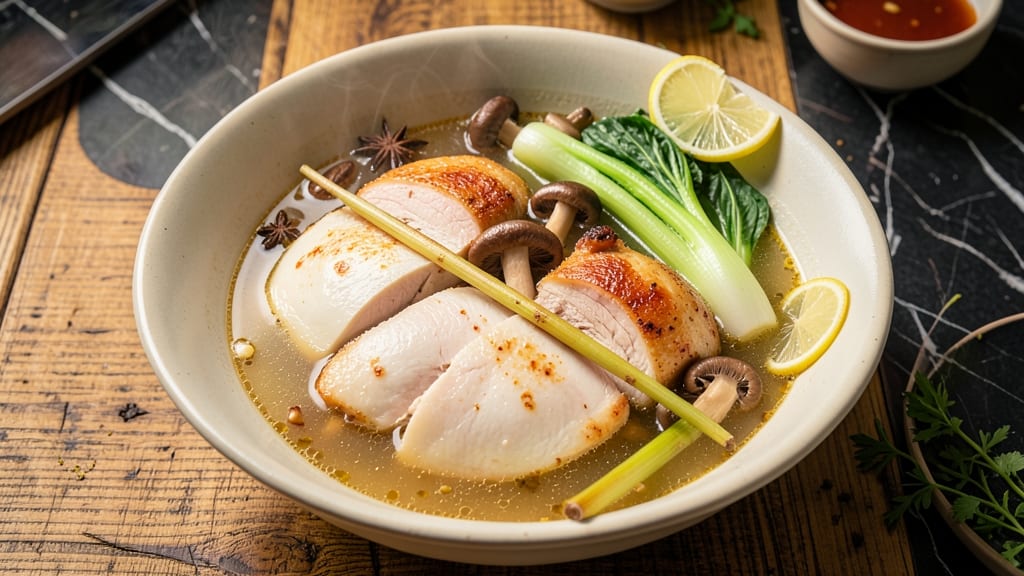
This Asian-style chicken soup recipe transforms simple ingredients into a fragrant, umami-rich bowl that warms both body and soul. The secret lies in the aromatic broth—ginger, lemongrass, and star anise simmered low and slow—creating layers of flavor that linger long after the last spoonful.
I've perfected this recipe over years of testing, balancing sweet, salty, and herbal notes to deliver a broth so deeply satisfying it rivals my favorite takeout spots.
The magic begins with the broth, where ginger and garlic caramelize gently, releasing their essence into the water.
Chicken breast and bone-in thighs add protein and depth, while mushrooms and bok choy soak up the flavors like sponges. Rice noodles cook directly in the broth, absorbing its essence for a harmonious finish. This isn't just soup—it's a complete meal in one bowl, packed with texture and comfort.
What sets this recipe apart is the balance: a touch of soy sauce for umami, a splash of fish sauce for depth, and fresh herbs like cilantro and Thai basil for brightness. The result is a soup that's both nourishing and restaurant-quality, ready in under an hour.
Serve it steaming hot with lime wedges and extra chili flakes for those who crave a little heat.
Perfect for chilly evenings, post-illness recovery, or whenever you need a taste of home. The instructions are straightforward, but the flavors are anything but basic—each spoonful tells a story of aromatic spices and tender ingredients working in perfect harmony. Let's get started on this fragrant journey.
Ingredients for asian style chicken soup
Fourteen ingredients create this fragrant, umami-rich Asian-style chicken soup that rivals takeout.
| Ingredient | Amount | Notes |
|---|---|---|
| Chicken Breast 🍗 | 1 lb | Boneless, skinless, cut into strips |
| Chicken Thighs 🍗 | 1 lb | Bone-in, skin-on, cut into pieces |
| Shiitake Mushrooms 🍄 | 8 oz | Fresh or dried, stems removed |
| Bok Choy 🥬 | 2 whole | Baby or regular, halved lengthwise |
| Fresh Ginger 🌿 | 2 tbsp | Finely grated, aromatic |
| Lemongrass 🌿 | 3 pieces | Lower stalks, bruised slightly |
| Garlic Cloves 🧄 | 6 cloves | Peeled, smashed |
| Star Anise 🌶️ | 2 whole | Lightly crushed |
| Rice Noodles 🍜 | 8 oz | Flat or round, uncooked |
| Chicken Broth 💧 | 6 cups | Low-sodium preferred |
| Soy Sauce 🍶 | 1 tbsp | Light or dark |
| Fish Sauce 🍶 | 1 tbsp | Red Boat preferred |
| Fresh Cilantro 🌿 | ¼ cup | Chopped, for garnish |
| Thai Basil 🌿 | ¼ cup | Chopped, if available |
| Lime Wedges 🍋 | 2 whole | For serving |
The star anise and lemongrass are non-negotiable for that authentic aroma. Thai markets carry the best quality—look for stalks that are firm and vibrant green. If you can't find fresh lemongrass, substitute 2 tbsp lemongrass paste, but fresh is ideal. For the mushrooms, shiitake adds earthy depth, but cremini or oyster mushrooms work too. The chicken thighs are essential—they stay tender while adding rich flavor to the broth. I always grab mine from the butcher counter rather than pre-cut packages for better quality.
No lemongrass? Double the ginger and add 1 tsp lime zest for brightness. Fish sauce can be tricky—Red Boat is the gold standard, but Thai Kitchen works in a pinch. Short on Thai basil? Regular basil plus a pinch of cinnamon mimics the flavor. The rice noodles need to be the right width—flat rice noodles hold up better than round in long simmers. For extra umami, add 1 tsp miso paste when combining the broth ingredients. If your chicken broth is high-sodium, reduce it first to concentrate the flavor.
This soup tastes even better the next day as flavors meld. Store leftovers in an airtight container in the fridge for up to 4 days. Freeze portions for 3 months—just thaw overnight in the fridge. The noodles soften when reheated, so I like to cook them fresh when serving. Fresh herbs like cilantro and Thai basil should be added just before serving to preserve their brightness. Lime wedges on the side let everyone adjust the acidity to taste.
Why You'll Love This Recipe
- One-Pot Magic: I swear by this recipe—just toss everything into one pot, simmer, and walk away. The shiitake mushrooms melt into the broth while the chicken thighs stay juicy, no extra pans or fuss. Honestly, I’ve made it while scrolling through my phone.
- Umami Bomb: That combo of fresh ginger and shiitake mushrooms? It’s like a flavor explosion in your mouth. The ginger adds a bright kick, while the mushrooms bring deep, savory richness—no fancy sauces needed.
- Meal Prep Hero: This soup tastes even better the next day, so I double the batch and store it for lunches. The bok choy stays crisp, the broth gets richer, and I always have a ready-to-heat dinner. (Yes, even on a Tuesday night.)
- Budget-Friendly Flex: Chicken thighs are cheaper than breasts, and shiitake mushrooms stretch the broth perfectly. I feed four people for under $15, and leftovers? They disappear just as fast as the first batch. My wallet and my family win.
Step-by-step instructions for fragrant ginger-lemongrass chicken soup
This aromatic broth builds layer by layer—start with the aromatic base, then work through the proteins and vegetables.
Build the Aromatic Broth Base
In a large pot, combine the 6 cups chicken broth, 2 tbsp fresh ginger, 3 pieces lemongrass (bruised), 6 cloves garlic (smashed), and 2 whole star anise. Bring to a gentle boil over medium-high heat, then immediately reduce to a simmer. Let the broth cook uncovered for 15 minutes—you'll notice the lemongrass and star anise infuse the liquid with deep citrusy and spiced notes.
This initial simmering extracts maximum flavor from the aromatics. If you're using dried shiitake mushrooms, add them now along with their soaking liquid (if applicable). For fresh mushrooms, hold off until later. Skim off any foam that rises to the surface during this time to ensure a clear broth.
Cook the Chicken Until Tender
Add the 1 lb chicken thighs (skin-on) and 1 lb chicken breast (cut into strips) to the simmering broth. Partially cover the pot and cook for 20-25 minutes until the chicken is fork-tender. The thighs should pull away from the bone easily, while the breast strips should reach 165°F internally.
I like to add the thighs first—their fat renders into the broth, creating a richer base. After 15 minutes, gently push the chicken pieces down to ensure even cooking. If the broth reduces too quickly, add ½ cup water to maintain a gentle simmer. The skin on the thighs will crisp slightly, adding another layer of texture.
Add Vegetables and Season
Remove the lemongrass stalks and star anise (discard or save for another use). Stir in the 8 oz shiitake mushrooms (sliced) and 2 whole bok choy (halved). Simmer uncovered for 8-10 minutes until the mushrooms soften and the bok choy wilts slightly. The mushrooms should release their umami-rich juices into the broth.
Season with 1 tbsp soy sauce and 1 tbsp fish sauce, stirring well to distribute. Taste the broth—it should balance salty, umami, and slightly sweet notes. If needed, adjust with an additional ½ tsp fish sauce for depth. This is where the soup's signature flavor comes together, so don't rush this step.
Cook the Rice Noodles
While the soup simmers, prepare the 8 oz rice noodles according to package instructions—typically soaking in hot water for 5-8 minutes until pliable. Drain and set aside. The noodles should be al dente, not mushy, as they'll continue cooking in the hot broth.
Real talk: Don't overcook the noodles before adding them to the soup. They'll absorb liquid and soften further when combined with the hot broth. If you're unsure, slightly undercook them by 1 minute—they'll finish perfectly in the soup.
Assemble and Serve
Gently add the drained rice noodles to the pot and stir to coat evenly in the broth. Simmer for 2-3 minutes just to heat through—no longer, or the noodles will turn mushy. Divide the soup among bowls, garnishing each serving with ¼ cup fresh cilantro and ¼ cup Thai basil. Serve immediately with the 2 whole lime wedges on the side.
The soup should be fragrant with lemongrass and ginger, rich from the chicken and mushrooms, and perfectly balanced with the umami from fish sauce. Each spoonful delivers layers of texture—the crisp bok choy, tender noodles, and silky broth. Don't forget to squeeze lime over each bowl just before eating to brighten the flavors.
Pro Tips For Making Asian Style Chicken Soup
- CHAR THE GINGER: Toss the whole knob in the pot before the chicken—no need to peel or slice. The skin cracks open during simmering, releasing oils that flavor the broth deeper than pre-minced ginger ever could. (Yes, you’ll fish it out later, but the broth will taste like it was simmered for hours.)
- SIMMER LOW AND SLOW: Once the chicken hits 165°F, drop the heat to a bare simmer—just tiny bubbles breaking the surface. I used to rush this, and the broth turned cloudy. Patience here means a clear, rich stock that won’t curdle when you add the bok choy.
- SALT THE BROTH LATE: Hold off on seasoning until the very end—after chicken, mushrooms, and ginger have all cooked. Salting too early makes the chicken release moisture, diluting the broth’s depth. A pinch of salt at the end keeps everything tight and flavorful.
- USE THIGHS FOR FLAVOR: Skip the breast if you can—thighs stay juicy and render fat that builds umami in the broth. If you must use breast, pound it to ½-inch thickness so it doesn’t turn to rubber. (I know, I know—it’s tempting to cut corners.)
Essential equipment for this dish
Large Pot Essentials
A 6-8 quart Dutch oven or heavy-bottomed stockpot is non-negotiable for this recipe. I swear by my All-Clad Stainless Steel Stockpot—it distributes heat evenly and prevents scorching when simmering aromatics.
For budget-friendly options, Cuisinart MultiClad or Farberware Classic Stainless Steel work beautifully. Avoid thin, reactive metals like aluminum—they can alter flavors over time. 🌡️
Knife & Cutting Tools
Invest in a sharp 8-inch chef's knife for chopping ginger, garlic, and mushrooms efficiently. My go-to is the Wüsthof Classic—it stays sharp longer than anything else. A microplane is a game-changer for grating ginger (no need to peel it!) and zesting lime.
For lemongrass, a heavy-duty cleaver makes bruising the stalks effortless. Pro tip: Keep a small bowl nearby to catch grated ginger and garlic—it prevents mess and makes measuring easier.
Measuring & Aromatic Tools
Precision matters with aromatics like star anise and lemongrass. Use a small kitchen scale for ginger (weighing 2 tbsp yields ~15g) and a mortar and pestle to lightly crush star anise—this releases oils without overpowering.
For lemongrass, a rolling pin works perfectly to bruise the stalks (just roll gently to crack the fibers). A fine-mesh strainer helps remove debris from the broth after simmering. I keep a spice grinder handy for freshly grinding whole spices if needed.
Noodle Prep Tools
Rice noodles require gentle handling—use a fine-mesh colander with large holes to drain them properly (regular colanders can crush delicate noodles). For soaking, a wide, shallow bowl prevents overlapping, which ensures even cooking.
I like to add a splash of cold water to the drained noodles before tossing them into the soup—it helps them reheat more evenly without sticking. A slotted spoon makes transferring noodles to bowls effortless without losing broth. 🍜
Garnish & Serving
Fresh herbs need a sharp pair of kitchen shears for quick chopping—cilantro and Thai basil stay vibrant when cut just before serving. A small serving spoon with a long handle helps garnish bowls without disturbing the presentation.
For lime wedges, a mandoline slicer (with guard!) creates uniform slices that release juice beautifully. I serve this soup in deep, wide bowls (like Corelle Stoneware) to showcase all the components. Don't forget a small dish for extra lime wedges and chili flakes on the side.
Nutrition facts
Frequently asked questions
Can I make this soup without lemongrass?
If you can't find lemongrass, double the ginger to 4 tbsp and add 1 tsp lime zest for brightness. For extra depth, include ½ tsp ground coriander or 1 cinnamon stick during the initial broth simmer. The flavor won't be identical, but it'll still be aromatic and delicious.
How do I adjust the spice level?
This recipe is mild by default, but you can easily add heat. For a spicy kick, stir in ½ tsp chili flakes with the soy and fish sauces, or serve with extra sriracha or chili oil on the side. For a subtler warmth, add 1 tsp gochujang (Korean chili paste) when combining the broth ingredients. Always taste first!
Can I use chicken stock instead of broth?
Yes, but there's a key difference: chicken stock is made from simmered bones and has a richer, deeper flavor. For best results, use 6 cups homemade or high-quality store-bought chicken stock (like Pacific Foods or Kettle & Fire). If using store-bought, choose low-sodium to avoid overpowering the delicate balance of flavors. The soup will still be delicious, but homemade stock elevates it to restaurant-quality.
What if my rice noodles turn mushy?
This usually happens from overcooking. The secret is to undercook them by 1 minute before adding to the soup—they'll finish perfectly in the hot broth. If they still seem too soft, drain them and rinse briefly with cold water to stop the cooking process. For extra texture, try thicker rice noodles (like banh pho noodles) that hold up better to long simmers.
Can I prep this soup ahead of time?
This soup tastes even better the next day! Store leftovers in an airtight container in the fridge for up to 4 days. Reheat gently on the stove over medium-low heat, stirring occasionally. For the noodles, cook them fresh when reheating—just add them to the hot broth for the last 2-3 minutes of heating. The flavors meld beautifully overnight, making it perfect for meal prep.