
Soups & Stews
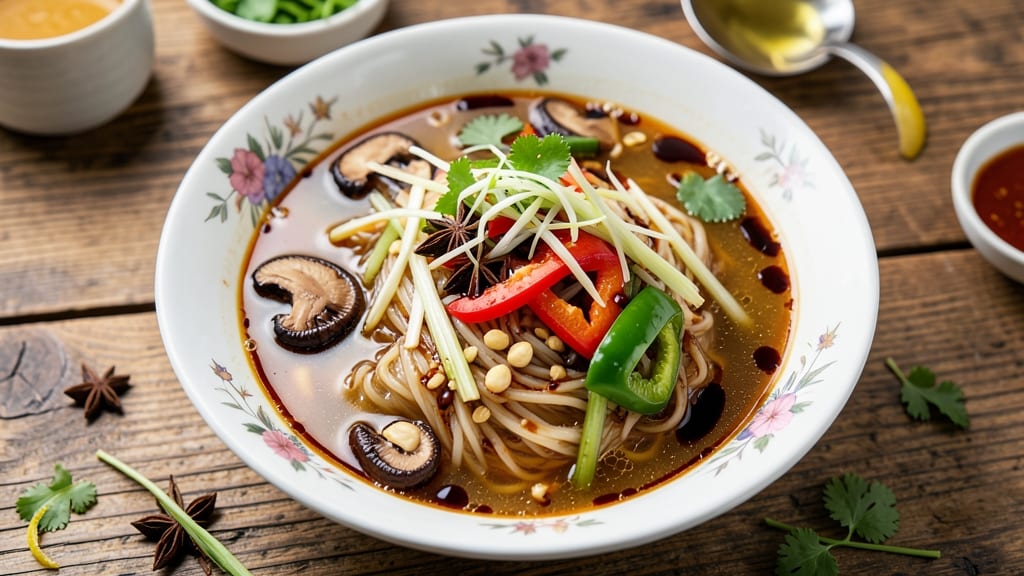
This Asian vegetable noodle soup recipe delivers the aromatic, comforting flavors of a bustling street-side pho stall—without the meat. The secret lies in a fragrant ginger-lemongrass broth infused with star anise and fish sauce (or vegetarian soy sauce), creating that signature umami depth that makes every spoonful irresistible.
I developed this version after years of testing, ensuring the broth remains clear and vibrant while balancing sweet, sour, and spicy notes perfectly.
The beauty of this recipe is its adaptability—whether you prefer a pho-inspired broth with thin rice noodles or a lighter Japanese-style miso base with udon. The vegetables (bell peppers, mushrooms, bok choy) are stir-fried just until tender-crisp to maintain their texture, while the noodles absorb the rich, savory broth.
What you'll end up with is a bowl that's both nourishing and deeply satisfying, with layers of flavor in every sip.
What sets this recipe apart is the attention to authenticity without sacrificing simplicity. The broth simmers for 30 minutes to develop its complex aroma, while the vegetables are prepared in stages to ensure each bite is packed with freshness.
Garnishes like fresh basil, lime wedges, and chili oil add brightness and heat, letting you customize the dish to your taste.
Perfect for weeknight dinners or meal prep, this soup scales easily and tastes even better the next day. Serve with pickled vegetables or a side salad for a complete meal. Let's get cooking!
Ingredients for asian vegetable noodle soup
Gather these fragrant ingredients for a bowl of aromatic, comforting vegetable noodle soup.
| Ingredient | Amount | Notes |
|---|---|---|
| Vegetarian Rice Noodles 🍜 | 8 oz | Thin or medium width preferred |
| Vegetable Broth 💧 | 6 cups | Low-sodium preferred, or homemade |
| Fresh Ginger 🧄 | 2 tbsp | Finely grated, aromatic variety |
| Lemongrass Stalks 🌿 | 2 whole | Bruised slightly for flavor |
| Star Anise Pods 🌶️ | 2 whole | Whole pods for easy removal |
| Vegetarian Soy Sauce 🍶 | 1 tbsp | Or coconut aminos for gluten-free |
| Garlic Cloves 🧄 | 4 cloves | Minced for aromatic depth |
| Bell Peppers 🌶️ | 1 whole | Any color, sliced thin |
| Shiitake Mushrooms 🍄 | 6 whole | Stems removed, sliced |
| Bok Choy 🥬 | 2 whole | Baby or regular, quartered |
| Fresh Basil Leaves 🌿 | ¼ cup | Chopped for garnish |
| Lime Wedges 🍋 | 2 whole | For serving |
| Chili Oil 🌶️ | 1 tbsp | For garnish, optional |
| Sesame Oil 🫒 | 1 tsp | For finishing |
| Salt 🧂 | 1 tsp | Adjust to taste |
| Black Pepper 🌶️ | ½ tsp | Freshly ground |
The broth is where the magic happens. Fresh ginger and lemongrass are non-negotiable for that signature aroma—look for bright green stems and firm ginger roots at Whole Foods or Asian markets. Star anise adds depth, but if you can't find it, a pinch of cinnamon works in a pinch. For the noodles, rice noodles are traditional, but udon or soba noodles add variety. The mushrooms? Shiitake gives the most umami, but cremini or oyster mushrooms work too. Just make sure they're fresh—no slimy stems.
No lemongrass? Substitute 1 tbsp lime zest plus 1 tsp lime juice—it won't be identical, but you'll still get that citrusy brightness. Out of star anise? Skip it or use 1/2 tsp ground cinnamon. Vegetarian soy sauce hard to find? Coconut aminos are a great gluten-free swap, though the flavor will be slightly milder. For the vegetables, any bell pepper color works, but red has the sweetest flavor. Bok choy can be subbed with regular cabbage or spinach if needed. The broth should be simmering gently—never boiling, or it'll turn cloudy.
This soup tastes even better the next day, so make extra if you can. Store leftovers in the fridge for 4-5 days, or freeze for 3 months in airtight containers. The noodles soften when reheated, so add a splash of water or broth when warming. For meal prep, portion the broth and vegetables separately—reheat the broth first, then add the veggies and noodles at the end to keep everything crisp. Garnish with fresh basil and a drizzle of sesame oil right before serving.
Why You'll Love This Recipe
- No Chopping Chaos: I swear by this one—just slice a few stalks of lemongrass and a thumb of ginger, toss them in boiling broth, and let the star anise do its magic. The broth builds flavor while you prep the rest, and honestly? That’s my kind of cooking.
- Umami Bomb: Between the vegetable broth simmering with star anise and the fresh ginger-lemongrass punch, this soup hits hard. The noodles soak up the depth like a sponge, and the first sip? Pure, addictive comfort—no heavy cream or weird aftertaste.
- Leftover Hero: Make a big batch on Sunday, and you’ve got lunch for days. The broth stays rich even reheated, and the noodles soften just right—no soggy mess. My roommates still ask for seconds, and I’m not even pretending to share my secret.
- Budget Flex: Vegetable broth and rice noodles stretch forever, and lemongrass/ginger cost pennies at Asian markets. Star anise? One pod lasts for ages. This is the kind of meal that feeds everyone without emptying your wallet—or your patience.
Step-by-step instructions for Asian vegetable noodle soup
Here's how to create a fragrant, aromatic broth that makes this simple veggie noodle soup unforgettable.
Build the Aromatic Broth Base
In a large pot, combine the 6 cups vegetable broth, 2 whole lemongrass stalks (bruised lightly with the side of a knife), 2 whole star anise pods, 2 tbsp finely grated fresh ginger, and 4 cloves minced garlic. Bring to a gentle boil over medium-high heat until the liquid reaches a rolling simmer.
Let it boil vigorously for 5 minutes to extract all the aromatic flavors from the lemongrass, ginger, and star anise. You'll notice the broth developing a beautiful golden hue and an intoxicating fragrance—this is where the magic happens. The star anise and lemongrass will infuse the broth with their signature citrusy, slightly sweet notes that define this dish.
Add Vegetables in Stages
Reduce heat to medium-low and add the 6 whole shiitake mushrooms (stems removed and sliced) and 1 whole bell pepper (sliced thin). Let them cook for 4-5 minutes until the mushrooms soften slightly and the bell pepper begins to lose its raw edge. Stir occasionally to prevent sticking.
Next, add the 2 whole bok choy (quartered) and 1 tbsp vegetarian soy sauce. Simmer for another 3-4 minutes until the bok choy wilts but still maintains a vibrant green color. The soy sauce will deepen the umami flavor of the broth while balancing the natural sweetness of the vegetables. This layered cooking approach ensures each ingredient develops its own texture without becoming mushy.
Prepare and Cook the Noodles
While the broth simmers, prepare the 8 oz vegetarian rice noodles by rinsing them briefly under cold water to remove any excess starch. This prevents them from sticking together during cooking. In a separate pot, bring 4 cups of fresh water to a boil and add the noodles. Cook for 3-4 minutes or until they're tender but still slightly firm to the bite—you want them al dente so they don't turn mushy in the hot broth.
Drain the noodles and set them aside. The key here is not to overcook them initially—they'll finish cooking in the hot broth. If you're worried about them getting soggy, you can even drain them completely and reserve them in a bowl until ready to add to the soup.
Combine and Finish the Soup
Add the cooked noodles to the pot with the vegetable broth and simmer for 2-3 minutes just to warm them through and let them absorb the rich flavors. Season with 1 tsp salt and 0.5 tsp freshly ground black pepper, adjusting to taste. The broth should now be fragrant with layers of ginger, lemongrass, and umami from the mushrooms and soy sauce.
Remove the lemongrass stalks and star anise pods at this point—they've done their job infusing flavor. Ladle the hot soup into bowls and finish each serving with 1 tsp sesame oil and a drizzle of 1 tbsp chili oil (if using). Garnish with 0.25 cup chopped fresh basil leaves and serve with 2 lime wedges on the side for a bright, citrusy finish.
Serve Immediately for Maximum Freshness
This soup is best enjoyed fresh while the noodles are still warm and the broth is steaming. The aroma alone will make your kitchen smell like a bustling Asian street market. Serve each bowl with lime wedges on the side so everyone can squeeze a little fresh lime into their soup for that final burst of brightness.
Real talk: The first bite should deliver a perfect balance of textures—silky noodles, tender-crisp vegetables, and a fragrant broth that coats your mouth with every flavor. If you find the soup too thick after adding the noodles, simply add a splash of hot water to reach your desired consistency. The beauty of this recipe is how customizable it is while still delivering that authentic Asian noodle soup experience.
Pro Tips For Making Asian Vegetable Noodle Soup
- Bruise the Ginger: Peel and smash it with the flat side of your knife—no need to mince. The broken fibers release more flavor, and you’ll taste it in every sip without the texture of tiny chunks. (I used to slice it thin, and it just didn’t pack the same punch.)
- Simmer Lemongrass Low: Toss the stalks whole into the broth and keep the heat at a gentle simmer. High heat makes them bitter fast—after 10 minutes, fish them out and squeeze out the juice with your fingers. That’s where the real aroma hides.
- Noodles Last Minute: Cook the rice noodles in the hot broth for the final 2 minutes, not beforehand. They’ll soak up flavor like a sponge and stay chewy, not mushy. (Yes, even if you’re eager to eat—wait.)
- Star Anise Early: Drop the star anise in with the broth right at the start, but remove it before serving. If you forget, it’ll leave a weird, resinous aftertaste that ruins the clean herbal notes. (I’ve learned this the hard way.)
Essential equipment for perfect results
Broth Pot Essentials
You’ll need a large, deep pot with a heavy bottom—I recommend a 5-6 quart stainless steel stockpot like the All-Clad Stainless Steel Stockpot for even heat distribution. The pot should hold all ingredients comfortably without boiling over when the broth simmers vigorously.
A lid with a vent is ideal for controlling steam and preventing splattering, especially when the lemongrass and ginger release their essential oils. 🌡️
For precise temperature control, a digital thermometer (like the Thermoworks Thermapen) helps monitor the broth’s temperature—keep it between 195-205°F to avoid cloudiness.
If you’re using a stovetop, a gas burner with medium-low heat works best for gentle simmering, while electric ranges may require slightly higher heat settings to maintain consistency.
Noodle Prep Tools
A fine-mesh strainer (like the OXO Good Grips Colander) is a game-changer for rinsing and draining the 8 oz rice noodles—it prevents breakage and ensures even cooking.
For prepping the noodles, a sharp chef’s knife (I use a Wüsthof Classic) helps slice the bell peppers and shiitake mushrooms uniformly, which ensures even cooking in the broth. A cutting board with a non-slip surface (like the John Boos Maple Board) keeps ingredients stable while chopping.
To measure ingredients accurately, a set of stainless steel measuring cups (like OXO Good Grips) and a microplane (for fresh ginger) are essential.
The microplane extracts more flavor than a grater, and the measuring cups ensure you hit the 2 tbsp grated ginger and 1 tbsp soy sauce marks precisely. Precision here makes a noticeable difference in flavor balance.
Garnish & Finishing Touches
Fresh basil leaves and lime wedges require a small, sharp pair of kitchen scissors (like Mercer Culinary Genius) for quick chopping—this keeps the herbs vibrant and easy to handle.
For the chili oil and sesame oil, a small squeeze bottle (like OXO Good Grips) lets you drizzle evenly without making a mess. A small bowl (for holding the basil) and a lime juicer (if you have one) streamline the garnishing process.
If you’re serving this soup in a restaurant-style setting, consider a slotted spoon (like Zyliss Stainless Steel Slotted Spoon) for ladling the broth over the noodles—it keeps the lemongrass stalks and star anise out of each bowl.
For meal prep, glass storage containers with airtight lids (like Pyrex) preserve the soup’s freshness for up to 5 days in the fridge.
Budget-Friendly Swaps
No fancy tools? A large Dutch oven (like Lodge Cast Iron) works perfectly for the broth, and a wooden spoon suffices for stirring. For measuring, standard measuring spoons and a grater (instead of a microplane) will do—just pack the ginger tightly into the grater for maximum yield.
A sharp paring knife can replace a chef’s knife for slicing veggies, though it’ll take a little more effort.
For garnishes, skip the scissors and use a clean kitchen knife to tear basil leaves by hand. A spoon can drizzle oils just as effectively as a squeeze bottle, and plastic wrap works in a pinch for storage (though glass is better for long-term freshness).
The key is focusing on temperature control and layered cooking—tools just help you execute those steps more efficiently.
Nutrition facts
Frequently asked questions
Can I make this soup without lemongrass?
Yes! If you can't find lemongrass, substitute with 1 tbsp lime zest plus 1 tsp lime juice for brightness, or 1 tsp lemongrass paste (available in Asian markets). For deeper flavor, add ½ tsp citronella oil (food-grade) to the broth. The dish will still taste amazing—just slightly less aromatic.
How do I prevent the noodles from getting mushy?
Cook the 8 oz rice noodles just until al dente (3-4 minutes) in boiling water, then drain and rinse with cold water. Add them to the hot broth only at the very end and simmer for 2-3 minutes max. For extra insurance, use fresh noodles (they hold up better than dried) or serve them in separate bowls with broth on the side.
What's the best way to store leftovers?
Store in airtight containers in the fridge for 4-5 days, or freeze for 3 months. Reheat broth first, then add noodles and veggies separately to avoid sogginess. For meal prep, portion broth and vegetables separately—reheat broth, then add cold noodles and veggies to warm through. The flavors actually improve overnight!
Can I use other types of noodles?
For a chewier texture, try udon or soba noodles (cook 5-6 minutes). For a lighter option, use vermicelli or rice stick noodles (2-3 minutes). Adjust cooking times based on package instructions—always undercook slightly since they'll finish in the broth. Each type changes the mouthfeel dramatically!
Why does my broth look cloudy?
Cloudiness usually means the broth boiled too vigorously, breaking down starches. Keep heat at medium-low and maintain a gentle simmer (195-205°F). For a clearer broth, skim off any foam that forms during the initial 5-minute boil. If it's already cloudy, strain through a fine-mesh sieve before adding noodles.