
Soups & Stews
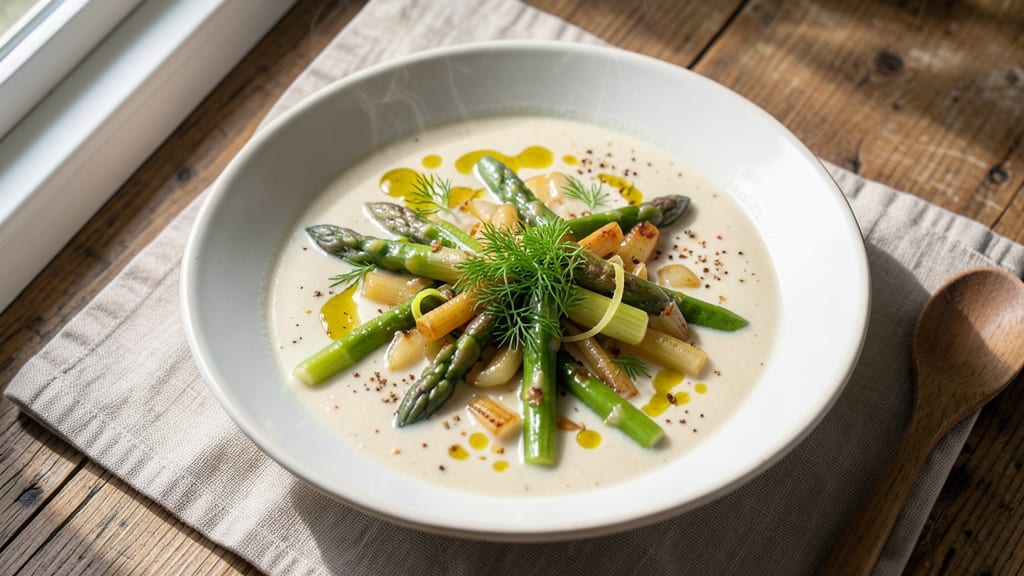
This asparagus celery soup recipe transforms humble spring vegetables into a velvety, herb-infused masterpiece that feels both comforting and elegant. The secret lies in slow-cooking fresh asparagus and celery until they dissolve into a silky broth, then finishing with a touch of cream and fresh herbs for brightness.
What starts as simple ingredients becomes something restaurant-worthy—creamy yet light, with a delicate balance of earthy and fresh flavors.
The beauty of this recipe is its versatility—it works as a standalone vegetarian main or pairs perfectly with crusty bread. I use a blend of fresh dill and tarragon for that signature herbal note, but feel free to swap in thyme or parsley if you prefer.
The key technique? Sautéing the vegetables until deeply aromatic before adding liquid, which builds layers of flavor that simmer into perfection. With just 30 minutes of active time and 45 minutes of simmering, you’ll have a soup that tastes like it took hours to prepare.
What makes this soup truly special is the crunchy topping—toasted breadcrumbs mixed with fresh herbs—that adds satisfying texture to every spoonful. The contrast between the velvety soup and crispy garnish is what makes this recipe stand out.
It’s the kind of dish that feels indulgent yet remains light enough for spring or summer dining, and it’s easy to adapt for dietary preferences by using coconut milk instead of cream.
Perfect for meal prep or last-minute entertaining, this soup keeps well in the fridge for up to 4 days and tastes even better the next day as the flavors meld.
Whether you’re serving it to guests or treating yourself to a cozy weeknight dinner, this recipe delivers on both comfort and sophistication. Let’s get cooking!
Ingredients for asparagus celery soup
Spring vegetables and aromatic herbs create this velvety soup with restaurant-worthy elegance.
| Ingredient | Amount | Notes |
|---|---|---|
| Fresh Asparagus 🌱 | 1 ½ lb | Trimmed, tough ends removed |
| Celery Stalks 🧅 | 4 whole | Trimmed, leaves reserved for garnish |
| Yellow Onion 🧅 | 1 whole | Medium size, diced |
| Garlic Cloves 🧄 | 4 cloves | Peeled, smashed for aroma |
| Extra-Virgin Olive Oil 🫒 | ½ cup | For sautéing vegetables |
| Vegetable Stock 💧 | 4 cups | Low-sodium preferred |
| Heavy Cream 🥛 | ½ cup | Full-fat for richness |
| Fresh Dill 🌿 | ¼ cup | Chopped, stems removed |
| Fresh Tarragon 🌿 | 0.15 cup | Chopped, finely minced |
| All-Purpose Flour 🌾 | ¼ cup | For breadcrumb topping |
| Panko Breadcrumbs 🍞 | ½ cup | Toasted for extra crunch |
| Sea Salt 🧂 | 1 ½ tsp | Diamond Crystal preferred |
| Ground Black Pepper 🌶️ | ½ tsp | Freshly ground preferred |
| Lemon Juice 🍋 | 1 tbsp | Freshly squeezed |
The asparagus and celery are the heart of this soup, so prioritize freshness. Local farmers markets often have the best spring asparagus—look for bright green spears with tightly closed tips. Celery should be crisp with no brown spots. For the herbs, Whole Foods or specialty produce sections carry the best dill and tarragon. If using frozen vegetables, thaw and pat dry before sautéing to avoid excess moisture. The vegetable stock is non-negotiable—low-sodium versions like Pacific Foods ensure you control the seasoning.
No fresh dill or tarragon? Dried herbs at one-third the amount work in a pinch, though fresh delivers superior flavor. Substituting coconut milk for cream creates a dairy-free version—just add 1 tbsp cornstarch to thicken. For a gluten-free topping, use crushed gluten-free crackers instead of panko. The lemon juice brightens the soup, but white wine vinegar at half the amount works if you prefer. When sautéing, cook the vegetables until deeply golden—this builds the rich, caramelized base that transforms into velvety perfection.
This soup develops deeper flavor overnight, so make a double batch for leftovers. Store in airtight containers for up to 4 days in the refrigerator, or freeze for 3 months. To reheat, warm gently on the stove with a splash of water or stock. The breadcrumb topping stays crispy when added fresh—keep it separate until serving. For meal prep, portion the soup into containers and store the topping separately to maintain texture.
Why You'll Love This Recipe
- Foolproof First Step: I swear by this—just sauté the onion and celery in olive oil until soft, then toss in the garlic and asparagus. No fancy techniques, no stress. The asparagus wilts in minutes, and suddenly you’ve got a base that’s actually worth building on.
- Umami Bomb: That garlic-to-asparagus ratio? It’s where the magic happens. The soup starts bright and fresh, then deepens into something rich and savory—like a hug in a bowl. Honestly, I’ve made this with just salt and pepper, and it still delivers.
- Weeknight Workhorse: I keep this in rotation because it’s the soup that works for everything: a lazy Tuesday, a dinner party appetizer, or even a side for grilled steak. Freeze half for later, and it reheats like it was just made—no texture loss, no weird aftertastes.
- Budget Brightener: Celery and asparagus stretch further than you’d think, especially when you blitz them into soup. I’ve fed four people for under $10, and the leftovers? Just as good the next day. Plus, the onion and garlic bulk it up without breaking the bank. Smart, simple, satisfying.
Step-by-step instructions for herb-infused asparagus and celery soup
Transform simple spring vegetables into velvety sophistication with this refined technique.
Prep and Sauté the Vegetable Base
Heat the 0.5 cup extra-virgin olive oil in a large Dutch oven over medium heat. Add the 1 whole yellow onion and 4 whole celery stalks, sliced into ¼-inch pieces, cooking for 8-10 minutes until softened and translucent. Here's the thing—don't rush this step. You want the vegetables to release their moisture and develop a gentle caramelization before adding anything else.
Push the onions and celery to the sides of the pot and add the 4 smashed garlic cloves. Stir for 30 seconds until fragrant—this prevents burning while maximizing flavor. Add the 1.5 lb trimmed asparagus, cut into 1-inch pieces, and cook for another 5 minutes, stirring occasionally. The asparagus should begin to soften slightly but retain some texture. This foundational sauté builds the soup's depth of flavor.
Build the Soup and Simmer
Pour in the 4 cups vegetable stock and bring to a gentle boil. Once boiling, reduce heat to medium-low and add the 1.5 tsp sea salt and 0.5 tsp ground black pepper. Let the soup simmer uncovered for 20-25 minutes until the asparagus and celery are completely tender and the flavors meld. You'll know it's ready when a wooden spoon glides through the mixture with no resistance. Real talk: Skim any foam that rises to the surface during this time—it prevents bitterness.
Remove from heat and let cool slightly for 5 minutes. Then, transfer 2 cups of the soup to a blender or use an immersion blender directly in the pot. Blend until completely smooth—this creates the signature velvety texture. Return the puréed soup to the pot and stir in the 0.5 cup heavy cream and 1 tbsp freshly squeezed lemon juice. The acidity brightens the natural sweetness of the vegetables while balancing the richness.
Prepare the Herb-Infused Topping
In a small bowl, combine the 0.25 cup all-purpose flour and 0.5 cup panko breadcrumbs. Toast the panko in a dry skillet over medium heat for 2-3 minutes until golden brown and fragrant—this enhances the crunch. Let cool slightly, then mix with the flour in the bowl. Stir in the 0.25 cup chopped fresh dill and 0.15 cup finely minced fresh tarragon. The herbs should be evenly distributed throughout the mixture; this ensures every bite delivers that aromatic punch.
Return the soup to a gentle simmer over low heat—just enough to maintain warmth without boiling. Ladle the soup into bowls, then sprinkle each serving with the herb-infused breadcrumb mixture. The contrast between the velvety soup and crispy topping is what makes this dish truly special. Serve immediately while the breadcrumbs are still crisp and the soup retains its perfect temperature.
Pro Tips For Making Asparagus Celery Soup
- CHAR THE ASPARAGUS FIRST: Blanch the tough bottom third of asparagus in boiling water for 30 seconds before adding it to the soup—this softens the fibers without turning the whole dish mushy. (I used to skip this and ended up with chewy bits that ruined the texture.)
- TRIM CELERY LIKE A PRO: Cut celery stalks on the bias (diagonal) and remove the stringy core—this exposes more surface area for faster cooking and keeps the soup from tasting like you used celery stems instead of actual celery. (Yes, I’ve done that. No, it’s not pretty.)
- SWEAT ONIONS LOW AND SLOW: Cook the onion in olive oil over medium-low heat until deeply golden, not browned—this builds flavor without bitterness. (After burning three batches, I finally realized "low and slow" isn’t just for roasts.)
- SAVE TIME WITH FROZEN GARLIC: Use pre-minced frozen garlic instead of fresh cloves—it chops instantly and adds the same punch without the hassle of peeling. (I was skeptical until I tried it, and now I won’t go back.)
Storing and reheating your leftovers
Refrigerator Storage
Let your soup cool to room temperature (about 30 minutes) before transferring to airtight containers. I use glass Pyrex containers with snap-on lids for best results—they maintain flavor and prevent absorption.
Store in the fridge at 40°F or below for up to 4 days. The flavors actually deepen overnight as the herbs infuse further. 💫
Freezer-Friendly Tips
For longer storage, freeze the soup in quart-sized freezer bags (leave 1-inch headspace for expansion). I recommend portioning into 2-cup servings for easy reheating. The soup keeps its quality for 3 months—just thaw overnight in the fridge before reheating.
The breadcrumb topping should be stored separately and added fresh after reheating to maintain its crisp texture.
Stovetop Reheating
My preferred method is stovetop reheating for the best texture. Transfer the chilled soup to a pot and warm over medium-low heat for 8-10 minutes, stirring occasionally. Add 2-3 tablespoons of water or vegetable stock if the soup appears too thick.
The gentle heat preserves the silky texture while reactivating the herb flavors. Never boil—this can break the emulsion and make the soup watery.
Microwave Shortcuts
For quick reheating, use the microwave on 50% power in 1-minute intervals, stirring between each interval. Cover with a damp paper towel to prevent drying out. A 1.5-cup portion typically takes 2-3 minutes total.
Add a splash of warm water if needed to restore creaminess. The microwave method is fastest but may slightly reduce the velvety texture compared to stovetop reheating.
Reviving Texture
If your reheated soup loses its velvety consistency, blend it again briefly with an immersion blender. For extra richness, stir in 1 tablespoon of heavy cream or a pat of cold butter.
The herb topping can be quickly toasted again in a dry skillet for 1-2 minutes to restore crispiness. This simple fix transforms any slightly compromised soup back into restaurant-quality perfection. ✨
Nutrition facts
Frequently asked questions
Can I make this soup without blending for a chunkier texture?
Skip the blending step entirely and simply mash the cooked vegetables with a potato masher or wooden spoon for a rustic texture. The soup will have more body and visible pieces of asparagus and celery, which works beautifully with a heartier bread bowl. Just simmer the soup slightly longer (about 30 minutes) to ensure everything softens completely.
What's the best way to use up leftover asparagus and celery?
This soup is perfect for using up spring vegetables before they wilt. If you have extra, try roasting the asparagus with olive oil and garlic at 400°F for 12-15 minutes until caramelized, then adding it to salads or grain bowls. Celery can be sautéed with onions and used as a base for stir-fries or added to omelets for extra flavor.
How can I make this soup vegan?
Replace the heavy cream with ½ cup full-fat coconut milk and add 1 tbsp cornstarch mixed with 2 tbsp water to thicken it properly. For a richer texture, stir in 2 tbsp nutritional yeast after blending. The lemon juice can stay the same, but you might want to add an extra pinch of salt to compensate for the reduced creaminess.
Why does my soup taste bitter?
Bitterness usually comes from overcooked vegetables or skimmed foam left in the pot. Always skim foam during simmering, and never boil the soup vigorously. If it's too late, balance the flavor with a splash of lemon juice or a pinch of sugar. For future batches, reduce simmering time by 5 minutes and taste frequently.
Can I add potatoes to make it heartier?
Yes, but adjust the cooking time. Add 1 diced medium potato when you introduce the vegetable stock and simmer for 30 minutes total (5 minutes longer than the original recipe). The potatoes will absorb some liquid, so you may need to add ½ cup extra stock after blending to maintain the right consistency.