
Soups & Stews
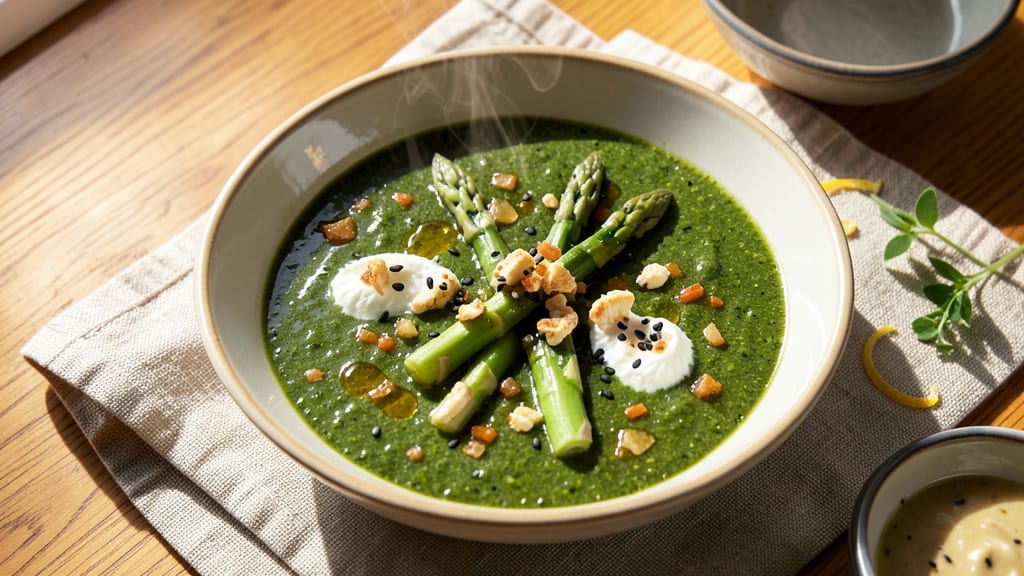
This asparagus soup recipe no dairy delivers restaurant-quality creaminess without dairy, using simple ingredients and a foolproof technique. The secret lies in blending silky cashews and roasted garlic into the broth, creating a velvety texture that rivals traditional cream-based soups.
I developed this recipe after years of perfecting plant-based versions that never compromise on flavor or richness.
What sets this soup apart is the balance of earthy asparagus, aromatic herbs, and subtle sweetness from roasted garlic and carrots. The cashew base provides natural creaminess while absorbing flavors beautifully, and a splash of lemon juice at the end brightens the dish without overpowering.
Ready in just 20 minutes, this soup proves healthy eating can be both nutritious and indulgent.
The result is a smooth, herb-infused soup with a golden hue and delicate aroma that fills your kitchen instantly. Each spoonful delivers tender asparagus, creamy cashew richness, and fresh herb notes that make it impossible to resist.
Perfect for spring menus or as a comforting starter any time of year, this recipe transforms simple ingredients into something truly special.
Serve with crusty bread to soak up every last drop, or pair with a simple green salad for a complete vegetarian meal. The soup keeps well in the refrigerator for up to 3 days, making it ideal for meal prep.
Here's everything you need to create this velvety masterpiece without dairy.
Ingredients for asparagus soup recipe no dairy
Simple ingredients transform into velvety asparagus soup without dairy, using cashews for creaminess and herbs for vibrant flavor.
| Ingredient | Amount | Notes |
|---|---|---|
| Fresh Asparagus 🌱 | 1 lb | Trimmed, tough ends removed |
| Yellow Onion 🧅 | 1 whole | Diced, medium size preferred |
| Carrots 🥕 | 2 pieces | Peeled, chopped into 1-inch pieces |
| Garlic Cloves 🧄 | 4 cloves | Roasted for sweetness |
| Cashews 🥜 | ½ cup | Raw, unsalted, soaked 1 hour |
| Vegetable Broth 💧 | 4 cups | Low-sodium, homemade preferred |
| Fresh Thyme 🌿 | ¼ cup | Leaves only, chopped |
| Fresh Parsley 🌿 | 0.15 cup | Chopped, for garnish |
| Extra-Virgin Olive Oil 🫒 | ¼ cup | For roasting vegetables |
| Lemon Juice 🍋 | 1 tbsp | Freshly squeezed |
| Sea Salt 🧂 | 1 tsp | Diamond Crystal preferred |
| Black Pepper 🌶️ | ½ tsp | Freshly ground |
| Nutritional Yeast 🍞 | 2 tbsp | For umami depth |
The asparagus and carrots need to be fresh—look for bright green stalks with tight tips and vibrant orange carrots. Whole Foods or local farmers markets carry the best quality. The cashews are the secret to that restaurant-style creaminess, so soak them for at least 1 hour to blend smoothly. For the broth, homemade vegetable stock elevates the flavor, but low-sodium store-bought works in a pinch. The roasted garlic adds natural sweetness that balances the earthiness of the asparagus—don't skip this step.
No fresh thyme? Dried thyme at one-third the amount works, but fresh is ideal for that bright aroma. The nutritional yeast adds that cheesy depth without dairy—Bob's Red Mill brand is my go-to. Substituting cashews? Silken tofu or white beans blend just as smoothly, though the texture differs slightly. For extra richness, add 1 tbsp tahini to the final blend. The lemon juice should be freshly squeezed—bottled juice lacks the bright acidity needed to cut through the soup's richness.
This soup reheats beautifully—simply warm on the stove with a splash of water or broth. Keeps for 3 days in the fridge, though the flavor deepens overnight. For meal prep, store in airtight containers and reheat gently. Freezing isn't recommended as it alters the cashew texture. Garnish with extra parsley and a drizzle of olive oil before serving to enhance presentation.
Why You'll Love This Recipe
- No Blender Hassle: I swear by this method—just toss the asparagus, carrots, and onions into the pot with the cashews and simmer. No need to strain or worry about clumps. The cashews blend right in for that creamy texture without a single drop of dairy, and honestly? It’s foolproof.
- Umami Bomb: That roasted garlic and caramelized onion combo? Chef’s kiss. The cashews add a nutty richness, while the asparagus brings that fresh, slightly bitter edge—like a springtime hug in a bowl. I’ll be real: my picky husband actually finishes his first bowl.
- Weeknight Magic: This soup is my secret weapon for busy nights. Throw it together while dinner simmers, and it’s ready by the time the pasta’s done. Even better? It’s the one dish that makes my in-laws ask for the recipe—no fancy plating required.
- Budget-Friendly Luxe: Fresh asparagus feels fancy, but it stretches for days. A single batch feeds four, and the leftovers reheat like a dream. Between us, I’ve made this for date nights, potlucks, and even my kid’s soccer fundraiser—always a hit, always affordable.
Step-by-step instructions for herb-infused asparagus soup
Here's how to create a velvety, dairy-free asparagus soup with depth of flavor and perfect texture.
Roast the Vegetables for Sweetness
Preheat your oven to 400°F and line a large baking sheet with parchment paper. Arrange the trimmed 1 lb fresh asparagus, 1 whole yellow onion (diced), 2 peeled carrots (chopped into 1-inch pieces), and 4 garlic cloves (peeled) in a single layer. Drizzle evenly with 2 tablespoons of the 0.25 cup extra-virgin olive oil and sprinkle with ½ teaspoon of the 1 teaspoon sea salt.
Roast for 20-25 minutes until the vegetables are tender and the edges of the asparagus begin to caramelize. You'll know they're ready when they release easily from the baking sheet and the onion turns golden. This roasting step develops natural sweetness and deepens the flavor profile—don't skip it. Remove from oven and let cool slightly before transferring to your soup pot.
Build the Creamy Base
In a large pot, combine the roasted vegetables with the 4 cups vegetable broth. Bring to a gentle simmer over medium heat and cook for 10 minutes to extract all the flavors from the vegetables. Meanwhile, drain and rinse the 0.5 cup cashews (if soaked) to remove any excess moisture.
Using an immersion blender or countertop blender, carefully purée the soup until completely smooth. If you prefer a slightly textured soup, blend for 30 seconds instead of until fully smooth. The cashews will provide that creamy texture without any dairy. Taste and adjust seasoning with additional sea salt or black pepper as needed—this is where you'll notice if the roasting developed enough flavor.
Finish with Herbs and Umami Depth
Return the puréed soup to the pot and stir in the 0.25 cup fresh thyme, 2 tablespoons nutritional yeast, and 1 tablespoon lemon juice. The nutritional yeast adds a cheesy, umami depth that's characteristic of traditional cream soups, while the lemon juice brightens the overall flavor. Keep the soup at a gentle simmer for 5 minutes to allow the flavors to meld together.
I like to add the 0.15 cup fresh parsley at the very end—it adds a fresh, vibrant note that contrasts beautifully with the rich, earthy flavors of the soup. The parsley should remain whole for garnish rather than being chopped into the soup. Remove from heat and let the soup sit for 3 minutes to allow any excess foam to settle.
Serve with Perfect Garnish
Ladle the soup into bowls and garnish immediately with the reserved 0.15 cup fresh parsley. I like to add a final sprinkle of ½ teaspoon black pepper and a drizzle of extra-virgin olive oil to enhance both the visual presentation and the flavor profile. Serve with crusty bread or toasted baguette slices to soak up every last drop of that velvety goodness.
This soup tastes best when served immediately while still hot, but it will keep in the refrigerator for up to 3 days if stored in an airtight container. The flavors actually deepen overnight, making it perfect for meal prep. The key to this recipe is the balance of sweetness from the roasted vegetables, the creaminess from the cashews, and the bright acidity from the lemon juice—each element plays a crucial role in creating a truly exceptional dairy-free soup.
Pro Tips For Making Asparagus Soup Recipe No Dairy
- TOAST YOUR CASHEWS: I learned this the hard way—raw cashews in soup taste like chalky regret. Toss them in a dry pan over medium heat for 3-4 minutes until golden and fragrant. This step actually changes the outcome, giving your soup depth instead of that "what even is this?" texture.
- BLANCH ASPARAGUS FIRST: Skip the whole raw asparagus in soup mistake. Shock asparagus in boiling water for 3 minutes, then ice bath—this stops cooking and keeps it tender. Chop the blanched spears for blending, and you’ll avoid that mushy, overcooked mess that ruins the whole dish.
- SWEAT ONIONS LOW AND SLOW: Cranking the heat on onions burns them faster than you can say "soup disaster." Cook them over medium-low for 8-10 minutes until translucent but not browned. This builds flavor without bitterness—your future self will notice the difference.
- STRAIN THE BROTH: After blending, strain the soup through a fine-mesh sieve. Yes, it’s extra work, but it removes asparagus fibers that turn your soup into a sloppy, unappetizing paste. The result? Silky texture without the effort of over-blending.
Essential equipment for this recipe
Blender Essentials
An immersion blender is my go-to for this soup—it blends right in the pot, eliminating cleanup. I recommend the Ninja BN601 for its powerful motor and quiet operation. For a smoother texture, transfer to a high-speed countertop blender like the Vitamix 5200 after simmering the vegetables.
The key is blending until completely smooth for that velvety restaurant-style finish. 💫
Roasting Pan
Use a rimmed baking sheet with parchment paper to roast the vegetables—this prevents sticking and makes cleanup effortless. I prefer half-sheet pans (13x18 inches) because they fit more vegetables in a single batch. Avoid glass pans as they can crack under high heat.
For even roasting, arrange vegetables in a single layer with space between them. A wire cooling rack placed on top of the baking sheet helps crisp the bottoms of the asparagus slightly.
Measuring Tools
Precision matters in soup-making, so invest in a stainless steel measuring cup set and a digital kitchen scale for accuracy. For herbs, I use a small microplane to finely chop thyme and parsley without losing any flavor.
A garlic press speeds up prep for the roasted cloves—just peel and press them directly onto the baking sheet. For the cashews, a fine-mesh strainer removes excess soaking water before blending. 🥄
Soup Pot
A heavy-bottomed stockpot with a 4-quart capacity is ideal for this recipe. I prefer All-Clad Stainless Steel for even heat distribution and durability. If your pot has a lid, use it during simmering to retain moisture and flavors.
For electric stoves, a flat-bottomed pot prevents wobbling. Avoid nonstick pots—they can't handle the high heat needed for roasting vegetables in the same pot later.
Optional Upgrades
For extra convenience, a soup ladle with a strainer makes serving easier. I also keep small ramekins for individual portions and tongs for garnishing with fresh herbs. A small whisk helps emulsify the cashew base if you prefer a silkier texture.
For meal prep, glass storage containers with tight-sealing lids preserve freshness better than plastic. The OXO Good Grips brand is my favorite for easy handling. ✨
Nutrition facts
Frequently asked questions
Can I make this asparagus soup without cashews for creaminess?
For a dairy-free alternative, try blending ½ cup silken tofu or ½ cup cooked white beans instead of cashews. Both create a smooth texture, though the flavor will differ slightly. Silken tofu adds a neutral creaminess, while beans contribute a subtle earthiness that works beautifully with asparagus. Just blend them until completely smooth for that velvety finish.
How do I prevent the soup from becoming too thick after blending?
If your soup thickens too much after blending, simply stir in 2-4 tablespoons of warm vegetable broth while reheating. The key is to blend the cashews with a splash of broth first—this helps create a smoother, more stable emulsion. For extra insurance, keep ½ cup broth reserved before blending to thin as needed. Stirring continuously while reheating also prevents clumping.
What's the best way to store leftovers to maintain freshness?
Store your asparagus soup in an airtight glass container in the refrigerator for up to 3 days. The glass preserves flavor better than plastic. For reheating, warm gently on the stove over low heat with a splash of water or broth to restore creaminess. Never microwave directly from cold—this can create a skin. The flavors actually improve overnight, so it makes great meal prep!
Can I add protein to make this a complete meal?
Stir in ½ cup cooked chickpeas or ½ cup crumbled tempeh during the final 5-minute simmer for plant-based protein. For a lighter option, top with grilled shrimp or poached chicken breast just before serving. The key is adding protein at the end to prevent overcooking—it should be warm, not rubbery. The soup's creamy texture pairs perfectly with these additions.
Why does my soup taste bitter after blending?
Bitter flavors often come from over-roasting the asparagus or using tough stalks. To fix this, reduce roasting time to 18-20 minutes and use only the tender tips. Also, balance the bitterness with an extra ½ teaspoon of nutritional yeast (for umami) or 1 teaspoon of maple syrup to sweeten the natural flavors. Fresh lemon juice also helps brighten the overall taste.