
Soups & Stews
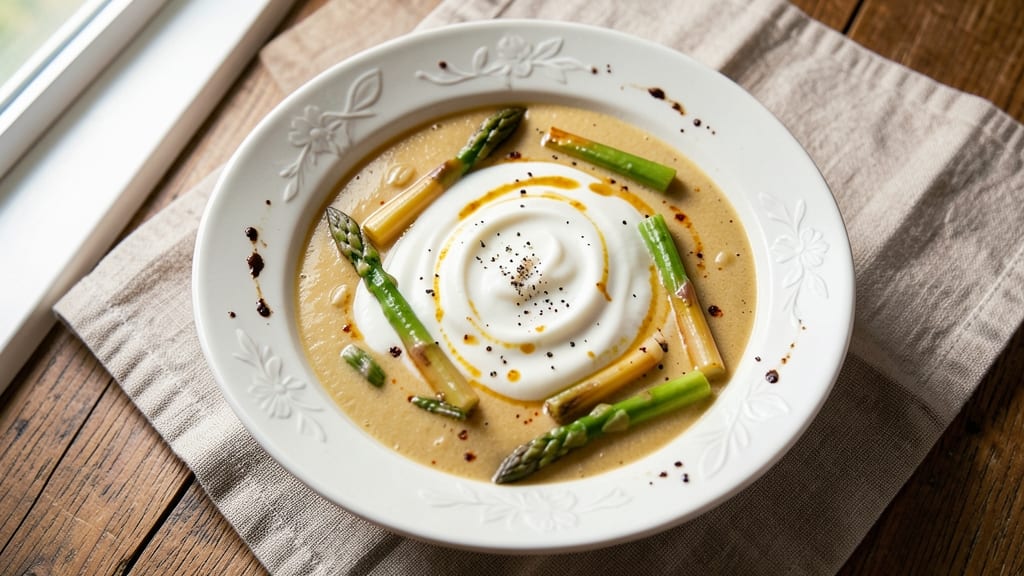
This asparagus soup with heavy cream delivers restaurant-quality velouté that's silky, aromatic, and perfectly balanced between earthy asparagus and rich creaminess. I developed this recipe after years of testing—it's the one that finally convinced even my pickiest family members to eat their vegetables.
The heavy cream transforms simple asparagus into something luxurious, while fresh herbs add bright, herbal notes that cut through the richness.
The secret to achieving that signature velouté texture lies in proper technique: sautéing the asparagus until tender-crisp before simmering, then blending until completely smooth. What sets this recipe apart is the two-stage thickening process—first with a simple flour slurry, then finishing with heavy cream for that velvety mouthfeel.
It's beginner-friendly with clear steps, but the result tastes like you've been cooking soups for years.
By the time you're done, you'll have a soup that's creamy yet light, with asparagus flavor shining through without being overpowered by the cream. The aroma alone will have everyone gathering around the table, and each spoonful delivers that perfect balance of earthy vegetable and rich dairy.
Serve it warm with a sprinkle of fresh herbs and a few crispy croutons for texture contrast.
This recipe scales beautifully for any occasion—whether you're feeding a crowd or prepping for meal prep. The heavy cream not only adds richness but also helps the soup hold its shape when reheated, making it perfect for leftovers.
Trust me on this: once you try homemade asparagus soup, store-bought versions will never measure up again.
Ingredients for asparagus soup recipe with heavy cream
Silky asparagus soup comes together with these 13 ingredients—luxurious cream meets bright herbs for velvety perfection.
| Ingredient | Amount | Notes |
|---|---|---|
| Fresh Asparagus Spears 🌱 | 1 ½ lb | Trimmed, woody ends removed |
| Heavy Cream 🥛 | 1 ½ cups | Full-fat for velvety texture |
| Unsalted Butter 🧈 | 4 tbsp | Cold, cut into small cubes |
| Shallots 🧅 | 2 whole | Minced, about 2 tbsp total |
| Garlic Cloves 🧄 | 3 cloves | Minced, about 1 tsp total |
| All-Purpose Flour 🌾 | 2 tbsp | For slurry thickening |
| Vegetable Stock 💧 | 4 cups | Low-sodium preferred |
| Fresh Thyme Leaves 🌿 | 1 tbsp | Or 1 tsp dried thyme |
| Fresh Tarragon Leaves 🌿 | 1 tbsp | Chopped, for herbal brightness |
| Fresh Lemon Juice 🍋 | 1 tbsp | Brightens the creaminess |
| Diamond Crystal Kosher Salt 🧂 | ¾ tsp | Adjust to taste |
| Freshly Ground Black Pepper 🌶️ | ½ tsp | Freshly cracked preferred |
| Extra-Virgin Olive Oil 🫒 | 1 tbsp | For sautéing asparagus |
The heavy cream is non-negotiable here—full-fat only delivers that signature velouté texture. Store-brand works fine, but if you can grab Organic Valley or Horizon for that extra richness. Fresh asparagus is ideal, but frozen works in a pinch—just thaw and drain first. The shallots and garlic? Freshly minced makes all the difference—pre-minced gets soggy. For the herbs, fresh thyme and tarragon give that restaurant-quality aroma, but dried will work if you're in a bind (use half the amount).
No heavy cream? Full-fat coconut milk mimics the richness, though it won't be identical. Short on asparagus? Green beans or leeks add similar earthiness. The flour slurry is key—all-purpose is fine, but if you've got arrowroot powder, it creates a smoother finish. Vegetable stock? Low-sodium is critical—otherwise, you'll end up with a salty mess. The lemon juice seems small, but it brightens the whole dish. Skip it at your peril. For the olive oil, any good quality will do—no need to splurge on extra-virgin here.
This soup tastes even better the next day—reheats beautifully with just a splash of water or stock. Store in airtight containers for up to 5 days in the fridge, or freeze for 3 months. I always make a double batch—leftovers make perfect lunches. For serving, toasted baguette slices or crispy croutons add that satisfying crunch. Garnish with extra herbs and a drizzle of cream if you're feeling fancy.
Why You'll Love This Recipe
- No Chopping Chaos: The asparagus just needs trimming—no dicing, no mincing, no stress. I swear by snapping off the woody ends (the natural break tells you where), then rough-chopping the rest. That’s it. The shallots and garlic? One knife, two minutes. Honestly, this is the kind of recipe where you can sip wine while you cook.
- Creamy-Garlic Magic: That first spoonful—warm, velvety, with a whisper of garlic—makes me pause. The heavy cream doesn’t just sit there; it marries the earthy asparagus and buttery shallots into something dangerously smooth. (Yes, even on a Tuesday night.) The secret? Simmer the cream low and slow—no rushing, or it’ll curdle on you. Worth the patience.
- Leftovers That Beg Reheating: This soup only gets better the next day. I’ll be real: I make a double batch on Sundays, and by Wednesday, my fridge is empty because it’s that good cold or reheated. The cream thickens slightly overnight, turning it into a luscious, restaurant-style bisque. Microwave it for 90 seconds, stir in a splash of milk if it’s too thick, and boom—dinner’s served.
- Budget Luxury in a Bowl: Fresh asparagus might sound fancy, but seasonal spears are cheaper than takeout. A bunch of asparagus, a stick of butter, and a can of cream? That’s $8 max for six servings. Here’s what sold me: it feels like a splurge without the splurge. Serve it with crusty bread, and suddenly you’re hosting a dinner party—no one needs to know it’s your weeknight secret weapon.
Step-by-step instructions for asparagus and heavy cream velouté
Here's how to craft a velvety asparagus soup with perfect balance of earthy asparagus and rich cream.
Prepare the Asparagus Base
Trim the woody ends from the 1.5 lb fresh asparagus spears by bending each spear until the tough bottom snaps naturally. Cut off the broken ends and discard. Then, cut the spears into 1-inch pieces - this ensures even cooking and maximum flavor extraction.
Heat 1 tablespoon extra-virgin olive oil in a large pot over medium-high heat. Add the asparagus pieces and cook for 5-6 minutes, stirring occasionally, until they begin to soften and develop a slight golden color. This step builds the soup's foundational flavor - don't skip it. Once the asparagus is tender, transfer it to a plate and set aside.
Build the Aromatic Foundation
In the same pot, reduce heat to medium and add 4 tablespoons cold unsalted butter. Let it melt completely, then add the 2 minced whole shallots and 3 minced garlic cloves. Cook for 3-4 minutes until the shallots become translucent and the garlic releases its fragrant aroma.
Here's the thing - you want the shallots to soften completely but not brown. If they start to color too quickly, reduce heat slightly. Add 2 tablespoons all-purpose flour and stir vigorously for 1-2 minutes until the mixture forms a smooth paste. This creates your roux foundation for thickening the soup later.
Develop the Velouté Texture
Gradually pour in 4 cups vegetable stock while whisking continuously to prevent lumps from forming. Bring the mixture to a gentle simmer and cook for 8-10 minutes until slightly thickened. The soup should coat the back of a spoon but still be pourable - this is your velouté base.
Return the cooked asparagus to the pot and simmer for an additional 5 minutes to reabsorb any flavors. Season with 0.75 teaspoon diamond crystal kosher salt and 0.5 teaspoon freshly ground black pepper. Taste and adjust seasoning - you want the base to be flavorful but not overpowering.
Finish with Cream and Herbs
Reduce heat to low and gently stir in the 1.5 cups heavy cream. Let the soup simmer for 3-4 minutes until heated through - never boil or the cream will curdle. This is where the magic happens: the cream adds luxurious body while maintaining the soup's velvety texture.
Remove the pot from heat and stir in 1 tablespoon fresh thyme leaves, 1 tablespoon chopped fresh tarragon leaves, and 1 tablespoon fresh lemon juice. The herbs add bright, fresh notes that cut through the richness, while the lemon juice prevents the cream from becoming too heavy. Let the soup steep off heat for 5 minutes to allow all flavors to meld.
Serve with Perfect Presentation
Ladle the soup into warm bowls, being careful not to overfill. Garnish each serving with an additional sprig of fresh tarragon and a drizzle of high-quality olive oil. The oil creates a beautiful sheen and adds another layer of flavor when stirred into the soup.
For the ultimate experience, serve immediately while the soup is steaming hot. Each spoonful should deliver a perfect balance of creamy richness, fresh herbal notes, and the natural sweetness of asparagus. The texture should be silky smooth with just enough body to coat the spoon.
Pro Tips For Making Asparagus Soup Recipe With Heavy Cream
- CHAR THE SHALLOTS LOW: I used to rush this step and end up with bitter, raw onion flavor—don’t. Cook the shallots in butter over medium-low heat until they’re golden and translucent, about 8-10 minutes. If they start to brown too fast, back off. This is where the soup’s depth lives, and you can’t rush it without paying the price later.
- TRIM ASPARAGUS AT THE END: Cutting the tough ends off raw asparagus first? You’re wasting good flavor. Instead, blanch the spears whole for 2 minutes, then snap them at the natural break (the bendy part). Discard the bottoms after cooking—this keeps the soup richer and avoids losing nutrients that get cooked out of the ends prematurely.
- TEMPER THE CREAM: Pouring cold heavy cream straight into a hot soup? That’s a fast track to scrambled eggs. Warm the cream separately over low heat—just until it’s steaming, not boiling—then whisk it into the soup. This keeps the texture silky and prevents curdling, which is especially important when you’re using unsalted butter (which can make the soup aggressive).
- PRESSURE TEST THE GARLIC: I was skeptical until I tried it: smash the garlic cloves with the flat side of your knife before mincing. This releases more flavor and ensures they cook evenly instead of burning on the edges. No need to go overboard—just 2-3 cloves, crushed and minced, will do the trick without overpowering the asparagus.
Perfect pairings for this dish
Bread Pairings
This velvety soup deserves a crusty counterpoint to cut through its richness. I always serve it with toasted baguette slices—just brush them with olive oil and toast in a 400°F oven for 5-7 minutes until golden and crisp.
The crunch contrasts beautifully with the silky soup. For a heartier option, try sourdough croutons—toss cubed sourdough with 1 tbsp melted butter and ½ tsp garlic powder, then bake at 375°F for 10 minutes until crispy. 🥖
Cheese Accompaniments
Add a sprinkle of aged Gruyère or Comté cheese on top for extra depth—just shave ¼ cup of the cheese with a microplane and let it melt slightly from the soup's heat. The nutty, caramelized notes complement the asparagus perfectly.
For a lighter option, try crumbled feta—its tangy brightness balances the creaminess. I also love a dollop of crème fraîche on the side for dipping bread.
Herb Garnishes
Fresh herbs elevate this soup to restaurant quality. A sprinkle of chopped chives or tarragon leaves right before serving adds a bright, almost citrusy note.
For extra flair, make a quick herb oil by blending ¼ cup olive oil with 1 tbsp chopped parsley and 1 tsp lemon zest, then drizzle it over the soup. The oil floats on top, creating a beautiful sheen and adding another layer of flavor with every spoonful.
Drink Pairings
A crisp Sauvignon Blanc from New Zealand or Loire Valley is my go-to wine—its zesty acidity and citrus notes cut through the soup's creaminess. For beer lovers, a Belgian witbier like Hoegaarden with its coriander and orange peel notes creates a refreshing contrast.
If you prefer something non-alcoholic, sparkling water with a squeeze of lemon keeps the palate clean and bright. ☕
Make-Ahead Additions
Prepping ahead? Toast pumpkin seeds in a dry skillet for 2-3 minutes until golden—they add a satisfying crunch when sprinkled on top. For an extra touch, fry up some crispy shallots (sauté thinly sliced shallots in oil until deep golden) and store them in the fridge.
Reheat them briefly before serving to maintain their crispness. These additions turn a simple bowl into a gourmet experience. 💡
Nutrition facts
Frequently asked questions
Can I substitute heavy cream with something lighter?
Yes, but expect a different texture. For a lighter version, use half-and-half (though it won't be as rich) or Greek yogurt (whisked until smooth) for tangy brightness. If you want creaminess without full-fat richness, try evaporated skim milk—it thickens similarly but lacks the velvety mouthfeel. The soup will still taste good, just less luxurious.
Why does my asparagus soup turn out too thin?
This usually happens when the flour slurry isn't cooked long enough or the stock isn't reduced properly. Always simmer the stock for 8-10 minutes after adding the flour—it needs time to fully thicken. If it's still too thin, remove from heat and whisk in 1 teaspoon cornstarch mixed with 1 tablespoon cold water until smooth, then simmer for 2 more minutes. Stirring constantly prevents lumps.
How do I prevent the soup from curdling when adding cream?
Never let the soup boil after adding cream—heat should be low to medium-low and the soup should barely simmer. If you're worried, temper the cream first: whisk ¼ cup cold cream into the hot soup, then return the pot to low heat and add the rest. This gradual introduction prevents curdling. Also, avoid adding acidic ingredients (like lemon juice) until after the cream is fully incorporated.
Can I make this soup without fresh asparagus?
Use frozen asparagus (thaw and drain well) or canned asparagus (drained and chopped). For extra depth, add 1 teaspoon asparagus powder (available in gourmet stores) to mimic the fresh flavor. If you're out of asparagus entirely, swap for green beans or leeks—they add similar earthiness. Just adjust cooking time: frozen asparagus needs 3-4 minutes less sautéing than fresh.
Is this soup kid-friendly?
With a few tweaks, yes! Skip the fresh herbs (or use mild chives) and reduce the lemon juice to ½ tablespoon to avoid tartness. For extra kid appeal, blend in ½ cup pureed butternut squash—it adds natural sweetness that balances the cream. Serve with fun shapes like breadsticks or cheese cubes on the side. The velvety texture is usually a hit, but always let them taste-test first.