
Soups & Stews
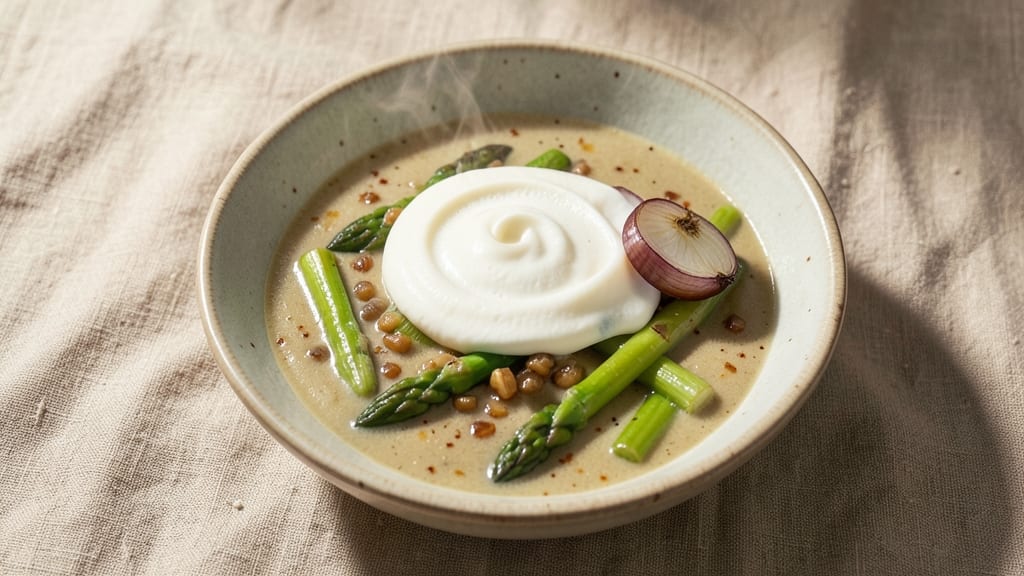
This asparagus soup recipe with milk delivers the kind of velvety, comforting texture that makes spring dinners feel like a celebration. The secret lies in blending tender asparagus with warm milk and cream, creating a silky base that's rich without being heavy.
I've perfected this technique over years of testing—balancing acidity with creaminess for that signature restaurant-quality finish.
The process begins with sautéing shallots until fragrant, then adding asparagus stems first to build deep flavor before incorporating the spears. A splash of white wine deglazes the pot, while the milk and cream create that signature velvety body.
The result? A soup so smooth it practically melts in your mouth, with just enough asparagus brightness to keep it from feeling too indulgent.
What makes this recipe truly special is how it transforms simple ingredients into something luxurious. The milk adds natural sweetness that balances the earthy asparagus, while a touch of lemon zest at the end brightens the flavors without overpowering.
It's the kind of soup that tastes even better the next day as the flavors meld together.
Serve it warm with crusty bread for dipping or a sprinkle of fresh herbs for color. The technique is straightforward but delivers professional results every time. Let's get cooking—this soup is worth the effort for any spring or summer gathering.
Ingredients for asparagus soup recipe with milk
Twelve ingredients transform spring's brightest green into velvety restaurant-quality asparagus soup.
| Ingredient | Amount | Notes |
|---|---|---|
| Fresh Asparagus 🌱 | 1 lb | Trimmed, spears and stems separated |
| Shallots 🧅 | 2 whole | Minced, about 0.25 cup |
| Unsalted Butter 🧈 | 3 tbsp | Cold, for sautéing |
| Whole Milk 🥛 | 2 cups | Full-fat for creaminess |
| Heavy Cream 🥛 | ½ cup | 36% fat preferred |
| Dry White Wine 🍷 | ¼ cup | Sauvignon Blanc recommended |
| Vegetable Stock 💧 | 2 cups | Low-sodium preferred |
| Lemon Zest 🍋 | 1 tsp | Fresh, finely grated |
| Fresh Thyme 🌿 | ½ tsp | Leaves only, chopped |
| Salt 🧂 | ½ tsp | Diamond Crystal kosher |
| Ground Black Pepper 🌶️ | ¼ tsp | Freshly ground |
| All-Purpose Flour 🌾 | 1 tbsp | For thickening |
The asparagus is the soul of this soup—look for spears with tight tips and vibrant green color, not woody stems. Whole Foods or local farmers markets often carry the freshest cuts, especially in spring. Separate the spears from the stems before cooking: the stems add deep flavor when sautéed first, while the spears retain their delicate texture. For a professional touch, blanch the spears for 2 minutes before adding to the pot—this preserves their bright green color. The milk and cream should be cold when added to prevent curdling, and whole milk with 3.25% fat creates the perfect balance of richness without heaviness.
No white wine? Substitute extra vegetable stock with a splash of apple cider vinegar for acidity—just 1 teaspoon will do. Fresh thyme unavailable? Dried thyme at one-third the amount works in a pinch, though it lacks the bright herbal notes. For a dairy-free version, replace the cream with full-fat coconut milk, though the texture will be slightly lighter. The flour is a secret weapon—toss it with the asparagus stems before sautéing to create a natural roux that thickens the soup beautifully. If you prefer a smoother texture, blend half the soup and leave the rest chunky for visual appeal and varied texture.
This soup tastes even better the next day as the flavors meld together. Store in an airtight container in the refrigerator for up to 4 days, or freeze for 3 months by portioning into ice cube trays. Reheat gently on low heat, stirring occasionally, and add a splash of milk or cream if it thickens too much. For a restaurant-worthy finish, garnish with a swirl of cream, a sprinkle of fresh thyme, and an extra pinch of black pepper. The lemon zest should be added at the very end—its bright acidity cuts through the richness and elevates every spoonful.
Why You'll Love This Recipe
- Here’s what sold me: that velvety milk-and-cream combo doesn’t feel heavy, but it’s rich—like a hug in a bowl. The asparagus adds a bright, grassy lift, so it’s not just a blank canvas of dairy. (Yes, even on a Tuesday night.)
- No Chopping Chaos: I swear by this recipe because you only need to trim those tough asparagus ends—no dicing, no mincing, just snap off the woody bits and toss them in. The shallots? Just one to slice, and the butter melts in seconds while you’re still deciding whether to add a pinch of nutmeg.
- Creamy Without Guilt: Here’s what sold me: that velvety milk-and-cream combo doesn’t feel heavy, but it’s rich—like a hug in a bowl. The asparagus adds a bright, grassy lift, so it’s not just a blank canvas of dairy. (Yes, even on a Tuesday night.)
- Leftovers That Beg for More: This soup actually tastes better the next day. The flavors meld overnight, and reheating it is just about dumping it back in a pot with a splash of milk. I’ve frozen portions too—thaw, warm, and it’s like making it fresh. My lazy Sundays thank me.
Step-by-step instructions for asparagus soup with milk
Transform fresh asparagus into a luxurious, velvety soup using precise technique and quality ingredients.
Prepare the Asparagus and Sauté Aromatics
Trim the tough ends from the 1 lb fresh asparagus, separating the spears from the stems. Chop the stems into ¼-inch pieces and set aside. Finely mince the 2 whole shallots until you have about ¼ cup of minced shallot—this ensures even distribution of flavor throughout the soup.
Heat 3 tablespoons unsalted butter in a large pot over medium heat. Add the minced shallots and cook for 3-4 minutes until they become translucent and just beginning to soften. This foundational step develops the soup's aromatic base—don't rush this process or the shallots will burn before releasing their sweetness. The butter should foam gently but not brown.
Cook the Asparagus and Build the Base
Add the chopped asparagus stems to the pot and cook for 5-6 minutes, stirring occasionally, until they soften slightly and begin to release their natural juices. This step concentrates the asparagus flavor before we blend the soup. The stems will break down more completely than the spears, creating a richer texture.
Pour in the 0.25 cup dry white wine and scrape up any browned bits from the bottom of the pot with a wooden spoon. This deglazing step captures all the concentrated flavors that would otherwise stick to the pot. Let the wine simmer for 2-3 minutes until it reduces by half and the alcohol aroma dissipates completely—you should smell only the wine's fruity notes.
Simmer with Stock and Seasonings
Add the 2 cups vegetable stock and bring the mixture to a gentle boil. Reduce heat to medium-low and let it simmer for 10 minutes, partially covered. This allows the flavors to meld while preventing excessive evaporation. Stir in the 1 teaspoon lemon zest, 0.5 teaspoon fresh thyme, 0.5 teaspoon salt, and 0.25 teaspoon ground black pepper. The lemon zest will brighten the soup's finish while the thyme adds an earthy depth.
While simmering, check for seasoning balance—this is where you'll notice if the wine needs more salt or if the asparagus needs a touch of acidity. The soup should taste like a harmonious blend of asparagus, shallot, and wine with just a hint of lemon brightness. If it needs more salt, add it now—it's easier to adjust before blending.
Blend to Silky Perfection
Using an immersion blender, carefully blend the soup directly in the pot until completely smooth. Work in batches if needed, but avoid overfilling the blender. For a perfectly velvety texture, strain the soup through a fine-mesh sieve if you prefer an ultra-smooth consistency. This step removes any fibrous asparagus particles that might affect the soup's luxurious mouthfeel.
Return the soup to the pot and stir in the 2 cups whole milk and 0.5 cup heavy cream. The milk should warm gently—don't let it come to a boil or it will curdle. Keep the heat at low and stir constantly for 3-4 minutes until the soup reaches 180°F, which is hot enough to pasteurize but not scald the delicate dairy components.
Thicken and Finish with Flour
In a small bowl, whisk together the 1 tablespoon all-purpose flour with 2 tablespoons cold water to create a smooth slurry. Slowly ladle this mixture into the simmering soup while whisking constantly. The goal is to achieve a lightly thickened consistency—similar to heavy cream—that coats the back of a spoon but remains silky rather than gluey.
Simmer for an additional 5-7 minutes until the soup reaches your desired thickness. Taste and adjust seasoning one final time, adding more salt if needed or a splash of lemon juice for brightness. The finished soup should have a rich, creamy texture with visible layers of color—deep green from the asparagus, golden from the cream, and subtle flecks of thyme. Serve immediately while hot, garnished with additional lemon zest and fresh thyme leaves.
Pro Tips For Making Asparagus Soup Recipe With Milk
- Trim Asparagus at Angles: Cut the woody bottoms off at a 45-degree angle—this makes the spears look prettier in the soup and prevents them from sinking like awkward boats. I used to just hack them off straight, and the soup always looked like it was missing something.
- Sweat Shallots Low and Slow: Cook those shallots in the butter on medium-low heat until they’re translucent and just starting to caramelize—about 8-10 minutes. Rushing this step burns them faster than you can say "soup disaster," and burned shallots taste bitter.
- Strain the Soup Twice: After blending, strain the soup through a fine-mesh sieve first, then a cheesecloth for a silky texture. I learned this the hard way when a chunk of asparagus made its way into every spoonful—now I save the puree for smoothie bowls instead.
- Temper the Milk Gradually: Warm the milk separately to room temperature before adding it to the hot soup—cold milk curdles faster than you can blink. Pour it in a slow stream while stirring constantly, or you’ll end up with a lumpy mess that’s harder to fix than a broken blender.
Storing and reheating this asparagus soup recipe with milk
Refrigerator Storage
Let your asparagus soup cool completely before transferring to airtight glass containers—I prefer Pyrex with snap-on lids for easy reheating. Store in the refrigerator for up to 4 days, where the flavors actually deepen as the milk and cream meld with the asparagus.
The soup's creamy texture remains intact when properly sealed, and the lemon zest adds a bright note that develops beautifully over time. 🌿
Freezer Prep Tips
For longer storage, portion the soup into quart-sized freezer bags—leave 1 inch of headspace to prevent expansion cracks. Lay them flat in the freezer for efficient space use, and they'll keep for 3 months without texture loss.
When ready to use, thaw overnight in the fridge before reheating. The milk and cream may separate slightly, but a quick stir restores that velvety consistency. ❄️
Stovetop Reheating
My preferred method is gentle stovetop reheating over low heat—never microwave if you want to preserve that restaurant-quality creaminess. Add 2 tablespoons of milk or cream per serving to prevent drying, and stir constantly.
Heat until steaming (about 8-10 minutes), then taste and adjust seasoning—you might need a pinch more salt or a squeeze of lemon to revive the brightness. The texture should return to silky perfection. 🔥
Microwave Shortcuts
For quick reheating, transfer soup to a microwave-safe bowl and heat on medium power in 1-minute intervals, stirring between each. Avoid high power or the cream may separate. If the soup thickens too much, thin with 1 tablespoon of warm milk or stock.
The immersion blender comes in handy here—just pulse briefly to restore smoothness. This method works best for single servings. ⚡
Garnish Refresh
Before serving reheated soup, always garnish with fresh thyme sprigs and a sprinkle of lemon zest—this revives the bright flavors that can dull slightly during storage. For extra richness, drizzle with a swirl of heavy cream or top with crispy fried shallots for contrast.
The presentation makes it feel like you're serving a fresh batch, even if it's been stored. ✨
Texture Troubles
If your reheated soup seems too thick, thin with warm milk or stock—just 1 tablespoon at a time until reaching the perfect light cream consistency. For separated milk, whisk vigorously or use an immersion blender to re-emulsify.
The flour slurry we added earlier helps stabilize the texture, but gentle heat is key to preventing curdling. Most importantly, never boil reheated soup—keep it just below 180°F to maintain that luxurious mouthfeel. 💡
Nutrition facts
Frequently asked questions
Can I use asparagus trimmings for this soup?
The trimmings from your asparagus spears work perfectly—they're packed with flavor and will give your soup a deeper, more concentrated taste. Just chop them finely and include them with the stems when sautéing. This reduces food waste while adding excellent depth to the base.
What if I don't have white wine?
No problem! Substitute with apple cider vinegar (1 teaspoon) or extra vegetable stock for the same acidity. For depth, try 1 tablespoon of lemon juice instead—it adds brightness that complements the asparagus beautifully. The flavor profile will be slightly different but still delicious.
How can I make this soup dairy-free?
Replace the milk with full-fat coconut milk (2 cups) and the cream with cashew cream (½ cup blended cashews + ½ cup water). For extra richness, add 1 tablespoon nutritional yeast—it mimics the umami depth of dairy. The texture will be slightly lighter but still velvety.
Why did my soup turn out too thick?
This usually happens if you simmered too long after adding the flour slurry or didn't thin properly. Thin with warm milk or stock (1 tablespoon at a time) while stirring constantly. For next time, reduce the flour to ½ tablespoon or simmer for less time. The goal is a light cream consistency that coats the spoon but remains silky.
Can I add potatoes to this recipe?
Yes, but use them sparingly—½ cup diced Yukon gold potatoes will add body without overpowering. Add them with the asparagus stems and cook until tender before blending. This works well if you prefer a heartier soup, but the original recipe's elegance comes from its light, asparagus-forward flavor.