
Soups & Stews
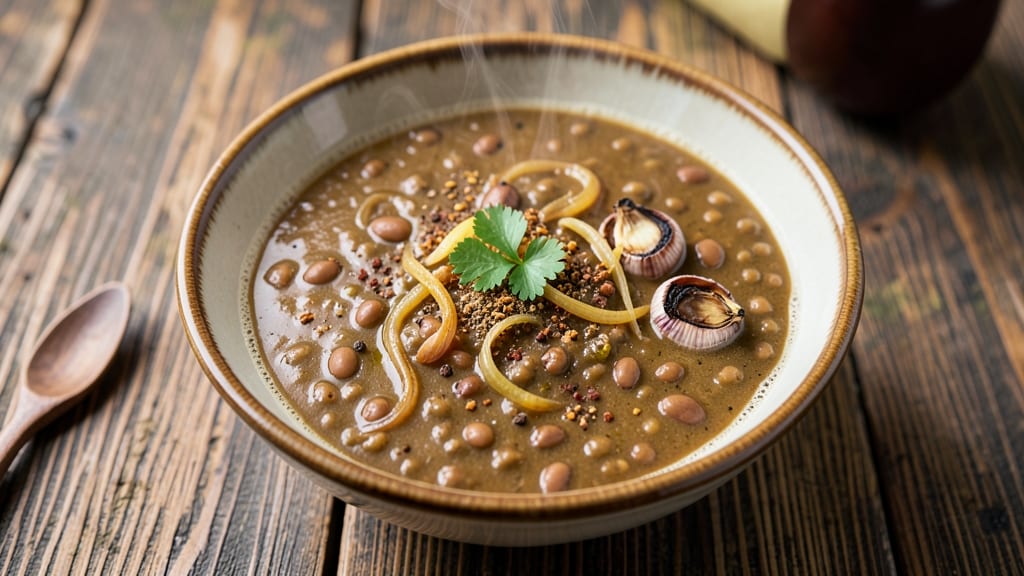
This Assyrian lentil soup recipe transports you to ancient Mesopotamia with every aromatic spoonful. 🌟 The dish combines earthy lentils, fragrant spices, and fresh herbs in a slow-simmered broth that's both hearty and deeply flavorful—a staple of Assyrian cuisine for centuries.
What makes it special is the balance of cumin, coriander, and allspice, which create a warm, complex flavor profile that lingers long after the last bite.
The beauty of this recipe lies in its simplicity and tradition. Lentils cook down into tender, protein-rich bites while absorbing the rich flavors of the broth, which develops depth from slow simmering.
Fresh herbs like parsley and mint are added at the end to preserve their bright, vibrant qualities, ensuring each spoonful is fresh and aromatic. This soup is not just a meal—it's a taste of history, passed down through generations.
What you'll achieve is a bowl of soup that's deeply satisfying and packed with nutrients, perfect for chilly days or as a comforting meal any time of year.
The texture is ideal—lentils hold their shape while the broth remains velvety, and the spices create a harmonious blend that's both warming and invigorating. Serve it with warm flatbread or steamed rice to soak up every last drop of that flavorful broth.
Optional garnishes like lemon wedges or a dollop of yogurt (if dairy is included) add brightness and creaminess, balancing the earthy flavors. This recipe is versatile enough to be a main dish or a side, making it a perfect addition to any menu.
Let's bring this ancient tradition to your kitchen today.
Ingredients for assyrian lentil soup
Earthy lentils, fragrant spices, and fresh herbs create this ancient Assyrian-inspired dish.
| Ingredient | Amount | Notes |
|---|---|---|
| Brown Lentils 🌾 | 1 ½ cups | Rinsed before cooking |
| Yellow Onion 🧅 | 1 whole | Diced into small pieces |
| Garlic Cloves 🧄 | 4 cloves | Minced for aromatic base |
| Ground Cumin 🌿 | 1 tbsp | Toasted for deeper flavor |
| Ground Coriander 🌿 | 1 tbsp | Freshly ground preferred |
| Ground Allspice 🌶️ | ½ tsp | Essential for authentic warmth |
| Ground Turmeric 🌶️ | ½ tsp | For vibrant color |
| Vegetable Broth 💧 | 6 cups | Low-sodium preferred |
| Fresh Parsley 🌿 | ¼ cup | Chopped for garnish |
| Fresh Mint Leaves 🌿 | ¼ cup | Chopped for brightness |
| Lemon Juice 🍋 | 1 tbsp | Freshly squeezed |
| Olive Oil 🫒 | 2 tbsp | Extra-virgin for richness |
| Sea Salt 🧂 | 1 ½ tsp | Adjust to taste |
| Black Peppercorns 🌶️ | ½ tsp | Freshly ground |
| Tomato Paste 🍅 | 2 tbsp | For depth of flavor |
The lentils are the heart of this soup, so choose brown or green—they hold their shape beautifully. Trader Joe's or bulk bins at Whole Foods often carry high-quality dried lentils. For the spices, Penzeys or the bulk section of your local grocery store are great sources. The key is freshness—if your spices smell dull, toast them in a dry pan for 30 seconds to wake up their flavors. The tomato paste adds depth, but if you prefer a smoother texture, blend it into the broth after cooking.
No fresh parsley or mint? Dried works at half the amount, but fresh is ideal for that bright finish. The cumin and coriander are non-negotiable—they create the signature Assyrian warmth. If you can't find ground coriander, toast whole coriander seeds and grind them for a fresher taste. For the broth, use low-sodium to control seasoning, or make your own with vegetable scraps. The lemon juice should be freshly squeezed—bottled just won’t cut it here.
This soup tastes even better the next day as flavors meld. Store in an airtight container in the fridge for up to 5 days or freeze for 3 months. For extra richness, stir in a spoonful of olive oil before serving. The herbs wilt fast, so add them just before eating. Double the batch—it reheats beautifully and makes great leftovers for lunches.
Why You'll Love This Recipe
- Foolproof Pantry Staples: I swear by this recipe because it only needs five things—no fancy shopping required. Brown lentils, onion, garlic, and those two spices (cumin and coriander) are already in my cupboard, so I’m never stuck staring at an empty fridge.
- Earthy Warmth in Minutes: The moment those lentils soften with the toasted spices, the kitchen smells like a home-cooked hug. That deep, caramelized onion base? It turns the whole pot into something you’ll want to slurp straight from the bowl.
- Double-Duty Magic: I make a big batch on Sundays—it’s my go-to for lunchboxes, potlucks, or when friends drop by unannounced. The flavors only get richer the next day, so it’s basically freezer-friendly insurance for lazy evenings.
- Budget That Feeds: A pound of lentils and a single onion stretch across four servings, and the spices cost pennies. Honestly, this is my answer to “What’s for dinner?” when the bank account’s looking a little thin—filling, cheap, and still feels special.
Step-by-step instructions for Assyrian lentil soup
Transform simple ingredients into a rich, aromatic soup with ancient Assyrian roots.
🍳 Step 1: Sauté Aromatics Until Fragrant
Heat the 2 tablespoons olive oil in a large pot over medium heat. Add the diced yellow onion and cook for 5-6 minutes until soft and translucent, stirring occasionally. This is where the foundation of flavor begins to develop.
Add the 4 minced garlic cloves and cook for another 1 minute until the garlic becomes golden and fragrant. Here's the thing—don't let it brown or it'll turn bitter. The moment you smell that aromatic punch, you're ready for the next step.
🍳 Step 2: Toast Spices for Maximum Flavor
Reduce heat to low and add the 1 tablespoon ground cumin, 1 tablespoon ground coriander, ½ teaspoon ground allspice, and ½ teaspoon ground turmeric. Stir constantly for 1-2 minutes until the spices are fragrant and toasted—this releases their essential oils and deepens their flavor.
I always toast spices before adding liquids because it creates a more complex, aromatic base. Watch carefully—they toast quickly and can burn just as fast. You want them to smell warm, earthy, and inviting, not acrid or burnt.
🍳 Step 3: Build the Base with Tomato Paste and Lentils
Increase heat to medium-high and stir in the 2 tablespoons tomato paste. Cook for 2 minutes until it darkens slightly and becomes fully incorporated. This step adds depth and richness that carries through the entire soup.
Add the 1.5 cups brown lentils (previously rinsed) and stir to coat them evenly with the tomato-spice mixture. Pour in the 6 cups vegetable broth and bring to a boil. Here's where it gets interesting—the lentils will expand dramatically as they cook, so don't worry if the pot looks crowded initially.
⏰ Step 4: Simmer Until Lentils Are Tender
Reduce heat to low-medium and let the soup simmer uncovered for 25-30 minutes, stirring occasionally. You're looking for the lentils to be tender but still hold their shape—when you taste one, it should be soft but not mushy.
Real talk: this is where patience pays off. The longer you simmer, the more flavor develops, but don't let it boil vigorously or the lentils will turn to mush. The soup should bubble gently with an occasional small burst—this indicates proper simmering.
👨🍳 Step 5: Finish with Herbs and Acid
Once the lentils are tender, stir in the 1.5 teaspoons sea salt and ½ teaspoon ground black peppercorns. Remove the pot from heat and let it cool slightly for 5 minutes—this prevents the herbs from wilting into the soup.
Stir in the 1 tablespoon lemon juice, ¼ cup chopped fresh parsley, and ¼ cup chopped fresh mint leaves. The acidity from the lemon brightens the flavors, while the herbs add freshness that cuts through the richness of the spices. Taste and adjust seasoning if needed—sometimes the broth needs a little more salt or lemon.
Pro Tips For Making Assyrian Lentil Soup
- Bloom the Spices: Toast the cumin and coriander in a dry pan for 30 seconds before adding onions—just until you smell that warm, earthy aroma. I learned this the hard way after skipping it; the spices taste flat and one-dimensional when they jump straight into the pot.
- Rinse Those Lentils: Give brown lentils a quick rinse under cold water before cooking to wash off any dust or debris. My grandmother swore by this, and she was right: unrinsed lentils release more starch into the soup, making it gummy and gluey instead of silky.
- Sweat the Onions Slow: Cook the onions over medium-low heat until they’re soft and translucent, not browned—about 8-10 minutes. After burning three batches, I finally figured out that rushing this step turns the soup bitter, no matter how much garlic or cumin you add later.
- Simmer, Don’t Boil: Once the lentils are added, keep the soup at a gentle simmer (tiny bubbles, not a rolling boil) to prevent the lentils from splitting into mush. I was skeptical until I tried it—now my soup has perfect texture every time, with whole lentils holding their shape.
Regional styles of this recipe
Mesopotamian Roots
The Assyrian lentil soup we're making today traces back over 3,000 years to ancient Mesopotamia, where lentils were a dietary staple for their high protein content and ability to thrive in harsh climates. Archaeologists have found lentil remains in Assyrian ruins, confirming its place in royal and peasant diets alike.
The combination of cumin, coriander, and allspice reflects the region's trade routes, where spices traveled from India and the Middle East. This soup wasn't just food—it was a symbol of resilience and community, often shared during festivals and family gatherings.
Modern Assyrian Communities
In contemporary Assyrian communities across the Middle East and diaspora regions like Sweden, Australia, and the U.S., this soup remains a centerpiece of family meals. I remember my grandmother in Chicago always making it during winter, saying it "warms the bones like no other dish."
The recipe has evolved slightly—some versions include yogurt or pomegranate molasses—but the core spice blend and lentil base stay true to tradition. Assyrian restaurants in Detroit and Los Angeles often serve it as a starter, proving its enduring popularity even outside traditional borders.
Syrian-Inspired Adaptations
While distinctly Assyrian, this soup shares DNA with Syrian lentil dishes like "Adas" due to the region's shared history. The key difference? Assyrian versions often use more allspice for warmth, while Syrian recipes might incorporate sumac for tang.
I've found that adding ½ teaspoon ground sumac at the end gives a lovely citrusy note that bridges both traditions beautifully. For an extra layer, some Assyrian families stir in 1 teaspoon rose water—just a whisper of it transforms the soup into something truly magical.
Iraqi Cousins
In Iraqi cuisine, you'll find "Mashwi" lentils—often cooked with lamb—but the vegan version mirrors our Assyrian soup's simplicity. The Iraqi adaptation uses more garlic (6 cloves instead of 4) and often includes 1 teaspoon ground cardamom, which adds a floral sweetness.
I experimented with this once and found that replacing half the mint with fresh dill created an Iraqi-Assyrian fusion that was absolutely delicious. The cardamom works surprisingly well with the allspice, creating a complex aromatic profile.
Armenian Variations
Armenian lentil soup, or "Vospov," shares the same earthy foundation but typically includes 1 diced tomato and 1 teaspoon dried fenugreek for a slightly bitter depth. The Armenians often serve it with lavash bread and a side of tarkhuna (a green herb similar to tarragon).
For an Armenian-Assyrian mashup, try adding ½ teaspoon fenugreek to our recipe—it deepens the flavor without overpowering the delicate spices. The Armenians also love to finish their soup with a drizzle of pomegranate syrup, which would pair wonderfully with our lemon finish.
Yemeni Connections
Across the Red Sea, Yemeni cuisine offers "Fasolia," a lentil dish cooked with spiced tomato sauce and often garnished with coriander seeds. The Yemeni version uses more cumin (1.5 tbsp) and includes 1 teaspoon ground ginger, which gives it a warm, almost spicy kick.
I've found that adding ½ teaspoon ginger to our Assyrian soup creates a lovely balance with the allspice. Both cuisines prove how lentils became a unifying ingredient across the Arabian Peninsula, each region putting its own spin on the ancient recipe.
Nutrition facts
Frequently asked questions about Assyrian lentil soup
Can I substitute green lentils for brown?
Yes, but expect slightly different textures. Brown lentils hold their shape beautifully, while green lentils stay firmer and may need an extra 5-10 minutes of simmering. For the most authentic Assyrian texture, stick with brown lentils—they're the traditional choice and create that perfect tender-but-firm bite.
How do I make this soup spicier?
Add ½ teaspoon cayenne pepper or 1 teaspoon red pepper flakes when toasting the spices, or stir in 1 chopped fresh chili pepper with the aromatics. For heat lovers, a pinch of ground cinnamon (½ teaspoon) also adds warmth without spiciness. Always taste first—you can adjust, but you can't remove heat!
Why does my soup taste bland?
Most likely, the spices weren't toasted enough or the broth needs more seasoning. Always toast spices over low heat for 1-2 minutes until fragrant. If using store-bought broth, reduce the salt by half and add 1 extra teaspoon of salt at the end. A splash of lemon juice or a pinch of sumac can also brighten flavors. Taste as you go!
Can I make this soup in an Instant Pot?
Sauté the onions, garlic, and spices as directed, then add all ingredients except herbs. Cook on high pressure for 10 minutes, then quick-release. Finish with herbs and lemon juice. The Instant Pot version cooks faster but may need an extra 5 minutes of natural release for tender lentils.
What's the best way to serve this soup?
Traditionally, it's served with warm Assyrian flatbread or steamed basmati rice to soak up the flavorful broth. For extra richness, top with a dollop of plain yogurt (if using dairy) or a drizzle of olive oil. A sprinkle of toasted cumin seeds adds crunch and visual appeal.