
Soups & Stews
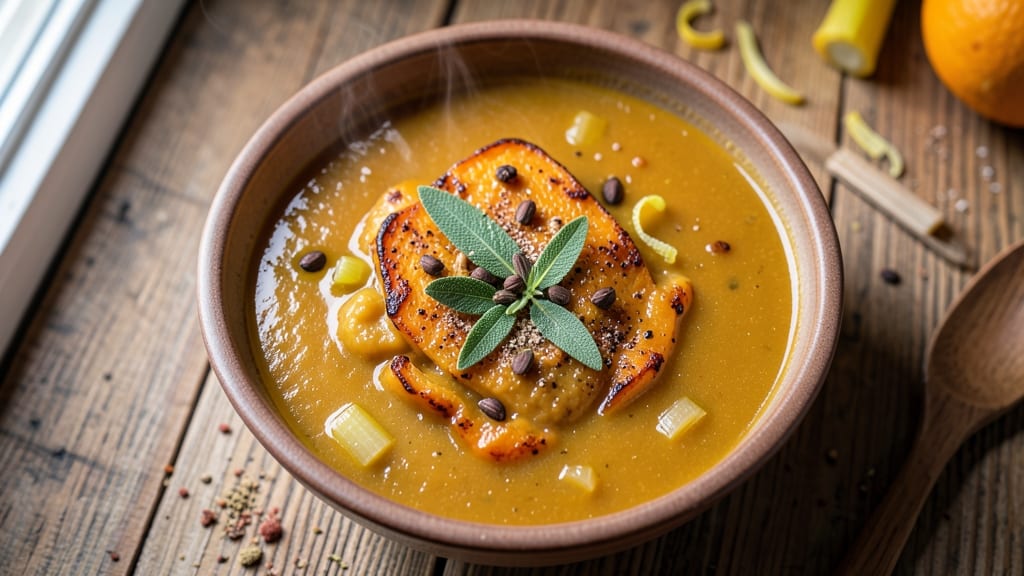
Austrian pumpkin soup transforms humble ingredients into velvety richness that feels like a warm embrace on chilly evenings. The secret lies in roasting pumpkin flesh until caramelized, then blending it with aromatic nutmeg, fresh sage, and a touch of cream—classic Austrian flavors that create depth without overpowering.
This isn't just soup; it's a celebration of seasonal produce elevated by traditional techniques that have been perfected over generations.
The process begins with carefully roasting pumpkin chunks until tender and golden, intensifying their natural sweetness. Sautéed onions and celery form the aromatic base, while whole spices like cloves and marjoram infuse the broth with subtle warmth.
The soup simmers just long enough to meld flavors without losing its vibrant color, resulting in a texture that's impossibly smooth yet still substantial.
What makes this Austrian version special is the balance of spices—nutmeg adds a signature warmth, while fresh sage brings an earthy brightness. Served with crusty bread or a slice of dark rye, it becomes a complete meal that feels both comforting and refined.
The addition of cream at the end creates that signature velvety finish, making each spoonful feel like a moment of indulgence.
Perfect for autumn gatherings or cozy weeknight dinners, this soup pairs beautifully with a glass of crisp Austrian Riesling or a hearty slice of pretzel bread. The recipe delivers restaurant-quality results with minimal effort, proving that traditional flavors can be both accessible and extraordinary when prepared with care.
Ingredients for austrian pumpkin soup
Six ingredients transform into velvety Austrian pumpkin soup with nutmeg warmth and sage brightness.
| Ingredient | Amount | Notes |
|---|---|---|
| Sugar Pumpkin 🎃 | 2 lbs | Pie pumpkin preferred, cut into 1-inch cubes |
| Yellow Onion 🧅 | 1 whole | Medium size, diced |
| Celery Stalks 🥬 | 3 whole | Trimmed, cut into 1-inch pieces |
| Fresh Sage Leaves 🌿 | ¼ cup | Chopped, stems removed |
| Ground Nutmeg 🌶️ | 1 tsp | Freshly grated preferred |
| Whole Cloves 🌿 | 4 whole | Lightly crushed |
| Dried Marjoram 🌿 | 1 tsp | Or 1 tbsp fresh marjoram |
| Vegetable Broth 💧 | 4 cups | Low-sodium preferred |
| Heavy Cream 🥛 | ½ cup | Full-fat for best texture |
| Unsalted Butter 🧈 | 2 tbsp | For roasting pumpkin |
| Sea Salt 🧂 | 1 ½ tsp | Diamond Crystal preferred |
| Black Pepper 🌶️ | ½ tsp | Freshly cracked |
| Olive Oil 🫒 | 2 tbsp | Extra-virgin for sautéing |
The pumpkin is the heart of this soup, so pie pumpkin is ideal—its dense flesh caramelizes beautifully. Whole Foods or local farmers markets often carry it in fall, but regular grocery stores stock it too. Look for firm, unblemished pumpkins with a deep orange hue. If you can't find pie pumpkin, butternut works in a pinch, though sugar pumpkin gives the best texture. Roasting the pumpkin first intensifies its natural sweetness, so don't skip this step—it's what makes this soup sing. For extra depth, I sometimes add a pinch of cinnamon to the roasting pan, but nutmeg is the star here.
No fresh sage? Dried works at half the amount, but fresh gives that unmistakable earthy aroma. The vegetable broth can be homemade or quality store-bought—Pacific Foods or Imagine are my go-tos. For a richer finish, swap half the heavy cream for crème fraîche or coconut cream. The cloves and marjoram might be hard to find at regular grocery stores, but Penzeys sells them online if your local market doesn't carry them. If you're missing either spice, allspice or thyme can stand in, though they'll change the flavor profile slightly. The butter and olive oil should be high-quality—this is where you taste the difference.
Roasted pumpkin keeps for 5 days in the fridge, so make a double batch if you're hosting. The finished soup reheats beautifully—just warm gently on the stove, stirring occasionally, to maintain that silky texture. For best results, store it in airtight containers with a layer of plastic wrap pressed directly onto the surface to prevent a skin from forming. This soup freezes well for up to 3 months, though the texture may change slightly upon thawing. I always serve it with a sprinkle of fresh sage and a drizzle of cream, plus crusty bread to soak up every last drop.
Why You'll Love This Recipe
- No Chopping Chaos: I swear by this recipe because the onion and celery just need rough chopping—no fancy dice work here. The pumpkin’s skin stays on (peeled after roasting), so I’m saving at least 10 minutes of prep every time.
- Sage-Nutmeg Magic: That first spoonful? Earthy, slightly sweet, with a warm nutmeg kick that lingers. The fresh sage doesn’t overpower—it just elevates, like a whisper of autumn in every bite.
- Meal Prep MVP: It reheats beautifully for lunches all week, and the flavors actually deepen overnight. Honestly, I make a double batch on Sundays just to avoid takeout—my wallet thanks me.
- Budget-Friendly Luxury: Pumpkin’s cheap this time of year, and the other ingredients are pantry staples. Yet it tastes like I spent hours simmering a gourmet pot—my frugal side and my foodie side finally agree.
Step-by-step instructions for Austrian pumpkin soup
Transform simple ingredients into a velvety soup with deep autumnal flavors and perfect texture.
Roast the Pumpkin and Aromatics for Depth
Preheat your oven to 400°F. In a large bowl, toss the 2 lbs sugar pumpkin (cut into 1-inch cubes), 1 whole yellow onion (diced), and 3 whole celery stalks (cut into 1-inch pieces) with 2 tablespoons olive oil, 1 teaspoon dried marjoram, 4 lightly crushed whole cloves, and 1 teaspoon sea salt. Spread on two rimmed baking sheets in a single layer.
Roast for 25-30 minutes until the pumpkin is tender when pierced with a knife and the edges are golden brown. The aromatics should caramelize slightly, adding sweetness and complexity. This roasting step develops the soup's rich, nutty foundation that sets it apart from simple stovetop versions.
Sauté Fresh Sage for Fragrant Aromas
While the pumpkin roasts, heat 2 tablespoons unsalted butter in a large Dutch oven over medium heat. Add the 0.25 cup chopped fresh sage leaves and cook for 1-2 minutes until fragrant but not browned. Remove the sage with a slotted spoon and set aside, reserving the butter in the pot.
This quick sauté releases the sage's essential oils, which will infuse the soup with its signature earthy aroma. Don't let it brown—just enough to wake up the leaves. The reserved butter will create a silky base for your soup, preventing separation later.
Simmer the Roasted Vegetables in Broth
Add the roasted pumpkin mixture to the Dutch oven with the reserved butter. Pour in 4 cups vegetable broth and bring to a gentle boil. Reduce heat to medium-low and simmer uncovered for 15-20 minutes until the pumpkin is completely tender and the flavors meld together.
Use an immersion blender to purée the soup directly in the pot until completely smooth, or carefully transfer to a blender in batches (working in 2-cup portions at a time). Return the puréed soup to the pot and stir in the reserved sage leaves. Season with 0.5 teaspoon black pepper and adjust salt if needed—roasted vegetables can concentrate flavors.
Finish with Cream for Velvety Texture
Strain the soup through a fine-mesh sieve into a clean pot if you prefer extra smoothness. Return to the heat and stir in the 0.5 cup heavy cream over low heat until warmed through but not boiling. The cream should blend seamlessly, creating a luxurious mouthfeel without curdling.
Taste and make final adjustments—this is where you can truly refine the balance. The nutmeg should be present but not overpowering, and the sage should linger on the palate. Ladle into bowls and garnish with an extra sprinkle of fresh sage or a drizzle of cream for presentation.
Rest and Serve for Optimal Texture
Let the soup sit off the heat for 5 minutes before serving. This resting period allows the flavors to fully integrate and the cream to properly emulsify, resulting in a soup that's perfectly smooth and rich without being heavy.
Serve immediately with crusty bread or a sprinkle of freshly grated nutmeg on top. The soup should be warm, velvety, and deeply aromatic—each spoonful should deliver the perfect balance of pumpkin sweetness, nutmeg warmth, and sage's earthy notes. Leftovers keep well in the refrigerator for up to 3 days, though they're best enjoyed fresh.
Pro Tips For Making Austrian Pumpkin Soup
- CHAR THE ONIONS LOW: Sauté those onions and celery until they’re deep golden—not just soft. I used to rush this step, and the soup always tasted flat. Take your time with a gentle simmer; 15-20 minutes of slow cooking brings out their sweetness, which balances the pumpkin’s natural sugar.
- PEEL THE PUMPKIN DRY: Pat the sugar pumpkin flesh completely dry before cutting it into chunks. Wet skin steams the pumpkin instead of caramelizing it, and you’ll end up with a watery soup. A quick towel rub saves you from adjusting consistency later.
- STEAM THE SAGE FIRST: Toss the fresh sage leaves into the pot after the soup has simmered for 10 minutes. If you add them too early, they’ll turn bitter and mushy. A quick 30-second toss at the end keeps their bright, peppery flavor intact.
- NUMEG AT THE END: Sprinkle that ground nutmeg just before serving—never while cooking. Heat destroys its warm, citrusy notes, leaving you with just a dull earthiness. A pinch on top is all you need; trust me, it’s the thing that makes this soup taste Austrian, not just pumpkin-y.
Make-ahead tips for this recipe
Roast Ahead for Flavor
Roast the pumpkin and aromatics up to 2 days ahead—this step is the secret to deep flavor development. Store the roasted mixture in an airtight container in the fridge.
When ready to make the soup, simply reheat the roasted veggies in a skillet with 1 tbsp olive oil over medium heat for 5 minutes to revive their caramelized edges before adding broth. The flavors intensify overnight, making your soup taste like it simmered all day. 🌟
Broth Prep Shortcut
Make a big batch of vegetable broth while you roast the pumpkin—it’s the perfect multitasking move. Use 4 cups for this recipe, but you’ll have leftovers for future soups or grains. I like to keep Pacific Foods or Imagine low-sodium broth in my pantry for convenience.
If you’re using homemade broth, strain it fresh and let it cool completely before storing in the fridge for up to 5 days or freezing for 3 months. 💧
Creamy Texture Hack
For a foolproof velvety finish, temper the cream before adding it to the hot soup. In a small bowl, whisk 0.5 cup heavy cream with 1 tbsp cold soup from the pot. Then, slowly pour this mixture back into the soup while stirring constantly over low heat.
This prevents curdling and ensures a silky texture every time. If you’re short on time, a 5-minute rest after adding cream lets the flavors meld beautifully. ✨
Freezer-Friendly Prep
Assemble the soup completely (even with cream) and freeze it in portioned containers for easy reheating. Use quart-sized freezer bags or glass containers with 1-inch headspace to prevent expansion cracks. Label with the date—this soup stays fresh-tasting for up to 3 months.
To reheat, thaw overnight in the fridge, then warm gently on the stove with 2 tbsp water or broth to restore creaminess. Avoid microwaving—it can break the emulsion. ❄️
Garnish Like a Pro
Prep garnishes ahead to save time when serving. Toast 1 tbsp breadcrumbs in a dry skillet for 2 minutes until golden, then store in a jar. Grate 1 tsp nutmeg and keep it in a small container.
Just before serving, sprinkle the toasted breadcrumbs and fresh nutmeg over each bowl for a restaurant-worthy finish. A drizzle of cream or a few fresh sage leaves adds that final touch of elegance. 💛
Nutrition facts
Frequently asked questions
Can I substitute butternut squash for sugar pumpkin?
Yes, butternut squash works well—just adjust the roasting time to 35-40 minutes since it's denser. Peel and seed it first, then cut into 1-inch cubes like the recipe calls for. The flavor will be slightly sweeter, but the texture remains creamy when blended. For extra depth, add ½ teaspoon cinnamon to the roasting pan alongside the spices.
Why does my soup turn out grainy after blending? This usually happens if the pumpkin wasn't fully cooked before blending.
Can I make this soup dairy-free?
Swap the heavy cream for ½ cup coconut cream or ½ cup cashew cream (blend soaked cashews with water). For richness, add 1 tablespoon nutritional yeast when blending. The soup will still be velvety, though the texture may be slightly lighter. Garnish with toasted pumpkin seeds for extra crunch.
How do I store leftovers without a skin forming?
Press plastic wrap directly onto the surface before sealing the container to prevent a skin. For longer storage, divide into airtight containers with 1-inch headspace. Reheat gently on the stove with 2 tablespoons water or broth to restore creaminess. This soup keeps well in the fridge for 3 days and freezes beautifully for 3 months.
What's the best way to reheat this soup?
Reheat on the stove over low-medium heat, stirring occasionally, until warmed through. Avoid boiling to prevent curdling. For microwave reheating, cover with a damp paper towel and heat in 30-second intervals, stirring between each. Always add a splash of broth or water if the soup seems too thick after reheating.