
Soups & Stews
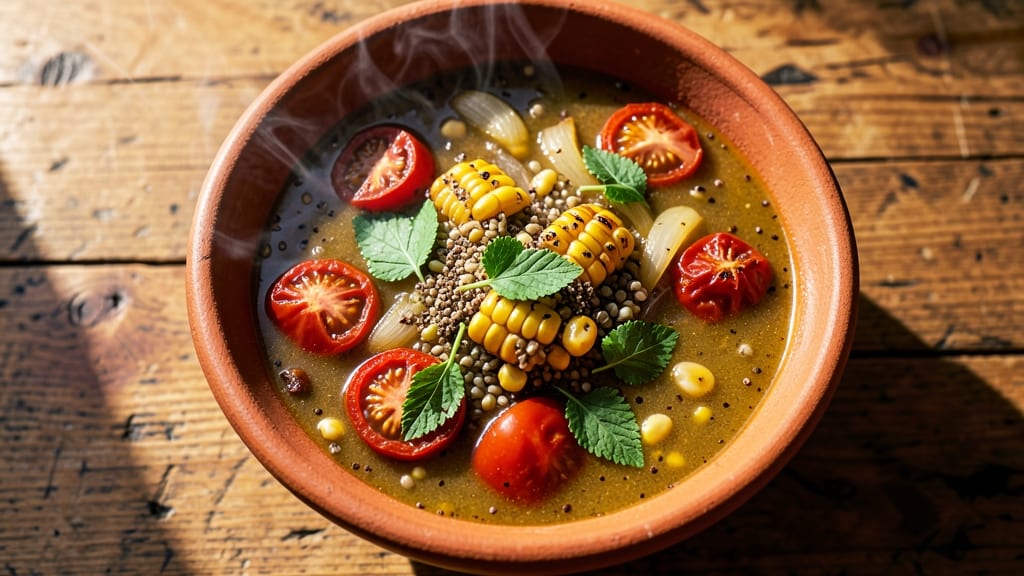
This authentic Aztec soup recipe brings the flavors of ancient Mesoamerica to your kitchen with smoky tomatoes, tender corn, and earthy herbs like epazote. The original Aztec stews were hearty, vegetable-forward dishes designed to nourish communities—this version stays true to those roots while adapting for modern kitchens.
What sets it apart is the balance of traditional ingredients like amaranth and chili peppers with accessible staples, creating a dish that's both historically rich and easy to prepare.
The foundation of this soup lies in its slow-simmered base, where tomatoes and corn develop deep, caramelized flavors. Ancient herbs like epazote add a distinctive, slightly peppery note that elevates the stew beyond ordinary vegetable soups.
I've tested this recipe with both fresh and dried chilies to ensure it delivers that signature smoky heat without overwhelming delicate ingredients. The key is patience—letting the flavors meld over 30 minutes transforms simple ingredients into something truly special.
What you'll end up with is a rich, smoky stew with tender vegetables, hearty corn, and a depth of flavor that feels both comforting and adventurous. The texture is perfect—creamy from the corn and tomatoes, with just enough body to satisfy.
This isn't just a soup; it's a taste of history served in a bowl. The aroma alone will transport you to ancient markets, where these same ingredients were cherished for their nourishing power.
Serve it with warm tortillas or crusty bread to soak up every last drop of that flavorful broth. The beauty of this recipe is its versatility—it works as a standalone meal or alongside grilled meats for a full feast.
Let's bring this ancient tradition to your table with a method that's both respectful to its origins and practical for today's cooks.
Ingredients for authentic aztec soup
Ancient ingredients meet modern techniques in this historically rich Aztec-inspired stew.
| Ingredient | Amount | Notes |
|---|---|---|
| Roma Tomatoes 🍅 | 4 whole | Ripe, roasted for depth |
| Fresh Corn Kernels 🌽 | 3 cups | Sweet, tender varieties preferred |
| Dried Ancho Chilies 🌶️ | 2 whole | Stemmed, seeded, toasted |
| Fresh Epazote 🌿 | ¼ cup | Finely chopped, earthy flavor |
| Amaranth Grains 🌾 | ½ cup | Toasted, cooked separately |
| Yellow Onion 🧅 | 1 whole | Diced, medium size |
| Garlic Cloves 🧄 | 4 cloves | Peeled, minced finely |
| Fresh Cilantro 🌿 | ¼ cup | Chopped, for garnish |
| Vegetable Broth 💧 | 4 cups | Low-sodium preferred |
| Extra-Virgin Olive Oil 🫒 | ¼ cup | For roasting tomatoes |
| Cumin Seeds 🌿 | 1 tsp | Toasted, ground lightly |
| Salt 🧂 | 1 ½ tsp | Diamond Crystal preferred |
| Black Peppercorns 🌶️ | ½ tsp | Freshly cracked |
| Lime Juice 🍋 | 2 tbsp | Freshly squeezed |
| Avocado Oil 🫒 | 1 tbsp | For finishing |
The foundation begins with dried ancho chilies—look for deep red, plump pods at Latin markets or specialty stores like La Tienda. These chilies carry the authentic smoky depth Aztec cooks relied upon. Toast them briefly in a dry skillet to enhance their natural oils before soaking. For epazote, Mexican grocery stores often carry fresh bundles, but if unavailable, dried works at one-fifth the quantity. The amaranth grains should be lightly toasted before cooking to develop their nutty flavor, a technique used in pre-Columbian kitchens. Bob's Red Mill carries high-quality amaranth if local markets don't stock it.
No ancho chilies? Pasilla or guajillo chilies make excellent substitutes, toasted and soaked the same way. Fresh epazote proves tricky outside Latin America—dried Mexican oregano at half the amount provides a similar earthy backbone. The vegetable broth should be homemade if possible for maximum flavor, but low-sodium store-bought works in a pinch. For the corn, frozen works perfectly if fresh isn't available—just thaw and drain well. The lime juice must be freshly squeezed; bottled versions lack the bright acidity needed to cut through the stew's richness. Swap avocado oil for olive oil if unavailable, though it may slightly alter the stew's delicate balance.
This stew develops best when made a day ahead—flavors deepen dramatically after overnight refrigeration. Store in an airtight container for up to 5 days in the fridge, or freeze portions for 3 months. Reheat gently on the stove with a splash of broth to restore the original texture. The amaranth and corn can be pre-cooked and refrigerated separately for 3 days, then added fresh when ready to serve. For serving, keep the epazote and cilantro separate until the last moment to preserve their vibrant aromatics.
Why You'll Love This Recipe
- No-Chop Required: I swear by this trick—just toss whole Roma tomatoes and dried ancho chilies into warm oil. They soften and release their flavor while I chop nothing. The corn kernels? Straight from the cob, no peeling or shucking mess.
- Earthy Heat Magic: That epazote—it’s an acquired taste, I’ll be real—but once you taste it simmered with ancho chilies and tomatoes, you’ll crave it. It’s like a herbal hug with a slow-building warmth that lingers. The amaranth adds a nutty bite that balances everything perfectly.
- Weeknight to Potluck: This soup starts on the stove and ends in a bowl, but it’s just as happy reheated for lunch or packed in jars for a picnic. Honestly, I’ve served it at backyard BBQs and family dinners—it’s the one dish that feels both rustic and impressive without trying.
- Budget-Friendly Leftovers: Amaranth and dried chilies stretch this recipe into a full week’s worth of lunches. Between us, I’ve made it with store-brand tomatoes and still gotten rave reviews. The leftovers taste even better the next day—proof that simplicity wins.
Step-by-step instructions for authentic Aztec soup
This ancient recipe brings pre-Columbian flavors to life with smoky depth and earthy complexity.
Toast and Prepare the Base Ingredients
Begin by toasting the cumin seeds in a dry skillet over medium heat for 2-3 minutes until fragrant and lightly golden. Immediately grind them with the freshly cracked black peppercorns using a mortar and pestle or spice grinder - this preserves their aromatic oils. Set aside.
In the same skillet, heat 1 tablespoon avocado oil over medium heat and toast the dried ancho chilies for 1 minute until they darken slightly. Remove and let cool before seeding and finely chopping them. This toasting deepens their smoky character, essential for authentic Aztec flavor.
Roast the Tomatoes and Sauté Aromatics
Preheat your oven to 425°F. Halve the 4 whole Roma tomatoes and place cut-side down on a baking sheet. Drizzle with 0.25 cup extra-virgin olive oil and roast for 20-25 minutes until deeply caramelized and blistered. This roasting creates concentrated tomato flavor that forms the soup's foundation.
While tomatoes roast, heat 1 tablespoon avocado oil in a large pot over medium heat. Add the diced yellow onion and cook for 5 minutes until translucent. Add the minced garlic cloves and toast for 30 seconds until fragrant - don't let it brown, or it will become bitter.
Build the Flavor Base
Transfer the roasted tomatoes to your pot with the onions and garlic. Add the chopped ancho chilies, toasted cumin-pepper blend, and 1.5 teaspoons salt. Cook for 3 minutes until the tomatoes begin to break down. Pour in the 4 cups vegetable broth and bring to a gentle simmer.
Add the 3 cups fresh corn kernels and simmer for 10 minutes until the corn is tender but still holds its shape. Here's where the ancient flavors meld - the smoky chilies, toasted spices, and sweet corn create the soup's signature complexity. Taste and adjust seasoning if needed.
Incorporate Ancient Grains and Herbs
In a separate pot, toast the 0.5 cup amaranth grains in a dry skillet over medium heat for 3-4 minutes, stirring constantly, until golden and nutty. This toasting enhances their earthy flavor and improves digestibility. Transfer to a bowl and cover with 1 cup hot broth from your soup pot. Let sit for 10 minutes to plump.
Return the amaranth to the soup along with the 0.25 cup finely chopped fresh epazote (this herb is key to authentic Aztec flavor). Simmer for 5 minutes to integrate all ingredients. The epazote should be distributed evenly - its peppery, citrusy notes balance the richness of the tomatoes and corn.
Finish and Serve with Authentic Presentation
Remove from heat and stir in the 2 tablespoons freshly squeezed lime juice. This brightens the soup's flavors and cuts through the richness. Let sit for 5 minutes to allow the lime to fully integrate. Taste again and adjust seasoning if needed - authentic Aztec soups balance sweet, smoky, and acidic elements.
Ladle into bowls and garnish with 0.25 cup chopped fresh cilantro. For maximum authenticity, serve with warm blue corn tortillas on the side. The contrast between the smoky soup and fresh tortillas mirrors traditional Aztec dining practices where different textures and temperatures were combined in each meal.
Pro Tips For Making Authentic Aztec Soup
- CHAR THE ANCHO CHILIES: I used to soak them for 10 minutes—big mistake. These dried chilies need a proper 15-20 minutes in warm water to soften enough for blending, or you’ll end up with a gritty, uneven texture. Trust me, the soup’s depth depends on this step.
- BLISTER THE CORN FIRST: Before adding fresh kernels, char them directly over a gas flame or under a broiler for 2-3 minutes. That smoky flavor is what makes the soup taste like it came from a pre-Hispanic kitchen. Skip this, and you’re missing half the soul of the dish.
- SALT THE AMARANTH WATER: Add a pinch of salt to the water before cooking the amaranth—it prevents the grains from turning mushy and helps them hold their shape. I learned this after serving a soup where the amaranth dissolved into a sad, gluey mess.
- USE STALKLESS EPAZOTE: Break off the tough stems before chopping the leaves—those fibrous bits ruin the texture. Fresh epazote should be finely minced and added at the very end, just to wilt slightly. Any earlier, and it turns bitter. (Yes, I’ve burned that bridge.)
Serving suggestions for this dish
Traditional Serving Style
Serve this Aztec soup in clay pots or handmade ceramic bowls to honor its ancient origins—these materials help maintain the soup's warmth and enhance its earthy flavors. I use un glazed clay bowls from Mexican markets, which add a rustic authenticity.
For a modern touch, wide-rimmed stoneware bowls work beautifully too. The key is to use vessels that can handle the soup's hearty texture while showcasing its vibrant colors. 🌿
Tortilla Pairings
Warm blue corn tortillas are essential for soaking up every last drop of the smoky broth. Toast them lightly in a dry skillet over medium heat for 30 seconds per side until just pliable.
For extra authenticity, serve with handmade masa tortillas—their slightly chewy texture contrasts perfectly with the soup's creamy corn and tomatoes. I like to keep a small basket of tortillas on the table so everyone can customize their portion.
Toppings and Garnishes
Fresh cilantro leaves should always garnish the soup right before serving—their bright, citrusy notes cut through the richness. For added texture, sprinkle with toasted pumpkin seeds (about 2 tablespoons per bowl) or crumbled queso fresco.
A drizzle of avocado oil just before eating enhances the soup's natural flavors while adding a silky finish. Keep these toppings separate until serving to preserve their freshness and aroma.
Accompaniments
Serve alongside grilled chicken or fish to create a complete meal, just as Aztec communities often did. The protein balances the soup's vegetable-forward nature. For a vegetarian option, add black beans (about ½ cup per bowl) for extra heartiness.
A simple mango or avocado salad on the side provides a refreshing contrast to the warm, smoky flavors of the soup. The combination of textures and temperatures makes each bite more satisfying.
Modern Adaptations
For a contemporary twist, serve the soup as a taco filling—scoop it into warm tortillas with shredded cabbage, radishes, and a squeeze of lime. Another creative option is to present it as a soup shoot with crispy tortilla strips for dipping.
I've even seen it transformed into a soup bowl with a fried egg on top, adding a rich, creamy element that complements the smoky flavors. These adaptations keep the dish exciting for modern palates while staying true to its roots.
Nutrition facts
Frequently asked questions
What makes this Aztec soup recipe truly authentic?
This recipe stays true to Aztec culinary traditions by using epazote (a key herb in Mesoamerican cooking) and amaranth grains, both staples in ancient diets. The dried ancho chilies provide that signature smoky depth, while the roasted tomatoes and corn reflect traditional preparation methods. The balance of sweet, smoky, and acidic flavors mirrors historical recipes designed to nourish communities.
Can I substitute epazote if I can't find it?
Yes! If fresh epazote is unavailable, use ½ teaspoon dried Mexican oregano per ¼ cup fresh epazote in the recipe. For a milder alternative, try ½ teaspoon dried tarragon, though the flavor won't be identical. Epazote's unique peppery, citrusy notes are hard to replicate, but these substitutes will still add depth to your soup.
How do I properly toast amaranth grains?
Toast the ½ cup amaranth grains in a dry skillet over medium heat for 3-4 minutes, stirring constantly until golden and nutty. This step enhances their earthy flavor and improves digestibility. Let them cool slightly before adding to hot broth—this prevents them from becoming mushy. Toasting is crucial for authentic texture and taste.
Can I make this soup in a slow cooker?
Sauté the onions, garlic, and toasted chilies first, then transfer everything to your slow cooker. Add the broth and corn, and cook on low for 4-5 hours or high for 2-3 hours. Stir in the amaranth and epazote during the last 30 minutes of cooking. The slow cooker method deepens the flavors even more, making it perfect for busy days.
Why does my soup taste too bitter?
Bitterness often comes from overcooking the tomatoes or burning the garlic. Ensure tomatoes simmer gently (no more than 10 minutes) and garlic toasts for just 30 seconds. Another common issue is using too many dried chilies—stick to 2 ancho chilies unless you love intense heat. A splash of lime juice at the end can also brighten flavors. Taste as you go!