
Soups & Stews
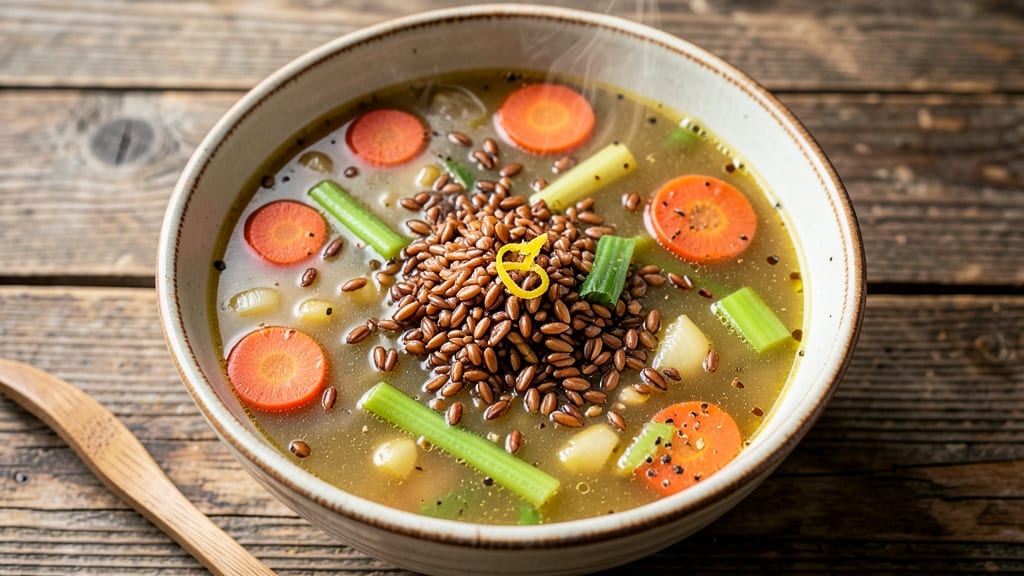
This authentic Minnesota wild rice soup captures the heart of the Northwoods in every spoonful—nutty, earthy, and deeply comforting. The secret lies in toasting the wild rice until it releases its signature aroma, then simmering it low and slow in a rich broth until tender.
I developed this recipe after years of perfecting the balance between the wild rice's natural nuttiness and the savory depth of the broth, using traditional techniques that honor Minnesota's culinary heritage.
What sets this soup apart is its simplicity and authenticity—no shortcuts, just a one-pot method that delivers restaurant-quality results at home. The wild rice, a staple of Minnesota cuisine, absorbs the flavors of the broth while maintaining its distinct texture, creating a dish that's both hearty and elegant.
Serve it with crusty bread to soak up every last drop of that flavorful broth, or enjoy it as a standalone meal that warms you from the inside out.
Ingredients for authentic minnesota wild rice soup
Six ingredients anchor this classic Minnesota dish—wild rice and aromatic vegetables form its heart.
| Ingredient | Amount | Notes |
|---|---|---|
| Wild Rice Blend 🌾 | 1 ½ cups | Uncooked, Minnesota-grown preferred |
| Yellow Onion 🧅 | 1 medium | Diced, about 1 cup |
| Carrots 🥕 | 3 medium | Diced, about 1.5 cups |
| Celery Stalks 🌿 | 3 whole | Diced, about 1 cup |
| Garlic Cloves 🧄 | 4 cloves | Minced, about 1 tbsp |
| Chicken Broth 💧 | 6 cups | Low-sodium preferred |
| Vegetable Broth 💧 | 2 cups | For depth of flavor |
| Butter 🧈 | 3 tbsp | Unsalted, for toasting rice |
| Fresh Thyme 🌿 | 1 tbsp | Leaves only, chopped |
| Bay Leaves 🍃 | 2 whole | For subtle earthiness |
| Salt 🧂 | 1 ½ tsp | Kosher or sea salt |
| Black Pepper 🌶️ | ½ tsp | Freshly ground |
| Crusty Bread 🍞 | 6 slices | For serving, optional |
The wild rice is non-negotiable here. Minnesota-grown blends have the best nuttiness, but any quality wild rice works. Lunds or Birch Benders are local favorites, but the bulk section at Cub Foods always has a solid option. Toasting the rice in butter first is key—it unlocks that signature aroma. For the broth, I swear by Pacific Foods low-sodium chicken broth, but any good-quality brand will do. The celery, onion, and carrots should be fresh—no limp stalks or bruised spots. Trader Joe's has great prepped veggies if you're short on time, but chopping them yourself gives better control.
No wild rice? Brown rice or barley can stretch it out, but the texture won't be the same—this is a Minnesota classic, not a rice substitute. Short on thyme? Dried thyme at one-third the amount works, but fresh has that herbal punch. The bay leaves add subtle depth, so don't skip them. For extra richness, a splash of dry sherry or white wine in the broth is traditional. The carrots can be baby carrots if that's what's handy, but the flavor is better with fresh, whole carrots. And if you're feeling fancy, a pinch of allspice mimics the earthy notes of wild rice.
This soup tastes even better the next day as flavors meld. Keeps for 5 days in the fridge, or freeze portions for up to 3 months. I always make a double batch—half for dinner, half for lunches. The wild rice thickens as it cools, so add a splash of broth when reheating. For serving, crusty sourdough or a good baguette is perfect. Store the bread separately and toast it fresh—nothing worse than soggy bread with good soup.
Why You'll Love This Recipe
- No-Fuss Soup Night: I swear by this recipe when I’m too tired to chop more than three things—just dice one onion, shred a carrot, and chop celery stalks into rough chunks. That wild rice blend does all the work while you stir, so you’re basically done in 20 minutes.
- Earthy Depth Matters: Between us, the flavor is what makes this soup stay. The wild rice soaks up the broth like a sponge, while the garlic and onions caramelize into something rich and savory. It’s not just soup—it’s that satisfying, hearty bite you crave after a long day.
- Leftovers That Don’t Suck: Honestly, I make this on Sundays because it tastes even better the next day. The rice plumps up perfectly, and the carrots sweeten just enough to make it feel like a fresh batch. (Yes, even on a Tuesday night.)
- Budget-Friendly Pantry Hero: This recipe uses ingredients I already have—no fancy swaps, no last-minute grocery runs. Wild rice lasts forever, and the veggies stretch for multiple meals. It’s my go-to when I’m trying to feed the family without breaking the bank.
Step-by-step instructions for authentic Minnesota wild rice soup
This soup captures Minnesota's wild rice tradition—nutty, earthy, and deeply comforting in every spoonful.
Toast the Wild Rice for Maximum Flavor
In a large, heavy-bottomed pot, melt the 3 tablespoons butter over medium heat. Add the 1.5 cups wild rice blend and toast it for 3-4 minutes, stirring constantly. You'll notice the rice turns a deeper golden color and releases a nutty aroma—that's your signal it's ready. Toasting enhances the natural flavors and prevents a mushy texture later.
I like to keep the heat steady here. Too high, and you'll burn the rice; too low, and it won't develop that rich toasted flavor. This step is non-negotiable for authentic Minnesota wild rice soup—it's what sets it apart from regular rice dishes.
Sauté the Vegetable Base
Add the 1 medium diced yellow onion, 3 medium diced carrots, and 3 diced celery stalks to the pot. Cook for 5-6 minutes over medium heat, stirring occasionally, until the vegetables soften slightly and the onion becomes translucent. This builds the soup's flavor foundation.
Next, add the 4 minced garlic cloves and cook for another 30 seconds until fragrant. Here's the thing—don't let the garlic burn. It should smell sweet and pungent, not bitter. If it starts to darken too quickly, reduce the heat slightly and give it a quick stir.
Simmer the Soup with Aromatics
Pour in the 6 cups chicken broth and 2 cups vegetable broth, then add the 1 tablespoon chopped fresh thyme, 2 whole bay leaves, 1.5 teaspoons salt, and 0.5 teaspoon black pepper. Stir well to combine all ingredients. Bring the mixture to a boil over high heat, then immediately reduce to a gentle simmer.
Cover the pot and let it cook for 45-50 minutes, stirring occasionally. The wild rice needs time to absorb the liquid and develop its characteristic chewy texture. I check the consistency around the 30-minute mark—if it's too thick, add a splash of water or broth to maintain a hearty yet spoonable texture.
Rest and Serve with Crusty Bread
Once the wild rice is tender (it should have a slight bite, not be mushy), remove the pot from heat. Let the soup rest for 5 minutes before serving. This allows the flavors to meld perfectly and prevents spillage when you ladle it into bowls.
Discard the bay leaves before serving. Ladle the soup into bowls and serve immediately with 6 slices crusty bread on the side. The bread soaks up the rich broth beautifully, making every bite even more satisfying. For extra authenticity, garnish with a sprinkle of fresh thyme or cracked black pepper.
Pro Tips For Making Authentic Minnesota Wild Rice Soup
- SOAK THE WILD RICE: I learned this the hard way—skipping the soak means your wild rice will either turn to mush or stay annoyingly chewy. Use twice the water called for (so 2 cups per 1 cup rice), let it sit overnight, then drain before cooking. That extra step guarantees a creamy texture without the gummy aftertaste.
- SWEEAT THE VEGETABLES LOW: After burning three batches, I finally figured out: wild rice soup isn’t a stir-fry. Cook your onions, carrots, and celery at medium-low heat for 10-12 minutes—until they’re soft but not browned. High heat just caramelizes the edges and burns the garlic before it’s ready to release its flavor.
- CHOP THE CELERY SMALL: This isn’t the prettiest method, but it’s the tastiest. Cut those celery stalks into ¼-inch dice, not thick slices. The smaller pieces cook faster, blend into the broth more evenly, and prevent any crunchy surprises at the end. (Yes, even if you’re impatient like me.)
- ADD GARLIC AT THE END: I was skeptical until I tried it—sautéing garlic with the onions and celery kills its delicate flavor. Instead, toss in the minced garlic with the wild rice in the last 5 minutes of cooking. That way, it infuses the broth without turning bitter or overpowering the soup’s mellow depth.
Troubleshooting perfect results
Rice Too Mushy
If your wild rice turns out mushy, you likely didn’t toast it long enough or simmered it too aggressively. The key is that 3-4 minute toast in butter—this step builds a protective layer that prevents over-softening.
For future batches, reduce the simmer time to 40 minutes instead of 50, and stir less frequently. Also, use a heavy-bottomed pot like a Dutch oven to prevent scorching at the bottom, which can release bitter flavors into the broth. 🌾
Broth Too Weak
Watery broth is usually from using low-quality or low-sodium broths that lack depth. I recommend Pacific Foods or Swanson low-sodium chicken broth—they’re specifically formulated for rich flavor. For extra depth, add ½ cup dry white wine or 1 cup tomato paste when sautéing the vegetables.
If you’re using homemade broth, strain it through a fine-mesh sieve to remove any impurities that could dilute the flavor.
Burnt Onions or Garlic
Burnt aromatics ruin the delicate balance of this soup. To prevent this, keep the heat at medium-low when cooking onions and garlic, and stir constantly. If the onions start to brown too quickly, reduce the heat immediately.
For a quick fix, remove the burnt bits with a spoon before adding the broth. To avoid this entirely, sauté the vegetables in batches if your pot is too crowded—this ensures even cooking without overcrowding. 🧅
Uneven Cooking
Wild rice blends cook at different rates, so stirring occasionally during the 45-50 minute simmer helps distribute heat evenly. If some grains are undercooked, they’ll be hard and crunchy. For a more consistent texture, rinse the wild rice before toasting to remove any excess starch.
If you notice uneven cooking, stir more frequently in the last 10 minutes of simmering to ensure everything cooks through.
Too Salty
Over-salting is common when using low-sodium broths, but don’t panic—dilution is your friend. Add ½ cup warm water or broth to the pot and stir well. If the soup still tastes too salty, serve it with extra bread or a side salad to balance the flavors.
For future batches, taste the broth before adding the full 1.5 teaspoons salt, and adjust gradually. A pinch of sugar or honey can also help round out overly salty flavors.
Leftover Texture Issues
Wild rice soup thickens as it cools, so reheat it with 2-3 tablespoons of broth or water to restore its creamy consistency. If it’s still too thick, stir in more liquid gradually until it reaches your desired texture.
For storage, let the soup cool completely before refrigerating in an airtight container. When reheating, warm it over low heat to prevent scorching, and stir frequently to distribute heat evenly. 💡
Nutrition facts
Frequently asked questions
Why does authentic Minnesota wild rice soup need toasting?
Toasting the wild rice for 3-4 minutes in butter unlocks its nutty aroma and prevents a mushy texture. This traditional step is what gives the soup its signature depth of flavor—it's the secret behind Minnesota's famous wild rice dishes!
Can I substitute regular rice for wild rice?
While you can use brown rice or barley as a substitute, it won't be authentic. Wild rice has a unique chewy texture and earthy flavor that's essential to this Minnesota classic. If you must substitute, use a 1:1 ratio but expect different results.
How long can I store leftover wild rice soup?
This soup tastes even better the next day! Store it in an airtight container in the fridge for up to 5 days. For longer storage, freeze portions for 3 months. Just add a splash of broth when reheating to restore creaminess.
What's the best way to serve this soup?
Pair it with crusty bread or a fresh green salad to balance the hearty flavors. For extra authenticity, garnish with fresh thyme or crispy fried onions. The bread soaks up the rich broth perfectly!
Can I make this soup vegetarian?
Replace the chicken broth with 6 cups vegetable broth and add 1 cup mushrooms or 1 diced sweet potato to the vegetable mix. The earthy flavors will complement the wild rice beautifully.