
Soups & Stews
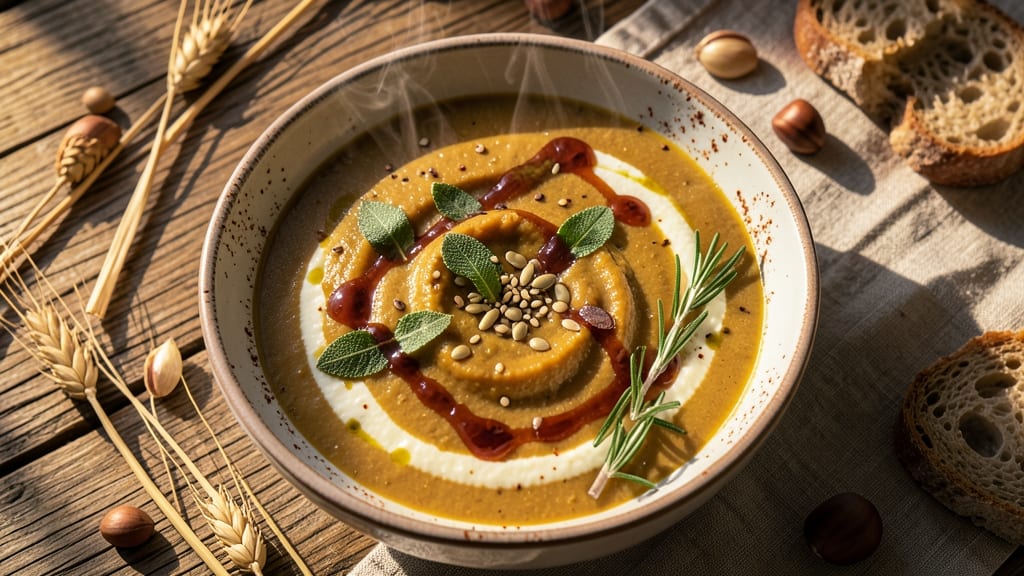
This autumn harvest butternut squash soup transforms seasonal produce into a velvety, spiced masterpiece that captures the essence of fall. 🍂 The secret lies in roasting the squash first—this caramelizes the natural sugars, creating a depth of flavor that no raw preparation can match.
What starts as simple ingredients becomes a symphony of warm spices, toasted sage, and creamy texture that feels like a hug in a bowl.
Professional techniques make this recipe approachable yet impressive: roasting the squash intensifies its sweetness, while sautéing onions and garlic in olive oil builds a flavorful foundation. A blend of cinnamon, nutmeg, and clove infuses warmth, balanced by the bright acidity of apple cider.
The result is a soup that's rich without being heavy, with each spoonful delivering layers of autumnal comfort.
The final touch transforms ordinary into extraordinary—swirls of toasted sage and a drizzle of cream or coconut milk elevate the presentation, making it perfect for gatherings or cozy weeknight dinners.
Every element works together to create a dish that's both comforting and sophisticated, proving that seasonal cooking can be both simple and stunning.
Whether you're serving it to guests or treating yourself to a moment of warmth, this soup delivers restaurant-quality results at home. The aroma alone will fill your kitchen with the spirit of harvest season, while the taste lingers long after the last bite.
Here's how to make it—step by step, with professional precision and home-cooked heart.
Ingredients for autumn harvest butternut squash soup
Roasted squash, aromatic spices, and velvety creaminess—this soup captures autumn's essence in every spoonful.
| Ingredient | Amount | Notes |
|---|---|---|
| Medium Butternut Squash 🎃 | 1 whole | Peeled, seeded, cut into 1-inch cubes |
| Yellow Onion 🧅 | 1 whole | Diced, about 1 cup |
| Garlic Cloves 🧄 | 3 cloves | Peeled, minced |
| Extra-Virgin Olive Oil 🫒 | ¼ cup | For roasting and sautéing |
| Vegetable Broth 💧 | 4 cups | Low-sodium preferred |
| Apple Cider 🍎 | ½ cup | Unfiltered for best flavor |
| Ground Cinnamon 🌶️ | ½ tsp | Freshly ground preferred |
| Ground Nutmeg 🌶️ | ¼ tsp | Freshly grated |
| Ground Cloves 🌶️ | ⅛ tsp | Use sparingly for warmth |
| Fresh Sage Leaves 🌿 | ¼ cup | Chopped, stems removed |
| Heavy Cream 🥛 | ½ cup | Full-fat for richness |
| Salt 🧂 | 1 tsp | Kosher or sea salt |
| Black Pepper 🌶️ | ½ tsp | Freshly ground |
| Coconut Milk 🥥 | ¼ cup | Full-fat for creaminess (optional) |
The squash is the soul of this dish. Look for a firm, heavy squash with smooth skin and a deep orange hue—avoid any with soft spots or bruises. A medium-sized squash (about 2-3 lbs) yields perfect cubes for roasting. Trader Joe's and Whole Foods often carry organic varieties, but any grocery store will have good options. Roasting caramelizes the natural sugars, so don't skip this step. For extra depth, toss the squash cubes with olive oil, salt, and a pinch of cinnamon before roasting—this builds flavor from the start. The onions should be sweet, not bitter, so choose yellow or white varieties.
No fresh sage? Dried sage works at one-third the amount, but the flavor won't be as bright. Swapping apple cider for apple juice? Use unsweetened and add a squeeze of lemon to balance the sweetness. The coconut milk is optional but adds a luscious texture—full-fat canned coconut milk works best. For a lighter version, omit it and use extra cream. The spices are key: pre-ground works fine, but freshly grated nutmeg and whole cloves toasted briefly in oil elevate the dish. If you're sensitive to heat, reduce the cloves to a pinch. The vegetable broth should be low-sodium to avoid over-salting the soup.
This soup tastes even better the next day as flavors meld. Store in an airtight container for up to 5 days in the fridge, or freeze for 3 months. For presentation, toast the sage leaves in a dry pan until crisp, then swirl into the soup just before serving. The cream can be omitted when reheating—add it fresh to maintain texture. Garnish with extra toasted sage and a drizzle of olive oil for a restaurant-worthy finish. Leftovers reheat beautifully—just add a splash of broth or water to loosen the texture.
Why You'll Love This Recipe
- No-Cut Shortcut: I roast the squash whole—yes, really—so I skip peeling and dicing entirely. Just scoop out the seeds, rub it with oil, and pop it in the oven while I chop the onion. That’s it. (My hands stay clean, and so does my kitchen.)
- Roasted Depth: The key? Roasting the squash first instead of boiling it. That caramelized edge from the oven? It turns this soup into something rich and complex—like a hug in a bowl. The garlic and onion mingle with that natural sweetness, and suddenly, it’s not just soup. It’s food.
- Weeknight to Potluck: Make a double batch on Sunday, and you’ve got dinner covered for three nights—or bring it to a gathering where everyone assumes you slaved over it. (Between us, the secret’s out: it’s basically foolproof.) Even my picky uncle—who once called soup "mush"—asked for seconds.
- Budget Warmth: Butternut squash lasts forever in the fridge, and this recipe uses just a few pantry staples. A single squash feeds four, and the leftovers? Even better the next day—if there are any. Honestly, I’ve never met a soup that’s both this satisfying and this wallet-friendly.
Step-by-step instructions for autumn harvest butternut squash soup
Here's how to transform roasted squash into velvety soup with aromatic spices and toasted sage swirls.
🔥 Step 1: Roast the Squash and Onion Until Caramelized
Preheat your oven to 400°F. Toss the 1-inch cubed butternut squash and diced yellow onion with 2 tablespoons of the extra-virgin olive oil on a large baking sheet. Spread in a single layer and roast for 25-30 minutes until the edges are deep golden brown and the squash yields slightly when pressed.
Here's the thing—roasting develops natural sweetness and caramelized flavors that sautéing can't match. Flip the squash halfway through for even browning. The onion should soften completely and turn translucent. Remove from oven and let cool slightly before transferring to a blender.
🍳 Step 2: Sauté Aromatics and Build the Spiced Base
In a large pot over medium heat, add the remaining 2 tablespoons olive oil. Add the minced garlic cloves and cook for 30 seconds until fragrant—don't let it brown or it'll turn bitter. Immediately add the ground cinnamon, ground nutmeg, and ground cloves and stir for 10 seconds to toast the spices.
Add the roasted squash and onion mixture along with the 4 cups vegetable broth and 0.5 cup apple cider. Bring to a gentle boil, then reduce heat to medium-low and simmer for 10 minutes until the flavors meld. The mixture should smell rich and aromatic—like autumn in a pot.
🥘 Step 3: Blend Until Silky Smooth
Working in batches if needed, transfer the soup mixture to a blender. Add 0.25 cup chopped fresh sage leaves and blend until completely smooth. I like to blend until no texture remains—this creates that luxurious, velvety consistency we want. Taste and adjust seasoning with salt and black pepper as needed.
For the best results, strain the soup through a fine-mesh sieve if you prefer an ultra-smooth texture. The sage adds an earthy depth that pairs perfectly with the sweet squash. Return the blended soup to the pot and keep it warm over low heat.
🔪 Step 4: Finish with Cream and Coconut Milk
Reduce heat to low and stir in the 0.5 cup heavy cream and 0.25 cup coconut milk (if using). Simmer gently for 3-4 minutes until the soup is heated through and slightly thickened. The coconut milk adds a subtle sweetness that balances the spices beautifully.
For that signature touch, heat a small skillet over medium heat and toast the remaining 2 tablespoons chopped sage leaves until fragrant. Spoon the toasted sage into a small bowl—we'll use it for garnish later. The soup should be creamy but not heavy, with just enough body to coat a spoon.
🍽️ Step 5: Serve with Toasted Sage Swirls
Ladle the soup into warm bowls. To create those elegant sage swirls, take a spoonful of the warm soup and stir in a pinch of the toasted sage leaves. Then, using the back of the spoon, create delicate swirls on the surface. This not only looks stunning but adds an extra layer of herbaceous flavor with each bite.
Serve immediately with crusty bread or a sprinkle of additional black pepper. The contrast between the warm, spiced soup and the cool, toasted sage garnish makes this dish truly special. Each spoonful should deliver that perfect balance of sweet squash, aromatic spices, and creamy richness.
Pro Tips For Making Autumn Harvest Butternut Squash Soup
- CHAR THE ONION FIRST: Cut the yellow onion into ¼-inch slices and let them sit in a cold bowl with a pinch of salt for 10 minutes before cooking. This softens them faster and prevents that bitter, overcooked onion flavor that ruins even the best soup—trust me, I’ve burned through three batches where I skipped this.
- PEEL THE SQUASH AFTER ROASTING: Skip the tedious peeling before cooking—just roast the whole squash (halved, cut-side down) at 400°F (200°C) for 40 minutes until tender. The skin slides off effortlessly, and you avoid the mess of peeling raw squash. (Yes, even if you’re impatient like me.)
- SWEAT THE GARLIC LOW: After sautéing the onions, add minced garlic and cook it on the lowest heat setting for 30 seconds—just until fragrant, not golden. Burnt garlic turns bitter, and that’s the last thing you want in a creamy soup meant to taste like autumn warmth.
- UPGRADE WITH ROASTED FLAVOR: Instead of raw garlic and onion, roast them whole with the squash (400°F/200°C for 30 minutes) before blending into the soup. The caramelized depth makes a real difference—it’s like swapping out basic broth for a richer, more complex base. (Your future self will thank you.)
Troubleshooting your autumn harvest butternut squash soup
Squash Too Watery?
If your soup ends up too thin, it's likely because the squash released too much moisture during roasting. To fix this, simmer the blended soup uncovered for 5-10 minutes to reduce the liquid.
For a thicker texture, stir in 1 tablespoon cornstarch mixed with 2 tablespoons cold water and simmer for 2 more minutes. I've found that roasting squash at 425°F for 20 minutes instead of 400°F helps concentrate flavors and reduces excess liquid. 💧
Blender Overload?
Butternut squash is dense, and overfilling your blender can cause motor strain or even breakage. Work in batches—never fill beyond the maximum fill line (usually ¾ capacity). For extra insurance, pulse the first batch briefly to break up large chunks before blending completely.
I always use my Ninja BN601 blender for soups because it handles thick ingredients effortlessly. If you're using an immersion blender, blend in 30-second bursts to avoid splatter. 🔄
Spices Too Strong?
Freshly ground spices pack more punch than pre-ground, so if your soup tastes overwhelmingly spiced, balance it with 1 tablespoon lemon juice or 1 teaspoon maple syrup. For future batches, reduce cinnamon to ¼ teaspoon and nutmeg to ⅛ teaspoon if you prefer milder flavors.
Toasting whole spices briefly in oil before adding them mellows their intensity—just toast 2 whole cloves and 1 cinnamon stick in 1 tablespoon oil for 30 seconds, then grind them. 🌶️
Sage Not Infusing?
If your sage flavor feels weak, try adding ½ teaspoon dried sage directly to the pot during simmering (alongside the fresh leaves). For maximum impact, steep the sage leaves in the hot broth for 5 minutes before blending.
I also recommend using Penzeys Spices fresh sage—their leaves are more aromatic. If you're short on time, crush the sage leaves with your fingers before adding them to release essential oils. 🌿
Cream Separating?
Cream separation happens when the soup isn't hot enough during the final stage. Always heat the soup to at least 160°F before stirring in the cream. For extra stability, whisk the cream vigorously before adding it to the soup.
If separation occurs, whisk in 1 teaspoon Dijon mustard or 1 tablespoon cold water to re-emulsify. I've also had success adding the cream last-minute—just stir it in right before serving. 🥛
Burnt Onion Taste?
Onions turn bitter when cooked too long or at too high heat. Sauté them over medium-low heat for 5-6 minutes until soft but not browned. For extra insurance, add a pinch of sugar (¼ teaspoon) to the onions while sautéing—this helps balance any bitterness.
If you notice burnt flavor, immediately remove the pot from heat and stir in 1 teaspoon apple cider vinegar to cut through the bitterness. 🧅
Nutrition facts
Frequently asked questions
Can I substitute butternut squash with another winter squash?
Acorn, delicata, or kabocha squash work beautifully—they're all rich in sweetness and hold up well to roasting. For a milder flavor, use hubbard squash, but expect a slightly nuttier taste. Just adjust the roasting time: delicata cooks faster (20 minutes) while hubbard may need 35 minutes due to its denser skin.
How do I make this soup dairy-free?
Swap the heavy cream for full-fat coconut milk and use unsweetened almond milk for thinning if needed. For extra creaminess, blend in ½ avocado with the soup—it adds richness without dairy. The coconut milk also enhances the autumnal flavors beautifully!
Can I make this soup ahead of time?
Yes, it actually tastes better the next day! Store in an airtight container for up to 5 days in the fridge. Reheat gently on low heat, stirring occasionally, and add a splash of broth or water to restore creaminess. For freezing, cool completely first, then freeze for up to 3 months. Thaw overnight in the fridge before reheating.
What's the secret to getting that perfect velvety texture?
The key is roasting the squash first—this caramelizes the natural sugars and reduces excess moisture. After blending, simmer the soup uncovered for 5-10 minutes to evaporate any remaining liquid. For ultra-smooth results, strain through a fine-mesh sieve before adding cream. The toasted sage swirls also add visual texture without altering the creamy base.
Can I use canned butternut squash instead of fresh?
While fresh squash gives the best flavor, you can use 1 (15 oz) can of pure pumpkin or butternut squash puree as a shortcut. Just reduce the broth to 3 cups and add 1 extra tablespoon cornstarch to thicken. The texture will be slightly less rich, but it's still delicious! For extra depth, roast ½ cup diced onion separately and add it to the pot before blending.