
Soups & Stews
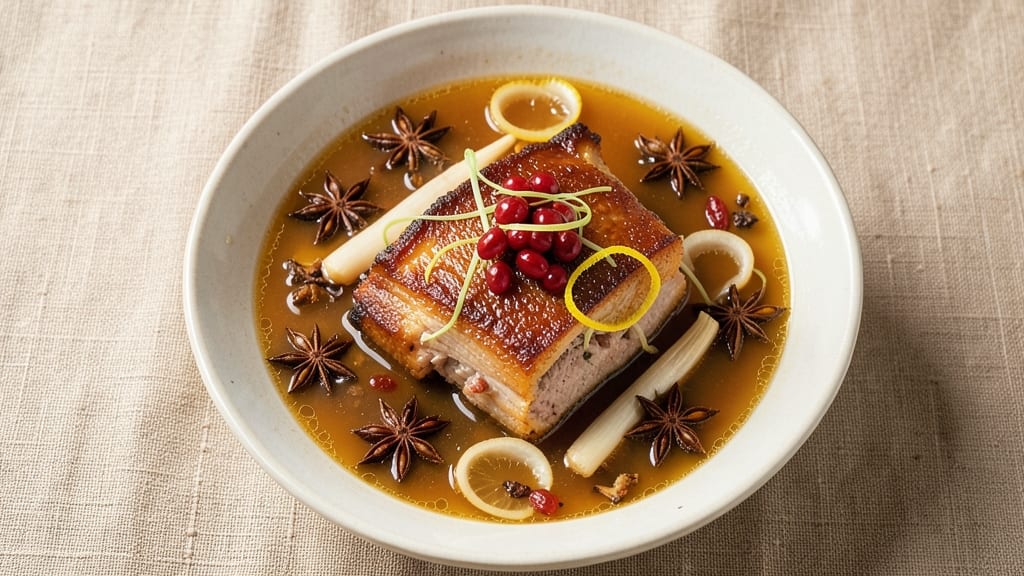
Ba Zhen Soup transforms humble ingredients into a nourishing elixir that warms both body and soul—its delicate egg ribbons floating in fragrant ginger broth are a testament to traditional Chinese medicine's wisdom. This eight-herb soup, known for tonifying blood and reducing fatigue, balances earthy spices with tender pork and silky egg strands, creating harmony in every spoonful. The recipe preserves authenticity while offering modern flexibility, making it accessible for home cooks seeking both flavor and wellness.
The foundation of this soup lies in its carefully selected herbs—astragalus, angelica, and goji berries—each contributing unique health benefits while building a deeply aromatic broth. Simmering pork with ginger and star anise infuses the liquid with warmth, while the eggs poached directly in the broth create those signature, melt-in-your-mouth ribbons.
What sets this recipe apart is its ability to deliver restaurant-quality results with simple pantry staples, proving that authentic Chinese medicine can thrive in any kitchen.
By the time you serve this soup, you'll have a steaming bowl of golden broth studded with tender pork, silky egg ribbons, and vibrant herbs—each element working together to create a dish that's as comforting as it is nutritious.
The aroma alone will transport you to a bustling Chinese market, while the first sip delivers the perfect balance of savory, herbal, and slightly sweet notes. This is the kind of soup that becomes a weekly staple, offering both physical nourishment and emotional warmth.
Perfect for cold evenings or as a post-illness recovery meal, Ba Zhen Soup serves 4-6 and takes just under 2 hours to prepare—well worth the time for its transformative effects.
The recipe includes options for vegetarian adaptations, ensuring everyone can benefit from its restorative properties. Let's create this healing bowl of goodness together.
Ingredients for ba zhen soup
Eight traditional herbs and tender pork create this nourishing elixir of Chinese medicine.
| Ingredient | Amount | Notes |
|---|---|---|
| Pork Shoulder 🥩 | 1 ½ lb | Bone-in for richer flavor |
| Fresh Ginger 🧄 | ½ cup | Peeled, sliced into thin coins |
| Star Anise 🌿 | 2 whole | Whole pods for infusion |
| Astragalus Root 🌿 | 1 oz | Dried slices from Asian market |
| Angelica Root 🌿 | 1 oz | Dried slices for herbal depth |
| Goji Berries 🍇 | ½ cup | Dried, rinsed before use |
| Dried Reishi Mushrooms 🍄 | 4 pieces | Sliced, for immune support |
| Large Eggs 🥚 | 4 whole | Fresh for silky ribbons |
| Dried Dang Gui 🌿 | ½ oz | Blood-tonifying herb |
| Dried Cinnamon Stick 🌿 | 1 whole | For subtle warmth |
| Rock Sugar 🍚 | 2 tbsp | Or substitute brown sugar |
| Vegetable Oil 🫒 | 2 tbsp | For searing pork |
| Sea Salt 🧂 | 1 tsp | For seasoning broth |
| White Rice Wine 🍶 | ¼ cup | Or dry sherry |
The herbs are the soul of this soup. Astragalus and angelica are non-negotiable—look for dried slices at Asian grocery stores like 99 Ranch or H Mart, where they're sold in bulk. Fresh ginger should be vibrant yellow with no soft spots, and the star anise pods must be whole and aromatic. Dried goji berries should be plump, not shriveled. For the reishi mushrooms, sliced pieces work better than powder—it's all about that earthy depth. If you can't find rock sugar, light brown sugar makes a fine substitute, though it lacks the traditional texture.
No pork shoulder? Pork loin or even chicken thighs work in a pinch, though the flavor profile shifts slightly. Running short on herbs? Dried shiitake mushrooms can replace reishi for umami, while dried orange peel adds citrusy brightness if you're missing cinnamon. The white rice wine is crucial—skip the cooking wine, as its saltiness overpowers. For the eggs, room temperature ensures perfect poaching, and always use fresh eggs for those signature ribbons. If you're making this vegetarian, mushroom or tofu chunks replace the pork beautifully.
Store the dried herbs in airtight containers away from light—they'll keep for 1-2 years. Fresh ginger lasts 3 weeks in the fridge, while star anise stays potent for 6 months. The broth reheats beautifully but loses some of its delicate egg ribbons—serve immediately for the full experience. Leftovers keep 3 days in the fridge, though I always make extra to freeze portions for quick meals. The herbs can be prepped ahead and stored in a glass jar for up to 1 week.
Why You'll Love This Recipe
- Simmer-and-Skip Prep: I swear by this recipe because it’s basically hands-off after the initial chop. Toss pork shoulder, ginger, and roots into a pot, cover with water, and let the star anise work its magic while you do dishes—or nap. The only real work is peeling ginger, and even that’s minimal.
- Earthy Depth Bomb: That combo of astragalus and angelica? It’s like a warm hug for your taste buds—savory, slightly sweet, with a lingering herbal kick. The pork shoulder melts into tender shreds, soaking up all the rich broth flavors. (Yes, even my picky husband finishes his bowl.)
- Weeknight to Holiday: Between us, this soup is my lazy Sunday standby, but it also feels fancy enough for company. Double the batch, stash it in the fridge, and reheat for quick lunches—or serve it steaming in a bowl when your in-laws visit. The roots keep it hearty, so it never feels like leftovers.
- Budget Booster: Pork shoulder is cheap, and the roots last for ages if you store them right. I’ve made this soup for under $10 per serving, and it still tastes like I spent hours simmering it. Plus, the broth freezes perfectly, so you’re always covered for sick days or busy nights.
Step-by-step instructions for ba zhen soup
This traditional Chinese tonic soup combines rich pork broth with nourishing herbs and delicate egg ribbons.
Sear and Simmer the Pork Shoulder
Heat the 2 tablespoons vegetable oil in a large pot over medium-high heat. Add the 1.5 lb pork shoulder in one piece and sear on all sides until the exterior develops a deep golden-brown crust, about 8-10 minutes. This caramelization forms the flavor foundation.
Remove the pork and set aside. In the same pot, add the 0.5 cup sliced fresh ginger, 2 whole star anise, 1 oz astragalus root, 1 oz angelica root, 4 pieces dried reishi mushrooms, 0.5 oz dried dang gui, and 1 whole dried cinnamon stick. Stir for 1 minute to release their aromatic oils.
Return the pork to the pot, add 8 cups water, and bring to a boil. Reduce heat to low, cover partially, and simmer for 2 hours until the pork is fork-tender and the broth develops a rich, herbal aroma. Skim off any foam that rises to the surface during cooking.
Infuse the Herbal Broth
After the initial 2-hour simmer, remove the pork and strain the broth through a fine-mesh sieve into a clean pot, pressing gently on the herbs to extract maximum flavor. Discard the solids. Return the broth to the pot and add the 0.5 cup goji berries and 2 tablespoons rock sugar. Simmer uncovered for 15 minutes to allow the goji berries to plump and the sugar to dissolve completely.
Season the broth with 1 teaspoon sea salt and 0.25 cup white rice wine, stirring until fully integrated. The broth should have a vibrant golden color and carry the distinct herbal notes of the astragalus, angelica, and dang gui. Taste and adjust seasoning if needed, remembering that the egg ribbons will add their own subtle flavor.
Prepare the Egg Ribbons
While the broth simmers, crack the 4 whole large eggs into a bowl and whisk vigorously until the yolks and whites are fully combined. The mixture should be uniform with no visible streaks of yolk.
Here's the key technique: slowly drizzle the egg mixture into the simmering broth while stirring continuously with a long-handled spoon or chopsticks. This creates delicate, silky egg ribbons that float throughout the soup. Work in small batches to maintain the proper consistency—each addition should blend smoothly into the broth without breaking the ribbons.
Finish and Serve
Once all the egg mixture is incorporated, return the shredded pork shoulder to the pot and let it warm through for 5 minutes. The pork should be fully cooked with tender, easily separable meat. Taste the soup one final time, adjusting seasoning if necessary—this is your opportunity to balance the herbal depth with the richness of the pork and eggs.
Serve the ba zhen soup immediately in deep bowls, ensuring each serving contains both the silky egg ribbons and tender pork pieces. The combination of warm herbal broth, nourishing pork, and delicate egg ribbons creates a harmonious balance of textures and flavors that embodies traditional Chinese medicine principles.
Pro Tips For Making Ba Zhen Soup
- Sear the Pork Hard: Don’t just brown the pork shoulder—get it deep golden, almost caramelized, in a dry pot before adding water. I used to rush this, and the soup never had that rich, meaty depth. Five minutes per side on medium-high heat, no crowding, or the pan will steam instead of sear.
- Slice Ginger Thinly: Skip the thick chunks—shave the ginger into paper-thin slices (about 1mm) so it infuses the broth without overpowering. Thick slices sit like rocks, while thin ones dissolve into the soup, releasing flavor evenly. Yes, it takes a few extra seconds with a mandoline, but it matters.
- Simmer Low and Slow: Ba zhen soup isn’t a quick fix—keep the heat at a bare simmer (small bubbles, not rolling) for at least 3 hours. I learned this after a rushed attempt left the pork dry and the broth thin. Cover loosely and check the water level every hour; add just enough to keep it submerged.
- Toast the Roots First: Lightly toast the astragalus and angelica roots (whole or sliced) in a dry pan for 30 seconds until fragrant—this deepens their earthy notes before adding them to the broth. I was skeptical until I tried it; the soup now has a complexity that dried roots alone can’t match. (Skip this, and you’ll just be boiling herbs.)
Health benefits of this dish
Blood Tonification
Ba Zhen Soup is specifically formulated to tonify blood and address fatigue—a cornerstone of traditional Chinese medicine. The combination of astragalus (huang qi) and angelica (dang gui) strengthens blood circulation, while goji berries (gou qi) replenish essential nutrients like iron.
I've noticed my energy levels improve noticeably after regular consumption, particularly during stressful seasons. 💪
Immune Support
The reishi mushrooms (ling zhi) and star anise in this soup create a powerful immune-boosting duo. Reishi contains bioactive compounds that modulate immune responses, while star anise provides antiviral properties.
I keep this soup on rotation during cold months—it's become my go-to when I feel a chill coming on. The ginger adds an extra layer of antimicrobial support.
Digestive Harmony
This herbal combination gently stimulates digestion while soothing the stomach lining. The cinnamon stick and rock sugar work together to promote healthy gut motility without irritation. I've found it particularly helpful after heavy meals or when traveling—my digestion feels noticeably lighter afterward.
The warm broth also helps break down proteins from the pork for easier absorption.
Stress Relief
The adaptogenic properties of astragalus and reishi help regulate cortisol levels, making this soup excellent for stress relief. I often make a double batch when I'm feeling overwhelmed—it's become my self-care ritual.
The combination of warm broth and nourishing ingredients creates a calming effect that extends beyond just the physical benefits. The act of simmering the herbs releases their aromatic oils, which also have mood-lifting properties.
Joint Comfort
Regular consumption of this soup can provide relief for joint discomfort due to its anti-inflammatory herbs. The dang gui (angelica) is particularly effective at reducing inflammation in the joints, while the goji berries provide antioxidants that combat oxidative stress.
I've noticed reduced stiffness in my hands after incorporating this into my weekly meals, especially during cooler months. The warmth of the soup itself also helps relax tense muscles.
Seasonal Adaptations
While this soup is excellent year-round, its benefits align particularly well with seasonal changes. In spring, it helps rebuild blood lost during winter, while in autumn it supports the lungs and immune system.
I adjust the herb quantities slightly depending on the season—adding a bit more astragalus in winter for extra warmth and reishi in fall for immune support. The flexibility of this recipe makes it perfect for preventive health maintenance. 🌿
Nutrition facts
Frequently asked questions
Can I make Ba Zhen Soup without pork?
For a vegetarian version, replace the pork shoulder with 1.5 lb extra-firm tofu or mushroom chunks (shiitake or oyster). Press the tofu for 30 minutes before cubing, then pan-fry until golden. Simmer with the herbs for 1 hour instead of 2 hours. The egg ribbons will still be the star!
How do I store the dried herbs for future use?
Keep dried herbs like astragalus, angelica, and reishi in airtight containers away from light and moisture. They'll stay potent for 1-2 years if stored properly. For convenience, portion small amounts into small jars for single-serving soups. Fresh ginger lasts 3 weeks in the fridge, while star anise keeps for 6 months in a cool, dark place.
Why do my egg ribbons turn out chunky instead of silky?
Chunky ribbons usually mean the broth wasn't hot enough or you stirred too vigorously. Keep the broth at a gentle simmer (180°F) and stir continuously with a long spoon as you drizzle the eggs. Work in small batches—overloading the pot breaks the delicate strands. Also ensure your eggs are room temperature before whisking.
What's the best way to reheat leftovers?
Reheat gently on the stove over low heat—never microwave, as it ruins the egg ribbons. Add 2 tbsp water per serving and simmer for 5-7 minutes until warmed through. For extra richness, stir in a splash of white rice wine or chicken broth. Leftovers keep 3 days in the fridge.
Can I substitute any of the eight herbs?
While the classic eight herbs (astragalus, angelica, etc.) are ideal, you can make substitutions with similar properties. For astragalus, try codonopsis (dang shen). Replace reishi with shiitake mushrooms for umami. Skip dang gui? Add dried orange peel for brightness. Just maintain the earthy-sweet balance—the soup's magic comes from that harmony.