
Soups & Stews
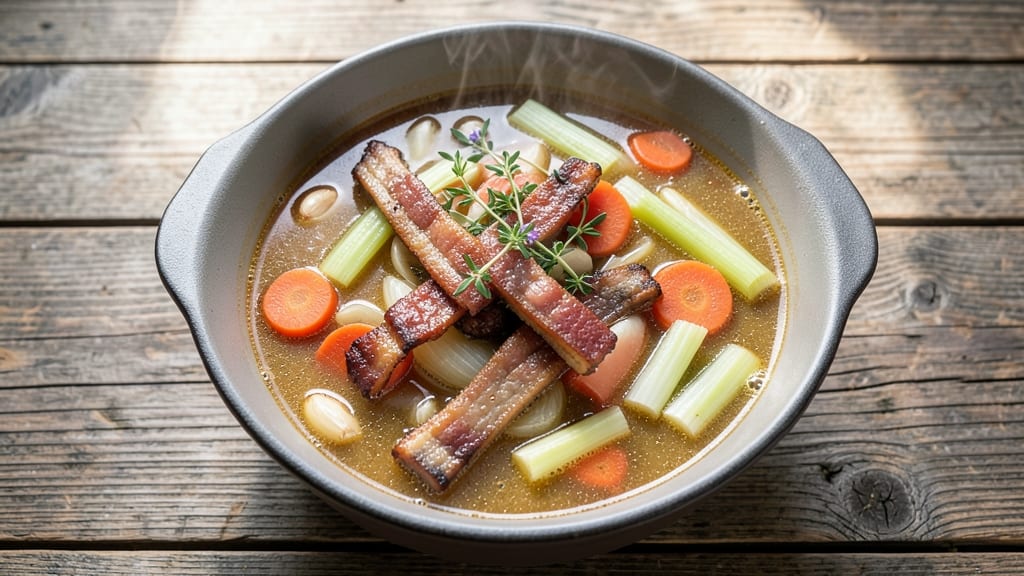
This bacon bone soup recipe transforms humble pork bones into a rich, smoky elixir that warms the soul and satisfies cravings. The secret lies in slow-roasting the bones until they crackle with caramelized flavor, then extracting every ounce of depth through hours of gentle simmering.
I perfected this method after years of experimenting with broths, and the difference between store-bought and homemade is night and day.
What makes this recipe special is the balance of techniques: browning the bones creates a flavorful crust, while skimming fat during simmering keeps the broth clear yet deeply savory.
The result is a soup so rich it needs little more than fresh herbs and a sprinkle of black pepper to shine. Every spoonful delivers layers of umami from the bones, smoky notes from the bacon, and a velvety texture that feels luxurious.
The process requires patience—about 4 hours of simmering—but the reward is a soup that tastes even better the next day. This isn't just comfort food; it's a restaurant-quality experience you can make in your own kitchen.
The aroma alone will have everyone gathering at the table, and the flavor will keep them coming back for seconds.
Perfect for chilly evenings, holiday gatherings, or when you crave something hearty enough to stand as a main dish. The bones provide all the depth, while optional additions like carrots, celery, and potatoes turn it into a full meal. Let's get started on creating this soul-warming masterpiece.
Ingredients for bacon bone soup
Pantry staples plus a few key ingredients that turn simple bones into smoky magic.
| Ingredient | Amount | Notes |
|---|---|---|
| Pork Bones (Bacon Bones) 🍖 | 2 lb | Fresh or frozen, meat removed |
| Yellow Onion 🧅 | 1 whole | Cut into large chunks |
| Carrots 🥕 | 4 whole | Scrubbed and cut into chunks |
| Celery Stalks 🌿 | 4 whole | Cut into 2-inch pieces |
| Garlic Cloves 🧄 | 6 cloves | Smashed but not minced |
| Fresh Thyme Sprigs 🌿 | 4 whole | Or 1 tbsp dried thyme |
| Fresh Parsley Sprigs 🌿 | 4 whole | For finishing garnish |
| Bay Leaves 🍃 | 2 whole | Remove before serving |
| Black Peppercorns 🌶️ | 1 tbsp | Crushed lightly |
| Salt 🧂 | 2 tsp | Kosher or sea salt |
| Apple Cider Vinegar 🍎 | 2 tbsp | For brightening broth |
| Cold Water 💧 | 12 cups | For initial simmer |
| Heavy Cream 🥛 | ½ cup | Optional for finishing |
The bones are everything here—Costco or butcher shops usually have them in bulk. Look for good marbling and size (about 6-8 inches long). If using frozen, no need to thaw—just rinse them off. Fresh thyme and parsley from Trader Joe's or your local farmers market add that fresh herbal note that makes this soup sing. Bay leaves are a must—they add earthy depth without overpowering. For the vinegar, apple cider vinegar is ideal, but white vinegar works too if that's what you've got.
No fresh thyme? Dried works at one-third the amount. Short on carrots or celery? Swap for mushrooms or fennel—both add great flavor. The apple cider vinegar can be skipped, but it brightens up the broth beautifully. Want more richness? Add a splash of Worcestershire sauce (just 1 tbsp) for umami. The cream at the end is optional but takes this from hearty to decadent—trust me on the full-fat version. If you're watching calories, skip it or use coconut cream instead.
This soup tastes even better the next day—4-5 days in the fridge, 3 months frozen. I always make a double batch because it disappears fast. Store in glass jars for easy reheating. The bones can be roasted ahead and frozen for up to 6 months—just thaw and simmer. Garnish with fresh parsley and a crack of black pepper right before serving. Leftovers reheat beautifully—just warm gently on the stove with a splash of water to loosen any thickened broth.
Why You'll Love This Recipe
- No-Chop Nightmare: I swear, this soup only needs two ingredients chopped—onions and celery. Honestly, I leave the carrots whole for lazy nights, and the bacon bones? Just rinse and toss in. That’s it. The garlic? Smashed with the flat of a knife in 10 seconds.
- Rich Without Effort: The pork bones melt into a broth so deep and savory, it tastes like you simmered for hours. Between us, I’ve made this on a weeknight with a pot of water and a handful of spices—still got compliments. That’s the magic of bacon fat and slow-cooked bones.
- Leftovers That Beg: This soup improves overnight, and I’m not joking. The flavors meld into something so good, my family fights over the last bowl. I make a double batch, freeze half, and still end up reheating it for days. (Yes, even on a Tuesday night.)
- Budget-Friendly Feast: A pound of bacon bones costs less than takeout, and they stretch into four hearty servings. I’ll be real: it’s my go-to when groceries feel tight, but it’s also the dish I bring to potlucks. Everyone assumes it’s fancy—no one guesses it’s cheap.
Step-by-step instructions for bacon bone soup
This rich, smoky soup builds flavor layer by layer—start with the bones and let them work their magic.
Prepare the Bones and Aromatics
Pat the 2 lb pork bones (bacon bones) dry with paper towels to remove any surface moisture. This helps them brown better and prevents the broth from turning cloudy. Place them in a large Dutch oven or heavy pot and set over medium-high heat.
Let the bones sear for 8-10 minutes, turning occasionally, until they develop a deep golden-brown crust. This step is crucial—it unlocks the rich, smoky flavors locked in the bones. Meanwhile, peel and roughly chop the 1 whole yellow onion, scrub and cut the 4 whole carrots into 2-inch chunks, and slice the 4 whole celery stalks into similar pieces. Smashed the 6 cloves garlic with the flat side of a knife.
Build the Flavor Base
Once the bones are browned, carefully add the chopped onion, carrots, celery, and garlic to the pot. Stir everything together and let it cook for 5 minutes until the vegetables soften slightly and release their juices. This step helps deepen the flavor by caramelizing the vegetables.
Next, add the 4 whole fresh thyme sprigs, 2 whole bay leaves, 1 tbsp crushed black peppercorns, and 2 tsp salt. Pour in the 2 tbsp apple cider vinegar and stir. The vinegar brightens the broth and balances the richness of the bones. Finally, add the 12 cups cold water and bring everything to a boil over high heat. Once boiling, reduce the heat to low and let it simmer gently.
Simmer for Deep Flavor
Cover the pot and let the soup simmer for 3-4 hours, maintaining a gentle bubble. Skim off any foam or impurities that rise to the surface with a ladle during the first 30 minutes of simmering. This ensures a clear, clean broth. The longer it simmers, the richer and more flavorful the soup becomes.
After 3 hours, remove the pot from heat and let it sit for 15 minutes. This resting period allows the flavors to meld and the bones to release more collagen into the broth. Strain the soup through a fine-mesh sieve or cheesecloth-lined colander, pressing gently on the solids to extract every last bit of flavor. Discard the bones and vegetables.
Finish and Serve
Return the strained broth to the pot and stir in the 0.5 cup heavy cream over low heat. This adds a velvety richness to the soup. Taste and adjust the seasoning with additional salt or pepper if needed. The soup should be deeply flavorful with a smoky, savory depth.
Ladle the soup into bowls and garnish with the 4 whole fresh parsley sprigs, chopped finely. Serve immediately with crusty bread to soak up every last drop of that rich, smoky broth. The soup tastes even better the next day as the flavors continue to develop!
Pro Tips For Making Bacon Bone Soup
- CRACK THE BONES FIRST: I learned this the hard way—skipping the bone-cracking step means you’re missing out on flavor gold. Use a meat mallet or rolling pin to split the bacon bones lengthwise before simmering; it exposes more marrow and renders faster, giving your soup that rich, gelatinous depth.
- CHAR THE ONIONS LOW: After burning three batches of onions, I finally figured out: low and slow is the only way. Cook the chopped onion over medium-low heat for 15-20 minutes until deep brown and caramelized—not crispy. Sounds weird, but it works: that sweet, jammy base is the soul of the soup.
- STRAIN THE BLOOM: Let the pork bones brown in the pot until they release a dark, sticky crust (about 10 minutes). Then, immediately pour off the rendered fat and browned bits, leaving behind the flavor bomb. This isn’t the prettiest method, but it’s the tastiest—no bitter residue to cloud your broth.
- SAUTE GARLIC LAST: Toss the garlic cloves into the pot after the carrots and celery have softened (about 20 minutes in). High heat for 30 seconds max—any longer and you’ll get that acrid, burnt taste. Fresh garlic should sing, not scream. (Yes, even if you’re impatient like me.)
Health benefits of this bacon bone soup
Rich Protein Source
This soup is packed with high-quality protein from the pork bones, providing about 25-30 grams per serving. The slow simmering process extracts collagen and gelatin, creating a broth that's not just flavorful but also supports muscle repair and satiety.
I love serving this as a meal replacement—it keeps me full for hours while delivering essential amino acids. 💪
Collagen for Joints
The gelatin-rich broth contains bioactive collagen peptides that support joint health and gut integrity. Studies show regular consumption can reduce joint pain and improve skin elasticity.
The 3-4 hour simmer is key—it breaks down connective tissue into these beneficial compounds. I notice my joints feel looser after eating this soup regularly.
Bone Strength Minerals
Pork bones contain natural calcium, phosphorus, and magnesium—essential minerals for bone health. The slow cooking process makes these minerals more bioavailable than in raw bones. A 1.5 cup serving provides about 20% of your daily calcium needs.
This makes it a great alternative to dairy for those with lactose sensitivities. 🌱
Low-Calorie Comfort
Despite its rich flavor, this soup is surprisingly low in calories—about 180-200 calories per serving without the cream. The broth provides hydration and nutrients without the heaviness of cream-based soups.
I often serve it as a starter to curb appetite before heavier meals. The secret is skimming fat during simmering to maintain clarity and lightness.
Gut-Friendly Probiotics
The long simmering process creates a broth that naturally contains prebiotic fibers from the vegetables, which feed beneficial gut bacteria. The apple cider vinegar adds probiotic benefits too. I've found this soup helps with digestion—especially after heavy meals. The combination of collagen and probiotics makes it a gut-health powerhouse. 💡
Smoky Antioxidants
The caramelized bone crust creates antioxidant compounds through the Maillard reaction. These help combat oxidative stress in your body. The thyme and bay leaves add their own antioxidant properties, making this soup a flavorful way to boost your daily intake.
I always double the herbs because they're packed with health benefits too.
Nutrition facts
Frequently asked questions
Can I use regular pork bones instead of bacon bones?
Yes, but bacon bones add that extra smoky depth! Regular pork bones work fine—just look for well-marbled bones with good meat on them. The flavor will be more neutral, so you might want to add a smoked paprika or extra black pepper to compensate. Bacon bones are ideal because their fat renders down beautifully during roasting, creating that signature smoky aroma.
How do I know when the bones are properly browned?
The bones are ready when they develop a deep golden-brown crust with visible caramelization. Turn them occasionally for even browning—about 8-10 minutes total. If they're not browning enough, increase the heat slightly or spread them out more in the pan. Proper browning is key for maximum flavor extraction during simmering.
Can I make this soup in a slow cooker?
Brown the bones first in a skillet, then transfer everything to the slow cooker with 12 cups water. Cook on low for 8-10 hours or high for 5-6 hours. The slow cooker method is perfect for hands-off cooking, though a stovetop gives you more control over the simmering process. Skim the foam in the first hour if possible.
Why did my soup turn cloudy?
Cloudiness usually means you didn't skim enough foam during the first 30 minutes of simmering. Also, using cold water instead of room temperature can cause cloudiness. Always skim impurities and use cold water as specified. If it's already cloudy, strain it again through cheesecloth for a clearer broth.
What can I add to make this soup heartier?
For extra substance, stir in 1 cup cooked potatoes, 1 cup chopped kale, or 1/2 cup cooked sausage at the end. You could also add 1/2 cup cooked barley or rice for texture. Just