
Soups & Stews
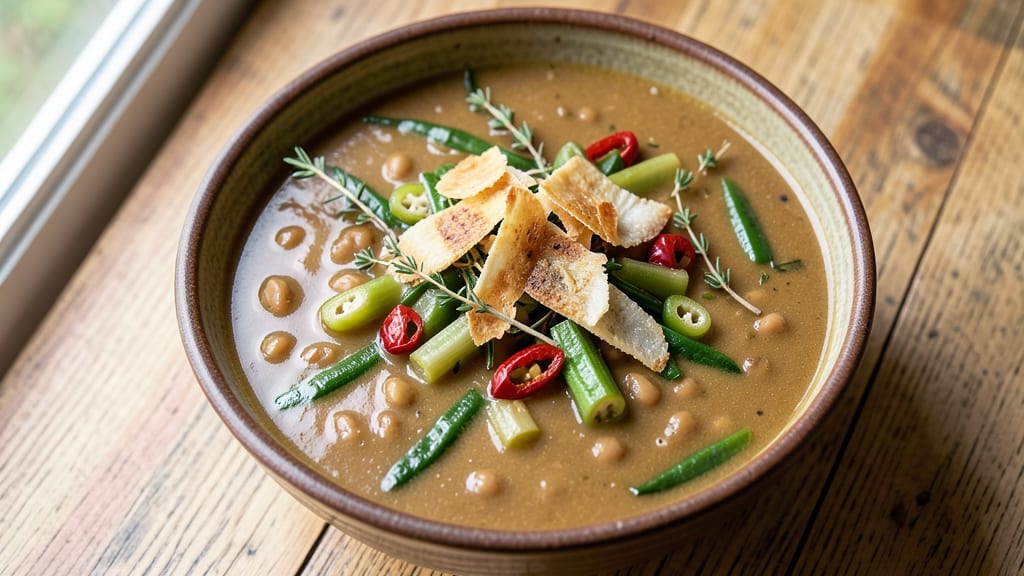
This Bahamian peas soup recipe brings the heart of the Bahamas to your kitchen with its slow-simmered depth of okra and callaloo. The dish transforms humble cowpeas into a rich, flavorful stew that's both comforting and deeply rooted in Bahamian tradition.
What makes this recipe special is the balance of earthy callaloo, tender okra, and the subtle saltiness of saltfish—a combination that defines Bahamian soul food.
The foundation of this soup lies in its slow simmering technique, which develops complex flavors over time. Traditional ingredients like thyme, scallions, and Scotch bonnet peppers infuse the broth with aromatic warmth, while cowpeas provide a satisfying heartiness.
This recipe stays true to its roots while offering flexibility—you can incorporate seafood like conch or shrimp for added richness or keep it vegetarian with extra vegetables and tofu.
By the time you finish simmering, you'll have a soup that's velvety yet textured, with each spoonful delivering layers of flavor—earthy callaloo, tender okra, and the subtle tang of Bahamian spices.
The aroma alone will transport you to the islands, where this dish is a staple at family gatherings and community meals. Serve it with rice or crusty bread to soak up every last drop of that flavorful broth.
Perfect for a cozy family dinner or a taste of the Caribbean, this recipe is both rewarding to make and deeply satisfying to eat. The slow cooking process ensures every ingredient contributes to the final harmony, making it a dish worth the time and effort.
Let's bring the Bahamas to your table with this traditional yet approachable recipe.
Ingredients for bahamian peas soup
Earthy callaloo, tender okra, and saltfish create this Bahamian masterpiece—slow-simmered for deep, aromatic richness.
| Ingredient | Amount | Notes |
|---|---|---|
| Dried Cowpeas 🌱 | 2 cups | Rinsed thoroughly before cooking |
| Fresh Callaloo 🌿 | 1 ½ lb | Chopped into 1-inch pieces |
| Fresh Okra 🥒 | 1 lb | Trimmed and sliced into rounds |
| Saltfish 🐟 | 1 lb | Cured, soaked overnight |
| Scotch Bonnet Peppers 🌶️ | 2 whole | Seeds removed for mild heat |
| Fresh Thyme 🌿 | ¼ cup | Leaves only, finely chopped |
| Scallions 🧅 | ½ cup | White and green parts, sliced |
| Tomato Paste 🍅 | 2 tbsp | High-quality, no additives |
| Olive Oil 🫒 | ¼ cup | Extra-virgin for richness |
| Garlic Cloves 🧄 | 4 cloves | Peeled and minced |
| Vegetable Bouillon 💧 | 2 cubes | Dissolved in 4 cups water |
| Long-Grain White Rice 🍚 | 2 cups | Uncooked, for serving |
| Salt 🧂 | 1 ½ tsp | Adjust to taste |
| Black Peppercorns 🌶️ | ½ tsp | Freshly ground |
The callaloo and okra are the heart of this dish, so prioritize freshness—local Caribbean markets or specialty grocers like Whole Foods often carry the best quality. For callaloo, look for vibrant green leaves still attached to sturdy stems, a sign of freshness. Okra should be firm and bright green, not slimy or discolored. Saltfish must be properly cured—look for a slightly salty aroma and firm texture. If using dried cowpeas, soak them overnight to reduce cooking time and improve texture. The Scotch bonnet peppers should be bright red and firm, with seeds removed for a milder heat profile.
No saltfish? Dried cod or smoked haddock works as a substitute, but soak it thoroughly to remove excess salt. Fresh callaloo unavailable? Substitute with a mix of spinach and kale, though the texture will differ slightly. Want to add seafood? Conch or shrimp can be incorporated in the last 10 minutes of cooking. For a vegetarian version, replace the saltfish with extra firm tofu or mushrooms. The tomato paste can be swapped for fresh tomatoes blended into a purée, though it may require longer simmering. Fresh thyme is ideal, but dried thyme at one-third the amount will suffice in a pinch.
This soup tastes even better the next day as flavors meld. Store in an airtight container in the fridge for up to 5 days, or freeze for 3 months in portion-sized containers. The rice should be cooked separately—jasmine or basmati works best for soaking up the flavorful broth. For meal prep, double the batch and freeze half for future lunches. The broth can also be separated and frozen for up to 6 months to use as a base for other dishes.
Why You'll Love This Recipe
- One-Pot Magic: I swear by this recipe because it’s basically foolproof—just soak the cowpeas overnight (or use canned for speed), toss everything in one pot, and let the saltfish and peppers work their flavor magic. No chopping marathons or last-minute scrambling.
- Heat & Depth: That Scotch bonnet pepper doesn’t just add heat—it layers the soup with a smoky, fruity punch that lingers. The callaloo and okra thicken it just enough to hold onto every savory bite, while the saltfish adds that briny, umami richness.
- Prep-Ahead Powerhouse: Between us, this is my go-to for lazy Sundays or busy weeknights. Make a big batch—it reheats beautifully—and you’ll have leftovers for days. Honestly, it’s the kind of soup that tastes even better the next day as the flavors meld.
- Budget-Friendly Staple: Dried cowpeas and callaloo are cheap, and saltfish stretches further than you’d think. I’ll be real: this recipe keeps my grocery bill low while still feeling like a special meal. Plus, it’s the kind of dish that makes you look like a cooking pro without breaking the bank.
Step-by-step instructions for Bahamian peas and soup
This traditional Bahamian dish transforms humble ingredients into a hearty, flavorful soup with deep Caribbean roots.
Prepare the Saltfish and Base Vegetables
Begin by thoroughly rinsing the 2 cups dried cowpeas under cold water to remove any debris. Soak them in 8 cups water for at least 4 hours or overnight—they should swell significantly but remain slightly firm to the touch. Drain and set aside.
While the cowpeas soak, prepare the 1 lb saltfish by rinsing it thoroughly under cold running water to remove excess salt. Place it in a bowl and cover with 4 cups fresh water. Let it soak for 30 minutes, changing the water twice to fully remove the curing brine. The water should taste neutral when you sample it.
Chop the 1.5 lb fresh callaloo into 1-inch pieces and trim the 1 lb fresh okra, slicing it into ½-inch rounds. Remove seeds from the 2 whole Scotch Bonnet peppers and finely chop them. Finely chop the 0.25 cup fresh thyme leaves and slice the 0.5 cup scallions into ½-inch pieces.
Build the Flavor Base in Olive Oil
Heat the 0.25 cup olive oil in a large pot over medium heat until shimmering. Add the 4 minced garlic cloves and sauté for 30 seconds until fragrant—don't let them brown. Stir in the 2 tbsp tomato paste and cook for 1 minute, stirring constantly to prevent burning.
Add the chopped Scotch Bonnet peppers and cook for another 30 seconds until their oils begin to release. This step develops the foundational flavors that will infuse the entire soup. Immediately add the 0.25 cup chopped thyme and 0.5 cup sliced scallions, stirring to combine.
Pour in 4 cups water and bring to a gentle boil. Dissolve the 2 vegetable bouillon cubes in the water first to ensure even flavor distribution. Once boiling, reduce heat to medium-low and add the prepared saltfish, callaloo, and okra. Simmer uncovered for 15 minutes, stirring occasionally.
Incorporate the Cowpeas and Season
Add the drained 2 cups soaked cowpeas to the pot, stirring gently to distribute them evenly. The cowpeas should be just below the surface of the liquid. Add the 1.5 tsp salt and 0.5 tsp freshly ground black peppercorns, stirring well to combine.
Bring the soup back to a gentle simmer and maintain this temperature for 45-50 minutes. The cowpeas should soften but retain some bite, and the callaloo and okra should become tender but still hold their shape. Stir occasionally to prevent sticking, especially as the soup reduces slightly.
Taste the soup and adjust seasoning if needed. The saltfish should be flaking easily, and the vegetables should be tender with a slight resistance. If the soup is too thick, add ½ cup water to reach your desired consistency.
Serve with Steamed Rice
While the soup simmers, prepare the 2 cups long-grain white rice by rinsing it thoroughly under cold water until the water runs clear. Cook the rice according to package instructions until tender and fluffy, then fluff with a fork.
Ladle the hot Bahamian peas and soup over the steamed rice, ensuring each serving gets an even distribution of cowpeas, callaloo, okra, and saltfish. Garnish each bowl with additional chopped scallions and thyme leaves for freshness and color.
Serve immediately while the soup is hot, as the flavors continue to meld and develop. This dish tastes best when enjoyed fresh, with the rice soaking up the rich, savory broth. The combination of tender cowpeas, hearty vegetables, and flaky saltfish creates a satisfying meal that captures the essence of Bahamian comfort food.
Pro Tips For Making Bahamian Peas Soup
- SOAK COWPEAS OVERNIGHT: I learned this the hard way—rushing the soak leaves them tough. Use 4 cups water per 1 cup dried cowpeas, add a pinch of baking soda (trust me), and let them sit 12+ hours. The longer they soak, the creamier the soup, and you’ll skip the extra simmering later.
- TRIM OKRA SLICES THIN: Skip the thick rounds—slice okra lengthwise into paper-thin strips. They cook faster, blend better into the broth, and won’t turn mushy. (Yes, even if it looks like you’re making noodles.)
- COOK SALTFISH IN BROTH: Don’t poach it separately—toss the flaked saltfish directly into the simmering soup. The heat melts its salt and fat into the base, while the cowpeas absorb flavor instead of getting watered down. Your soup will taste richer, not salty.
- LOW-SIMMER CALLALOO: After adding callaloo, drop the heat to a gentle simmer—hard boiling turns it bitter. Cover and let it wilt for 10 minutes, stirring once. Overcooking ruins the texture, and you want that tender-crisp bite, not a sad, limp pile.
Troubleshooting this recipe
Cowpeas Too Hard
If your cowpeas remain tough after simmering, they likely need more time or a pre-soak adjustment. First, ensure they soaked for at least 4 hours—overnight is ideal. If using dried cowpeas, try adding ½ tsp baking soda to the soaking water to soften them faster.
For extra tenderness, increase simmering time to 60 minutes or until they're fork-tender. 🌱
Broth Too Thin
A watery broth often means the soup needs more reduction time. After adding cowpeas, simmer uncovered for 10-15 extra minutes to thicken naturally. If still too thin, mash 2-3 cowpeas with a fork to release starches, which will thicken the broth.
For immediate thickening, mix 1 tbsp cornstarch with 2 tbsp cold water, stir into the soup, and simmer 2 minutes more.
Saltfish Too Salty
Overly salty saltfish ruins the balance of flavors. To fix this, drain the saltfish and rinse it thoroughly in 3 changes of cold water, letting it soak 15 minutes between each change. For a stronger flavor without excess salt, use ½ lb saltfish instead of the full pound.
If the soup still tastes salty, add ½ cup coconut milk or extra callaloo to dilute the saltiness.
Okra Too Slimy
Okra's sliminess comes from its mucilage, which releases when overcooked. To prevent this, add okra to the pot only after the initial 15-minute simmer with callaloo and saltfish. Cook it for just 10 minutes before adding cowpeas.
For a firmer texture, use younger, smaller okra pods. If sliminess occurs, remove okra and simmer the soup without it for 5 minutes before adding back.
Vegetables Mushy
Overcooked callaloo and okra lose their texture when simmered too long. The key is timing: add callaloo first (simmer 15 minutes), then okra (10 minutes), and finally cowpeas.
For extra control, blanch callaloo in boiling water for 3 minutes before adding to the pot. This jump-starts cooking and prevents mushiness during the long simmer.
Flavor Too Mild
If your soup lacks depth, boost flavors by increasing the Scotch bonnet peppers to 1 whole pepper (seeds removed) or adding ½ tsp ground allspice during the final 10 minutes of simmering.
For umami, stir in 1 tbsp soy sauce or ½ tsp smoked paprika at the end. A splash of lime juice before serving brightens the entire dish. 🌶️
Nutrition facts
Frequently asked questions
What are Bahamian peas?
Bahamian "peas" aren't peas at all—they're actually cowpeas, a type of legume native to West Africa. These small, creamy beans are the heart of this dish, providing protein and a satisfying texture. They're often called "peas" in Caribbean cuisine, just like green beans or black-eyed peas are called "peas" in other cultures.
Can I make this soup without saltfish?
Saltfish is traditional, but you can substitute with dried cod, smoked haddock, or even extra firm tofu for a vegetarian version. For seafood lovers, add conch or shrimp in the last 10 minutes of cooking. The key is maintaining that salty, umami depth—just adjust seasoning accordingly.
How do I find fresh callaloo?
Callaloo is a leafy green similar to spinach but with a more robust flavor. Look for it at Caribbean markets, specialty grocery stores, or even well-stocked produce sections. If unavailable, substitute with a mix of spinach and kale, though the texture will differ slightly. For the best results, use young, tender leaves.
Can I make this soup in a slow cooker?
Yes! Follow the same steps, but after adding all ingredients, cook on low heat for 6-7 hours or high heat for 3-4 hours. The slow cooker's gentle heat will develop flavors beautifully. Just check occasionally to ensure the cowpeas are tender and the broth isn't too thin.
Why does my soup taste bland?
Blandness often comes from insufficient seasoning or underdeveloped flavors. Boost taste by adding 1 extra Scotch bonnet pepper (seeds removed), ½ tsp allspice during the final 10 minutes, or a splash of lime juice before serving. For umami, stir in 1 tbsp soy sauce or ½ tsp smoked paprika at the end.