
Soups & Stews
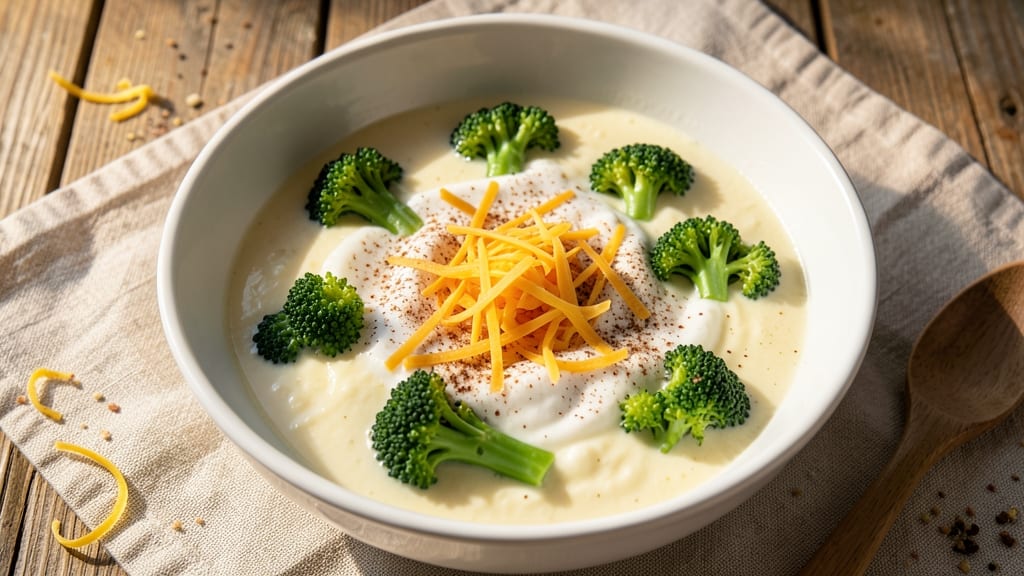
This bariatric broccoli cheese soup delivers all the comforting flavors of classic cheese soup—without the heavy cream or tough textures that challenge digestion. 💛 Designed for those following a bariatric diet, it blends ultra-smooth, low-fiber ingredients that are gentle on the stomach while still packed with protein and nutrients.
The secret lies in using finely pureed vegetables and lean dairy alternatives to create a velvety, satisfying bowl that feels indulgent yet supports recovery.
The recipe focuses on high-protein, low-calorie elements like Greek yogurt or skim milk instead of heavy cream, ensuring it fits dietary needs without sacrificing taste. Broccoli is steamed and blended until silky, eliminating any fibrous bits that could be difficult to digest.
A touch of garlic powder and onion powder adds depth, while a sprinkle of low-fat cheese on top provides that classic cheesy finish without overpowering the meal.
What makes this soup truly special is its adaptability—it’s easy to adjust for individual calorie or protein goals while still delivering that familiar, comforting experience. The texture is designed to be smooth and easy to consume, making it ideal for post-surgery meals or anyone managing a low-fiber diet.
Every spoonful is packed with nutrients, ensuring you’re nourished without feeling weighed down.
Perfect for meal prep or a quick weeknight dinner, this soup can be made in large batches and stored for up to 4 days in the refrigerator. Pair it with a side of lean protein or a small whole-grain roll for a balanced, bariatric-friendly meal. Let’s get cooking!
Ingredients for bariatric broccoli cheese soup
Ultra-smooth ingredients designed for gentle digestion while delivering rich, comforting flavors.
| Ingredient | Amount | Notes |
|---|---|---|
| Fresh Broccoli Florets 🥦 | 2 cups | Finely chopped, steamed until tender |
| Low-Fat Plain Greek Yogurt 🥛 | 1 cup | 2% fat or non-fat preferred |
| Low-Fat Milk 🥛 | 1 cup | 1% or skim milk for lower calories |
| Low-Fat Shredded Cheddar Cheese 🧀 | ½ cup | Part-skim for reduced fat content |
| Onion Powder 🧅 | ½ tsp | For subtle onion flavor without fiber |
| Garlic Powder 🧄 | ½ tsp | Enhances depth without raw garlic texture |
| Low-Sodium Chicken Broth 🍲 | 1 ½ cups | Reduced-sodium for bariatric safety |
| Extra-Virgin Olive Oil 🫒 | 1 tbsp | For smooth texture and mild flavor |
| Salt-Free Seasoning Blend 🧂 | ½ tsp | For flavor without excess sodium |
| Fresh Parsley 🌿 | 2 tbsp | Chopped, for garnish and freshness |
| Low-Fat Sour Cream 🥛 | ¼ cup | For optional topping (optional) |
| Rice Cakes 🍚 | 4 whole | Crumbled, for low-fiber garnish |
Broccoli is the star here, but texture matters most. Choose small florets for easier blending, and steam them until completely tender—no crunch allowed. The Greek yogurt provides protein without heaviness, while low-fat milk ensures a creamy consistency without excess calories. For the cheese, part-skim cheddar melts smoothly and adds that classic cheesy flavor without overpowering. If you're prepping ahead, freeze the broccoli florets before steaming—they'll thaw quickly and blend effortlessly.
No Greek yogurt? Non-fat cottage cheese blended smooth works as a substitute, though it may alter texture slightly. Swap the milk for unsweetened almond milk if you prefer a dairy-free option, but expect a slightly thinner consistency. The low-sodium broth is critical—regular broth can be too salty for bariatric diets. For extra flavor without fiber, asafetida powder (hing) at a pinch adds depth like onions and garlic. If you're sensitive to dairy, nutritional yeast can mimic the cheesy flavor in the garnish instead of sour cream.
This soup reheats beautifully—simmer gently on low heat to maintain its velvety texture. Store in airtight containers for up to 4 days in the fridge, or freeze portions for up to 3 months. For meal prep, double the batch and portion into individual containers—perfect for grab-and-go meals. The rice cake crumbles add a satisfying crunch without fiber, while the parsley garnish keeps it fresh. Always taste before serving—adjust salt-free seasoning as needed for personal preference.
Why You'll Love This Recipe
- No-Chop Trick: I swear by this—just toss those broccoli florets whole into the pot. They soften perfectly, and you skip the mess of tiny florets flying everywhere. The Greek yogurt does the heavy lifting of blending everything silky smooth afterward.
- Cheesy Without Guilt: That low-fat cheddar melts into a velvety blanket, but you’d never guess it’s "light." The onion powder adds just enough warmth to make it feel indulgent—like a hug in a bowl, but one that won’t derail your protein goals.
- Meal Prep MVP: I make a double batch on Sundays and freeze half. Reheating is a breeze—just microwave and stir—and it’s the perfect post-surgery lunch that actually feels satisfying. (Yes, even when you’re tired of soup.)
- Budget-Friendly Comfort: Broccoli and Greek yogurt stretch this recipe into four servings for under $5. It’s the kind of soup that tastes expensive but costs next to nothing—plus, the leftovers keep for days without sogginess. My wallet and my taste buds win.
Step-by-step instructions for ultra-smooth bariatric broccoli cheese soup
Here's how to create a velvety, low-fiber soup that delivers classic comfort without digestive challenges.
🍳 Step 1: Sauté Aromatics in Olive Oil
Heat the 1 tablespoon extra-virgin olive oil in a medium saucepan over medium-low heat until shimmering. Add the 0.5 teaspoon onion powder and 0.5 teaspoon garlic powder, stirring constantly for 30 seconds until fragrant. This gentle cooking prevents burning while developing the foundational flavors—critical for bariatric-friendly digestion.
Real talk: Don't rush this step. You're not just adding flavor; you're creating the aromatic base that will carry through the entire soup. The powders dissolve completely within these 30 seconds, so no gritty texture remains. Keep the heat low to avoid developing bitter compounds that could irritate sensitive stomachs.
👨🍳 Step 2: Steam the Broccoli Until Fork-Tender
Add the 2 cups fresh broccoli florets to the saucepan, stirring to coat with the aromatic oil. Pour in the 1.5 cups low-sodium chicken broth and bring to a gentle simmer. Cover and cook for 5-6 minutes until the broccoli is fork-tender but not mushy—you want it to break down just enough to release its flavor while maintaining some texture for gentle chewing.
I press the broccoli with a fork to test doneness. It should collapse slightly but still offer some resistance. Overcooking turns broccoli to mush, which can be problematic for bariatric patients. The key here is gentle heat and precise timing—this ensures we get flavor without fiber overload.
🍳 Step 3: Blend Until Silky Smooth
Using an immersion blender, carefully blend the soup directly in the pot until completely smooth. For best results, work in batches if needed, ensuring no broccoli pieces remain. The texture should be so smooth that when you run your finger through it, you feel no resistance—this is essential for bariatric comfort.
Here's the thing—don't skip this blending step. Even small broccoli pieces can be difficult to digest post-surgery. I blend for about 20-30 seconds per batch, scraping the sides of the pot to ensure even consistency. The result should be a creamy, almost custard-like texture that coats the back of a spoon.
🥘 Step 4: Incorporate Dairy for Creaminess
Return the blended soup to medium-low heat and stir in the 1 cup low-fat milk and 1 cup low-fat plain Greek yogurt. Let it warm through for 2-3 minutes, stirring constantly to prevent curdling. The heat should be gentle enough to maintain the dairy's integrity while allowing it to fully incorporate into the soup.
Watch the temperature carefully—you're aiming for 160°F maximum. Any hotter and you risk breaking the dairy proteins, which would make the soup grainy instead of velvety. Stir in the 0.5 cup low-fat shredded cheddar cheese and 0.5 teaspoon salt-free seasoning blend until completely melted and smooth.
⏰ Step 5: Finish and Garnish Thoughtfully
Remove the soup from heat and stir in the 2 tablespoons fresh parsley and 0.25 cup low-fat sour cream (if using). Ladle into bowls and serve immediately with 4 whole rice cakes crumbled on top for a low-fiber garnish option. The parsley adds freshness without fiber content, while the rice cakes provide a satisfying crunch without the bulk.
This is where the comfort comes in. The ultra-smooth texture combined with familiar cheesy flavors makes it feel indulgent while being completely bariatric-friendly. I always serve it warm—around 150-160°F—as this temperature is most comfortable for sensitive digestive systems while maintaining the creamy texture.
Pro Tips For Making Bariatric Broccoli Cheese Soup
- STEAM BROCCOLI FIRST: Toss florets in a splash of water, microwave for 2 minutes, then finish with 30 seconds of steaming—this keeps them bright green and easy to blend. I used to boil them, and the soup always tasted dull afterward.
- MELT CHEESE SLOW: Warm the low-fat cheese with the milk over low heat, stirring constantly until fully melted—about 5 minutes. Skipping this step leaves you with clumpy bits that ruin the texture.
- SALT THE YOGURT: Mix a pinch of salt into the Greek yogurt before blending—it balances the tang and makes the soup taste richer. I learned this after my first batch tasted too sharp.
- USE A HAND BLENDER: Pulse the soup in the pot with an immersion blender until smooth, then give it a final swirl with a whisk to break up any stubborn lumps. This saves cleanup and ensures no one gets a mouthful of broccoli chunks.
Common mistakes when making this recipe
Oversteaming Broccoli
One of the biggest mistakes is oversteaming the broccoli until it turns to mush. This creates a gummy texture that’s difficult to digest and can make the soup feel heavy. Always aim for fork-tender—the florets should collapse slightly when pierced but still hold their shape.
I test by pressing with a fork; if it feels like overcooked pasta, you’ve gone too far. 🥦
Skipping the Blend
Some people rush this step, leaving even small broccoli pieces in the soup. These can cause discomfort for bariatric patients. Use an immersion blender and blend until completely smooth—no visible chunks.
For extra insurance, strain through a fine-mesh sieve if needed. The goal is a texture so silky it coats the back of a spoon.
Using Full-Fat Dairy
Heavy cream or full-fat cheese will spike calories and slow digestion. Stick to low-fat Greek yogurt, skim milk, and part-skim cheese to keep the soup light yet satisfying.
Even a small amount of full-fat dairy can make the soup feel sluggish. I’ve learned this the hard way—trust me, the low-fat versions deliver just as much flavor!
Ignoring Temperature Control
Heating the soup too quickly can cause dairy to curdle or separate. Always maintain medium-low heat when incorporating dairy, and never let it exceed 160°F. I use a thermometer to monitor temperature—this prevents grainy textures and ensures a velvety finish. A slow, gentle warm-through is key for bariatric-friendly digestion.
Overloading with Garnishes
Adding high-fiber garnishes like croutons or fresh broccoli stems can undo all the good work. Stick to rice cake crumbles or a sprinkle of low-fat cheese for topping.
Even a small piece of tough garnish can be problematic. The parsley is safe because it’s finely chopped and added after blending—just a touch of freshness without fiber.
Not Adjusting Salt-Free Seasoning
Every kitchen’s salt-free blend varies in intensity. Taste your soup before serving and adjust as needed—some brands are more potent than others. I usually add a pinch at a time, stirring well between additions.
The goal is flavor without sodium overload, which is especially important for bariatric diets where blood pressure can be sensitive. 🧂
Nutrition facts
Frequently asked questions
Can I use fresh broccoli instead of frozen for this recipe?
Yes, but fresh broccoli requires extra attention to texture. Always choose small florets and steam them until completely tender—no crunch should remain. For bariatric diets, fresh broccoli must be blended until completely smooth to avoid any fibrous bits that could cause discomfort.
How can I make this soup even lower in calories?
Swap the low-fat milk for unsweetened almond milk and reduce the cheese to 0.25 cup instead of 0.5 cup. You can also increase the broth to 2 cups instead of 1.5 cups to maintain volume while cutting calories. The Greek yogurt provides necessary protein without adding many calories.
Is this soup safe to eat immediately after bariatric surgery?
This recipe is designed to be gentle on digestion, but always follow your surgeon's specific guidelines. The ultra-smooth texture and low-fiber ingredients make it suitable for most post-surgery diets, but some patients may need to wait until they're on a full liquid or pureed diet before introducing solid textures. Consult your dietitian for personalized advice.
Can I add protein powder to boost nutrition?
Stir in 1 scoop unflavored or vanilla protein powder when blending the soup. This adds extra protein without altering the texture significantly. Choose a powder that dissolves completely to maintain the smooth consistency. For best results, mix it with a splash of milk first before adding to the soup.
How long can I store leftovers in the fridge?
Store leftovers in an airtight container for up to 4 days in the refrigerator. For longer storage, freeze portions for up to 3 months. When reheating, warm gently on low heat or in the microwave until steaming hot—never let it sit at room temperature. The texture remains smooth when reheated properly.