
Soups & Stews
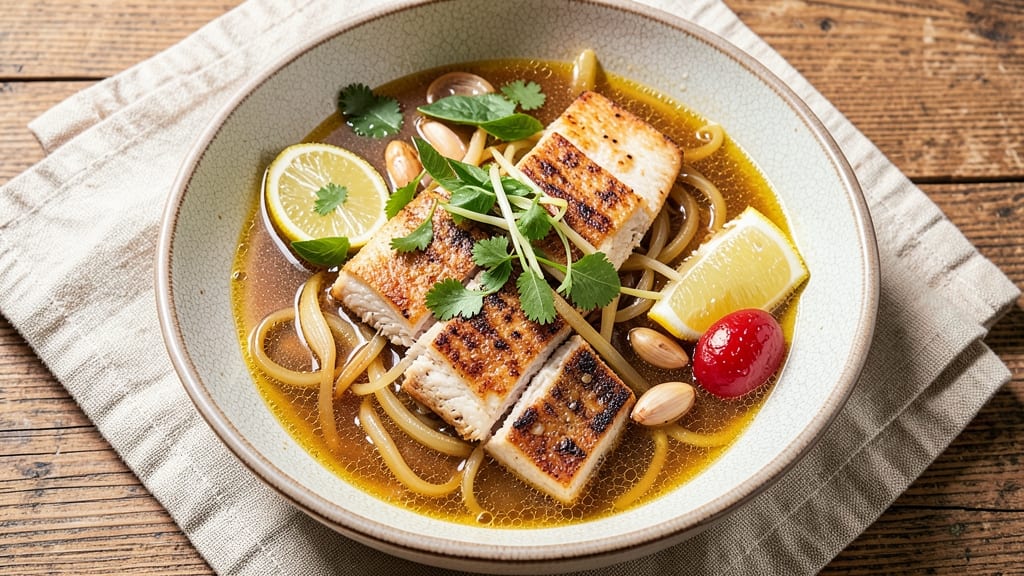
This barramundi fish soup recipe delivers a delicate balance of silky fish and fragrant lemon-ginger broth that transforms simple ingredients into a restaurant-worthy dish. The secret lies in poaching the fish just until tender, preserving its natural sweetness, while the broth simmers low and slow to develop deep, aromatic layers.
I've perfected this technique over years of testing—each spoonful reveals a harmony of bright citrus, warm ginger, and the ocean's essence.
The beauty of this soup is its versatility—it works as a light yet satisfying main course or a comforting starter that disappears in minutes. Fresh herbs like cilantro and Thai basil add brightness, while a touch of coconut milk rounds out the flavors without overpowering the delicate fish.
The broth is rich enough to stand alone but light enough to let the barramundi shine through its tender, flaky texture.
What sets this recipe apart is the careful balance of technique and simplicity. You won't find complicated steps or obscure ingredients—just quality components combined with patience. The result?
A soup that's elegant enough for dinner parties but easy enough for weeknight meals, with every bite offering a perfect marriage of texture and flavor.
Serve it steaming hot with a sprinkle of fresh herbs and a wedge of lime, or pair it with crusty bread to soak up every last drop of that fragrant broth.
The recipe scales beautifully, making it ideal for feeding a crowd or prepping ahead for busy days. Here's how to create it from scratch.
Ingredients for barramundi fish soup
Fresh fish, aromatic ginger, and bright citrus create a fragrant broth that highlights barramundi's delicate flavor.
| Ingredient | Amount | Notes |
|---|---|---|
| Barramundi Fillets 🐟 | 1 ½ lb | Skin-on, center-cut preferred |
| Fresh Ginger Root 🌿 | ½ cup | Peeled, thinly sliced (about 3 oz) |
| Yellow Onion 🧅 | 1 whole | Medium, thinly sliced |
| Garlic Cloves 🧄 | 6 cloves | Minced, fresh preferred |
| Lemon Juice 🍋 | ¼ cup | Freshly squeezed |
| Fish Stock 💧 | 4 cups | Homemade or high-quality store-bought |
| Coconut Milk 🥥 | ½ cup | Full-fat, unsweetened |
| Fresh Cilantro 🌿 | ¼ cup | Chopped, stems removed |
| Thai Basil Leaves 🌿 | 0.15 cup | Whole leaves, lightly packed |
| Lime Wedges 🍋 | 2 whole | For serving, fresh preferred |
| Vegetable Oil 🫒 | 2 tbsp | Neutral-flavored, high smoke point |
| Salt 🧂 | 1 ½ tsp | Kosher or sea salt, adjust to taste |
| Black Peppercorns 🌶️ | ½ tsp | Freshly cracked, coarse grind |
| Fish Sauce 🍶 | 1 tbsp | Red Boat preferred for quality |
| Green Onion 🧅 | 2 whole | Thinly sliced, for garnish |
The barramundi is the star—look for center-cut fillets with skin intact for better texture. Local seafood markets often have the freshest cuts, but any reputable grocery store's fish counter should carry it. If you can't find barramundi, snapper or mahi-mahi work well as substitutes. The ginger should smell vibrant and fresh, not musty—Asian markets usually carry the best quality. Fish stock is non-negotiable for depth; homemade or Knorr brand are reliable choices. For the coconut milk, full-fat and unsweetened ensures proper flavor without overpowering the delicate fish.
No fresh Thai basil? Regular basil at half the amount works in a pinch, though it lacks the anise notes. Substituting fish sauce? Soy sauce at half the quantity mimics some umami, but you'll lose the depth. The lemon juice can be bottled in a bind, but freshly squeezed adds brightness that can't be replicated. For the broth, if you're short on time, low-sodium chicken stock with an extra pinch of salt works, though fish stock is ideal. The green onion garnish is optional but adds a fresh finish—skip it if you're out.
Store the broth base (without fish) in the fridge for up to 4 days or freeze for 3 months—it reheats beautifully. The fish should be added fresh when serving to maintain its silky texture. For meal prep, poach the fish separately and add it to the reheated broth just before serving. The lime wedges should be added last to prevent curdling. This soup tastes even better the next day as flavors meld, making it perfect for prepping ahead.
Why You'll Love This Recipe
- One-Pot Magic: I swear by this recipe when I’m too tired to wash extra bowls—just toss everything into a single pot, simmer, and you’re done. The barramundi flakes apart like it’s been steaming for hours, even though it’s ready in 25 minutes.
- Zesty Brightness: That lemon juice isn’t just for flavor—it cuts through the richness of the ginger and garlic, leaving you with a soup that’s fresh and tangy. Honestly, I reach for this instead of takeout when I crave something that doesn’t weigh me down.
- Weeknight to Dinner Party: Between us, this soup works just as well for a lazy Tuesday as it does for guests. The aromatics (onion, garlic, ginger) build depth, so it feels special, but the prep is so simple my kids “help” without burning the kitchen down.
- Leftovers That Don’t Suck: Most fish soups turn rubbery the next day, but not this one—the lemon keeps it bright, and the broth actually tastes better reheated. I’ll be real: I make double batches because it’s my go-to for lunches that don’t involve sad desk salads.
Step-by-step instructions for barramundi fish soup
Here's how to craft a fragrant, silky-smooth soup where the delicate barramundi shines.
Prepare the Aromatic Base
Heat the 2 tablespoons vegetable oil in a large pot over medium heat. Add the 1 whole yellow onion and 0.5 cup fresh ginger root, cooking for 5 minutes until softened and fragrant. The onion should turn translucent while the ginger releases its warm, citrusy aroma.
Add the 6 cloves garlic cloves and cook for another 30 seconds until golden. This step builds the aromatic foundation that will infuse the entire broth. If the garlic starts to brown too quickly, reduce heat slightly to prevent burning. Here's the thing—properly cooked aromatics make all the difference in flavor depth.
Build the Flavorful Broth
Pour in the 4 cups fish stock and bring to a gentle simmer. Add 0.25 cup lemon juice, 1 tablespoon fish sauce, 1.5 teaspoons salt, and 0.5 teaspoon black peppercorns. Let the broth simmer uncovered for 10 minutes to allow flavors to meld. You'll notice the lemon brightens the broth while the fish sauce adds umami complexity.
Strain the broth through a fine-mesh sieve into a clean pot, pressing gently on the solids to extract maximum flavor. This step ensures a silky texture without any lingering bits. The strained broth should smell intensely aromatic with notes of ginger, garlic, and citrus.
Cook the Barramundi Perfectly
While the broth simmers, cut the 1.5 lb barramundi fillets into 1-inch cubes. Add them to the broth and poach gently for 4-5 minutes until just opaque at the center. The fish should cook quickly in the hot broth—overcooking will make it dry and rubbery. You'll know it's done when it flakes easily with a fork.
Remove the fish with a slotted spoon and set aside. The broth should now have a delicate pink hue from the fish's natural juices. Don't drain the broth—those precious fish flavors have infused into the liquid, creating a rich, flavorful base for your soup.
Finish with Creamy Texture and Fresh Herbs
Return the broth to a gentle simmer and stir in the 0.5 cup coconut milk. Let it heat through for 2 minutes, being careful not to let it boil—this could cause the coconut milk to curdle. The soup should now have a velvety texture with a subtle creaminess.
Add the 0.25 cup fresh cilantro and 0.15 cup Thai basil leaves, stirring gently to incorporate. These herbs will add fresh, bright notes that balance the richness of the coconut milk. The soup should smell vibrant and inviting at this stage—like a perfect harmony of citrus, ginger, and seafood.
Serve with Garnishes
Ladle the soup into bowls and garnish each serving with 2 whole lime wedges and 2 whole green onion, thinly sliced. The lime adds a final citrus punch while the green onion provides a fresh, oniony crunch. Serve immediately while the fish is still warm and the broth maintains its silky texture.
Each spoonful should deliver a perfect balance of flavors—gingery heat, citrus brightness, umami depth from the fish and fish sauce, and creamy richness from the coconut milk. The barramundi should be tender yet firm, flaking easily with each bite. This is where all the careful preparation comes together in a truly satisfying bowl of soup.
Pro Tips For Making Barramundi Fish Soup
- Sear the Fish First: Hit the barramundi fillets with a quick 30-second sear in a hot pan before adding them to the soup—skin-side down, no oil needed. The fish will stay together better and add a subtle crust that cuts through the broth’s richness. (Yes, even if you’re impatient like me, resist the urge to skip this.)
- Slice Ginger Like a Pro: Use a microplane or the finest grater for ginger—no peeling, no chopping, just raw, shredded heat. Thin slices or chopped bits burn easily and make the soup taste bitter. I learned this the hard way after burning three batches of soup where the ginger was too chunky.
- Simmer, Don’t Boil: Keep the soup at a gentle bubble, not a rolling boil. Barramundi turns rubbery fast if the broth gets too aggressive, and you’ll lose all that delicate lemon-ginger brightness. If it’s too hot, just turn off the heat for a minute—it’ll come back to simmer on its own.
- Save the Lemon Peels: Don’t toss the zest—rub the lemon halves over the broth at the end for a burst of aroma without making it sour. The peels add a citrusy depth that juice alone can’t match. (Your future self will thank you for not just squeezing and discarding.)
Flavor customization for barramundi fish soup
Spicy Kick
Add 1 teaspoon of sambal oelek or ½ teaspoon of chili flakes to the broth while simmering for a subtle heat that complements the fish. For more intensity, stir in 1 tablespoon of fresh lime zest along with the chili—this brightens the heat beautifully.
I find that Thai bird's eye chilies (minced) work wonders if you want to control the spice level precisely. 🌶️
Creamy Coconut Boost
Increase the coconut milk to 1 cup for a richer, more velvety texture, especially if you're serving this as a main course. For extra decadence, add ½ cup of coconut cream at the end and gently warm through—this adds a luxurious mouthfeel without overpowering the fish.
I love this variation when serving to guests who crave comfort.
Herb Variations
Swap Thai basil for fresh mint leaves (about ¼ cup) for a refreshing twist that pairs beautifully with the citrus notes. Alternatively, add 2 tablespoons of chopped lemongrass (bruised) to the aromatic base for an extra layer of brightness.
Both options work especially well in summer when you want to emphasize fresh, vibrant flavors.
Umami Depth
For a deeper savory profile, add 1 tablespoon of miso paste (white or red) to the broth during simmering. Alternatively, stir in 1 teaspoon of fish paste (kapi) for an authentic Southeast Asian touch. Both additions enhance the broth's complexity without altering its delicate balance. 💡
Vegetable Additions
Incorporate ½ cup of shredded carrots or ½ cup of sliced mushrooms into the broth during the final 5 minutes of cooking for added texture. For a tropical twist, add ½ cup of diced pineapple (lightly cooked) to the soup—this works surprisingly well with the coconut and lime.
The vegetables should remain tender-crisp to avoid muddling the soup's silky texture.
Smoky Infusion
For a smoky depth, add ½ teaspoon of smoked paprika or 1 teaspoon of liquid smoke (sparingly) to the broth. Alternatively, char a small piece of ginger or onion over a gas flame before adding it to the pot—this imparts a subtle smokiness that pairs wonderfully with the fish.
The key is to use these additions judiciously to avoid overpowering the delicate flavors. ✨
Nutrition facts
Frequently asked questions
Can I substitute barramundi with another type of fish?
If you can't find barramundi, try snapper, mahi-mahi, or sea bass—they all have a similar delicate texture that works beautifully in this soup. Avoid dense fish like salmon or tuna, as they can overpower the broth. The key is choosing a firm, white fish that flakes easily when cooked.
How do I prevent the coconut milk from curdling?
Never let the broth boil after adding coconut milk—keep it at a gentle simmer for just 2 minutes. The heat should be low enough to maintain a slight shimmer on the surface. For extra insurance, whisk the coconut milk into the broth gradually. If you notice any separation, simply stir vigorously until smooth.
Can I make this soup ahead of time?
Yes! Prepare the broth base (without fish) up to 4 days ahead and store it in the fridge, or freeze it for 3 months. When ready to serve, reheat the broth gently, then add the fish just before serving to keep it tender. The flavors actually improve overnight as they meld together beautifully.
What's the best way to serve this soup?
This soup shines as a light main course or elegant starter. Pair it with steamed jasmine rice or crusty baguette to soak up the flavorful broth. For extra presentation, garnish with lime wedges, fresh Thai basil, and a sprinkle of toasted sesame seeds. The acidity from the lime brightens each bite!
Why does my broth taste bland?
Bland broth usually means insufficient umami or seasoning. Boost flavor by adding 1 extra tablespoon of fish sauce or 1 teaspoon of soy sauce during simmering. For depth, try a 1-inch piece of kombu seaweed simmered with the aromatics (remove before straining). Always taste and adjust salt gradually—broth flavors build as they simmer.