
Soups & Stews
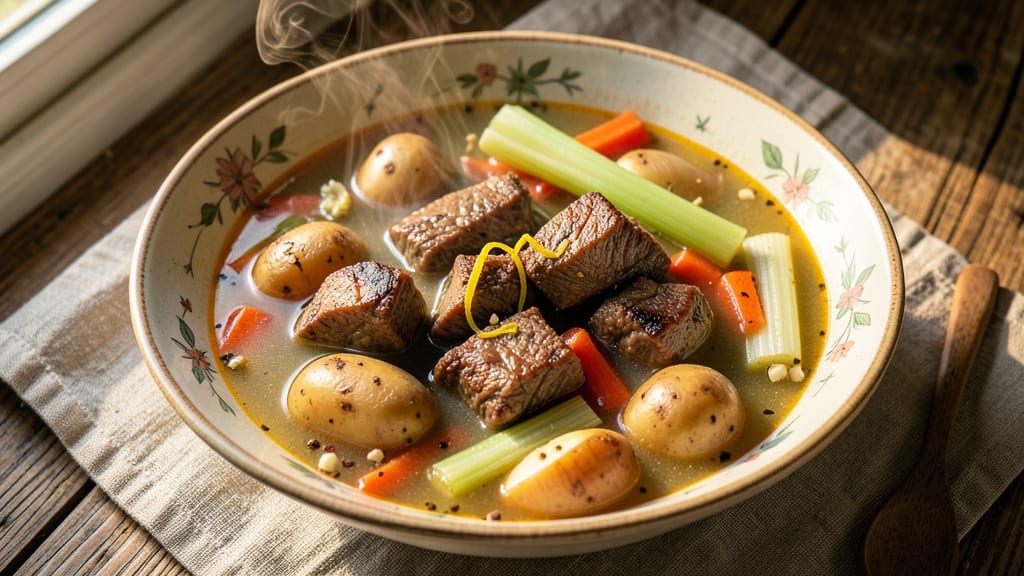
This basic vegetable beef soup recipe delivers comfort in a single pot, perfect for chilly evenings when you crave warmth without fuss. The secret lies in balancing tender beef, hearty vegetables, and rich broth—simmered just long enough to develop deep, savory flavor without overcooking.
I’ve tested this method countless times, and it never fails to satisfy, whether you’re feeding a family or meal prepping for the week.
The beauty of this recipe is its flexibility: use store-bought broth for convenience or homemade for deeper flavor, and swap vegetables based on what’s seasonal. Carrots, celery, and potatoes form the classic base, while onions and garlic build the aromatic foundation.
The beef—cut into small, even pieces—cooks through perfectly, ensuring every spoonful is packed with protein and texture.
By the time you’re done, you’ll have a steaming bowl of soup with tender beef, fork-tender vegetables, and a broth so rich it coats every bite. The one-pot method means minimal cleanup, and the flavors only get better as it sits—ideal for leftovers or freezing.
Serve with crusty bread to soak up every last drop, and you’ve got a meal that’s both nourishing and deeply comforting.
For those watching their sodium, reduce the salt in the broth or use low-sodium options. Vegetarians can swap beef for mushrooms or lentils without sacrificing heartiness. This soup is the kind of dish that transforms a simple weeknight into a cozy gathering—no shortcuts, just honest, satisfying flavor.
Ingredients for basic vegetable beef soup
Six hearty ingredients transform into a steaming bowl of comfort—no shortcuts, just honest flavor.
| Ingredient | Amount | Notes |
|---|---|---|
| Beef Chuck Roast 🥩 | 1 ½ lb | Cut into 1-inch cubes |
| Yellow Onion 🧅 | 1 whole | Diced, medium size |
| Carrots 🥕 | 4 medium | Peeled, cut into chunks |
| Celery Stalks 🧄 | 4 whole | Diced, including leaves |
| Russet Potatoes 🥔 | 2 medium | Peeled, cut into chunks |
| Garlic Cloves 🧄 | 4 cloves | Minced, fresh preferred |
| Beef Broth 💧 | 6 cups | Low-sodium preferred |
| Tomato Paste 🍅 | 2 tbsp | Smooth texture preferred |
| Olive Oil 🫒 | 2 tbsp | Extra-virgin for richness |
| Dried Thyme 🌿 | 1 tsp | Or 1 tbsp fresh |
| Bay Leaves 🌿 | 2 whole | Remove before serving |
| Salt 🧂 | 1 tsp | Kosher or sea salt |
| Black Pepper 🌶️ | ½ tsp | Freshly ground preferred |
| Fresh Parsley 🌿 | ¼ cup | Chopped, for garnish |
The beef makes this soup hearty, so chuck roast is your best bet—it stays tender and absorbs flavors beautifully. Most grocery stores carry it pre-cut, but if you're buying a whole roast, ask the butcher to cube it for you. Costco or Walmart usually have it at a good price, and it keeps well in the freezer for up to 6 months. For the vegetables, fresh is always better, but frozen works in a pinch—just don’t thaw them first. The carrots and celery should be firm with no soft spots, and the potatoes should feel heavy for their size.
No beef broth? Chicken or vegetable broth works too, though the flavor will be slightly different. Short on thyme? Dried oregano at half the amount gets you close. The tomato paste can be skipped if you're avoiding it, but it adds that rich, umami depth that makes this soup sing. For the garlic, fresh is ideal, but if you're in a hurry, jarred minced garlic from Trader Joe's is a solid shortcut. The potatoes can be swapped for sweet potatoes if you prefer, or even turnips for extra earthiness. Just make sure they're cut into even-sized pieces so they cook uniformly.
This soup tastes even better the next day—3-4 days in the fridge is perfect. Freeze portions for up to 3 months by storing in airtight containers. I like to double the recipe and freeze half right away so I always have a quick meal on hand. The broth reduces slightly as it cools, so it’s a great candidate for freezing. When reheating, add a splash of water or broth if it gets too thick. Garnish with fresh parsley right before serving to keep it bright and fresh-tasting.
Why You'll Love This Recipe
- One-Pot Wonder: I swear by this—just dump everything into one pot, let it simmer, and walk away. No fancy techniques, no last-minute grocery runs; the chuck roast practically melts into tender perfection while the veggies soften just enough to soak up every last bit of flavor.
- Deep Umami Magic: That slow-cooked beef? It’s the star. The onions caramelize at the bottom, carrots stay slightly crisp, and the celery adds this earthy backbone—like a hug in a bowl. (Honestly, I’ve had people ask if I used bouillon cubes, but it’s just patience and a pinch of salt.)
- Leftover Goldmine: This soup only gets better the next day. The potatoes absorb the broth like a sponge, the beef gets even more fork-tender, and I’ve reheated portions for days—no one ever complains. (My roommate still steals my leftovers, and I don’t blame him.)
Step-by-step instructions for vegetable beef soup
Here's how to create a rich, comforting soup with minimal cleanup and maximum flavor.
Prepare the Beef and Vegetables
Cut the 1.5 lb Beef Chuck Roast into 1-inch cubes for even cooking. Pat each piece dry with paper towels—this helps develop a better browned crust later. In a large pot, heat 2 tablespoons Olive Oil over medium-high heat until shimmering. Working in batches, add the beef cubes and sear for 2-3 minutes per side until they develop a deep golden brown color. This step builds the foundation of your soup's flavor.
While the beef browns, prepare the vegetables. Dice the 1 whole Yellow Onion into ¼-inch pieces, cut the 4 medium Carrots and 2 medium Russet Potatoes into 1-inch chunks, and dice the 4 whole Celery Stalks (including leaves). Minced the 4 cloves Garlic Cloves—this will infuse the soup with aromatic depth. Keep these prepped ingredients nearby so you can add them in stages.
Build the Soup Base
Once all the beef is browned, remove it from the pot and set it aside. In the same pot, add the diced Yellow Onion, Carrots, and Celery Stalks. Cook over medium heat for 5-6 minutes, stirring occasionally, until the vegetables soften slightly and the onion becomes translucent. This step draws out their natural sweetness and prepares them for the long simmer ahead.
Add the 2 tablespoons Tomato Paste and stir for 1 minute to toast it lightly—this deepens its flavor. Pour in the 6 cups Beef Broth, scraping up any browned bits from the bottom of the pot. Return the beef to the pot, along with the 2 whole Bay Leaves, 1 teaspoon Dried Thyme, 1 teaspoon Salt, and ½ teaspoon Black Pepper. Bring the mixture to a gentle boil, then reduce heat to low and let it simmer uncovered for 30 minutes. This initial simmer allows the beef to tenderize and the flavors to meld.
Add Potatoes and Garlic for Heartiness
After 30 minutes, add the 2 medium Russet Potatoes and 4 minced Garlic Cloves to the pot. Stir gently to combine, then return the heat to medium-low and continue simmering for another 20-25 minutes. The potatoes should be fork-tender, and the beef should be easily pulled apart with a fork. If the soup thickens too much, add ½ cup water or Beef Broth to maintain a consistent texture.
Here's the thing—don't rush this step. The potatoes need time to absorb the rich beef broth and become creamy. You'll know they're done when a knife slides in easily and the soup has a velvety consistency. The garlic should be fully incorporated, adding a subtle, aromatic punch to every spoonful.
Finish and Garnish
Remove the 2 whole Bay Leaves from the soup—they've done their job and can be discarded. Taste the soup and adjust the seasoning if needed. I often add a pinch more Salt or Black Pepper at this stage to ensure the flavors are balanced. The soup should be rich, savory, and well-seasoned without being overpowering.
Ladle the soup into bowls and garnish each serving with ¼ cup chopped Fresh Parsley. The bright, fresh notes of parsley cut through the heartiness of the beef and vegetables, adding a pop of color and a final touch of freshness. Serve immediately with crusty bread to soak up every last drop of that flavorful broth.
Pro Tips For Making Basic Vegetable Beef Soup
- Sear the Chuck First: Brown that beef chuck in batches—don’t crowd the pan—until it’s deep golden, not just pink. I learned this the hard way: skipping the sear means flavorless broth and tougher meat. Use a heavy pot and medium-high heat; it takes patience, but the payoff is worth it.
- Cut Potatoes Uniformly: Dice those Russets into 1.5-inch chunks—big enough to stay intact but small enough to soften fully. I used to chop them randomly, and some ended up mushy while others stayed rock-hard. A sharp knife and consistent cuts make all the difference.
- Salt the Water Generously: Add 1 tablespoon of salt to the broth before the potatoes go in—this seasons the meat and veggies from the start. I know it sounds like a lot, but trust me: bland soup is worse than salty soup you can fix later.
- Deglaze with Wine or Beer: After browning the beef, splash in ½ cup of dry red wine or beer—it loosens the fond (those browned bits) and adds depth. Skip this, and you’re missing out on the richest part of the flavor. (Yes, even if you’re not fancy about cooking.)
Common mistakes when making this dish
Overcooking the Beef
I’ve seen this happen more times than I can count—beef that’s turned into tough, chewy rubber instead of tender, melt-in-your-mouth bites. The key is timing: 1.5 hours total simmering is ideal for 1-inch cubes of chuck roast.
If you’re using a larger pot, reduce the heat slightly to medium-low to prevent overcooking. A meat thermometer is your best friend here—pull the beef when it hits 195°F (it’ll rise to 203°F while resting). 🌡️
Skipping the Sear
That golden-brown crust on the beef isn’t just for looks—it’s packed with flavor from the Maillard reaction. If you skip searing and just toss the raw beef into the pot, your soup will taste flat and one-dimensional.
Work in batches if needed, but 2-3 minutes per side on medium-high heat makes all the difference. I promise, the extra 5 minutes of effort is worth it.
Adding Potatoes Too Early
Potatoes release starch quickly, which can turn your soup gluey if added too soon. Wait until after the 30-minute initial simmer—this ensures the beef and vegetables develop flavor first.
If you’re in a hurry, use waxy potatoes like Yukon Gold, which hold their shape better, but even then, patience pays off. The 20-25 minutes for the potatoes is non-negotiable for that perfect creamy texture.
Ignoring the Broth Level
Nothing ruins a soup faster than a pot that’s too crowded. If your broth level drops below halfway up the vegetables, the edges will burn and the flavors will concentrate unevenly.
Keep an eye on the liquid—add ½ cup water or broth every 15 minutes if needed. A 6-quart pot is perfect for this recipe; if yours is smaller, reduce the ingredients slightly.
Over-Salting Early
It’s tempting to salt the broth right away, but the flavors evolve as the soup simmers. Instead, add just ½ teaspoon salt initially, then adjust at the end. Taste as you go—remember, you can always add more salt, but you can’t take it out.
A pinch of black pepper and a splash of lemon juice at the end can brighten flavors if needed. Trust the process!
Not Tasting Along the Way
This is a rookie mistake, but it happens to everyone. Taste your soup at every major step—after the initial simmer, after adding the potatoes, and right before serving. Flavor builds gradually, and you might need to tweak the seasoning at any point.
I keep a small bowl of salt and pepper on the stove for quick adjustments. A final garnish of fresh parsley or a drizzle of hot sauce can elevate it even more. 💡
Nutrition facts
Frequently asked questions
Can I use ground beef instead of cubed beef?
Ground beef works perfectly—just brown it thoroughly first to avoid a greasy soup. Use 1 lb ground beef instead of cubed beef, and cook it until fully browned before adding other ingredients. The texture will be slightly different but still delicious. For extra flavor, try mixing 80% lean ground beef with 20% ground pork.
What vegetables can I substitute if I don't have carrots or celery?
No problem! Swap carrots for zucchini or parsnips, and celery for leeks or fennel. For a heartier soup, add turnips or rutabagas. If you're short on time, frozen mixed vegetables work too—just drain them well before adding. The key is keeping the vegetable-to-broth ratio balanced for proper cooking.
How can I make this soup thicker or thinner?
For a thicker soup, mash ½ of the cooked potatoes with a fork or blend a small portion with ½ cup broth before mixing back in. To thin it, add ½ cup water or broth at a time until you reach your desired consistency. Remember, soups often thicken as they cool, so adjust while still hot.
Is this recipe freezer-friendly?
Yes! This soup freezes beautifully. Let it cool completely, then store in airtight containers with 1-inch headspace. It keeps for up to 3 months. When reheating, add a splash of water or broth if it seems too thick. The flavors actually improve after freezing—perfect for meal prep!
Can I make this soup in a slow cooker?
Perfect for slow cooking! Brown the beef first, then transfer everything to your slow cooker. Cook on low for 7-8 hours or high for 4-5 hours. The potatoes will absorb more broth, so add ½ cup water if needed. The slow cooker method actually makes the beef extra tender—just be sure to remove the bay leaves before serving.