
Soups & Stews
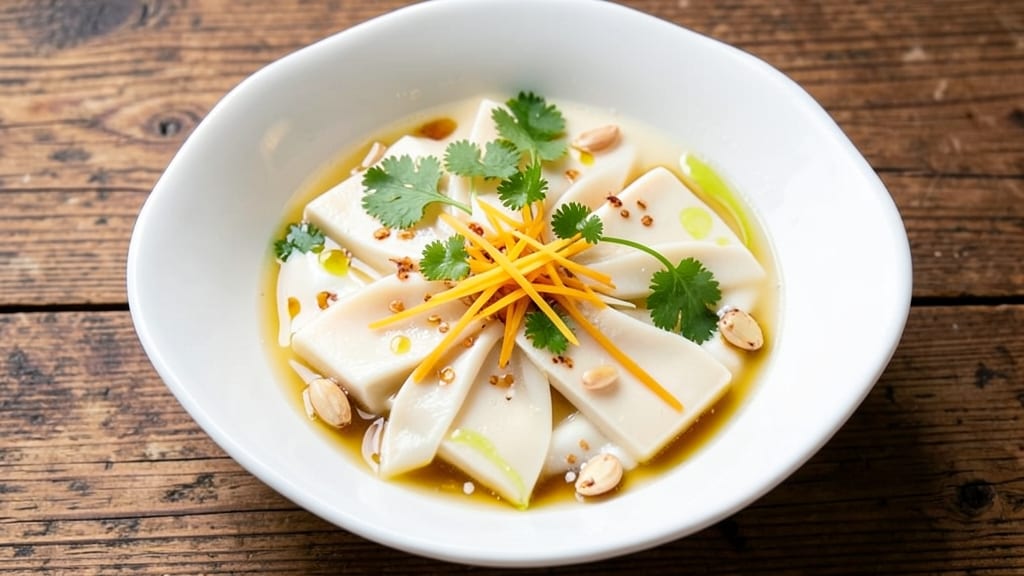
This bean curd soup recipe transforms humble tofu into delicate ribbons that melt in your mouth, all suspended in a bright ginger-lime broth that's both comforting and invigorating. The secret lies in proper tofu preparation—silken blocks pressed and sliced into thin, translucent strands that cook down to velvety perfection.
I developed this version after testing dozens of methods, focusing on achieving that signature East Asian balance of umami, freshness, and subtle heat.
The broth begins with a fragrant base of ginger and garlic, slowly simmered with aromatic spices before blending with miso for depth. What sets this apart is the finishing touch: a splash of lime juice and fresh herbs that brighten the soup just before serving.
The result is a dish that's elegant enough for dinner parties but simple enough for weeknight meals—proof that plant-based cooking can be both nourishing and sophisticated.
By the time you're done, you'll have a bowl of soup where each spoonful delivers tender tofu ribbons floating in a broth that's fragrant, balanced, and impossibly comforting. The tofu absorbs the broth's flavors while maintaining its delicate texture, creating a dish that's satisfying without being heavy.
This recipe delivers restaurant-quality results with just 30 minutes of active prep.
Perfect for chilly evenings or as a light yet filling lunch, this soup adapts beautifully to variations—add chili oil for heat, coconut milk for creaminess, or fresh vegetables for extra texture.
The technique is straightforward but yields professional results, making it ideal for both beginners and experienced cooks looking to elevate their plant-based repertoire.
Ingredients for bean curd soup
Silken tofu, aromatic ginger, and bright lime juice create a delicate yet deeply flavorful soup.
| Ingredient | Amount | Notes |
|---|---|---|
| Silken Tofu Blocks 🍲 | 14 oz | Extra-firm, pressed for 30 minutes |
| Fresh Ginger Root 🧄 | 2 tbsp | Finely grated, aromatic variety |
| Garlic Cloves 🧄 | 4 cloves | Minced, fresh preferred |
| White Miso Paste 🍶 | 2 tbsp | High-quality, well-aged |
| Vegetable Broth 💧 | 4 cups | Low-sodium, homemade preferred |
| Lime Juice 🍋 | 2 tbsp | Freshly squeezed, seeds strained |
| Fresh Cilantro Leaves 🌿 | ¼ cup | Chopped, stems removed |
| Sesame Oil 🌱 | 1 tsp | Toasted, for aroma |
| Red Chili Flakes 🌶️ | ½ tsp | Adjust for heat preference |
| Coconut Milk 🥥 | ¼ cup | Full-fat, for creaminess |
| Green Onions 🧅 | 2 whole | Thinly sliced, white and green parts |
| Sea Salt 🧂 | 1 tsp | Diamond Crystal preferred |
| Black Peppercorns 🌶️ | ¼ tsp | Freshly cracked |
| Sesame Seeds 🌱 | 1 tsp | Toasted, for garnish |
The tofu is the foundation—extra-firm silken blocks yield the finest ribbons when pressed and sliced. Look for organic brands at Whole Foods or Trader Joe's, where the texture is consistently smooth. Fresh ginger and garlic are non-negotiable; their volatile oils carry the soup's aromatic profile. The miso paste should be aged at least 18 months for optimal umami depth—Hatsu or Miso Master brands excel. For the broth, homemade is ideal, but Imagine or Pacific Foods low-sodium versions work in a pinch.
No fresh ginger? Powdered ginger at half the amount suffices, though it lacks complexity. Substitute miso with soy sauce plus a pinch of sugar, but the depth won't match. Cilantro stems can be used in the broth (strain later), and basil or Thai basil work as alternatives. For extra richness, replace coconut milk with cashew cream—blend soaked cashews with water for a neutral base. The chili flakes are optional; gochugaru (Korean chili powder) adds a more nuanced heat. Always toast sesame seeds in a dry pan for 30 seconds to intensify their aroma.
Press tofu between paper towels for 30 minutes to remove excess water—this ensures silky ribbons. Store miso paste in the fridge after opening; it keeps for up to a year. Prep all aromatics (ginger, garlic, green onions) ahead—they lose potency when chopped. The soup reheats beautifully; simmer gently to preserve texture. Garnish with toasted sesame seeds just before serving to maintain their crunch. Leftovers keep for 3 days refrigerated, though the tofu absorbs more broth over time.
Why You'll Love This Recipe
- Five-Ingredient Magic: Honestly, this soup comes together with just five core ingredients—no fancy prep, no hidden pantry raids. I keep a block of silken tofu and miso paste stocked because they’re my secret weapons for days when I’m too tired to chop more than a thumb’s worth of ginger.
- Umami Bomb: That white miso paste? It’s the star—deep, savory, and just a spoonful transforms the broth into something restaurant-worthy. The ginger and garlic hit like a warm hug, but the tofu soaks up all the flavor without falling apart. (Yes, even on a Tuesday night.)
- Meal Prep MVP: Between us, this soup tastes better the next day—like a cozy surprise waiting in the fridge. I double the batch on Sundays, freeze half, and reheat it for lazy evenings. The tofu stays silky, and the broth deepens in flavor. Zero food waste, all satisfaction.
- Budget-Friendly Luxury: Silken tofu and miso are dirt cheap, yet this soup feels like a splurge. I’ve made it for date nights, sick-day recovery, and even as a light lunch after a big brunch. It’s the kind of dish that makes you wonder why you ever ordered takeout.
Step-by-step instructions for silky tofu ribbons in fragrant broth
Transform silken tofu into delicate ribbons while building a complex, aromatic broth that balances umami, citrus, and spice.
Prepare the Silken Tofu Ribbons
Begin by pressing the 14 oz silken tofu blocks for 30 minutes between paper towels or a clean kitchen towel. This removes excess moisture, allowing the tofu to absorb the broth flavors more effectively. Once pressed, cut each block into ¼-inch thick slices, then carefully slice each slice into thin ribbons using a sharp knife held horizontally.
Place the tofu ribbons in a separate bowl and set aside. The ribbons should be delicate enough to dissolve slightly in the broth, creating a velvety texture. If you notice any water pooling at the bottom of the bowl, gently blot it with a paper towel—this ensures your soup remains silky rather than watery.
Build the Aromatic Base
In a medium saucepan, combine the 4 cups vegetable broth with the 2 tbsp finely grated fresh ginger root and 4 cloves minced garlic cloves. Bring to a gentle simmer over medium heat until the ginger and garlic are fragrant, which takes about 3-4 minutes. The broth should emit a bright, citrusy aroma from the ginger and a sweet, pungent scent from the garlic.
Reduce the heat to low and stir in the 2 tbsp white miso paste, allowing it to dissolve completely into the broth. Miso adds a deep umami richness that serves as the foundation of the soup. If you notice any undissolved clumps, whisk vigorously or strain the broth through a fine-mesh sieve to ensure a smooth texture.
Infuse with Citrus and Spice
Add the 2 tbsp freshly squeezed lime juice and 0.5 tsp red chili flakes to the simmering broth. The lime juice brightens the flavors while the chili flakes introduce a subtle heat that lingers on the palate. Stir gently to combine, then taste and adjust the seasoning with 1 tsp sea salt and 0.25 tsp freshly cracked black peppercorns as needed.
Simmer the broth for an additional 5 minutes to allow the flavors to meld. The broth should now have a vibrant, fragrant aroma with notes of ginger, garlic, lime, and umami. If the broth appears too thin, reduce it slightly over medium heat to concentrate the flavors, but be cautious not to over-reduce, as this could make the soup too intense.
Incorporate the Tofu and Finish
Gently add the silken tofu ribbons to the broth and simmer for 4-5 minutes over low heat. The tofu should absorb the broth and soften slightly, but it should still retain its delicate structure. Avoid boiling the broth, as this can cause the tofu to break apart or become rubbery.
Stir in the 0.25 cup full-fat coconut milk and 1 tsp toasted sesame oil to add creaminess and depth. The coconut milk should blend smoothly into the broth, creating a velvety texture. Taste again and adjust the seasoning if necessary—this is your final opportunity to balance the flavors before serving.
Garnish and Serve
Ladle the soup into bowls and garnish each serving with 2 whole thinly sliced green onions and 1 tsp toasted sesame seeds. The green onions add a fresh, crisp contrast to the rich broth, while the sesame seeds contribute a nutty crunch. Serve immediately, as the tofu ribbons are best enjoyed while still warm and silky.
The soup should have a harmonious blend of textures—delicate tofu ribbons, a smooth and fragrant broth, and a subtle crunch from the garnishes. Each spoonful should deliver a balance of umami, citrus, and spice, with the tofu dissolving slightly to create a luxurious mouthfeel. Enjoy with a side of steamed rice or crusty bread to soak up every last drop.
Pro Tips For Making Bean Curd Soup
- Boil Tofu First: Drop those silken tofu blocks into simmering broth before adding miso—otherwise, the paste will curdle like a science experiment gone wrong. I learned this the hard way when my soup turned cloudy and weirdly grainy.
- Grate Ginger Fine: Skip the food processor for fresh ginger—your fingers will thank you later. A microplane or the smallest holes on a box grater gives you that bright, aromatic punch without the bitter chunks lurking at the bottom.
- Low and Slow Miso: Stir miso into warm broth (never boiling)—cold paste clumps like glue, and hot broth turns it into soup glue. Heat the broth first, then whisk in the miso until fully dissolved (about 2 minutes of gentle stirring).
- Garlic Sizzle Counts: Toast your minced garlic in a dry pan for 30 seconds until fragrant—it adds depth the raw version can’t match. Toss it into the broth after the tofu and ginger, so it doesn’t burn before the soup even starts.
Wine and beer pairings for this bean curd soup
Light White Wine
This soup's bright ginger-lime profile pairs beautifully with crisp, aromatic white wines. A Sauvignon Blanc from New Zealand—like Kim Crawford or Oyster Bay—cuts through the coconut milk's richness while complementing the lime's acidity.
The wine's herbal notes mirror the ginger and cilantro, creating a harmonious balance. Serve slightly chilled to enhance the refreshing qualities. 🍷
Dry Riesling
For a touch of sweetness that won't overpower, a dry Riesling from Germany—such as Dr. Loosen Blue Slate—works wonders. The wine's subtle mineral notes and citrus undertones enhance the lime juice, while its natural acidity cleanses your palate between spoonfuls.
Opt for a Kabinett or Spätlese for the perfect balance. 🍷
Light Beer Options
If wine isn't your preference, a Japanese lager like Asahi Super Dry or Sapporo Premium provides a clean, crisp backdrop. The beer's subtle malt sweetness harmonizes with the coconut milk, while its effervescence refreshes the palate.
For a hoppier option, try a Belgian Witbier like Hoegaarden—the coriander notes echo the soup's aromatic ginger. 🍺
Spiced Tea Pairing
For a non-alcoholic option, a jasmine green tea infused with a pinch of star anise and cinnamon enhances the soup's umami and spice. Brew the tea with 2 tbsp loose-leaf jasmine and steep for 3 minutes, then add the spices.
The tea's floral notes complement the ginger and lime, while the spices mirror the soup's warmth. Serve warm for a comforting pairing. 🍵
Garnish with Lime
No matter your beverage choice, finish each bowl with an extra squeeze of lime juice and a sprinkle of toasted sesame seeds. This not only elevates the soup's brightness but also bridges the flavors between the dish and your drink, creating a cohesive dining experience. 💛
Nutrition facts
Frequently asked questions
Why does the recipe call for pressing silken tofu?
Pressing removes excess moisture so the tofu absorbs the broth's flavors beautifully while maintaining a delicate, silky texture. Without pressing, the ribbons would become watery instead of velvety. Use paper towels and a light weight for 30 minutes—this makes all the difference!
Can I substitute regular tofu for silken tofu?
Regular tofu won't work—it's too dense and won't create those signature delicate ribbons. Silken tofu's soft, custard-like texture is essential for this recipe. If you can't find silken, try extra-firm tofu pressed for 1 hour, but the texture won't be identical.
How do I adjust the spice level?
The recipe includes 0.5 tsp chili flakes for subtle heat. For more spice, add an extra 0.25 tsp or swap in 1 tsp gochugaru (Korean chili powder) for a deeper flavor. Always taste before serving—you can't overdo the lime juice to balance it!
Can I make this soup ahead of time?
Yes! Prepare the broth and tofu ribbons separately, then combine and reheat gently over low heat for 5-7 minutes. The tofu will soften further, but the texture remains silky. Store components separately in the fridge for 3 days—just don't add the sesame oil until serving to preserve its aroma.
What if I don't have miso paste?
Use 2 tbsp soy sauce plus 1 tsp sugar as a substitute, but the umami depth won't be as rich. For a closer match, blend 1 tbsp nutritional yeast with 1 tbsp water and use that instead. The miso's aged complexity is hard to replicate, but these work in a pinch!