
Soups & Stews
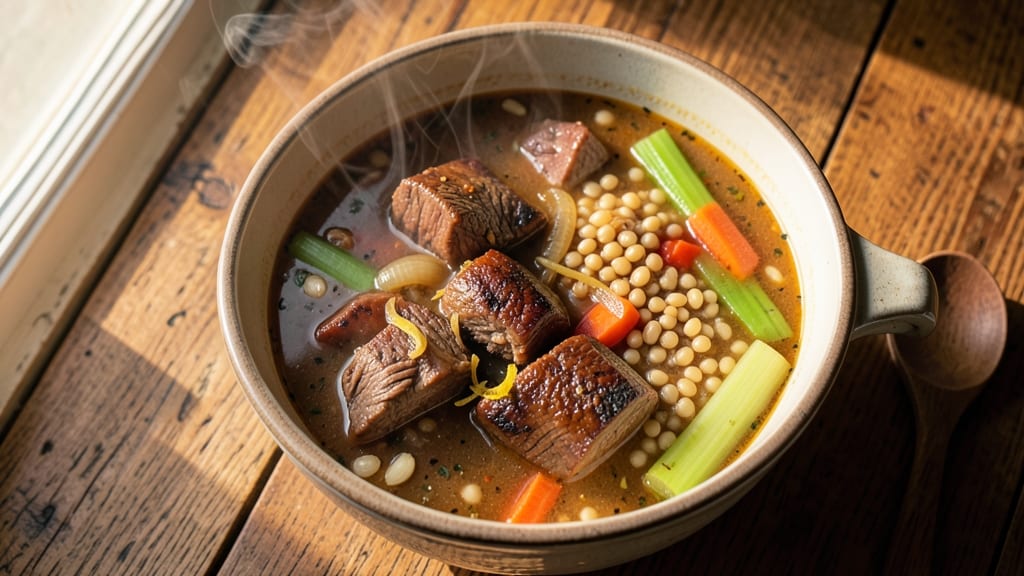
This beef barley soup pressure cooker recipe transforms a classic comfort dish into a 30-minute one-pot wonder—rich, hearty, and packed with tender beef and chewy barley. The pressure cooker unlocks deep, restaurant-quality flavors in a fraction of the time, while the sealed vessel keeps every ingredient perfectly integrated.
I developed this version after years of slow-cooking soup, and the pressure cooker version is the only one that doesn’t require babysitting the pot.
The secret lies in the high-pressure cooking technique, which breaks down tough beef into fork-tender pieces while transforming broth into a velvety, flavorful base. Barley absorbs the rich liquid, becoming plump and satisfying, while vegetables retain their texture without turning mushy.
This method also eliminates the need for pre-cooking the beef separately—just dump everything in and let the pressure cooker do the work.
What you’ll end up with is a deeply aromatic soup with layers of savory beef, earthy barley, and caramelized vegetables—all infused with herbs and spices that develop while sealed under pressure. The result is a foolproof dish that’s perfect for busy weeknights, meal prep, or feeding a crowd.
Every spoonful delivers that cozy, soul-warming satisfaction of a slow-cooked pot, but without the hours of simmering.
Serve with crusty bread to soak up every last drop or pair it with a simple green salad for balance. The leftovers reheat beautifully, making this the ultimate make-ahead soup for cold days. Let’s get started—your pressure cooker is about to become your new best friend.
Ingredients for beef barley soup pressure cooker
The heart of this pressure cooker masterpiece—bold flavors and tender textures in every bite.
| Ingredient | Amount | Notes |
|---|---|---|
| Chuck Roast 🥩 | 2 lb | Cut into 1.5-inch cubes for even cooking |
| Pearl Barley 🌾 | 1 cup | Uncooked, rinsed well before adding |
| Yellow Onion 🧅 | 1 whole | Diced into 0.5-inch pieces |
| Carrots 🥕 | 4 medium | Peeled and cut into 1-inch chunks |
| Celery Stalks 🥬 | 4 whole | Trimmed and cut into 1-inch pieces |
| Garlic Cloves 🧄 | 6 cloves | Smashed with side of knife |
| Beef Broth 💧 | 6 cups | Low-sodium preferred for balance |
| Tomato Paste 🍅 | 2 tbsp | High-quality for rich flavor |
| Dried Thyme 🌿 | 1 tsp | Or 1 tbsp fresh thyme leaves |
| Bay Leaves 🍃 | 2 whole | Remove before serving |
| Black Peppercorns 🌶️ | 1 tsp | Freshly cracked for best flavor |
| Salt 🧂 | 1 ½ tsp | Adjust to taste at the end |
| Olive Oil 🫒 | 2 tbsp | Extra-virgin for richness |
| Fresh Parsley 🌿 | ¼ cup | Chopped for garnish |
The chuck roast is non-negotiable here—it's the star that turns tough into tender under pressure. Look for well-marbled cuts at your butcher or grocery store's meat department, and ask for it pre-cut into cubes if you're short on time. Costco or Whole Foods usually carry excellent quality, but don't overlook your local butcher for the freshest cut. For the barley, pearl barley (not quick-cooking) gives that perfect chewy texture, and it's the only kind that holds up to pressure cooking without turning mushy. Rinse it well before adding to remove any surface starch that could make your soup cloudy. The onions, carrots, and celery form your flavor base—Trader Joe's sells pre-diced mirepoix mixes that save time if you're in a hurry, but chopping your own gives you more control over the size and texture.
No beef broth on hand? Low-sodium chicken broth with 1 tbsp soy sauce works in a pinch, though purists will notice the difference. The tomato paste can be swapped for 1 cup crushed tomatoes if you're avoiding it, but the paste gives that concentrated umami punch that's essential for depth. Fresh thyme is ideal, but dried works at one-third the amount—just make sure it's labeled as culinary thyme, not ornamental. For the garlic, roasted garlic cloves add a sweet, mellow flavor if you want to get fancy, but raw smashed cloves work perfectly fine. The bay leaves are crucial for that classic soup aroma, but don't skip them—remove them before serving or you'll be picking out leaf fragments. Fresh parsley at the end isn't just for looks; it brightens up the rich flavors with its citrusy note.
This soup tastes even better the next day as all the flavors meld together—make a double batch if you can. It keeps for 5-6 days in the fridge, and freezes beautifully for up to 3 months. For freezing, portion into individual containers so you can thaw just what you need. The pressure cooker makes this the ultimate meal prep soup—just reheat with a splash of water or broth to restore moisture. Store the broth separately if you want to use it for other recipes later, but honestly, you'll want to eat this all at once it's so good. The barley will thicken slightly when reheated, so add a splash of water or broth if it's too thick for your liking.
Why You'll Love This Recipe
- Pressure Cooker Magic: I swear by this method—chuck roast goes from tough to fork-tender in 45 minutes while I chop veggies. No babysitting the pot, no burnt bottoms, just set-and-forget perfection.
- Deep Umami Payoff: That chuck roast? Slow-cooked until it practically melts, then simmered with onions, carrots, and celery until everything’s caramelized. The broth is rich but not heavy—like a hug in a bowl.
- Leftovers That Beg: Honestly, I make this twice a month because the second day is even better. The barley softens just right, the beef gets juicier, and I can toss it into wraps or over rice without a second thought.
- Budget-Friendly Feast: Pearl barley and chuck roast stretch across five meals for my family of four—no takeout nights here. Plus, the veggies are the basic "soup starter" kind, so I never waste money on fancy ingredients.
Step-by-step instructions for beef barley soup in a pressure cooker
This method transforms humble ingredients into restaurant-quality soup using your pressure cooker's magic.
Sear the Chuck Roast for Deep Flavor
Set your pressure cooker to "Sauté" mode and heat the 2 tablespoons olive oil over medium-high heat. Add the 2 lb chuck roast cut into 1.5-inch cubes, working in batches if needed to avoid crowding. You want the meat to develop a rich brown crust—this is where all the flavor begins. Cook each batch for 3-4 minutes, turning occasionally, until the exterior is deeply caramelized. Resist the urge to move it too frequently; let those beautiful fond bits form at the bottom of the pot.
Once all the meat is browned, transfer it to a plate. You'll notice the pot now has a beautiful layer of fond—those browned bits packed with flavor. This is your secret weapon for building depth in the soup. Don't wipe it out; we'll deglaze this in the next step. The seared meat will release even more flavor as it cooks in the pressure cooker.
Sauté the Vegetable Base
In the same pressure cooker, add the diced 1 whole yellow onion, 4 medium carrots cut into 1-inch chunks, 4 whole celery stalks cut into 1-inch pieces, and 6 smashed garlic cloves. Cook over medium heat for 5-6 minutes, stirring occasionally, until the vegetables begin to soften and the onion turns translucent. You'll smell that sweet, aromatic base developing—this is the foundation of your soup's flavor profile.
After the vegetables soften, stir in the 2 tablespoons tomato paste and cook for another 1 minute until it darkens slightly. This step deepens the soup's richness and balances the earthy barley. The tomato paste will mellow out during the pressure cooking, but it's crucial for that classic beef barley soup depth. Keep the heat at medium to prevent burning while you work quickly.
Build the Soup Foundation
Pour in the 6 cups beef broth, scraping up all those flavorful browned bits from the bottom of the pot. Add the 1 cup uncooked pearl barley (rinsed well), 1 teaspoon dried thyme, 2 whole bay leaves, 1 teaspoon black peppercorns, and 1.5 teaspoons salt. Return the seared chuck roast cubes to the pot and give everything a good stir to combine. The barley should be fully submerged in the liquid—this ensures even cooking and prevents it from becoming mushy.
Place the lid on the pressure cooker and set it to cook on high pressure for 20 minutes. This is where the magic happens—the pressure cooker transforms tough chuck roast into tender, fork-pull-apart meat while cooking the barley to perfect al dente texture. The high pressure also infuses all the aromatic vegetables and spices into the broth, creating a deeply flavorful base. Don't be tempted to peek or open the lid during this time—releasing pressure prematurely can ruin the texture of both the meat and barley.
Finish and Adjust Seasoning
When the cooking time is complete, allow the pressure to release naturally for 10 minutes, then quick-release any remaining pressure. Carefully remove the lid—you'll be greeted by a pot of soup that looks rich and inviting. Remove and discard the bay leaves (they've done their job), then taste the soup and adjust the seasoning if needed. You might need a little more salt, especially if you used low-sodium broth. The pearl barley should be tender but still have a slight bite—this is key to authentic barley soup texture.
Return the soup to medium heat and stir in the 0.25 cup chopped fresh parsley. This final step brightens the soup and adds a fresh finish. Let it simmer gently for 2-3 minutes to heat through completely. The parsley will wilt slightly, releasing its aromatic oils into the soup. Serve immediately with crusty bread to soak up every last drop of that hearty broth.
Pro Tips For Making Beef Barley Soup Pressure Cooker
- Brown the Chuck First: Don’t just toss that raw chuck roast into the pressure cooker—give it a good sear first. A quick 3-4 minutes on high heat in a skillet (or even the pressure cooker’s sauté function) builds deep flavor that won’t dissolve into the broth later. I learned this the hard way when my first batch tasted bland, no matter how long I cooked it.
- Rinse the Barley Twice: Pearl barley’s starchy coating can make your soup gluey if you skip this step. Toss it in a fine-mesh strainer and rinse under cold water two times before adding it to the pot. This removes excess starch and ensures your barley stays firm and separate—no mushy surprises here.
- Don’t Overfill the Pot: That pressure cooker’s got limits, and ignoring them is how you end up with a weak broth and half-cooked veggies. Fill it no more than halfway with liquid before sealing—this gives the beef room to break down properly and the barley to absorb flavor without turning into a paste. I once crammed mine full and spent 20 minutes fishing out undercooked carrots.
- Add Umami Early: Skip the bouillon cube shortcut and boost flavor by browning your onions, carrots, and celery until they’re deep golden—almost caramelized—before adding liquid. A splash of soy sauce or a teaspoon of Worcestershire in the initial broth also makes a real difference. My grandmother swore by this, and she was right: the soup tastes richer from the start, not just at the end.
Wine and beer pairings for this recipe
Red Wine Pairings
For this hearty beef barley soup, I reach for a medium-bodied red wine that can stand up to the rich beef flavors while complementing the earthy barley.
A Chianti Classico from Tuscany is my go-to—its bright acidity and cherry notes cut through the soup's richness while the tannins match the beef's depth. Look for a 2021 or 2022 vintage from vineyards like Castello di Volpaia or Antinori for that perfect balance. 🍷
If you prefer something with more body, a Syrah/Shiraz from the Northern Rhône—like Guigal Côte-Rôtie—brings smoky, peppery notes that echo the soup's thyme and black pepper. The wine's dark fruit flavors mirror the beef's richness, creating a harmonious match.
For a budget-friendly option, Crozes-Hermitage delivers excellent quality at half the price of more prestigious labels.
Crisp White Wine
Don't overlook white wines for this soup! A dry Riesling from Germany's Mosel region offers vibrant acidity and subtle honeyed notes that contrast beautifully with the barley's earthiness. I love Dr. Loosen Blue Slate Riesling—its mineral finish cleanses your palate between spoonfuls.
The wine's slight sweetness also balances the soup's savory depth without overpowering it. 🍷
Beer Complements
For beer lovers, a Belgian Dubbel like Westmalle Tripel brings malty sweetness and spicy notes that pair surprisingly well with the soup's hearty profile. The beer's caramel and vanilla flavors complement the barley's nuttiness, while its alcohol content helps cut through the richness.
For a lighter option, try a German Helles Lager—its crisp, clean profile refreshes the palate without competing with the soup's flavors.
Craft Beer Options
If you're experimenting with craft beers, a sour brown ale with fruity esters—like Allagash Barrel-Aged Brown—adds a tangy contrast that enhances the soup's umami. The beer's dark fruit notes mirror the beef's depth, while its slight acidity brightens the dish.
For a hoppier option, a session IPA with citrusy hops provides a refreshing counterpoint to the soup's richness. Just avoid overly bitter IPAs that might clash with the meal's hearty profile. 🍺
Nutrition facts
Frequently asked questions
Can I use a different cut of beef instead of chuck roast?
Yes! For a leaner option, try stew beef or brisket—both work well in pressure cookers. Avoid tender cuts like sirloin or filet mignon as they'll become mushy. For extra richness, swap in bone-in chuck (like short ribs) and increase cooking time by 5 minutes—the bones add incredible depth to the broth.
What if my barley isn't tender after 20 minutes?
This usually happens if the barley wasn't fully submerged or if you used quick-cooking barley. For undercooked barley, add 1 cup hot water, reseal, and cook for another 5-7 minutes on high pressure. If using quick-cooking barley, reduce time to 15 minutes initially. Always rinse barley before adding to prevent gumminess.
Can I make this soup in an Instant Pot without a pressure valve adapter?
Standard Instant Pots work perfectly—just follow the same 20-minute high-pressure cook time. The valve adapter isn't needed for soups. For electric pressure cookers without manual release options, always do a 10-minute natural release first to prevent barley from overcooking. The sealed lid maintains pressure naturally during this time.
How do I prevent the soup from being too thick after pressure cooking?
Start with 6.5 cups broth instead of 6 cups to ensure proper liquid ratio. If it's still thick after cooking, stir in ½ cup hot water before serving. For future batches, reduce barley by ¼ cup—it absorbs more liquid than you might expect. The natural release helps thicken slightly, so plan accordingly.
Can I add potatoes to this recipe?
Yes! Add 1 lb baby potatoes (halved) with the vegetables in Step 2. They'll cook perfectly in the 20-minute cycle. For larger potatoes, reduce to ½ lb—they need 15 minutes max to avoid mushiness. The starch helps thicken the soup naturally, but you may want to reduce barley by 2 tablespoons to balance textures.