
Soups & Stews
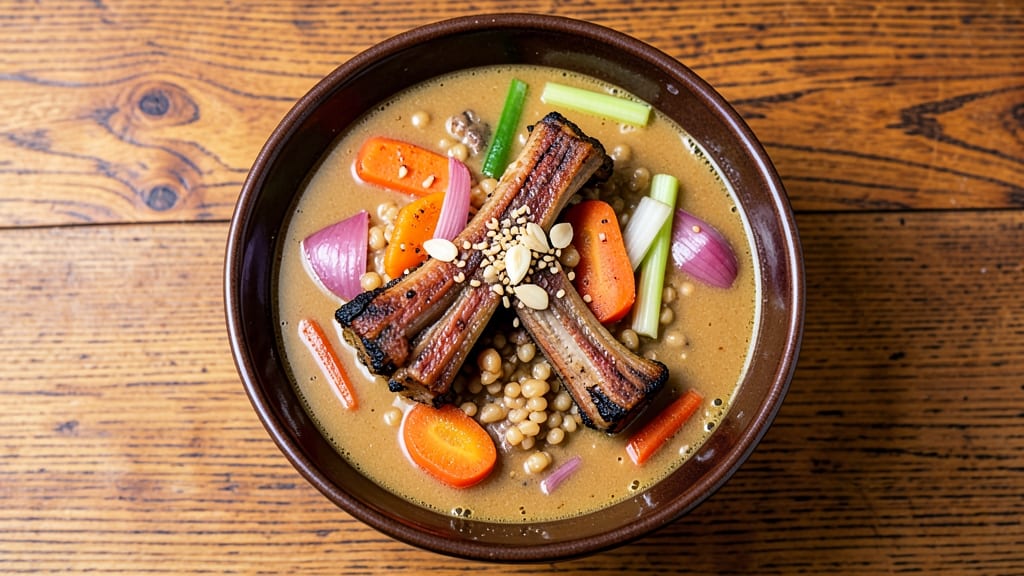
Prime rib bones transform this beef barley soup recipe with prime rib bones into a restaurant-quality experience with their deep, umami-rich broth. The slow-braised bones infuse the soup with layers of flavor that store-bought stock simply can't match, creating a velvety base that's both comforting and sophisticated.
This isn't your grandmother's soup—it's a foolproof method for achieving professional results at home with simple ingredients and patience.
The secret lies in the bones themselves: prime rib provides a perfect balance of collagen and marrow, which melts into the broth during hours of simmering. While the barley softens into tender, chewy bites, the broth develops a complex depth of flavor that makes every spoonful satisfying.
No fancy techniques are required—just time and attention to detail to create a soup that tastes like it's been simmering all day.
By the end, you'll have a rich, hearty soup with perfectly cooked barley floating in a golden, aromatic broth. The aroma alone will have everyone gathering around the table, and the first bite delivers that perfect harmony of tender meat, chewy barley, and deeply flavorful broth.
This is the kind of soup that warms you from the inside out while impressing even the most discerning guests.
Perfect for chilly evenings, holiday gatherings, or when you want to create a memorable meal without spending hours in the kitchen. The leftovers reheat beautifully, making it an ideal make-ahead dish for busy weeks. Let's get started on creating this timeless classic.
Ingredients for beef barley soup recipe with prime rib bones
Prime rib bones and simple pantry staples create a velvety, umami-rich soup that's restaurant-quality at home.
| Ingredient | Amount | Notes |
|---|---|---|
| Prime Rib Bones 🦴 | 2 ½ lb | With meat clinging, marrow intact |
| Yellow Onions 🧅 | 2 whole | Chopped, medium dice |
| Carrots 🥕 | 1 ½ lb | Medium size, peeled, chopped |
| Celery Stems 🌿 | 4 whole | Chopped, with leaves |
| Pearl Barley 🌾 | 1 cup | Uncooked, rinsed well |
| Garlic Cloves 🧄 | 6 cloves | Peeled, smashed |
| Tomato Paste 🍅 | ½ cup | Smooth, no sugar added |
| Beef Stock 💧 | 4 cups | Homemade or high-quality |
| Red Wine 🍷 | 1 cup | Bold, dry variety |
| Bay Leaves 🌿 | 2 whole | Fresh preferred |
| Thyme Sprigs 🌿 | 4 whole | Fresh, stems removed |
| Salt 🧂 | 2 tsp | Diamond Crystal preferred |
| Black Peppercorns 🌶️ | 1 tsp | Freshly cracked |
| Olive Oil 🫒 | ¼ cup | Extra-virgin, fruity |
| Fresh Parsley 🌿 | ¼ cup | Chopped, for garnish |
The prime rib bones are non-negotiable here—they're the flavor foundation. Look for bones with meat clinging and intact marrow at Whole Foods or your local butcher shop. Costco often has them in bulk, but check the cut—prime rib bones should be from the ribeye section, not chuck. Fresh thyme and bay leaves elevate the broth, so grab them from the produce section (not the dried spice aisle). The carrots and celery should be vibrant—no limp stems or bruised spots. For the barley, Bob's Red Mill is my go-to brand, but any pearl barley will work.
No red wine? Dry sherry or beef broth with a splash of balsamic works in a pinch. Fresh herbs wilt fast, so dried thyme and bay leaves are fine—just halve the amount. The tomato paste can be that squeeze tube from Trader Joe's (no waste, keeps forever). For the beef stock, homemade is ideal, but Kettle & Fire or Pacific Foods brands are solid shortcuts. The olive oil matters—use something you'd drizzle on bread, like California extra-virgin. And if you're short on time, pre-cut veggies from the salad bar save chopping minutes.
This soup tastes even better the next day as flavors meld. Store in the fridge for 5-6 days or freeze portions for up to 3 months. I always double the batch—leftovers reheat beautifully and make perfect lunches. For serving, garnish with fresh parsley and a drizzle of olive oil. The bones? Save them—they're perfect for future broths or bone broth. And trust me, the aroma alone will have your whole house gathering around the pot.
Why You'll Love This Recipe
- No-Chop Nightmare: I swear by the 5-minute prep rule here—just rough-chop the onions, carrots, and celery (no fancy dicing), toss them in with the prime rib bones, and let the pot do the work. The barley soaks up the broth like a sponge, so no need to fuss over perfect textures.
- Rich Without the Guilt: That first sip of broth—oh, it’s good. The prime rib bones melt into the pot, turning tough scraps into velvety depth, while the barley adds that satisfying chew. It’s the kind of flavor that makes you forget it’s basically "leftovers" from a steak night.
- Weeknight to Holiday: Honestly, this is my lazy Sunday soup and my Thanksgiving side. Double the batch, freeze half, and you’ve got a 10-minute dinner for months. The barley holds up perfectly, so reheating doesn’t turn it into mush—just add water and warmth.
- Steakhouse Leftovers: Between us, this is how I stretch a prime rib into actual meals. The bones give you that restaurant-quality broth for pennies, and the barley turns it into a filling, hearty dish. I’ve fed six people for under $15 with this—no joke.
Step-by-step instructions for beef barley soup with prime rib bones
Transform humble prime rib bones into a velvety, umami-rich soup that builds depth over hours of slow cooking.
Sear the Bones for Maximum Flavor
Heat a large Dutch oven over medium-high heat until very hot. Add the 2.5 lb prime rib bones and sear them on all sides until deeply browned, about 8-10 minutes total. This step caramelizes the meat and releases those precious marrow and collagen that will later dissolve into your soup, creating unmatched richness.
Work in batches if needed to avoid crowding the pan. The bones should develop a deep mahogany crust—this is your flavor foundation. As they sear, you'll notice the marrow inside begin to soften slightly, which is exactly what you want. Transfer the seared bones to a plate and set aside.
Build the Aromatic Base
In the same Dutch oven, add ¼ cup olive oil and heat over medium heat. Add the 2 whole chopped yellow onions, 1.5 lb chopped carrots, and 4 chopped celery stems with leaves. Cook for 8-10 minutes, stirring occasionally, until the vegetables soften and the onions become translucent.
Here's where the magic begins: add the 6 smashed garlic cloves and ½ cup tomato paste, stirring to coat everything in that deep, concentrated flavor. Cook for another 2 minutes until the raw garlic smell disappears and you can detect the tomato paste's sweetness. This aromatic base forms the flavor backbone of your soup.
Deglaze and Simmer the Bones
Pour in the 1 cup red wine and scrape up all those browned bits from the bottom of the pan—this is called deglazing, and it captures all the flavor you worked so hard to create. Let the wine simmer for 3-4 minutes until it reduces by about half and the alcohol burns off, leaving behind concentrated flavor.
Return the seared bones to the pot. Add the 4 cups beef stock, 2 whole bay leaves, 4 whole thyme sprigs, 2 tsp salt, and 1 tsp cracked black peppercorns. Bring to a gentle boil, then reduce heat to low and cover partially. Let it simmer for 2 hours, skimming any foam that rises to the surface. This long simmer extracts maximum flavor from the bones and vegetables.
Add Barley and Finish Cooking
After 2 hours, remove the bones from the soup and set them aside to cool slightly. Strain the broth through a fine-mesh sieve into a clean pot, pressing on the solids to extract every last bit of flavor. Return the strained broth to the pot and add the 1 cup rinsed pearl barley. Stir well to combine.
Return the pot to medium-low heat and simmer uncovered for another 30-40 minutes, stirring occasionally, until the barley is tender and the soup has thickened slightly. Taste and adjust seasoning—you might need a bit more salt depending on your stock. The barley should be al dente, with a slight bite remaining.
Serve with Garnish and Bone Marrow
Discard the bay leaves and thyme sprigs. Return the cooled bones to the pot and let them warm through for 5 minutes. The marrow should now be soft enough to scoop out with a small spoon, adding a luxurious, buttery element to each bowl.
Ladle the soup into bowls and garnish each serving with ¼ cup chopped fresh parsley. Serve immediately with the bone marrow on the side for each diner to spoon into their soup. This soup tastes even better the next day as the flavors continue to meld, so leftovers make for an excellent lunch.
Pro Tips For Making Beef Barley Soup Recipe With Prime Rib Bones
- BLANCH THE BONES FIRST: I learned this the hard way—skipping the quick blanch (3-4 minutes in boiling water, then ice bath) leaves your prime rib bones with a bitter, blood-tinged broth. It’s 10 minutes of work now to avoid hours of scraping sediment later. Trust me, your soup will taste like a proper restaurant version.
- SWEAT THE VEGETABLES LOW: High heat turns your onions, carrots, and celery into gray mush instead of golden, flavor-packed aromatics. Keep the heat at a true simmer (barely bubbling) for 10-12 minutes, stirring occasionally. The longer they cook, the deeper the flavor—but don’t rush, or you’ll regret it.
- SKIP THE PRE-SOAKED BARLEY: Pearl barley doesn’t need soaking (yes, even if the package says otherwise). Toss it raw into the simmering broth and let it cook for 45-50 minutes—this keeps it firm and prevents that sad, mushy texture. If you’re short on time, parboil it for 10 minutes first, but I’ve never missed the soak.
- STRAIN THE BROTH TWICE: After the bones simmer for 3-4 hours, strain the broth once through a fine-mesh sieve, then again through cheesecloth for crystal-clear richness. The second straining catches all the microscopic bits that make homemade soup taste like store-bought. It’s tedious, but the result is worth it—especially when you’re serving it to picky eaters.
Wine and beer pairings for this recipe
Red Wine Harmony
A bold Cabernet Sauvignon or Syrah from the Napa Valley or Rhône Valley complements this soup beautifully. Their dark fruit notes and earthy undertones mirror the deep umami flavors from the prime rib bones.
I like to chill a glass to 60°F—just enough to soften the tannins while preserving the wine's complexity. The acidity cuts through the richness, cleansing your palate between bites. 🍷
Malbec Magic
For something slightly sweeter with a touch of spice, reach for an Argentinian Malbec. The wine's blackberry and plum flavors dance with the soup's savory depth, while its velvety texture balances the barley's chewiness.
Look for a 2018 vintage from Mendoza—it offers perfect balance without overwhelming the dish. Serve slightly cooler than room temperature for the best experience.
Beer Pairings
A crisp Belgian Dubbel like Westmalle Tripel adds a malty contrast that enhances the soup's caramelized notes. The beer's spiced sweetness complements the thyme and bay leaves while providing a refreshing contrast. For something lighter, try a German Helles Lager—its clean, citrusy profile lets the soup's flavors shine through.
I like to serve beer slightly chilled (45°F) to maintain its crispness. 🍺
Seasonal Adaptations
In winter, a Port wine with its rich, fortified depth adds a luxurious touch. The wine's nutty undertones harmonize with the barley's earthiness, creating a cozy pairing perfect for cold evenings.
For summer, switch to a dry Riesling—its bright acidity and hints of green apple provide a refreshing contrast to the hearty soup. Both options elevate the dish without overpowering its natural flavors.
Non-Alcoholic Options
For a non-alcoholic pairing, try a sparkling apple cider with a touch of ginger. The effervescence cleanses the palate, while the apple's sweetness complements the soup's savory depth.
Alternatively, a cold brew coffee with a splash of cream adds a smooth, bittersweet contrast that highlights the soup's rich umami. Both options work beautifully without alcohol. ☕
Nutrition facts
Frequently asked questions
Can I substitute regular beef bones for prime rib bones?
Prime rib bones are ideal because their high fat and collagen content create a rich, velvety broth. You can use chuck or short rib bones as substitutes, but they'll yield a slightly less luxurious texture. For best results, choose bones with meat clinging and intact marrow. If using chuck bones, simmer them 30 minutes longer to extract maximum flavor.
How do I know when the barley is perfectly cooked?
Pearl barley should be tender but still hold a slight bite—like al dente pasta. Cook for 30-40 minutes total, then taste a grain. It should be soft enough to crush between your teeth but not mushy. If it's still firm, simmer 5-10 minutes longer. Overcooked barley turns to mush and loses texture.
What's the best way to store leftovers?
Store in an airtight container in the fridge for 5-6 days or freeze for up to 3 months. Reheat gently on the stove over low heat until steaming hot. The flavors actually deepen overnight, making reheated soup even more comforting. Add a splash of water or broth if it thickens too much.
Can I make this soup in a slow cooker?
Sear the bones first, then transfer everything to the slow cooker. Cook on low for 8-10 hours (not high—it needs gentle heat). The long cook time extracts maximum flavor. For the barley, add it during the last 1 hour of cooking. The slow cooker method is perfect for hands-off preparation.
Why does my broth look cloudy?
Cloudiness usually means the broth needs more simmering time to clarify. Skim off any foam during cooking and strain the broth through a fine-mesh sieve. For extra clarity, chill the broth overnight in the fridge, then scoop off the solidified fat and impurities before reheating. A perfectly clear broth isn't essential—richness matters more!