
Soups & Stews
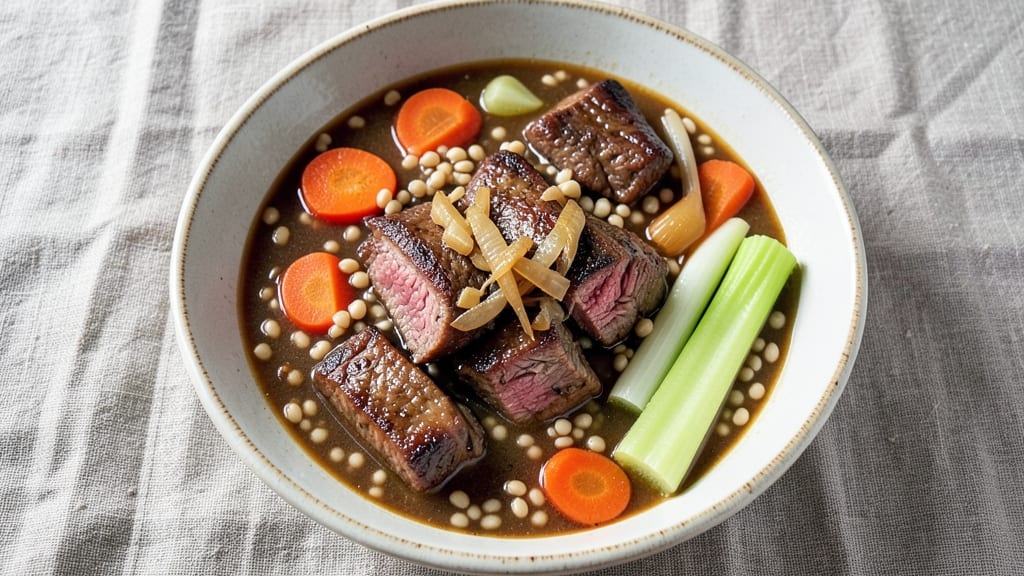
This beef barley soup recipe with stew meat transforms tough cuts into melt-in-your-mouth tenderness through slow simmering—a technique that builds rich, savory depth over time. The key lies in browning the meat first, creating a flavorful crust that dissolves into the broth during hours of gentle cooking.
I've perfected this version to deliver the perfect balance of hearty beef, chewy barley, and vegetables that soften just enough to soak up every drop of flavor.
The beauty of this soup is its foolproof nature—ideal for weeknight dinners or meal prep. You'll start with a simple sear of stew meat, then let the flavors develop as everything simmers together in one pot.
The barley absorbs the broth beautifully, while carrots, celery, and onions add natural sweetness and texture. This isn't just soup; it's a comforting, restaurant-quality meal that feels like a steaming bowl of home.
By the time you're done, you'll have a deeply aromatic soup with tender beef that practically falls apart at the touch of a spoon. The barley becomes plump and chewy, while the vegetables retain just enough bite to keep the texture interesting.
Each spoonful delivers layers of savory, slightly sweet, and umami-rich flavors that make this more than just a meal—it's a weeknight tradition worth making again and again.
Serve it hot with crusty bread to soak up every last drop of that rich broth. The beauty of this recipe is its versatility—it works equally well as a standalone meal or paired with a simple green salad. Let's get simmering!
Ingredients for beef barley soup recipe with stew meat
Six hearty ingredients transform tough stew meat into restaurant-quality beef barley soup.
| Ingredient | Amount | Notes |
|---|---|---|
| Stew Meat 🥩 | 2 lb | Chuck roast, cut into 1-inch cubes |
| Pearl Barley 🌾 | 1 cup | Uncooked, rinsed well |
| Yellow Onion 🧅 | 1 whole | Medium, chopped |
| Carrots 🥕 | 4 whole | Medium, peeled and chopped |
| Celery Stalks 🧄 | 4 whole | Chopped, including leaves |
| Garlic Cloves 🧄 | 4 cloves | Minced, fresh preferred |
| Tomato Paste 🍅 | 2 tbsp | Smooth, not chunky |
| Beef Broth 💧 | 6 cups | Low-sodium preferred |
| Red Wine 🍷 | 1 cup | Dry, like Cabernet |
| Bay Leaves 🌿 | 2 whole | Fresh, not dried |
| Thyme Sprigs 🌿 | 2 whole | Fresh, or 1 tsp dried |
| Salt 🧂 | 1 ½ tsp | Kosher or sea salt |
| Black Peppercorns 🌶️ | 1 tsp | Freshly cracked |
| Olive Oil 🫒 | 2 tbsp | Extra-virgin for browning |
| Fresh Parsley 🌿 | ¼ cup | Chopped, for garnish |
The stew meat is everything here. Chuck roast gives you that perfect melt-in-your-mouth texture—sirloin or round stays too tough. I always grab mine from Costco or the butcher counter at Whole Foods for the best marbling. Look for pieces with good fat distribution; that's what makes it tender. Cube it yourself if possible—pre-cut often has uneven sizes that cook inconsistently. For the barley, pearl barley is the classic choice, but pot barley works too if that's what you've got. Just rinse it well before adding to the pot.
No red wine? Beef broth with a splash of balsamic vinegar works in a pinch—just add an extra tablespoon of tomato paste for depth. Fresh thyme is ideal, but dried works at one-third the amount. The tomato paste can be tricky—those little squeeze tubes at Trader Joe's are perfect for this recipe. If you're using dried herbs, crush them between your fingers first to release the flavor. The carrots and celery can be baby versions if that's what's in the fridge, but regular stalks add more texture. And for the garlic, fresh is non-negotiable—jarred minced loses its punch fast.
This soup tastes even better the next day—3-4 days in the fridge, no problem. For freezing, portion it into containers with a little extra broth on top to prevent a skin from forming. Keeps for 3 months. I always make a double batch because it's perfect for meal prep. Store the broth separately if you want to use it for other recipes later. The barley thickens as it sits, so you might want to add a splash of water when reheating. And trust me, the parsley at the end isn't just for looks—it brightens up the whole bowl.
Why You'll Love This Recipe
- One-Pot Magic: I swear by this recipe because it’s the kind of meal where you dump everything in one pot and walk away. No fancy techniques—just brown the beef, toss in the onions and celery (I chop them roughly, no stress), add the barley and carrots, and let it simmer. By the time the beef is tender, the flavors have melded into something deeply comforting.
- Rich, Deep Umami: Here’s what sold me—the way the stew meat breaks down into tender, flavor-packed chunks while the barley soaks up all that savory goodness. The onions caramelize just enough to add sweetness, and the carrots stay slightly crisp. Honestly, it’s the kind of soup where every spoonful feels like a hug.
- Meal Prep Hero: Between us, this is my go-to for busy weeks. Make a big batch on Sunday, and you’ve got hearty lunches for days. The barley thickens the broth just enough to stay satisfying, and the beef stays juicy even after reheating. (Yes, even on a Tuesday night when you’re running late.)
- Budget-Friendly Feast: Stew meat stretches further than you’d think, and pearl barley is one of the cheapest whole grains out there. I often double the recipe because it’s cheaper per serving than takeout, and it feeds a crowd without breaking the bank. Plus, leftovers taste even better the next day—proof that good food gets richer with time.
Step-by-step instructions for hearty beef barley soup
This is how you build a rich, comforting beef barley soup that simmers into perfect harmony.
🍳 Step 1: Brown the Stew Meat for Deep Flavor
Heat the 2 tablespoons olive oil in a large Dutch oven over medium-high heat. Working in batches if needed, add the 2 lb stew meat and sear until deeply browned on all sides—about 8-10 minutes. This step is non-negotiable; you want that beautiful crust that carries through the entire soup.
I like to press down gently on the meat with a wooden spoon during the first minute to prevent curling. Once browned, remove the meat and set it aside. You'll notice the pot now has a rich, caramelized fond at the bottom—this is pure flavor we'll dissolve later. Don't wipe out the pot; those browned bits are essential.
👨🍳 Step 2: Sauté the Vegetable Base
In the same Dutch oven, add the chopped 1 whole yellow onion, 4 whole carrots, and 4 whole celery stalks (including leaves). Cook over medium heat for 8-10 minutes, stirring occasionally, until the vegetables soften and the onion becomes translucent. You want them to release their natural sweetness and mellow flavors.
Add the 4 cloves minced garlic and cook for another 30 seconds until fragrant. Here's where it gets good—stir in the 2 tablespoons tomato paste and cook for 1 minute. This creates a rich base that will deepen the soup's color and flavor as it simmers. If you smell it burning, reduce the heat slightly—garlic burns fast.
🍳 Step 3: Deglaze and Build the Broth
Pour in the 1 cup red wine and scrape up all those browned bits from the bottom of the pot. Let it simmer for 2-3 minutes until the wine reduces by half. This deglazing step captures all the meaty flavors that would otherwise stick to the pot. Add the 6 cups beef broth, 2 whole bay leaves, and 2 whole thyme sprigs.
Return the browned stew meat to the pot. Bring everything to a gentle boil, then reduce heat to low and let it simmer uncovered for 1 hour. You'll see the meat gradually break down and the broth become more opaque. This is when the magic happens—flavors meld and the soup transforms from a collection of ingredients into something truly comforting.
🥘 Step 4: Add Barley and Season
After the initial 1-hour simmer, stir in the 1 cup rinsed pearl barley. The barley needs time to absorb the broth and soften properly, so let the soup continue simmering for another 30-40 minutes. You'll know it's ready when the barley is tender but still has a slight bite—it should hold its shape but be easily mashed between your fingers.
Season with 1.5 teaspoons salt and 1 teaspoon cracked black peppercorns. Taste the broth before adding salt—sometimes the beef and broth already contain enough salt. Remember, you can always add more salt, but you can't remove it. Let the soup simmer uncovered for another 10-15 minutes to allow the flavors to fully develop and deepen.
🔪 Step 5: Finish and Garnish
Remove the bay leaves and thyme sprigs before serving. The soup should be thick and hearty, with barley that's tender but still holds its shape. If it's too thick, add a little water or broth to reach your desired consistency. The meat should be fork-tender, falling apart easily when pierced.
Ladle the soup into bowls and garnish with ¼ cup chopped fresh parsley. The parsley adds a fresh contrast to the rich, hearty flavors of the soup. Serve immediately with crusty bread to soak up every last drop of that delicious broth. This soup tastes even better the next day as the flavors continue to meld, but it's too good to wait that long!
Pro Tips For Making Beef Barley Soup Recipe With Stew Meat
- SEAR THE BEEF FIRST: Walk away from the stove for 10 minutes after browning the stew meat—let those crusty bits develop. I used to rush this, and my soup always tasted flat. The Maillard reaction happening here is what builds deep flavor, not just color.
- CHOP VEGETABLES UNIFORM: Cut carrots, celery, and onions into roughly ½-inch pieces—no smaller. I learned this the hard way when my soup turned to mush after 2 hours. Uniform size means even cooking, and you won’t end up with a watery stew.
- SALT THE WATER LIKE THE OCEAN: Add 2 teaspoons of salt to the broth before boiling—enough to sting your fingers a little. Pearl barley soaks up flavor like a sponge, and if the water’s bland, so will your soup. Trust me, you won’t overdo it.
- SIMMER LOW AND LONG: After the initial boil, drop the heat to a bare simmer—just enough to keep tiny bubbles breaking the surface. I once walked away for 30 minutes and came back to a stew that was barely cooked. Low heat = tender meat and creamy barley, not a science experiment.
Serving suggestions for this dish
Crusty Bread Pairing
Serve your beef barley soup with a warm, crusty loaf of sourdough or baguette—the perfect vehicle for soaking up every last drop of that rich broth. I love using a freshly baked baguette from my local bakery, like the ones at Whole Foods or Trader Joe's.
The crispy exterior contrasts beautifully with the soft, hearty soup, while the open crumb absorbs the flavors like a sponge. 🥖
Simple Green Salad
A bright arugula salad with lemon vinaigrette cuts through the soup's richness perfectly. Toss 4 cups baby arugula with 2 tablespoons olive oil, 1 tablespoon fresh lemon juice, and a pinch of flaky sea salt.
Add ¼ cup shaved Parmesan cheese for extra depth. This light contrast balances the soup's heartiness while adding freshness to your meal.
Cheese Board Accompaniment
For a more indulgent spread, pair your soup with a mixed cheese board featuring aged cheddar, brie, and blue cheese. The sharpness of the cheddar and the creaminess of the brie complement the soup's savory notes, while the blue cheese adds a bold, tangy contrast.
Include crackers, dried fruit, and nuts for variety. This makes the meal feel like a cozy, restaurant-worthy feast. 🧀
Wine Pairings
A bold red wine like Cabernet Sauvignon or Merlot enhances the soup's rich, meaty flavors. The tannins in these wines cleanse your palate between spoonfuls, while their fruitiness complements the barley and beef.
For a lighter option, a Pinot Noir offers a smoother, more elegant pairing. Avoid heavy, oaky whites—they won’t stand up to the soup’s depth. 🍷
Garnish Upgrades
Elevate your soup with a few finishing touches before serving. A sprinkle of toasted breadcrumbs adds crunch, while a drizzle of high-quality extra-virgin olive oil enhances richness.
For a pop of color, add thinly sliced radishes or cherry tomatoes. These small details make the soup feel even more special and restaurant-worthy. ✨
Leftovers Reinvented
Turn tomorrow’s leftovers into a new meal with soup crostini. Toast baguette slices, spread with a layer of leftover soup, and top with shredded cheese before broiling until bubbly.
Alternatively, blend the soup into a creamy barley bisque by adding a splash of heavy cream and simmering until smooth. These creative twists keep the meal exciting! 💡
Nutrition facts
Frequently asked questions
Can I use ground beef instead of stew meat?
While you can substitute ground beef, it won't give you the same rich, tender texture. Stew meat (like chuck roast) breaks down beautifully during long simmering, creating melt-in-your-mouth pieces. Ground beef will cook faster and may become dry. If you must use it, brown it well first and reduce simmering time to 45-60 minutes total.
How do I make this soup in a slow cooker?
Brown the stew meat and vegetables in a skillet first, then transfer everything to your slow cooker. Add all remaining ingredients (including barley) and cook on low for 7-8 hours or high for 4-5 hours. The slow cooker's gentle heat will tenderize the meat perfectly without drying it out. Stir occasionally and add water if needed to reach your desired consistency.
Why did my barley turn mushy?
Overcooking is the most common cause. Pearl barley should be tender but still hold its shape—simmer for 30-40 minutes after adding it, not longer. If it's already mushy, strain out the barley and replace it with fresh. For next time, check the barley every 15 minutes during the final simmer.
Can I make this soup vegetarian?
Replace the beef with mushrooms (like portobello or cremini) or lentils for protein. Use vegetable broth instead of beef broth and add 1 teaspoon soy sauce or miso paste for depth. The cooking time will be shorter—simmer for 20-30 minutes after adding barley. The umami from mushrooms or lentils will complement the barley beautifully.
How do I know when the stew meat is fully cooked?
The meat should be fork-tender, falling apart easily when pierced with a fork. For 2 lb stew meat, it typically takes 1-1.5 hours of simmering. If you're unsure, cut into a piece—the juices should run clear, not pink. For extra assurance, use a meat thermometer: the internal temperature should reach 160°F for safety.