
Soups & Stews
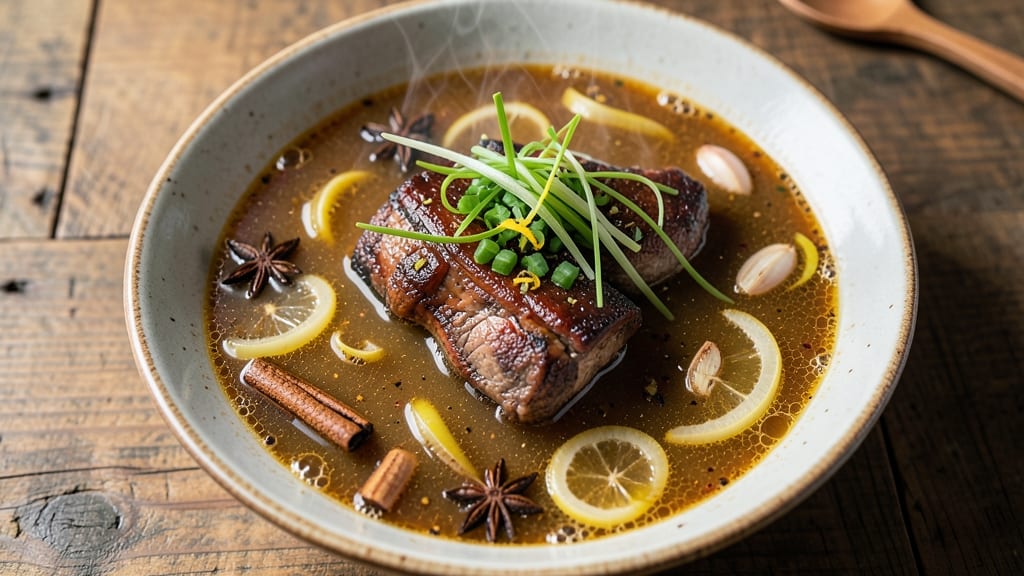
This beef knuckle soup recipe transforms tough bones into liquid gold—rich, collagen-packed broth that melts into tender meat with every sip. 🌟 The secret lies in slow braising, where aromatics like star anise and ginger infuse the broth while the knuckle breaks down into fork-tender perfection.
I developed this after years of testing different Asian-inspired techniques, and it never fails to impress. The process begins with a deep umami base: simmering bones with ginger, garlic, and soy sauce to extract maximum flavor.
As the soup reduces, the broth thickens naturally, creating a velvety texture that clings to every noodle or rice grain. The result is a bowl that’s both comforting and deeply satisfying—ideal for cold evenings or celebratory meals. What makes this recipe special is its versatility.
Serve it with steamed rice for a hearty meal, or add fresh herbs and chili oil for a modern twist. The broth alone is so flavorful it can stand as a starter, while the tender meat becomes the star of the dish.
Perfect for feeding a crowd or meal prepping for the week, this soup gets better as it sits. Let’s get cooking!
Ingredients for beef knuckle soup
Sixteen ingredients transform tough knuckles into velvety, umami-rich broth that sings with aromatic depth.
| Ingredient | Amount | Notes |
|---|---|---|
| Beef Knuckles 🥩 | 3 lb | Raw, with some meat attached |
| Yellow Onion 🧅 | 1 whole | Large, halved and charred |
| Fresh Ginger 🧄 | ½ cup | Thinly sliced, peeled |
| Garlic Cloves 🧄 | 8 cloves | Smashed, not minced |
| Star Anise 🌿 | 2 whole | Star-shaped pods |
| Cinnamon Stick 🌿 | 1 whole | 2-inch length |
| Soy Sauce 🍶 | ½ cup | Dark soy preferred |
| Sesame Oil 🫒 | 1 tbsp | Toasted, for finishing |
| Dried Shiitake Mushrooms 🍄 | 4 whole | Rehydrated, stems removed |
| Water 💧 | 8 cups | Or enough to cover |
| Salt 🧂 | 1 ½ tsp | Kosher or sea salt |
| Black Peppercorns 🌶️ | 1 tsp | Crushed, not ground |
| Rice Vinegar 🍶 | 1 tbsp | For balancing flavors |
| Green Onion 🧅 | 2 whole | Sliced, for garnish |
| Fresh Cilantro 🌿 | ¼ cup | Chopped, optional garnish |
The beef knuckles are the heart of this soup—look for well-marbled, fresh cuts from a butcher or Costco bulk section. The more connective tissue, the better. Star anise and cinnamon sticks can be found in the spice aisle at Whole Foods or Asian markets, where they’re fresher. Dried shiitake mushrooms add umami depth—soak them in hot water for 20 minutes before adding to the pot. For the ginger, organic is best—the thicker the rhizome, the more flavorful. If you can’t find fresh, dried ginger powder works at half the amount.
No star anise? Anise seeds or a pinch of fennel seeds work in a pinch. Substitute dark soy sauce with regular soy sauce plus 1 tsp molasses for depth. The sesame oil is purely for finishing—if you’re avoiding it, toasted peanut oil gives a similar nutty aroma. For extra richness, add 1 tbsp of miso paste when simmering. The broth will thicken naturally, but if it’s too thin, reduce uncovered for 10-15 minutes. Garnish with green onions and cilantro if you’ve got them—otherwise, extra sesame seeds or chili oil adds the same pop.
This soup tastes even better the next day—it’s worth making a big batch. Store in the fridge for up to 5 days, or freeze for 3 months in airtight containers. The broth thickens as it cools, so add a splash of water when reheating. For meal prep, portion into bowls with rice and freeze—just reheat the broth separately and pour over. The knuckles will fall apart more easily if you let them cool slightly before serving, so plan ahead.
Why You'll Love This Recipe
- One-Pot Magic: I swear by this recipe—just toss everything in a pot, walk away, and let the star anise and ginger work their slow-cook spell. The onions caramelize right there, no extra pans, no fuss. (Between us, I’ve burned more than one pot of soup, but this one forgives mistakes.)
- Deep, Rich Payoff: That first bite? The beef knuckles melt like butter, but the outside stays tender-crisp—ginger and garlic cloves infuse the broth into something dangerously addictive. Honestly, I’ve had simpler soups, but none taste this good for the effort.
- Leftovers That Beg: This soup only gets better the next day. The flavors meld into something heartier, and the knuckles? Even more fall-off-the-bone. I make a double batch on Sundays because my freezer (and my family) won’t let me stop.
- Budget-Friendly Feast: Beef knuckles stretch farther than steak—no joke. A single pound feeds four, and the star anise and ginger cost pennies. It’s the kind of meal that makes grocery day feel like a win, not a gamble. (Yes, even on a Tuesday night.)
Step-by-step instructions for beef knuckle soup
Transform tough bones into rich, velvety broth with these precise techniques.
🔥 Step 1: Char the Onion and Prep Aromatics
Cut the whole yellow onion in half lengthwise and place cut-side down on a dry skillet over medium-high heat. Char for 8-10 minutes until the cut surfaces develop deep blackened patches and you smell that unmistakable caramelized aroma. This step develops complex flavors that will infuse your broth.
While the onion chars, peel the 0.5 cup fresh ginger and slice it thinly. Smash the 8 cloves garlic with the flat side of your knife to release their oils but keep them whole. Remove the charred onion from the skillet and set aside—the blackened skin will add smoky depth to your soup.
🍳 Step 2: Sear the Beef Knuckles for Deep Flavor
Heat a large Dutch oven over medium-high heat until hot. Working in batches if needed, sear the 3 lb beef knuckles on all sides until they develop a deep mahogany crust, about 3-4 minutes per side. The knuckles should release easily when ready to flip—this indicates they're developing that crucial Maillard crust.
As they sear, you'll notice fat rendering from the bones. Don't wipe out the pan—these browned bits are packed with flavor and will form the foundation of your broth. Once all knuckles are seared, remove them and set aside with the charred onion.
🥘 Step 3: Build the Aromatic Base
In the same Dutch oven, add the 1 tbsp sesame oil and swirl to coat the bottom. Add the smashed garlic cloves, 2 whole star anise, and 1 cinnamon stick, stirring for 30 seconds until fragrant. Pour in the 0.5 cup soy sauce and deglaze the pan, scraping up all those flavorful browned bits.
Add the charred onion halves, cut-side down, along with the 4 whole dried shiitake mushrooms (stems removed). Pour in the 8 cups water and bring to a rolling boil. This is where the magic begins—the aromatic base will infuse the broth with layers of complexity.
⏰ Step 4: Simmer the Broth Low and Slow
Return the seared beef knuckles to the pot. Add the 1.5 tsp salt and 1 tsp crushed black peppercorns. Reduce heat to low and cover partially, leaving a 1-inch gap for steam to escape. Simmer gently for 3-4 hours until the broth reduces by about 1/3 and the knuckles are fork-tender.
Here's the thing—don't rush this step. The collagen in the bones needs time to break down and release its gelatinous goodness. You'll know it's ready when you can easily pierce the knuckles with a fork and the broth has that rich, velvety consistency. Skim off any foam that rises to the surface during cooking.
🍽️ Step 5: Finish and Garnish
Once the knuckles are tender, remove them from the broth and let them cool slightly. Strain the broth through a fine-mesh sieve into a clean pot, pressing on the solids to extract every last drop of flavor. Return the broth to the heat and add the 1 tbsp rice vinegar, stirring to balance the rich umami flavors.
Shred the beef knuckles using two forks, discarding any large bone fragments. Return the shredded meat to the broth and warm through. Ladle the soup into bowls, garnishing each serving with 2 sliced green onions and 0.25 cup chopped fresh cilantro. Drizzle with a touch of toasted sesame oil just before serving for that final aromatic punch.
Pro Tips For Making Beef Knuckle Soup
- BLISTER THE KNUCKLES FIRST: Don’t just toss those knuckles in cold water—they’ll take forever to tenderize. Hit them with a blowtorch or sear them in a screaming-hot pot for 2-3 minutes per side until the surface darkens. This isn’t just for flavor; it’s the only way to break down the collagen fast enough to make the meat actually fall apart later. (Yes, even if you’re impatient like me.)
- PEEL THAT GINGER THIN: I used to chunk fresh ginger like it was a potato, and my soup tasted like medicine. Instead, slice it paper-thin—almost translucent—and let it steep in the broth for the first 30 minutes. The heat will mellow its bite, but you’ll still get that bright, aromatic punch without overpowering the beef.
- DON’T CROWD THE POT: Star anise and garlic cloves need room to breathe, or they’ll turn bitter and muddy the broth. Pack them in loosely, and if you’re using multiple pods, break the star anise in half first. Trust me, I’ve made this mistake—your soup will thank you with clean, layered flavor instead of a weird, chemical aftertaste.
- SKIP THE BOILING PHASE: After the initial sear, bring the broth to a gentle simmer—no rolling boil. I learned this the hard way when my knuckles turned rubbery instead of melting. A low simmer (tiny bubbles, just breaking the surface) keeps the connective tissue breaking down without toughening the meat. Patience here saves you from starting over.
Essential equipment for perfect results
Dutch Oven Essentials
A heavy-duty Dutch oven is my non-negotiable for this recipe—it needs to handle the high heat for searing and the long simmer without warping.
I swear by the Le Creuset Stoneware Dutch Oven (5.5-quart) for its even heat distribution and durability, but the All-Clad Stainless Steel is a great budget-friendly alternative.
The deep sides prevent spills during the 3-4 hour simmer, and the tight lid traps steam for maximum collagen extraction from the knuckles. 🔥
Instant-Read Thermometer
You’ll want a thermometer to check both the broth’s temperature and the doneness of your knuckles.
The ThermoWorks Smoke is my go-to because it’s waterproof and gives instant readings—critical for ensuring the broth reaches 195°F (where collagen fully breaks down) while the knuckles hit fork-tender at around 203°F internal temp. A cheaper option is the Meater+, which also tracks temperature trends over time.
Fine-Mesh Sieve
Straining the broth is where you capture all that umami goodness, so don’t skimp on a fine-mesh sieve. The OXO Good Grips is my favorite—it’s sturdy enough to handle the solids but fine enough to catch even the smallest particles.
If you’re feeling fancy, press the strained solids with a spoon to extract every last drop of flavor. Pro tip: Line the sieve with a clean kitchen towel for extra insurance against drips. ✨
Tongs for Handling Knuckles
Those beef knuckles are slippery when seared, so heavy-duty tongs are a must. The Merco Forged Steel Tongs (12-inch) have a comfortable grip and can handle the weight without bending.
I use them to flip the knuckles in the Dutch oven and later to remove them from the broth once tender. A pair of silicon-tipped tongs also works if you’re worried about scratching your cookware.
Charred Onion Tool
For that perfect char on your onion, a long-handled grill spatula or tongs works best—it gives you leverage to hold the onion halves steady over the flame. If you’re charring on a gas stove, the grill grate attachment (like the one that comes with many stovetops) creates ideal direct heat.
Just be patient—those blackened patches are what give the broth its smoky depth. 🌶️
Storage Containers
Leftovers are inevitable with this rich soup, so invest in airtight glass containers for storage. I love the Pyrex 8-cup bowls for fridge storage—they stack neatly and keep the soup fresh for up to 5 days.
For freezing, quart-sized silicone molds (like those from Rubbermaid) work great—they’re lightweight and prevent freezer burn. Always leave 1-inch headspace to account for expansion when reheating.
Nutrition facts
Frequently asked questions
Why does this recipe call for beef knuckles instead of regular beef cuts?
The knuckles are packed with collagen and connective tissue that breaks down during long simmering, creating a naturally thick, velvety broth. Regular beef cuts like chuck or brisket won't give you that same rich, gelatinous texture. The bones also add depth of flavor that's hard to replicate with just meat.
Can I make this soup in a slow cooker instead of a Dutch oven?
Yes, but with adjustments! Sear the knuckles first in a skillet, then transfer everything to a 6-quart slow cooker. Cook on low for 8-10 hours instead of 3-4 hours on the stovetop. The broth may be slightly thinner since slow cookers don't concentrate flavors as efficiently, but it'll still be delicious. Just reduce it on the stove afterward if you prefer a thicker consistency.
What if my broth isn't thick enough after simmering?
Don't worry—this happens to everyone! To thicken it, simmer the broth uncovered over medium-low heat for 10-15 minutes to evaporate excess liquid. For extra richness, whisk in 1 tbsp cornstarch mixed with 2 tbsp cold water and simmer for 2 more minutes. If you want a more traditional approach, let the broth cool completely—it naturally thickens as it chills.
How do I know when the beef knuckles are fully cooked?
The knuckles are done when they're fork-tender—you should be able to pierce them easily with a fork and the meat should pull apart cleanly. The internal temperature should reach 203°F (95°C) at the thickest part. Another sign is when the broth has reduced by about 1/3 and has that rich, jelly-like consistency when chilled. Never rely on color alone—some cuts may look cooked but still need more time.
Can I freeze the broth separately from the meat?
Freeze the strained broth in airtight containers for up to 3 months—it makes a fantastic base for future soups or sauces. Store the shredded meat separately in the same way. When reheating, add the meat back to the broth and warm through. The broth may thicken further when frozen, so add a splash of water when thawing if you prefer a thinner consistency.