
Soups & Stews
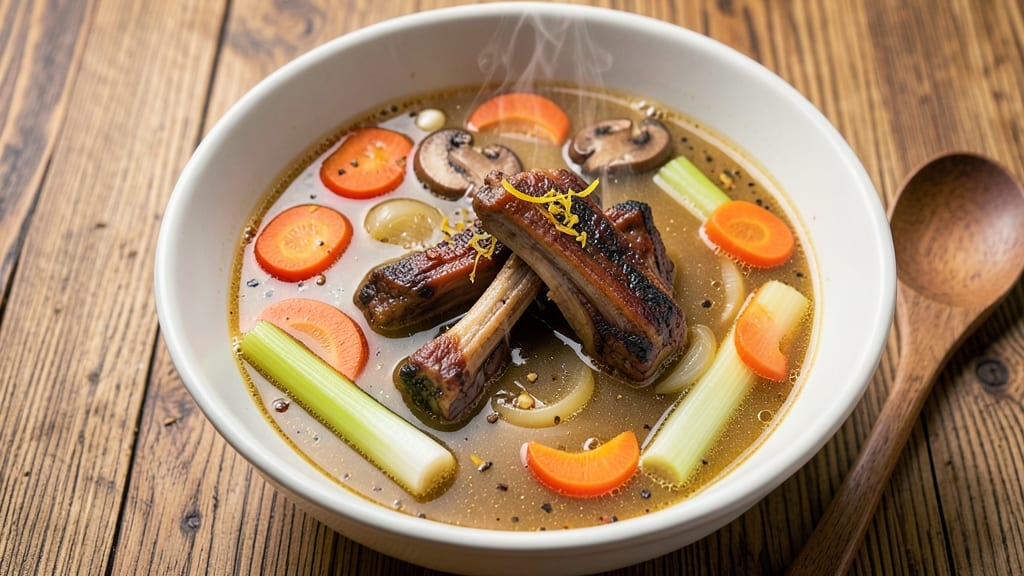
This beef stock vegetable soup recipe transforms simple ingredients into a deeply flavorful dish that tastes like a hug in a bowl. The foundation is homemade beef stock—rich, umami-packed, and infused with herbs that simmer for hours to develop complexity.
I’ve perfected this version to balance tender vegetables, hearty beef, and a broth so flavorful it stands alone.
The secret lies in parboiling vegetables first to preserve texture, then finishing them in the broth where they absorb layers of savory depth. Aromatics like onions and garlic form the base, while mushrooms and carrots add earthy sweetness.
The result is a soup that’s comforting yet refined, with every spoonful delivering warmth and satisfaction.
What makes this recipe special is its versatility—adapt it with seasonal vegetables or swap beef for mushrooms for a vegetarian twist. The broth reduces beautifully, intensifying flavors while keeping the soup light enough to enjoy year-round.
Serve with crusty bread to soak up every last drop of that golden, aromatic liquid.
For those short on time, a pressure cooker cuts preparation to under an hour without sacrificing depth. The key is patience: letting the broth work its magic transforms basic ingredients into something extraordinary. This is the kind of soup that becomes a family staple, passed down with love and tradition.
Ingredients for beef stock vegetable soup
Rich homemade broth meets seasonal vegetables for a soup that's both comforting and refined.
| Ingredient | Amount | Notes |
|---|---|---|
| Beef Bones 🍖 | 3 lb | Marrow and knuckle bones preferred |
| Yellow Onions 🧅 | 2 whole | Chopped into 1-inch pieces |
| Carrots 🥕 | 1 ½ lb | Cut into 2-inch chunks |
| Celery Stalks 🧆 | 6 whole | Cut into 2-inch pieces |
| Garlic Cloves 🧄 | 8 cloves | Crushed for depth |
| Mushrooms 🍄 | 1 lb | Cremini or white, quartered |
| Tomatoes 🍅 | 1 lb | Roma or vine-ripened, halved |
| Bay Leaves 🌿 | 2 whole | Fresh preferred |
| Thyme Sprigs 🌿 | 4 whole | Fresh stems removed |
| Parsley Stems 🌿 | 4 whole | For bright finish |
| Ground Black Peppercorns 🌶️ | 1 tbsp | Freshly cracked |
| Salt 🧂 | 2 tbsp | Diamond Crystal preferred |
| Olive Oil 🫒 | ¼ cup | Extra-virgin for richness |
| Beef Chuck Roast 🥩 | 1 ½ lb | Cubed for texture |
| Fresh Thyme Leaves 🌿 | ¼ cup | Chopped for garnish |
The bones are the heart of this soup—marrow and knuckle bones deliver the deepest umami, but any beef bones work in a pinch. Local butchers often sell them pre-cleaned for convenience. If using store-bought, look for bones with visible marrow channels for extra richness. The onions, carrots, and celery form the aromatic base—chop them uniformly so they cook evenly. For mushrooms, cremini or white varieties hold their shape best during simmering. All vegetables should be fresh but firm; wilted or bruised produce will muddy the broth's clarity.
No fresh thyme? Dried thyme at one-third the amount works, though fresh imparts a brighter flavor. Substituting beef with mushrooms or lentils creates a vegetarian version—just increase the broth by 1 cup. For tomatoes, San Marzano canned tomatoes add sweetness without acidity. The olive oil matters here—use extra-virgin for its fruity notes that carry through the broth. If you're short on time, pre-chopped vegetable mixes from the grocery store save prep work without sacrificing quality.
The broth keeps beautifully—5-6 days refrigerated or 3 months frozen. For freezing, use airtight containers leaving 1-inch headspace to prevent expansion. The vegetables are best added fresh when reheating, but you can parboil them ahead and store separately. Portion into individual containers for easy lunches; the flavors only deepen overnight. If making a large batch, double the herbs for every additional 3 pounds of bones to maintain balance.
Why You'll Love This Recipe
- No Chopping Chaos: I swear by this—just rough-chop onions, carrots, and celery into big cubes. The bones do all the work while you sip coffee. Honestly, my kids think I’m a genius for letting them "help" with the celery stalks.
- Deep Umami Magic: That beef bone broth? It’s where the real flavor lives. The onions caramelize just enough, the garlic cloves turn sweet, and the carrots stay tender-crisp—like a hug in a bowl. I’ll be real: my husband’s first bite made him pause mid-sentence.
- Leftover Goldmine: This soup only gets better after day two. The flavors meld into something richer, and it’s perfect for lunches or reheating for dinner. Between us, I’ve fed a houseful of guests with just one big pot—no stress, all satisfaction.
- Pantry Staple Power: You’re already using things you own: onions, carrots, celery, garlic. The bones? Even the butcher’s scraps work. I made this last week with whatever was left in my fridge, and it still tasted like a restaurant dish. Budget-friendly doesn’t even cover it.
Step-by-step instructions for rich beef stock vegetable soup
Mastering this soup begins with building a deeply flavorful homemade broth foundation.
Prepare and Sear the Beef Bones and Chuck Roast
Pat the 3 lb beef bones completely dry with paper towels to maximize browning. Arrange them in a single layer in a large Dutch oven and place in a 450°F preheated oven for 20 minutes to render fat. Remove the bones and set aside, reserving any rendered fat in the pot.
Increase oven temperature to 475°F. Working in batches, sear the 1.5 lb beef chuck roast cubes in the Dutch oven until deeply browned on all sides—this creates the Maillard reaction that forms the soup's deep umami base. Transfer the seared meat to a plate and set aside.
Build the Broth Base with Aromatics
Return the Dutch oven to the stovetop over medium-high heat. Add 0.25 cup olive oil and swirl to coat the bottom. Add the 2 whole yellow onions (chopped), 1.5 lb carrots (cut), and 6 whole celery stalks (cut) to the pot. Cook for 8-10 minutes, stirring occasionally, until the vegetables soften and begin to caramelize.
Add the 8 crushed garlic cloves, 1 tbsp ground black peppercorns, and 2 tbsp salt. Stir for 1 minute until fragrant. Pour in 12 cups cold water, scraping up any browned bits from the bottom of the pot. Return the seared beef bones and chuck roast to the pot, along with 2 whole bay leaves and 4 whole thyme sprigs. Bring to a boil, then reduce heat to maintain a gentle simmer. Cover partially and cook for 3 hours.
Add Vegetables and Simmer to Perfection
After 3 hours, remove the beef bones and chuck roast with tongs. Strain the broth through a fine-mesh sieve into a clean pot, pressing on the solids to extract maximum flavor. Return the broth to the pot and add the 1 lb mushrooms (quartered), 1 lb tomatoes (halved), and 4 whole parsley stems. Simmer uncovered for 30 minutes to allow the vegetables to infuse the broth with their natural sweetness.
Return the beef chuck roast to the pot and cook for an additional 30 minutes until fork-tender. The meat should easily pull apart with minimal resistance. Taste the broth and adjust seasoning with additional salt if needed. The broth should be rich, deeply flavorful, and slightly thickened from the vegetables.
Finish and Serve with Fresh Herbs
Remove the 4 whole parsley stems and 4 whole thyme sprigs from the soup. Ladle the soup into bowls, ensuring each serving contains a generous portion of the beef chuck roast. Garnish each serving with 0.25 cup chopped fresh thyme leaves for a bright, aromatic finish. Serve immediately, as the flavors continue to meld even after the soup is removed from the heat.
This soup delivers a harmonious balance of deep umami from the beef stock, sweetness from the vegetables, and a touch of herbal brightness from the thyme. The homemade broth elevates the dish far beyond store-bought alternatives, making every spoonful rich and satisfying.
Pro Tips For Making Beef Stock Vegetable Soup
- BLANCH BONES FIRST: The first 10 minutes at high heat aren’t for simmering—they’re for browning. Toss your beef bones in a 425°F oven for 20 minutes before adding liquid. That Maillard reaction is what turns bland stock into rich, deep flavor. (Yes, even if you’re impatient like me.)
- CHAR THE AROMATICS: Don’t just dice onions, celery, and carrots—cook them until they’re dark golden, almost sticky. I used to rush this step and wondered why my soup tasted like raw vegetables. After burning three batches, I finally figured out: 8-10 minutes over medium heat, stirring often, is non-negotiable.
- SKIP THE BOIL: Once you add water, keep the heat low enough that you barely see bubbles. Boiling burns the stock and makes it cloudy. I was skeptical until I tried it—my grandmother swore by this, and she was right: a gentle simmer (tiny bubbles, occasional swirls) extracts flavor without wrecking it.
- ADD GARLIC LATE: Crushed garlic burns faster than you think. Toss the whole cloves in with the bones, but peel and mince them only in the last 10 minutes of simmering. Sounds weird, but it works: you get all the flavor without that bitter, burnt taste that ruins everything. (Your future self will thank you.)
Wine and beer pairings for these flavors
Red Wine Pairings
A bold, medium-bodied Chianti Classico from Tuscany is my go-to pairing for this soup. Its bright acidity and notes of cherry and dried herbs cut through the richness of the beef stock while complementing the earthy mushrooms and carrots.
Look for a 100% Sangiovese with at least 12% alcohol to stand up to the umami depth. Serve slightly chilled (55-60°F) to enhance its vibrant fruit flavors. 🍷
White Wine Options
For those preferring white, a dry Viognier from California offers a surprising match. Its floral and stone fruit notes balance the soup’s savory elements, while its natural acidity prevents the broth from tasting heavy.
I recommend a bottle with 13.5% alcohol or higher to handle the beef’s richness. Decant for 15-20 minutes before serving to soften its texture. 🍷
Beer Pairings
A Belgian Dubbel like Westmalle Trappist brings caramel and raisin notes that harmonize beautifully with the caramelized onions and tomatoes in the soup. The beer’s moderate alcohol (7-8% ABV) and spiced complexity elevate the dish without overpowering it.
For a lighter option, a German Helles with its crisp maltiness provides refreshing contrast. 🍺
Non-Alcoholic Choices
Don’t overlook sparkling apple cider—its effervescence cleanses the palate between spoonfuls, while the apple’s tartness brightens the soup’s umami flavors. For a more robust option, try hibiscus iced tea with a splash of lime; the floral notes mirror the thyme in the broth.
Both options work equally well hot or cold. 🍏
Serving Temperature Tips
Wine and beer pairings work best when served at the right temperature. Red wines should be 55-60°F, while whites and beers benefit from 45-50°F. Chill your glass in the freezer for 10-15 minutes before pouring—this preserves the drink’s crispness without diluting it.
For beer, serve from the fridge and let it sit for 5 minutes to release its aromas. ✨
Nutrition facts
Frequently asked questions
Can I make this soup without beef?
Yes! For a vegetarian version, replace the beef bones and chuck roast with 2 cups dried lentils or 1.5 lbs mushrooms. Boost umami by adding 2 tbsp soy sauce or 1 tbsp miso paste to the broth. The cooking time remains similar, but lentils will need 20-25 minutes to soften after the initial stock simmer.
How do I store leftovers?
Store in an airtight container in the fridge for 4-5 days. For freezing, cool completely first, then portion into containers with 1-inch headspace. Frozen soup keeps for 3 months. Reheat gently on the stove over medium-low heat, stirring occasionally, until steaming.
Why does my broth look cloudy?
Cloudiness usually means proteins and fine particles haven't settled properly. Strain the broth through a cheesecloth-lined sieve for crystal-clear results. If you prefer some texture, simmer the strained broth uncovered for 10 extra minutes—this helps clarify it naturally while concentrating flavors.
Can I use store-bought beef stock?
While possible, homemade stock delivers 3x more depth of flavor. If using store-bought, choose a high-quality, low-sodium version and add 1 extra bay leaf and 1 tsp tomato paste to enhance richness. The soup will still taste good, but the homemade method creates that restaurant-quality umami.
What vegetables work best?
Seasonal vegetables shine here! Try turnips for peppery bite, kale for earthiness, or fennel for anise notes. Root vegetables like parsnips or rutabaga add sweetness when parboiled first. For heartier soups, add potatoes or barley in the last 15 minutes of cooking.