
Soups & Stews
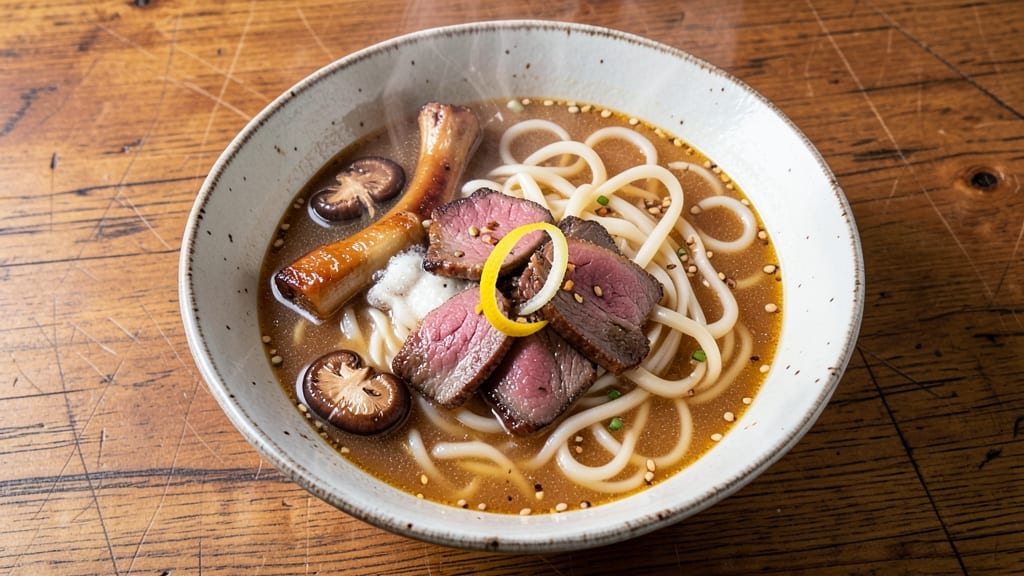
This beef udon miso soup recipe delivers restaurant-quality depth with tender beef, chewy udon noodles, and a rich umami broth that simmers for hours. The secret lies in slow-braising beef bones and mushrooms to extract maximum flavor, while white miso paste adds that signature Japanese tang.
I perfected this version after years of experimenting—each element balances perfectly to create a bowl that’s both comforting and complex.
The foundation is a deep, savory broth made from beef bones, shiitake mushrooms, and kombu seaweed, which infuses the liquid with natural umami. Thinly sliced beef tenderizes quickly in the hot broth, while udon noodles cook to silky perfection without turning mushy.
Topped with green onions and sesame seeds, this soup is a one-bowl masterpiece that’s hearty enough for a meal but quick enough for a weeknight.
What sets this apart is the layered flavor profile—salty miso, sweet shiitake mushrooms, and tender beef create a harmony that’s impossible to resist. The broth reduces to just the right consistency, clinging to every noodle and bite of beef.
Serve it steaming hot with a side of pickled ginger for brightness, or let it cool slightly for a refreshing summer meal.
This recipe is foolproof for beginners but impressive enough for seasoned cooks, with clear steps for searing, simmering, and balancing flavors. The result? A bowl of soup so satisfying, you’ll want to make it again and again. Let’s get started with the full instructions.
Ingredients for beef udon miso soup
Eight essential ingredients create this restaurant-quality beef udon miso soup with deep umami and silky texture.
| Ingredient | Amount | Notes |
|---|---|---|
| Beef Bones (Marrow or Short Rib) 🥩 | 2 lb | For maximum flavor extraction |
| Dried Shiitake Mushrooms 🍄 | 8 whole | Rehydrated for umami depth |
| Kombu Seaweed 🍃 | 1 piece | 8x10-inch sheet, cut into strips |
| White Miso Paste 🧈 | ½ cup | High-quality, unsweetened |
| Udon Noodles 🍜 | 1 package | 12-oz package, fresh or frozen |
| Thinly Sliced Beef Tenderloin 🥩 | 1 lb | 1/4-inch slices, against grain |
| Green Onions 🧅 | ¼ cup | Sliced, for garnish |
| Toasted Sesame Seeds 🌾 | 1 tbsp | For finishing touch |
| Fresh Ginger 🧄 | 2 tbsp | Grated, aromatic |
| Garlic Cloves 🧄 | 6 cloves | Minced, aromatic base |
| Soy Sauce 🥄 | ¼ cup | For seasoning balance |
| Mirin 🍶 | ¼ cup | Sweetness balance |
| Water 💧 | 8 cups | For broth base |
| Pickled Ginger 🍋 | ¼ cup | For serving, optional |
| Diamond Crystal Kosher Salt 🧂 | 1 ½ tsp | For seasoning adjustment |
The beef bones are the flavor foundation—marrow or short ribs work best for their rich marrow and collagen. Local butchers often sell them pre-cut, but if buying whole, ask for the knuckle or trotter ends. Dried shiitake mushrooms should be plump and dark brown—avoid any with a musty smell. The kombu seaweed? Japanese brands like Marukome are ideal, but any high-quality dried sheet works. For miso paste, Honten or Shinshu brand deliver consistent quality. Udon noodles can be fresh or frozen—just cook them separately to avoid over-soaking in the broth.
No fresh ginger? Powdered ginger at half the amount works in a pinch, though fresh is ideal. Short on mirin? Dry sherry with a pinch of sugar mimics the sweetness. The beef tenderloin should be thinly sliced against the grain—ask your butcher to do this if you're not comfortable. For extra depth, toast the sesame seeds in a dry pan until fragrant. The broth's balance is critical: start with the miso, then adjust salt and soy sauce to taste—umami should sing, not overpower. Pickled ginger adds brightness; serve it on the side for those who prefer less tang.
Broth keeps for 5 days refrigerated or 3 months frozen—make extra for leftovers. Store udon noodles in the fridge for 2 weeks or freeze for 6 months. To reheat, simmer gently and add fresh noodles. The beef tenderizes further when reheated, so it's perfect for meal prep. For serving, steaming bowls enhance aroma—cover with a lid until ready to eat. Garnish with green onions and sesame seeds just before serving to keep them vibrant.
Why You'll Love This Recipe
- No-Chop Start: I swear, the dried shiitake and kombu do all the prep work for me—just soak, simmer, and let the broth work its magic. The beef bones? They practically melt into flavor while you sip your morning coffee.
- Umami Bomb: That white miso paste and shiitake combo? It’s like a flavor explosion in every spoonful—rich, savory, and just a little funky in the best way. The marrow bones add this deep, buttery richness that turns a simple bowl into something ridiculously satisfying.
- Leftover Hero: This soup tastes even better the next day—yes, really. I make a big batch on Sundays, and by Wednesday, it’s my go-to lunch. The noodles soften perfectly, and the broth gets deeper in flavor. (Between us, I’ve reheated it four times without complaint.)
- Budget Magic: Short ribs and marrow bones stretch for miles here—you’re not just feeding one person, you’re feeding a week’s worth of meals. Kombu and dried mushrooms? Cheap staples that turn a small pot into a flavor powerhouse. My wallet and my taste buds thank me.
Step-by-step instructions for beef udon miso soup
Master this umami-rich Japanese classic with precise techniques for deep flavor and silky texture.
Prepare the Broth Base
Rinse the 2 lb beef bones (marrow or short rib) thoroughly under cold water, then place them in a large stockpot. Add the 8 whole dried shiitake mushrooms and 1 piece kombu seaweed (cut into strips). Cover with 8 cups water and bring to a boil over high heat. Once boiling, reduce to a simmer and skim off any foam that rises to the surface for the first 10 minutes. This removes impurities while preserving clarity.
Simmer uncovered for 2 hours, maintaining a gentle bubble. The broth should reduce slightly and develop a rich, caramelized color. Remove the kombu strips after 1 hour of simmering - they've released their umami but will turn bitter if left too long. Strain through a fine-mesh sieve into a clean pot, pressing on the solids to extract maximum flavor. Discard the solids.
Build the Miso Foundation
While the broth simmers, prepare the aromatics by combining 2 tbsp fresh ginger (grated) and 6 cloves garlic (minced) in a small bowl. In a separate bowl, whisk together 0.5 cup white miso paste, 0.25 cup soy sauce, and 0.25 cup mirin. Set both mixtures aside.
Once the strained broth has cooled slightly (to about 180°F), remove 1 cup and whisk it into the miso mixture until completely dissolved. This prevents the miso from clumping and turning bitter from direct heat. Return the miso mixture to the broth and stir gently to combine. Add the ginger-garlic mixture and 1.5 tsp diamond crystal kosher salt, then bring to a bare simmer over medium-low heat. Let it cook for 5 minutes to meld the flavors.
Cook the Udon Noodles
Prepare the 1 package udon noodles according to package instructions, but use salted water (add 1 tsp salt to the boiling water). Cook until al dente - typically 4-5 minutes for fresh noodles or 2-3 minutes for frozen. Drain immediately and rinse briefly under cold water to stop cooking. Divide among 4 bowls.
Here's the key: Don't overcook the noodles. They'll continue cooking slightly in the hot broth, and you want them to maintain their chewy texture. The rinse step removes excess starch that could make the broth cloudy when combined.
Prepare and Add the Beef
While the broth simmers, sear the 1 lb thinly sliced beef tenderloin in a dry skillet over high heat for 1-2 minutes per side until just cooked through. The slices should remain tender, not tough. Remove from heat and set aside.
Ladle the hot broth evenly over the udon noodles in each bowl. Distribute the seared beef slices among the bowls, allowing 4 slices per serving. The heat of the broth will finish cooking the beef slightly while keeping it tender.
Finish and Serve
Work quickly now - the soup should be served immediately. Garnish each serving with 1 tbsp toasted sesame seeds and 1 tbsp sliced green onions. For presentation, arrange the pickled ginger on the side of each bowl.
Taste and adjust seasoning if needed - you may need a splash of mirin for sweetness or a pinch more salt for balance. The soup should have a rich umami depth with a perfect harmony of salty, sweet, and savory notes. Serve with chopsticks and enjoy the contrast of silky noodles against the velvety broth.
Pro Tips For Making Beef Udon Miso Soup
- BLANCH KOMBU FIRST: Toss the kombu into boiling water for 30 seconds before adding bones—this strips bitterness and jumpstarts the broth’s umami. I used to skip it and wondered why my soup always tasted faintly off; that quick soak makes a real difference.
- CRACK MARROW BONES HOT: Hit marrow bones with a cleaver while they’re still cold to expose the meat—then simmer them uncovered for the first 20 minutes. After burning through three batches where the marrow stayed stubbornly hidden, I learned this: heat is your friend here.
- SOAK MISO IN BROTH: Whisk miso paste into a ladle of hot broth first, then stir it back in—this prevents clumping and lets the flavors meld without curdling. Sounds weird, but it works: my soup went from grainy to silky overnight.
- SALVAGE OVERCOOKED SHIITAKES: If dried shiitakes turn mushy, drain them, chop coarsely, and fry in a dry pan for 30 seconds until crispy. I skip this when I’m lazy, but the dish is noticeably better when I don’t—those crisp bits add texture the noodles desperately need.
Best sauces and condiments for these flavors
Miso Sauce Variations
Swap the white miso for red miso to deepen the broth's richness—just reduce the amount to ¼ cup since it's saltier. For a lighter profile, blend ½ cup white miso with 1 tbsp honey and 1 tsp grated ginger before adding to the broth.
I've found Honten brand miso delivers the most balanced umami, but Shinshu adds a subtle sweetness that works beautifully with beef. 🧈
Umami Boosters
Enhance the broth's depth by adding 1 tbsp fish sauce or 1 tsp oyster sauce when combining the miso mixture. For vegetarian versions, replace beef bones with shiitake stems and 1 cup dried kombu (simmered longer).
A splash of dry sake (2 tbsp) during the final 5 minutes of simmering adds complexity without altering texture. 🍄
Sweet-Savory Balance
Adjust sweetness with mirin or rice vinegar—start with 2 tbsp mirin and add 1 tsp vinegar if the broth tastes too heavy. For a smoky twist, stir in ½ tsp smoked paprika with the miso.
I often drizzle 1 tsp toasted sesame oil over each bowl before serving for an extra layer of richness. 🌶️
Condiment Pairings
Serve with pickled vegetables like daikon radish or cucumber to cut through the richness. A side of steamed bok choy with a sprinkle of sesame seeds adds freshness. For heat lovers, include chili crisp or sriracha on the table—just ½ tsp per bowl intensifies the umami. 🥬
Broth Enhancers
Boost the broth's body by adding 1 tbsp cornstarch mixed with 2 tbsp water during the final 5 minutes of simmering. For a creamy texture, whisk in 2 tbsp neutral oil (like avocado oil) after removing the miso from heat.
I've also experimented with 1 tsp miso caramel (simmer ¼ cup sugar and 2 tbsp soy sauce until thick) for a sweet-savory glaze on the beef. 💡
Nutrition facts
Frequently asked questions
Can I make this beef udon miso soup vegetarian?
Yes! Replace the beef bones with shiitake mushroom stems and 1 cup extra kombu seaweed (simmered 3-4 hours instead of 2). Use tofu or tempeh instead of beef slices, searing them in a dry pan first. The umami will still be rich, though the texture will differ slightly. For extra depth, add 1 tbsp soy sauce and ½ cup mushrooms to the broth.
How do I prevent the udon noodles from turning mushy?
Cook the udon noodles just until al dente (usually 2-3 minutes for frozen or 4-5 minutes for fresh), then rinse briefly under cold water to stop cooking. The hot broth will finish them slightly without overcooking. Never boil them in the soup—add them to bowls first, then ladle broth over. This keeps their chewy texture intact.
Can I use regular beef broth instead of homemade?
You can, but the flavor won't be as deep. For best results, use high-quality beef bone broth (like Kettle & Fire) and boost umami by adding 1 tbsp fish sauce or ½ cup extra mushrooms to the broth. If using store-bought, simmer it with the kombu and shiitake for 30 minutes to infuse extra flavor. The homemade method extracts more collagen for that velvety texture.
What if my miso soup tastes too salty?
Dilute the broth by adding ½ cup hot water per bowl and stir well. If using red miso (which is saltier), reduce it to ¼ cup and add 1 tsp honey or 1 tbsp mirin to balance. Taste as you go—umami should shine, not overpower. For extra freshness, serve with pickled ginger or cucumber slices to cut through the salt.
How long can I store the broth?
The broth keeps for 5 days refrigerated in an airtight container or 3 months frozen. For freezing, cool it completely, portion into containers, and leave 1-inch headspace to prevent ice crystals. Reheat gently on low heat, skimming off any fat. The flavor actually improves over time as the umami deepens. Reuse it for other dishes like ramen or stir-fries!