
Soups & Stews
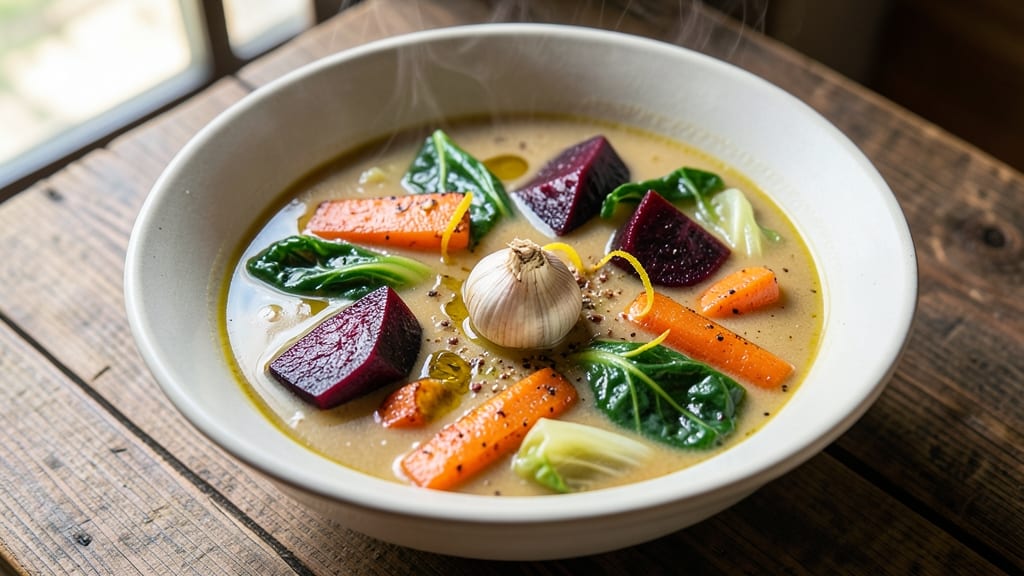
This beet cabbage carrot soup recipe transforms humble vegetables into a rich, velvety masterpiece that's both hearty and elegant. The secret lies in roasting the vegetables first—this caramelization deepens their natural sweetness while building complex flavors that simmer beautifully into a restaurant-quality broth.
I developed this recipe after years of experimenting with vegetable-forward soups, and it's now a staple in my rotation for its versatility and depth of flavor.
The beauty of this soup is its adaptability—it works equally well as a light lunch, comforting dinner, or even a first-course showstopper. Roasting the vegetables before blending creates a depth that no raw prep can match, while the cabbage adds a satisfying crunch that contrasts perfectly with the creamy texture.
It's also naturally vegan, packed with fiber, and customizable with spices like smoked paprika or fresh herbs for added complexity.
What you'll end up with is a soup that's vibrant in color, robust in flavor, and impossibly comforting—each spoonful delivers layers of earthy beet, slightly sweet carrot, and briny cabbage, all bound together by a smooth, aromatic broth.
The roasting step takes just 20 minutes of hands-off time, and the entire process comes together in under an hour, making it perfect for busy weeknights or meal prep.
Serve it with crusty bread to soak up every last drop, or pair it with a simple green salad for a balanced meal. The soup keeps well in the refrigerator for up to 5 days, with flavors actually improving as it sits—proof that good food gets better with time.
Here's how to make it perfectly every time.
Ingredients for beet cabbage carrot soup
Roasted vegetables bring deep flavor, while aromatic spices and fresh herbs make this vegan soup restaurant-quality.
| Ingredient | Amount | Notes |
|---|---|---|
| Beets 🍠 | 2 lbs | Medium-sized, peeled and cubed |
| Green Cabbage 🥬 | 1 whole | Heads cut into wedges, core removed |
| Carrots 🥕 | 2 lbs | Medium-sized, peeled and chopped |
| Yellow Onion 🧅 | 1 whole | Medium, diced |
| Garlic Cloves 🧄 | 6 cloves | Peeled and smashed |
| Extra-Virgin Olive Oil 🫒 | ½ cup | For roasting vegetables |
| Vegetable Broth 💧 | 4 cups | Low-sodium preferred |
| Smoked Paprika 🌶️ | 1 tbsp | For depth of flavor |
| Ground Cumin 🌿 | 1 tsp | Toasted for warmth |
| Fresh Thyme Leaves 🌿 | ¼ cup | Chopped, stems removed |
| Fresh Parsley Leaves 🌿 | ¼ cup | Chopped, for garnish |
| Lemon Juice 🍋 | 2 tbsp | Freshly squeezed |
| Sea Salt 🧂 | 1 ½ tsp | Adjust to taste |
| Black Pepper 🌶️ | ½ tsp | Freshly ground |
| Coconut Milk 🥥 | ½ cup | Full-fat for creaminess |
The beets and carrots are the stars here—roasting them first unlocks their natural sweetness and builds that rich, caramelized depth. Look for organic beets at Whole Foods or your local farmers market; their vibrant color means better flavor. Cabbage should be firm with crisp leaves—avoid any with yellowing or wilted spots. I always grab a few extra carrots and beets for snacks while prepping; they're perfect raw or lightly steamed. The smoked paprika is non-negotiable—it adds that smoky complexity that makes this soup feel special. Penzeys or Trader Joe's carry great options if you want to splurge on quality.
No smoked paprika? Liquid smoke at half the amount works in a pinch, though it won't be exactly the same. Fresh thyme is ideal, but dried works at one-third the quantity if that's what you've got. The coconut milk adds creaminess without dairy—full-fat canned coconut milk gives the best texture, but light works too. For extra richness, stir in 1 tbsp nutritional yeast when serving. The lemon juice brightens everything up, so don't skip it—freshly squeezed makes all the difference. If you're prepping ahead, roast the veggies first and store them in the fridge for up to 3 days before blending.
This soup tastes even better the next day as flavors meld together. Store in an airtight container in the fridge for up to 5 days, or freeze portions for 3 months. I like to portion it into containers with a layer of coconut milk on top—it keeps the soup from absorbing fridge odors. For serving, garnish with fresh parsley and a drizzle of olive oil. The cabbage stays crisp if you add it raw at the very end—just toss in a handful when reheating. Leftovers make fantastic lunches or can be turned into veggie patties by blending with breadcrumbs.
Why You'll Love This Recipe
- One-Pot Magic: I swear by this recipe—just toss everything (chopped beets, cabbage, carrots, onion) into one pot with garlic and broth, and let it simmer. No fancy techniques, no extra pans, just pure, hands-off cooking that still tastes like you slaved over it.
- Earthy Depth: That first spoonful of caramelized beets and cabbage? It’s like autumn in a bowl—sweet, tangy, and just a hint of garlic warmth. The cabbage softens perfectly without turning mushy, and the carrots add this natural sweetness that balances everything.
- Meal Prep MVP: Between us, this soup begs to be made in bulk. I double the batch on Sundays, and it’s still delicious for lunches all week—whether I reheat it or serve it cold with a squeeze of lemon. (Yes, even on a Tuesday night.)
- Budget-Friendly Powerhouse: Honestly, the ingredient list won’t break the bank—beets and cabbage stretch forever, and onions/garlic add flavor without cost. It’s the kind of soup that makes you feel fancy while keeping your wallet happy, especially when you’re feeding a crowd or just yourself.
Step-by-step instructions for beet cabbage carrot soup
Here's how to transform humble vegetables into a rich, velvety soup bursting with roasted depth.
Roast Vegetables for Maximum Flavor
Preheat your oven to 425°F and line two large baking sheets with parchment paper. Spread the 2 lbs beets, 2 lbs carrots, and 1 whole green cabbage wedges in a single layer on the sheets. Drizzle everything with 0.5 cup extra-virgin olive oil, then sprinkle with 1.5 tsp sea salt, 0.5 tsp black pepper, and 1 tbsp smoked paprika. Toss gently to coat.
Roast for 30-35 minutes until the vegetables are tender and edges are caramelized. You'll know it's perfect when the beets develop a deep mahogany color and the cabbage softens but doesn't collapse. This roasting step builds the soup's complex, caramelized foundation - don't skip it. Meanwhile, in a small pan, toast the 1 tsp ground cumin for 1 minute until fragrant, then set aside.
Build the Base with Aromatics
While the vegetables roast, heat 2 tablespoons of the reserved olive oil in a large Dutch oven over medium heat. Add the 1 whole yellow onion and cook for 5 minutes until softened and translucent. Add the 6 cloves garlic cloves and toast for 30 seconds until golden - don't let them burn, or they'll turn bitter.
Stir in the toasted cumin and cook for 1 minute until fragrant. This aromatic base forms the flavor backbone of your soup. Here's the thing - if you rush this step, your soup will taste flat. Take your time letting those spices bloom properly in the oil.
Simmer the Vegetables into Soup
Add the roasted vegetables to the Dutch oven along with 4 cups vegetable broth. Bring to a boil, then reduce heat to medium-low and simmer for 20-25 minutes until all vegetables are completely tender. You'll notice the soup thickens slightly as it simmers - this is normal and desirable.
Use an immersion blender to purée until completely smooth. If you prefer texture, blend only half and leave the rest chunky. Here's where you can taste and adjust seasoning - add more sea salt or lemon juice if needed. The soup should be rich but not overly salty. Remove from heat and stir in the 0.25 cup fresh thyme leaves.
Finish with Creamy Depth
Return the soup to medium-low heat and stir in the 0.5 cup coconut milk. Simmer gently for 3-4 minutes until warmed through - don't let it boil or the milk will curdle. The coconut milk adds luxurious creaminess while keeping the soup dairy-free.
Taste again and adjust seasoning if needed. The acidity from the 2 tbsp lemon juice brightens the earthy flavors perfectly. Ladle into bowls and garnish with 0.25 cup fresh parsley leaves. This finishing touch adds freshness and visual appeal that makes the soup look as good as it tastes.
Pro Tips For Making Beet Cabbage Carrot Soup
- CHAR THE ONION FIRST: I learned this the hard way—sautéing onions with beets and cabbage at the same time turns your soup into a muddy gray sludge. Get that onion golden brown (5-7 minutes on medium heat) before tossing in anything else. The deeper color and sweetness make the whole soup sing.
- PEEL BEETS AFTER COOKING: Raw beets stain like a toddler’s art project, and peeling them before chopping is a waste of time. Toss whole, unpeeled beets into the pot with the carrots and cabbage, then peel them after they’re tender. The skins slide off like guilty secrets.
- DON’T OVERCOOK THE CABBAGE: Cabbage gets bitter and mushy fast—aim for 10-12 minutes max in the pot after the beets and carrots soften. If it’s still crunchy, add a splash of water and cover for 5 more minutes. No one likes soup that tastes like overboiled laundry.
- SWAP FRESH GARLIC FOR ROASTED: Sounds weird, but it works: Roast 3-4 garlic cloves with the beets and carrots (400°F for 15 minutes) before adding them to the soup. The mellow, sweet flavor blends better than raw garlic, and it cuts through the earthiness of the beets without overpowering. (Your future self will thank you.)
Creative variations of beet cabbage carrot soup
Spiced Winter Twist
Add ½ tsp ground cinnamon and ¼ tsp ground ginger to the roasting vegetables for a warm, spiced variation that feels like autumn in a bowl. The cinnamon adds subtle sweetness while the ginger brings a gentle kick—perfect for chilly evenings.
I like to serve this version with a sprinkle of toasted pumpkin seeds for crunch and extra protein. 🌿
Creamy Potato Addition
For a heartier soup, stir in 2 cups diced Yukon Gold potatoes with the carrots and beets during roasting. Their natural starchiness thickens the soup beautifully while adding a comforting, creamy texture.
I recommend using red potatoes for their slightly firmer bite and vibrant color. This version works especially well as a main dish when paired with crusty bread. 🥔
Lemon-Garlic Crust
Create a flavorful crust by blending ½ cup tahini, 2 tbsp lemon juice, 1 tbsp maple syrup, and 1 minced garlic clove into a smooth paste. Swirl this into individual bowls of soup before serving.
The tahini adds richness while the lemon brightens the earthy flavors—it's like a tangy, creamy topping that elevates every spoonful. 🍋
Herb-Infused Oil Garnish
For an elegant finishing touch, infuse ¼ cup olive oil with 1 tbsp fresh rosemary and 1 tbsp fresh thyme by gently heating for 5 minutes. Strain and drizzle over the soup just before serving.
The fragrant oil adds a luxurious aroma and depth that makes the dish feel restaurant-worthy. Store the infused oil in the fridge for up to 1 week. 🌿
Smoky Chipotle Kick
For heat lovers, stir in 1 tsp adobo sauce from a can of chipotle peppers along with the smoked paprika during roasting. This adds a deep, smoky heat that pairs beautifully with the sweet beets and carrots.
Adjust to taste—start with ½ tsp if you're sensitive to spice. Serve with a dollop of Greek yogurt (or coconut yogurt for vegan) to cool the heat. 🌶️
Crispy Topping Option
Add texture with crispy fried shallots or toasted breadcrumbs. For shallots, thinly slice 1 shallot, fry in 1 tbsp oil until golden, and drain on paper towels.
For breadcrumbs, toast ¼ cup panko in a dry pan until golden. Both toppings add a satisfying crunch that contrasts perfectly with the creamy soup. 🥬
Nutrition facts
Frequently asked questions about beet cabbage carrot soup
Can I make this soup without roasting the vegetables?
You can try, but roasting is key for developing that deep, caramelized flavor. If you skip roasting, simmer the chopped vegetables for 45-50 minutes instead of 20-25 minutes to soften them completely. The flavor will be milder but still delicious—just less complex. For best results, roast at least the beets and carrots if you're short on time.
How can I make this soup spicier?
Add ½-1 teaspoon cayenne pepper or 1 teaspoon hot sauce when blending the soup. For smoky heat, increase the smoked paprika to 2 teaspoons during roasting. If you like depth without too much heat, try adding ½ teaspoon chipotle powder instead—it gives a smoky kick without overwhelming spice.
Can I use frozen vegetables instead of fresh?
Fresh vegetables give the best texture and flavor, but you can use frozen in a pinch. Thaw and drain frozen veggies completely before roasting, and add 1 extra tablespoon of oil to prevent drying. For cabbage, use 10 oz frozen chopped cabbage instead of a whole head. The soup will still be delicious, though the texture might be slightly softer.
Why did my soup turn out too thin?
This usually happens if the vegetables weren't cooked long enough or if you used too much broth. Simmer the soup for 5-10 extra minutes to thicken naturally. For instant thickening, stir in 1 tablespoon cornstarch mixed with 2 tablespoons water and simmer for 2 minutes. If using coconut milk, reduce it to ¼ cup—full-fat versions thicken the soup more.
What's the best way to reheat leftovers?
Gently reheat on the stovetop over low-medium heat until warmed through—never boil, or the coconut milk may separate. For microwave reheating, cover with a damp paper towel and heat in 30-second intervals, stirring between each. Add a splash of water or broth if the soup seems too thick. For extra freshness, stir in 1 tablespoon fresh lemon juice before serving.