
Soups & Stews
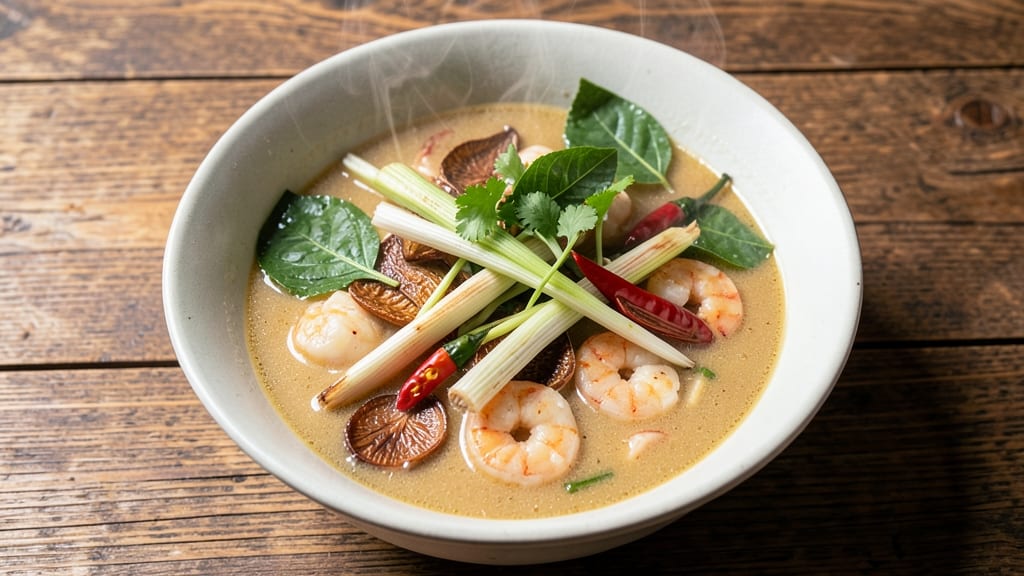
This best ever tom yum soup recipe delivers the perfect balance of fiery heat, bright citrus, and aromatic depth that Thai street vendors perfect. The secret lies in fresh lemongrass, galangal, and kaffir lime leaves—ingredients that transform ordinary broth into something deeply complex.
I've refined this recipe through countless batches, ensuring the spicy-lime harmony clears sinuses while satisfying cravings.
What sets this version apart is the two-stage cooking process: first building rich, fragrant aromatics, then finishing with a burst of lime and chili that makes every spoonful sing. Traditional techniques like shrimp paste (or vegetarian alternatives) create umami depth, while fresh herbs elevate the dish beyond takeout quality.
The result? A soup that's both restaurant-worthy and foolproof at home.
Expect a broth that's clear yet deeply flavorful, with tender shrimp or chicken swimming in a tangy, slightly spicy liquid. The aroma alone will have your kitchen smelling like Bangkok, while the balance of heat and acidity keeps every bite exciting.
This isn't just soup—it's a sensory experience that delivers authentic Thai flavors without the guesswork.
Whether you're serving a crowd or treating yourself, this recipe scales beautifully while maintaining its signature punch. The best part? Adjustable spice levels mean everyone gets to experience the magic—just as it should be. Let's get cooking!
Ingredients for best ever tom yum soup
Fresh aromatics and fiery ingredients transform simple broth into Bangkok's legendary spicy-lime soup.
| Ingredient | Amount | Notes |
|---|---|---|
| Lemongrass Stalks 🌿 | 4 whole | Bruised for maximum aroma |
| Galangal Slices 🍋 | 3 pieces | Fresh, peeled, about 1-inch thick |
| Kaffir Lime Leaves 🍋 | 4 whole | Bruised, stems removed |
| Shrimp Paste 🦐 | 2 tbsp | Vegetarian alternative: mushroom powder |
| Thai Bird's Eye Chilies 🌶️ | 4 whole | Adjust to taste, seeds removed |
| Shallots 🧅 | 6 whole | Peeled, thinly sliced |
| Garlic Cloves 🧄 | 6 cloves | Peeled, smashed |
| Large Shrimp 🦐 | 1 ½ lb | Peeled, deveined, tail-on |
| Vegetable Broth 💧 | 6 cups | Homemade or quality store-bought |
| Fish Sauce 🍶 | 2 tbsp | Red Boat preferred |
| Lime Juice 🍋 | ½ cup | Freshly squeezed |
| Coconut Milk 🥥 | ½ cup | Full-fat, chilled |
| Fresh Thai Basil 🌿 | ¼ cup | Stems removed, loosely packed |
| Brown Sugar 🍯 | 1 tbsp | Light or dark variety |
| Salt 🧂 | 1 tsp | Diamond Crystal preferred |
The galangal and lemongrass are non-negotiable—Asian markets have the freshest cuts, but grocery stores work too if they're vibrant and firm. Look for galangal with tight, unblemished skin and lemongrass that's still plump and green. Kaffir lime leaves should be fragrant and bright green—avoid any with brown spots. For shrimp paste, Thai Kitchen brand is reliable, but if you're vegetarian, mushroom powder works beautifully. The chilies? Bird's Eye brings that signature heat, but serrano peppers in a pinch will do. I usually grab extra galangal because it's harder to find and I want to experiment with other Thai dishes later.
No galangal? Ginger at half the amount works in a bind, though it won't be identical. Fresh Thai basil hard to find? Sweet basil or cilantro adds a different but still delicious note. The coconut milk needs to be chilled—full-fat for creaminess, but don't skip the step of chilling it first. For the broth, homemade is ideal, but Swanson or Pacific Foods make solid store-bought versions. The fish sauce? Red Boat is the gold standard, but any good quality brand will work. And if you're worried about spice levels, remove the chili seeds first—you can always add more later.
This soup tastes even better the next day as flavors meld. Store leftovers in an airtight container with a splash of lime juice on top—keeps for 3-4 days in the fridge. Freezes beautifully for up to 3 months, though the texture might change slightly. I always make a double batch because it disappears faster than you'd think. The lime juice and basil can be added fresh right before serving to keep that bright, vibrant punch. And trust me, the aroma alone will have your kitchen smelling like a Bangkok street market in minutes.
Why You'll Love This Recipe
- No-Fuss Freshness: I swear by this recipe because the prep is ridiculously simple—the hardest part is bruising the galangal and chilies. Toss everything in one pot, simmer, and let the lemongrass and kaffir lime leaves work their magic without babysitting.
- Tangy, Spicy, Addictive: The shrimp paste and bird’s eye chilies hit like a flavor bomb, but the galangal’s peppery kick and lemongrass’s citrusy aroma balance it perfectly. It’s the kind of soup that makes you go back for seconds—no question.
- Weeknight to Party: This soup is my go-to for lazy nights (20 minutes, tops) but also steals the show at gatherings. Serve it steaming with rice and lime wedges, or chill it for a refreshing summer bowl—it works both ways.
- Budget-Friendly Powerhouse: A single jar of shrimp paste and a handful of fresh herbs stretch across multiple bowls, and the broth only gets richer as it sits. Honestly, I’ve made this for a crowd of six on $10 worth of ingredients—and no one ever complains.
Step-by-step instructions for authentic tom yum soup
Here's how to build the perfect balance of heat, sourness, and umami that makes this soup legendary.
Bruise and Sauté the Aromatics
Start by bruising the 4 whole lemongrass stalks with the flat side of a knife—this releases their essential oils. Cut them into 2-inch pieces and set aside. In a large pot over medium-high heat, add 2 tablespoons shrimp paste and let it sizzle for 30 seconds until fragrant (don't let it burn—this is where the deep umami develops).
Add the bruised lemongrass, 3 pieces galangal slices, 4 whole kaffir lime leaves, 6 whole shallots, and 6 cloves garlic cloves. Stir constantly for 3-4 minutes until the shallots turn golden and the galangal softens. You'll smell the complex aromatics building—this is the foundation of your soup's flavor profile. If the galangal looks too fibrous, break it into smaller pieces with a wooden spoon.
Build the Spicy-Sour Base
Push the aromatics to one side of the pot and add 4 whole Thai bird's eye chilies (adjust to taste). Let them sizzle for 30 seconds to release their capsaicin. Immediately pour in 6 cups vegetable broth and scrape up any browned bits from the bottom—this is where all the flavor hides. Bring to a rolling boil, then reduce heat to medium-low and simmer for 5 minutes to let the flavors meld.
Here's where the magic happens: add 1 tablespoon brown sugar and 1 teaspoon salt, stirring until dissolved. The sugar balances the acidity while enhancing the shrimp's sweetness. Taste the broth now—it should be aromatic, slightly sweet, and just starting to develop depth. If it needs more brightness, add 2 tablespoons fish sauce now (you can adjust later).
Cook the Shrimp and Finish the Broth
Add the 1.5 lb large shrimp to the simmering broth and cook for 2-3 minutes until they turn opaque and curl slightly—this ensures they're cooked through but still tender. Remove them with a slotted spoon and set aside. The broth should now have a vibrant, aromatic quality with visible red streaks from the shrimp.
Stir in 0.5 cup lime juice and 0.5 cup chilled coconut milk, then return the shrimp to the pot. The coconut milk should be added slowly to prevent curdling—temper it first by whisking a small amount into the hot broth before adding the rest. Simmer for 1-2 minutes just to warm through. The soup should be vibrant, with a balance of heat, sourness, and richness.
Garnish and Serve Immediately
Ladle the soup into bowls and immediately top with 0.25 cup fresh Thai basil. The basil's anise-like flavor cuts through the heat and adds freshness. Serve with extra lime wedges on the side—let your diners squeeze fresh lime into their bowls to adjust the sourness to their preference. The shrimp should be plump and juicy, floating in a broth that's clear enough to see the bottom of the bowl but rich enough to coat a spoon.
This is where the soup truly shines: the first bite should deliver a perfect balance of heat, sourness, and umami. If it's too spicy, add more lime juice or coconut milk. If it's too mild, stir in an extra ½ teaspoon fish sauce. The key is adjusting to taste at the table—every bowl should be customizable for individual preferences.
Pro Tips For Making Best Ever Tom Yum Soup
- CHAR THE SHRIMP PASTE: Burn it first—just until it’s fragrant and smoky (about 30 seconds over medium-high). I learned this the hard way: raw shrimp paste tastes like fishy soap, but charring unlocks that deep, umami punch that makes the whole soup sing. (Yes, even if you’re impatient like me.)
- SLICE GALANGAL THIN: Use a sharp knife and cut galangal lengthwise into paper-thin slices—no thicker than 1/8 inch. Thick chunks turn to mush and water down the broth; thin slices release their peppery heat evenly. (Pro tip: Freeze it for 20 minutes first—it slices cleaner.)
- STEAM THE LEMONGRASS: Blanch the lemongrass stalks in boiling water for 30 seconds before adding them to the pot. This softens the tough outer layers so they release their citrusy oils instead of floating as bitter, fibrous clumps. (Your future self will thank you.)
- SALT THE BROTH LAST: Hold off on adding salt until the very end—after the chilies and lime juice go in. The acidity throws off salt balance, and you’ll end up guessing if the soup needs more. Taste first, then adjust: a pinch at a time until it’s bright, not flat. (I skip this, and the soup always tastes dull.)
Storing and reheating your leftovers
Fridge Storage Tips
Let your tom yum soup cool to room temperature for no more than 2 hours before storing. Transfer to an airtight container with a tight-fitting lid—I use glass Pyrex containers for best results. The soup actually improves overnight as the flavors meld together beautifully.
Store for up to 4 days in the fridge, but I recommend eating it within 3 days for peak freshness. Always add a splash of lime juice before sealing to preserve the vibrant acidity. 🥄
Freezer Prep
For long-term storage, freeze your soup in quart-sized freezer bags or airtight containers. Leave 1 inch of headspace to prevent expansion cracks. I like to portion it into 2-cup servings for easy reheating.
Label with the date—this soup freezes beautifully for up to 3 months, though the texture may become slightly softer after thawing. The aroma alone will transport you to Bangkok when you open the freezer! ❄️
Reheating Methods
For the best texture, reheat your soup on the stovetop. Pour it into a pot and warm over medium-low heat for 5-7 minutes, stirring occasionally. If it looks too thick, add 1-2 tablespoons water or broth to restore the perfect consistency.
Avoid boiling—just bring it to a gentle simmer to preserve the delicate flavors. For frozen soup, add an extra 1-2 minutes of reheating time. 🔥
Microwave Shortcut
When you're in a hurry, use the microwave with caution. Transfer to a microwave-safe bowl and heat on 70% power for 2-3 minutes, stirring halfway. Add a splash of water if needed to prevent drying.
For frozen portions, microwave for 4-5 minutes total, stirring once. The texture won't be identical to stovetop reheating, but it's a convenient option when you're short on time. 💫
Reviving Freshness
After reheating, give your soup a final boost by adding fresh herbs and lime. Stir in 1 tablespoon chopped Thai basil and 1 teaspoon lime juice to restore that bright, vibrant flavor profile. The basil adds freshness while the lime rebalances the acidity.
If the broth has lost some of its punch, add a pinch of fish sauce or a dash of chili oil for extra depth. This simple step makes reheated soup taste almost as good as fresh! 🌿
Serving Leftovers
Tom yum soup makes an excellent lunch the next day. Serve with steamed jasmine rice or rice noodles to soak up the flavorful broth. For extra presentation, garnish with fresh cilantro, lime wedges, and a sprinkle of crushed peanuts.
I like to serve it in individual bowls with chopsticks for that authentic Thai dining experience. The flavors actually develop more complexity over time, making leftovers even more satisfying! 🍜
Nutrition facts
Frequently asked questions
Can I make this soup vegetarian?
Replace shrimp with 1.5 lb firm tofu (pressed and cubed) or 12 oz mushrooms (shiitake or oyster work best). Use mushroom powder instead of shrimp paste for umami depth, and add 1 extra tablespoon soy sauce to mimic fish sauce's savory punch. The broth will still be vibrant and aromatic—just adjust the cooking time for tofu to 4-5 minutes for proper texture.
How do I adjust the spice level?
Start by removing seeds from Thai bird's eye chilies for medium heat, or keep them for extra spice. For milder soup, reduce chilies to 2-3 whole and add 1 extra tablespoon brown sugar to balance. If it's still too hot, stir in 1-2 tablespoons coconut milk or fresh lime juice at the table. Pro tip: Serve with extra lime wedges so everyone can customize their bowl!
What if I can't find galangal?
Use ginger at half the amount (about 1.5 inches sliced) as a substitute, though it won't be identical. For authentic flavor, try Thai markets or order online—they often carry frozen galangal. If you're desperate, turmeric root (peeled and sliced) adds a subtle earthy note, though the aroma won't be the same. The lemongrass and kaffir lime leaves are non-negotiable for that signature Thai taste!
Can I make this soup in an Instant Pot?
Yes! Sauté the aromatics (shrimp paste, lemongrass, galangal, kaffir lime, shallots, garlic) in the Instant Pot for 3 minutes on sauté mode. Add broth, chilies, sugar, and salt, then pressure cook for 3 minutes on high. Quick-release the pressure, then add shrimp, lime juice, and coconut milk. Cook on sauté mode for 2 minutes to heat through. The Instant Pot version cooks faster but may need an extra ½ teaspoon fish sauce for depth.
Why does my broth look cloudy?
Cloudy broth usually means the aromatics weren't cooked long enough or the broth wasn't strained. For crystal-clear soup, simmer the broth for 5 extra minutes after adding the ingredients, then strain through a fine-mesh sieve. If using shrimp, add them back after straining. The cloudiness won't affect flavor—it just means your soup has more body and richness!