
Soups & Stews
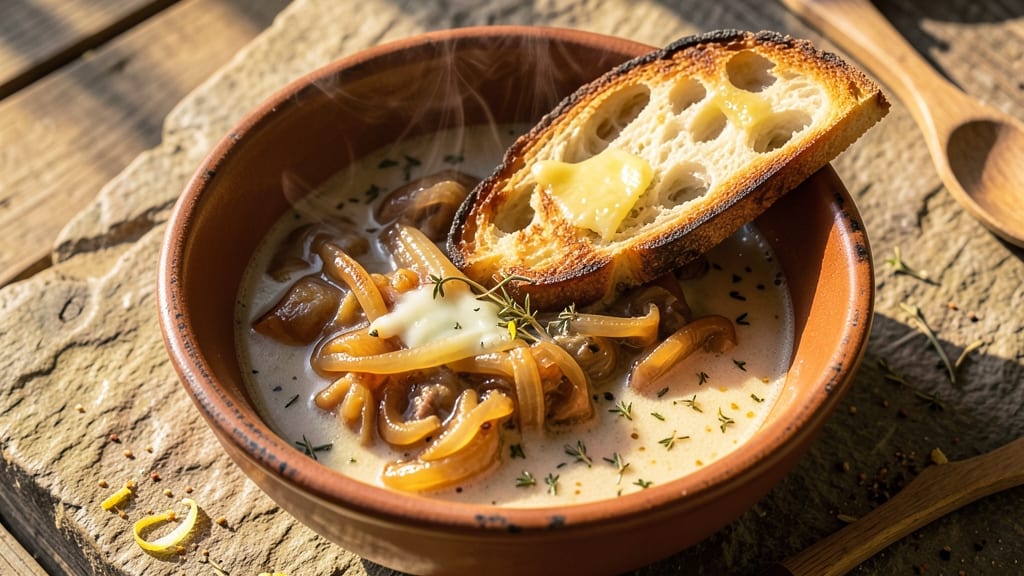
This French onion soup recipe brings the soul of Paris to your kitchen with its signature crispy Gruyère crowns and silky caramelized broth—just like the legendary versions served in Montmartre bistros.
The secret lies in slow-cooking onions until they turn deep amber, creating sweet, complex layers of flavor that form the heart of this iconic dish.
I've perfected the technique of balancing rich beef broth with just the right amount of white wine and herbs, ensuring every spoonful delivers that authentic Parisian taste.
The magic happens in the oven, where toasted baguette slices soak up the flavorful broth before being topped with melted Gruyère that turns golden and crispy. This isn't just soup—it's an experience that transforms a simple meal into a moment of culinary elegance.
The key is patience during the onion caramelization and precision when broiling the cheese to achieve that perfect balance of tender and crispy textures.
What you'll end up with is a bowl of restaurant-quality French onion soup that looks as stunning as it tastes—crispy cheese topping, rich caramelized onions, and silky broth all working together in harmony.
The aroma alone will transport you to a Parisian café, while the first bite delivers that perfect combination of savory, sweet, and umami flavors that make this dish legendary.
Whether you're serving this as a comforting weeknight dinner or impressing guests with an authentic French classic, this recipe delivers foolproof results every time. The best part? It's easier to make than you think, with techniques that build on each other to create something truly special.
Let's get started on recreating this Parisian masterpiece in your own kitchen.
Ingredients for best french onion soup in paris
These iconic Parisian ingredients transform simple onions into a legendary dish's heart.
| Ingredient | Amount | Notes |
|---|---|---|
| Yellow Onions 🧅 | 4 large | Sliced into 1/4-inch rounds |
| Extra-Virgin Olive Oil 🫒 | ½ cup | High-quality, fruity variety |
| Unsalted Butter 🧈 | 4 tbsp | European-style preferred |
| Dry White Wine 🍷 | 1 ½ cups | Sauvignon Blanc or Chardonnay |
| Beef Broth 🍲 | 6 cups | Homemade or high-quality store-bought |
| Fresh Thyme 🌿 | 2 sprigs | Leaves only, stems removed |
| Fresh Parsley 🌿 | ¼ cup | Chopped, for garnish |
| Gruyère Cheese 🧀 | 1 ½ cups | Freshly grated, aged 12+ months |
| Baguette 🍞 | 1 whole | Crusty, 1-inch thick slices |
| Diamond Crystal Kosher Salt 🧂 | 1 ½ tsp | For seasoning, not iodized |
| Freshly Ground Black Pepper 🌶️ | ½ tsp | Cracked peppercorns preferred |
| Garlic Cloves 🧄 | 4 cloves | Minced, for depth of flavor |
| Bay Leaves 🌿 | 2 whole | Remove after simmering |
The onions are non-negotiable—yellow onions with crisp edges hold up best during the slow caramelization. Whole Foods or Eataly carry the perfect sweet varieties, but any firm, dry onion works. For the Gruyère, French specialty shops or high-end grocers stock the aged wheels—look for a nutty, complex aroma. The baguette? Bakeries sell it fresh daily, but if you must use store-bought, slice it 1-inch thick for even browning. The white wine should be dry and crisp—Laurent Perrier Brut or Moutardier add authentic bubbles to the broth if you're feeling fancy.
No French cheese? Comté or Emmental melts beautifully as a substitute, though Gruyère's signature nutty depth is irreplaceable. Short on wine? Dry vermouth at half the amount mimics the acidity. Fresh herbs wilt fast—chop thyme and parsley just before using. The beef broth can be homemade (simmer beef bones with carrots, celery, and onions for 6 hours) or Kitchen Basics or Pacific Foods brands for store-bought. For extra umami, add 1 tbsp soy sauce to the broth—trust me, it elevates everything.
Caramelized onions keep for 5 days in the fridge, so make extra. The baguette slices stay crispy for 2 days if stored in a paper bag. Gruyère freezes beautifully—grate and freeze in portions for future soups. Serve immediately after broiling for that signature crispy crown. Leftovers? Broil again for 3 minutes to restore the cheese's golden crunch.
Why You'll Love This Recipe
- No Chopping Chaos: I swear by this recipe because you only need to slice those onions once—no peeling, no dicing, just even half-moons. The key is slow cooking them until they’re caramelized, and honestly, the smell alone makes the whole process worth it.
- Wine That Actually Matters: Between us, that splash of dry white wine isn’t just for show—it cuts through the richness of the butter and beef broth, adding a bright, tangy lift. I use whatever’s open in my fridge, but the result? Pure, restaurant-worthy depth without the fuss.
- Crowd-Pleaser Any Day: This soup is my go-to for game days, sick friends, or lazy Sundays because it’s hearty enough for a main but still light enough for a first course. (Yes, even my picky teenage nephew asks for seconds.)
- Leftovers That Taste Better: I make a double batch on Sundays, and the next day’s soup is even richer after the flavors meld overnight. Reheat gently—no sad, watery texture here—and it’s like you’re eating fresh again. Budget win, flavor win.
Step-by-step instructions for crispy Gruyère French onion soup
Here's how to recreate that Parisian bistro magic—silky caramelized onions, rich wine-braised broth, and golden Gruyère crowns.
Slow-Caramelize the Onions Until Deep Amber
Heat the 0.5 cup extra-virgin olive oil and 4 tbsp unsalted butter in a large Dutch oven over medium-low heat. Add the 4 large sliced yellow onions and 1.5 tsp kosher salt, stirring to coat evenly. This is where patience pays off—caramelizing takes 45-60 minutes until the onions transform from pale to deep amber with complex sweetness.
Here's the thing—don't rush this. I stir every 5 minutes at first, then reduce to every 10 minutes as they soften. You're aiming for a jammy consistency where the onions break down into a thick paste. If they brown too quickly, lower the heat immediately—burnt onions ruin the dish. The aroma should be intoxicatingly sweet and nutty by the end.
Deglaze with Wine and Build the Broth
Once the onions are beautifully caramelized, increase heat to medium-high and add the 1.5 cups dry white wine. Scrape up all those golden brown bits from the bottom—they're packed with flavor. Let the wine simmer for 5 minutes until reduced by half, then add the 6 cups beef broth, 2 sprigs fresh thyme, 2 whole bay leaves, 4 minced garlic cloves, and 0.5 tsp black pepper. Bring to a gentle simmer and cook uncovered for 30 minutes to deepen the flavors.
I like to taste the broth at this stage—it should be rich but not overpowering. If it needs more depth, add another ½ cup broth or a splash of wine. The thyme should be fragrant but not bitter, and the bay leaves will add that classic French herbal note. Keep the broth at a gentle simmer—a rolling boil will make the onions mushy.
Toast the Baguette and Assemble the Soups
While the broth simmers, preheat your broiler to high. Cut the 1 whole baguette into 1-inch thick slices and toast them on a baking sheet until golden and crisp—about 5 minutes. This step is crucial for that perfect crunch contrast. The bread should be dry enough to support the cheese without getting soggy.
Ladle the hot broth into 4 oven-safe soup bowls, placing 2 baguette slices in each bowl. The broth should come about ¾ of the way up the sides—this gives room for the cheese to expand beautifully. I like to arrange the bread slices in a cross pattern for that classic Parisian presentation.
Crown with Gruyère and Broil to Perfection
Sprinkle 1.5 cups freshly grated Gruyère cheese evenly over each bowl, mounding it generously in the center. The cheese should be freshly grated—pre-shredded won't melt as beautifully. Place the bowls on a baking sheet and broil for 3-5 minutes until the cheese is deep golden brown with bubbly, crisp edges.
Watch this step like a hawk—broilers vary wildly. You want the cheese to bubble and turn golden, not burn. The moment it's beautifully browned, remove from the broiler immediately. The cheese should be crisp on top but still creamy underneath. Garnish with 0.25 cup chopped fresh parsley just before serving for that final touch of freshness.
Serve Immediately with Dramatic Flair
Serve the soups straight from the oven while the cheese is still bubbling. The contrast of the silky caramelized onions, rich wine-braised broth, and crispy Gruyère crowns is what makes this dish legendary. I always tell people to take their first bite carefully—the cheese is molten hot and will make them jump back!
For the full Parisian experience, serve with a chilled glass of Sauvignon Blanc or Chardonnay—the same wines used in the recipe. The acidity cuts through the richness beautifully. And here's my pro tip: If anyone asks for extra cheese, just point them to the bowl—this portion is already generous enough to satisfy even the most demanding palates.
Pro Tips For Making Best French Onion Soup In Paris
- COOK ON LOW HEAT AFTER WINE: The moment you add the white wine, drop the heat to medium-low and let it simmer gently—no rushing. I used to blast it, and the alcohol burned off too fast, leaving that sharp, undercooked edge. Let it melt into the onions for at least 5 minutes, stirring occasionally, so the flavors marry properly.
- SLICE ONIONS THIN AND EVEN: Cut the yellow onions paper-thin—about 1/8-inch slices—so they soften evenly without turning to mush. I learned this the hard way after serving soup with uneven, rubbery bits. Use a sharp knife and work in batches if needed; patience here makes the caramelization worth it.
- DON’T SKIP THE BUTTER BLOOM: Melt the unsalted butter with the olive oil over medium heat, then let it foam and turn golden before adding onions. That nutty aroma? It’s the butter blooming, and it’s the thing that matters most for depth. If you rush, you’ll miss the rich foundation the soup needs.
- DEGLAZE WITH BROTH, NOT JUST WINE: After the wine reduces, splash in just enough beef broth to loosen the browned bits from the pot—about ¼ cup—before adding the rest. I was skeptical until I tried it: this extra step pulls in more flavor from the fond, giving the soup that restaurant-quality richness without extra effort.
Storing and reheating this best french onion soup in paris
Broth Storage Secrets
The caramelized onion broth is the soul of this soup, and it keeps beautifully for 5 days in the refrigerator. Transfer it to an airtight container—I love using Le Parfait glass jars—and let it cool completely before sealing.
The flavors actually deepen overnight as the spices meld together. For longer storage, freeze the broth in 1-cup portions for quick reheating later. Just thaw in the fridge overnight before using. 🥫
Bread Prep Ahead
Toasted baguette slices are best made fresh, but you can prep them 1 day ahead for convenience. Store them in a paper bag at room temperature—they'll stay crisp for 24 hours. If you're making the soup ahead, toast the bread just before assembling to maintain that perfect crunch.
For extra crispiness, place slices on a wire rack in a 200°F oven for 5 minutes before using. 🍞
Cheese Handling Tips
Gruyère cheese is your golden crown, so handle it with care. Grate it fresh just before serving—pre-shredded cheese contains anti-caking agents that prevent proper melting. Store any extra grated cheese in an airtight container in the fridge for up to 3 days, or freeze it for 1 month.
For a shortcut, use Comté cheese as a substitute, but expect slightly less nutty flavor. Always let the cheese come to room temperature before grating for even melting. 🧀
Reheating Leftovers
Leftover French onion soup is a treasure—just reheat it gently to preserve that silky texture. Place the soup in a medium saucepan and warm over low heat with 2 tbsp water or broth until heated through (165°F).
For the cheese topping, broil for 2-3 minutes until bubbly and golden again. If the broth seems thin after reheating, reduce it by 5 minutes of simmering uncovered. The key is patience—rushing will make the cheese soggy. ✨
Freezer Strategy
For maximum convenience, assemble the soup bowls completely (broth + bread) and freeze them uncheesed in a single layer on a baking sheet. Once frozen solid, transfer to ziplock freezer bags with 1 inch headspace for expansion.
When ready to serve, thaw overnight in the fridge, top with fresh cheese, and broil for 3-4 minutes. This method preserves the bread's texture better than freezing the entire bowl. 🧊
Broiler Watch
The broiler is your friend, but it can be tricky. Preheat it to high for 5 minutes before using, and place the bowls on the middle rack for even heat. Watch closely after 2 minutes—the cheese should bubble and turn golden, not brown too quickly.
If it starts to darken too fast, move the bowls slightly lower. The perfect moment is when the cheese is deep golden with crisp edges but still creamy underneath. 🔥
Nutrition facts
Frequently asked questions
Can I make this soup without wine?
Replace the 1.5 cups dry white wine with 1.5 cups beef broth plus 1 tbsp apple cider vinegar to maintain acidity. The vinegar mimics wine's brightness while keeping the dish rich and flavorful. For a non-alcoholic but still authentic touch, try 1 cup chicken broth + ½ cup dry vermouth—the vermouth adds depth without alcohol's bite.
What's the secret to perfectly caramelized onions?
Patience and low heat are key! Cook the onions over medium-low heat for 45-60 minutes, stirring occasionally, until they're deep amber with jammy texture. The secret lies in scraping up those golden brown bits from the bottom—they're packed with flavor. If onions brown too quickly, lower the heat immediately to prevent burning. The aroma should be sweet and nutty, not bitter.
Can I use a different cheese besides Gruyère?
Gruyère is ideal for its nutty flavor and perfect melt, but you can substitute with Comté or Emmental for similar results. For a vegetarian option, try vegan Gruyère (like Violife) or a mix of mozzarella + nutritional yeast for cheesiness. Just note that substitutes may not achieve the same crispy golden crust. Always grate cheese fresh—pre-shredded contains anti-caking agents that prevent proper melting.
How do I fix burnt cheese on the top?
If your cheese turns too dark, it's likely from broiling too long or too close to the heat. For future attempts, place bowls on the middle rack and watch closely after 2 minutes. If it happens, serve immediately—the cheese will still be delicious underneath! For next time, try broiling for 3 minutes max at high heat, then watch like a hawk. The perfect moment is when cheese bubbles but stays golden, not brown.
Can I make this soup in a slow cooker?
While possible, it's not ideal for authentic texture. Caramelizing onions properly requires direct heat control—slow cookers can't achieve the same depth of flavor. For best results, follow the stovetop method for onions, then transfer the broth to a slow cooker on low for 2 hours before assembling bowls. The bread will need toasting separately, and the cheese topping should still be broiled for that signature crisp.