
Soups & Stews
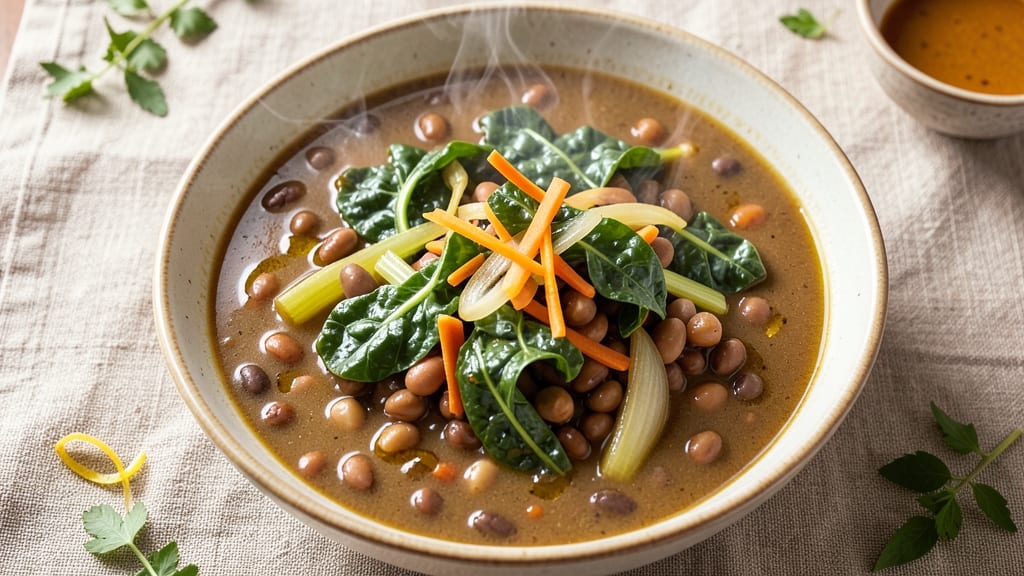
This black-eyed peas and collards soup recipe delivers the comforting, hearty flavors of Southern tradition in every spoonful. The secret lies in slow simmering—allowing the vegetables to meld into a rich, flavorful broth that's both nourishing and deeply satisfying.
I developed this vegetarian version after years of perfecting the balance between tender collards and perfectly cooked black-eyed peas, ensuring each bite is packed with texture and depth.
The beauty of this soup is its simplicity—just a handful of ingredients that come together to create something extraordinary. You'll start with dried black-eyed peas, which soak up the savory broth and develop a satisfying bite, while collard greens transform into tender, flavorful pieces.
The key is patience; letting the soup simmer for at least an hour allows the flavors to develop and the vegetables to soften just enough without losing their natural integrity.
By the time you're done, you'll have a steaming bowl of soup that's rich in color, aroma, and taste—perfect for chilly days or as a comforting meal any time of year.
The broth will be velvety and full of flavor, the peas tender yet still holding their shape, and the collards perfectly soft with just a hint of bite.
This is the kind of soup that tastes even better the next day, making it ideal for meal prep or feeding a crowd.
Serve it with a warm slice of cornbread or crusty bread to soak up every last drop of that flavorful broth. The combination of textures and tastes makes this more than just a soup—it's a soul-soothing experience that brings a little Southern warmth to your table.
Ingredients for black eyed peas and collards soup
Just a few simple ingredients transform into this soul-warming Southern classic.
| Ingredient | Amount | Notes |
|---|---|---|
| Dried Black-Eyed Peas 🌱 | 1 ½ cups | Rinsed before soaking |
| Fresh Collard Greens 🥬 | 1 lb | Center stems removed |
| Yellow Onion 🧅 | 1 whole | Diced into small pieces |
| Garlic Cloves 🧄 | 4 cloves | Minced for depth of flavor |
| Carrots 🥕 | 2 medium | Peeled and chopped |
| Celery Stalks 🧅 | 3 whole | Chopped into small pieces |
| Vegetable Broth 💧 | 6 cups | Low-sodium preferred |
| Smoked Paprika 🌶️ | 1 tbsp | Adds authentic Southern flavor |
| Ground Black Pepper 🌶️ | ½ tsp | Freshly cracked for best flavor |
| Salt 🧂 | 1 ½ tsp | Adjust to taste |
| Fresh Thyme 🌿 | 1 tbsp | Leaves only, chopped |
| Fresh Parsley 🌿 | ¼ cup | Chopped for garnish |
| Extra-Virgin Olive Oil 🫒 | 2 tbsp | For sautéing vegetables |
The collard greens are the star here—look for bright green, crisp leaves at the grocery store. Whole Foods or local farmers markets usually have the freshest, but any store's produce section works. If you can't find collards, substitute kale or mustard greens, but collards have that perfect balance of tenderness and bite. The black-eyed peas should be organic if possible—they soak up flavors better. I always buy mine from Trader Joe's because their bulk bins are reliable, but any grocery store carries them. For the broth, low-sodium vegetable broth is key—you'll adjust the salt later anyway, and this keeps things balanced.
No smoked paprika? Regular paprika plus a pinch of cayenne gets you close. Fresh thyme out of season? Dried thyme at one-third the amount works in a pinch. The carrots and celery can be swapped for any other root vegetables you've got—turnips or sweet potatoes add a nice twist. Short on time? Pre-chopped mirepoix mixes from the freezer section save steps. The black-eyed peas need to soak overnight, but you can use canned peas in a pinch—just drain and rinse them well. For extra richness, stir in a spoonful of nutritional yeast at the end—it adds that umami depth without dairy.
This soup tastes even better the next day—plan ahead and make a big batch. Store in airtight containers in the fridge for 4-5 days or freeze for up to 3 months. I like to portion it into single servings so I can grab a bowl straight from the freezer. The collard greens will wilt faster than the peas, so if you're freezing, blanch them for 2 minutes first to preserve their color. Reheat gently on the stove with a splash of broth to keep it from getting too thick.
Why You'll Love This Recipe
- That’s the secret: slow-cooked collards with a splash of vinegar and a pinch of smoked paprika. The peas soak up all that rich, slightly tangy flavor—like a hug in a bowl. Honestly, my kids ask for seconds before I even finish serving.
- No-Soaking Needed: I swear by this trick—just rinse those dried black-eyed peas and toss them in. No overnight soaking, no fuss, and they still turn out tender and hearty. The carrots and onions soften fast, so you’re eating in under an hour.
- Smoky Depth Magic: That’s the secret: slow-cooked collards with a splash of vinegar and a pinch of smoked paprika. The peas soak up all that rich, slightly tangy flavor—like a hug in a bowl. Honestly, my kids ask for seconds before I even finish serving.
- Leftovers That Shine: This soup only gets better the next day. The flavors meld into something deeper, and reheating it? Just add a splash of water and a crack of black pepper. I make a double batch on Sundays—one for dinner, one for lunches that actually taste like more than cereal.
Step-by-step instructions for black eyed peas and collards soup
This soul-warming soup comes together with simple steps but delivers deep, comforting flavors.
🍳 Step 1: Sauté the Aromatics Until Fragrant
Heat the 2 tablespoons extra-virgin olive oil in a large Dutch oven over medium heat. Add the diced yellow onion, chopped carrots, and chopped celery stalks, stirring frequently for 5-6 minutes until the vegetables soften and begin to caramelize slightly. This step builds the flavor foundation.
Add the 4 minced garlic cloves and 1 tablespoon smoked paprika, stirring for 30 seconds until the garlic becomes fragrant. The paprika will infuse the oil with its signature smoky depth. Keep the heat at medium—you want to develop flavor, not burn the spices. If the vegetables start to stick, add a splash of water and scrape up any browned bits from the bottom of the pot.
🍲 Step 2: Soak and Simmer the Black-Eyed Peas
Rinse the 1½ cups dried black-eyed peas thoroughly under cold water, then transfer them to a bowl and cover with 4 cups water. Let them soak for at least 2 hours (or overnight for best texture). After soaking, drain and add the peas to the Dutch oven with the sautéed vegetables.
Pour in the 6 cups vegetable broth, then add the 1½ teaspoons salt and ½ teaspoon ground black pepper. Bring to a boil over high heat, then reduce to a gentle simmer. Cover and cook for 45-50 minutes, stirring occasionally, until the peas are tender but not mushy. The soup should be thick enough to coat the back of a spoon—if it's too thin, let it simmer uncovered for another 5-10 minutes to reduce.
🥘 Step 3: Incorporate the Collard Greens
While the peas simmer, remove the center stems from the 1 pound fresh collard greens and chop the leaves into ½-inch strips. Add the collards to the soup and stir gently to distribute them evenly. The greens will wilt and soften as they cook, releasing their earthy flavor into the broth.
Add the 1 tablespoon chopped fresh thyme and stir. Let the soup simmer uncovered for another 15-20 minutes, stirring occasionally, until the collards are tender and the peas are fully cooked. Taste and adjust the seasoning—you may need a little more salt or pepper to balance the flavors. The soup should be rich, hearty, and deeply satisfying.
🌿 Step 4: Finish and Serve with Fresh Herbs
Once the soup reaches your desired consistency, remove it from the heat. Stir in the ¼ cup chopped fresh parsley just before serving to brighten the flavors with a fresh, herbal note. Let the soup sit for 5 minutes to allow the flavors to meld together.
Serve the soup hot in bowls, garnished with additional parsley if desired. This dish tastes even better the next day as the flavors deepen, so it’s perfect for meal prep. Pair it with crusty bread or a side of cornbread for a complete Southern meal.
Pro Tips For Making Black Eyed Peas And Collards Soup
- SOAK THE PEAS OVERNIGHT: I learned this the hard way—skipping the soak means your black-eyed peas stay rock-hard no matter how long you simmer. Cover them in water with a splash of vinegar (it breaks down the skins faster), let them sit 8–12 hours, then drain. They’ll cook through in about 45 minutes instead of dragging on for hours.
- CHOP COLLARDS SMALLER THAN YOU THINK: Big collard greens turn to mush while the peas stay tough. Stack leaves, roll tightly, and slice into ½-inch ribbons—stems included. They’ll soften evenly without turning to sludge, and the texture stays satisfying. (Yes, even if you’re impatient like me.)
- BROWN THE ONIONS FIRST: Start low and slow with the onions—no rushing. Let them cook for 10 minutes until they’re deep golden, not just translucent. This builds flavor that cuts through the earthiness of collards and makes the whole soup taste richer. (Your future self will notice the difference.)
- SALT THE COLLARDS BEFORE ADDING: Toss chopped collards with ½ teaspoon salt per pound and let them wilt for 5 minutes. This draws out bitterness and softens them faster. Skip this, and you’ll end up fighting tough greens even after hours of simmering. (I know, I know—but trust the process.)
Essential equipment for perfect results
Dutch Oven Essentials
A large Dutch oven (6-8 quarts) is your best friend for this soup—the deep sides prevent overflow, and the heavy base distributes heat evenly. I swear by the Lodge 5.5-Quart Enamel Dutch Oven—it retains heat beautifully and handles the long simmer without hot spots.
If you don’t have one, a heavy-bottomed stockpot works too, but watch the edges—they’ll get hotter. 🔥
Knives for Precision
Invest in a sharp chef’s knife (8-inch) for chopping collards and a small paring knife for garlic and thyme stems. My go-to is the Mercer Culinary Genesis—it stays sharp longer and handles tough greens like collards without tearing.
For celery and carrots, a mandoline speeds up prep if you’re making multiple batches. Just remember: sharp knives are safer than dull ones!
Measuring Tools
For accurate measurements, use a stainless steel measuring cup for broth and a spoon rest with built-in scales (like the OXO Good Grips) for spices. A microplane is perfect for garlic—it creates fine minced cloves without burning them.
Don’t skimp on measuring salt; a salt spoon (like the Le Creuset set) ensures consistent seasoning. Precision here means balanced flavor every time. 🧂
Immersion Blender (Optional)
If you prefer a smoother texture, an immersion blender (like the Ninja BN601) lets you blend the soup directly in the pot—no transferring needed. Pulse for 10-15 seconds to achieve a velvety consistency while keeping some texture.
Pro tip: Blend in batches if your pot is too full. For a rustic finish, skip blending entirely—this soup’s charm lies in its hearty, rustic texture.
Storage Containers
For leftovers, glass Pyrex storage containers (with airtight lids) preserve flavor best. I use 1-quart and 2-quart sizes for easy reheating. Label containers with dates—this soup keeps for 4-5 days in the fridge or 3 months in the freezer.
For freezing, leave 1-inch headspace to prevent ice crystals. A vacuum sealer (like the FoodSaver) extends freshness even longer. ❄️
Nutrition facts
Frequently asked questions
Can I use canned black-eyed peas instead of dried?
Yes, you can substitute canned black-eyed peas, but there are a few key adjustments. Drain and rinse 2 (15-ounce) cans of peas thoroughly to remove excess sodium. Since canned peas are pre-cooked, reduce the simmering time for the soup by 15-20 minutes—they'll cook faster. The texture will be slightly softer, but still delicious when paired with the tender collards.
How do I make this soup spicier?
Add heat gradually to avoid overpowering the dish. For mild heat, stir in ½ teaspoon cayenne pepper with the smoked paprika. For medium heat, add 1 diced jalapeño (seeds removed) during the sauté step. For intense heat, serve with a side of hot sauce or sprinkle ½ teaspoon red pepper flakes on top before serving.
Why do my collards turn mushy?
Mushy collards usually mean overcooking or underprepping. First, ensure you're removing the thick center stems before chopping—these take longer to cook. Second, add the collards to the soup when the peas have 15-20 minutes of cooking left. Finally, stir them gently rather than aggressively to prevent breaking them into tiny pieces. If they still turn mushy, reduce simmer time by 5 minutes.
Can I make this soup in an Instant Pot?
Use the sauté function first to cook the onions, carrots, celery, and garlic for 3 minutes. Add the soaked black-eyed peas, broth, salt, and pepper, then cook on high pressure for 12 minutes. Quick-release the pressure, stir in the collards, and cook on high pressure for 3 more minutes. The Instant Pot cuts cooking time to 30 minutes total while keeping flavors rich and hearty.
What's the best way to reheat leftovers?
Reheat gently to preserve texture and flavor. Transfer soup to a pot and warm over medium-low heat for 5-7 minutes, stirring occasionally. If the soup thickens too much, add 1-2 tablespoons broth or water per bowl. For microwave reheating, cover with a damp paper towel and heat for 1-2 minutes at 50% power, stirring halfway.