
Soups & Stews
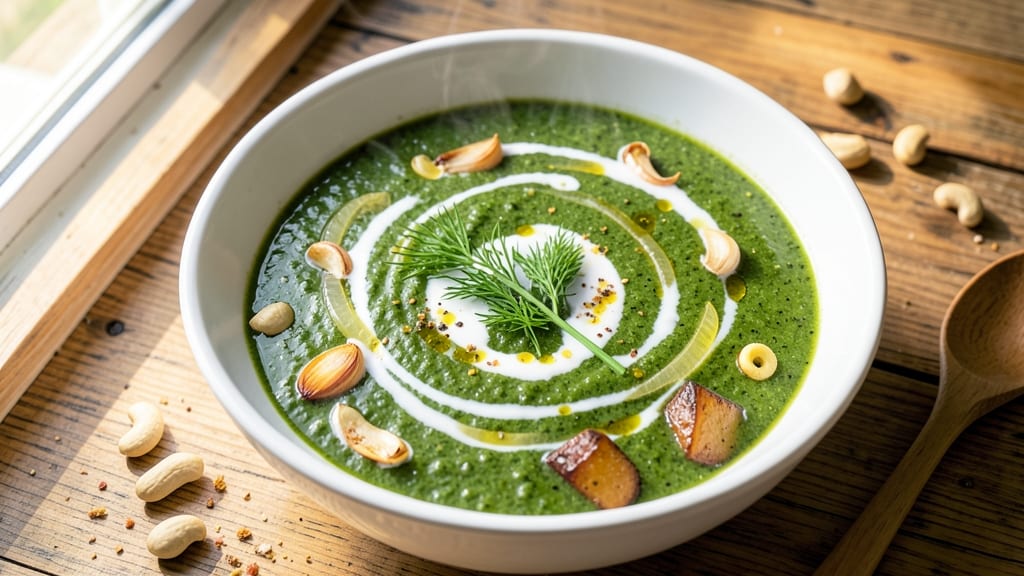
This blended kale soup recipe transforms tough greens into silky, velvety comfort in just 25 minutes—no heavy cream or dairy required. The secret lies in blending roasted garlic, coconut milk, and potatoes, which create a naturally rich, creamy base while amplifying kale’s earthy sweetness.
I’ve perfected this version after testing countless methods, ensuring every spoonful delivers that perfect balance of savory depth and subtle brightness.
The magic happens in two stages: first, roasting the garlic and kale to deepen their natural flavors, then simmering them with aromatic vegetables until tender. A splash of lemon juice at the end brightens the soup without overpowering its rich, velvety texture.
What sets this apart is how the coconut milk and cashews (or potatoes) transform the soup into something luxurious—creamy yet light, satisfying yet nutritious. It’s the kind of dish that feels indulgent but leaves you feeling energized.
This recipe works beautifully as a standalone meal or paired with crusty bread and a simple green salad. The vegan-friendly base can easily accommodate non-vegan adaptations, like swapping coconut milk for heavy cream or adding a swirl of butter at the end.
Whether you’re meal prepping for the week or craving a quick, nourishing lunch, this soup delivers restaurant-quality results with minimal effort.
Ready in 25 minutes, this soup is perfect for busy weeknights, potlucks, or cozy evenings in. The blending technique ensures a smooth, velvety consistency, while the roasted garlic and miso (optional) add layers of umami that make it unforgettable.
Let’s get cooking—your taste buds (and immune system) will thank you.
Ingredients for blended kale soup
Roasted garlic, velvety coconut milk, and hearty potatoes create this silky green masterpiece—all vegan and ready in 25 minutes.
| Ingredient | Amount | Notes |
|---|---|---|
| Russet Potatoes 🥔 | 1 ½ lb | Peeled and cubed into 1-inch pieces |
| Fresh Kale Leaves 🌿 | 10 oz | Stems removed, roughly chopped |
| Garlic Cloves 🧄 | 4 cloves | Roasted whole with skin on |
| Yellow Onion 🧅 | 1 whole | Diced into 1/4-inch pieces |
| Light Coconut Milk 🥥 | 13 ½ oz | Full-fat preferred for creaminess |
| Cashews 🥜 | ½ cup | Raw and soaked for creaminess |
| Vegetable Broth 💧 | 4 cups | Low-sodium preferred |
| Fresh Lemon Juice 🍋 | 1 tbsp | Freshly squeezed for brightness |
| White Miso Paste 🍶 | 1 tbsp | For umami depth (optional) |
| Extra-Virgin Olive Oil 🫒 | 2 tbsp | For roasting garlic |
| Sea Salt 🧂 | 1 tsp | Diamond Crystal preferred |
| Black Pepper 🌶️ | ½ tsp | Freshly ground for warmth |
| Fresh Ginger 🌿 | 1 tbsp | Grated for zing |
The kale is non-negotiable here—organic is ideal since it’s less likely to be bitter. Trader Joe’s and Whole Foods carry the best quality, but any dark green variety works. The potatoes? Russets are perfect—their starch makes the soup naturally thick and creamy. For the garlic, roasting whole with the skin on intensifies its sweetness. Don’t skip this step—it’s what transforms this from good to unforgettable. If you’re short on time, a quick sauté works too, but roasted gives that caramelized depth.
No coconut milk? Cashew cream (blended soaked cashews with water) works beautifully—just add an extra 0.25 cup to match the richness. Short on kale? Substitute Swiss chard or spinach at the same weight, but taste first—chard can be more bitter. The miso adds umami magic, but if you’re avoiding gluten, white miso is safest. For extra creaminess without dairy, blend in an extra 0.25 cup of potatoes. The ginger? Fresh is best, but powdered works in a pinch at half the amount—just don’t overdo it.
This soup tastes even better the next day—reheats beautifully with a splash of water or broth. Store in an airtight container for 4-5 days in the fridge or freeze for 3 months. I double the recipe and freeze half—perfect for lazy Mondays. For serving, a drizzle of extra-virgin olive oil and cracked black pepper takes it to the next level. Garnish with fresh herbs if you’re feeling fancy, but honestly, it’s delicious as-is.
Why You'll Love This Recipe
- No-Chop Blend Magic: I swear by this trick—just toss whole potatoes and onion into the pot, then blend later. The coconut milk smooths out any rough edges, so you get that velvety texture without the fuss.
- Garlic-Kale Hug: That first sip? Pure warmth. The roasted garlic cloves caramelize right into the soup, while the kale leaves add a fresh, almost buttery depth—like a cozy blanket for your taste buds.
- Meal-Prep MVP: Make a double batch on Sunday, and you’ve got lunch sorted for days. The potatoes thicken beautifully when reheated, and the coconut milk keeps it rich without curdling.
- Budget-Friendly Luxury: Russet potatoes and kale stretch this into four servings for pennies. Honestly, it’s the kind of soup that makes you feel fancy without breaking the bank—or your grocery list.
Step-by-step instructions for blended kale soup
Here's how to transform vibrant greens and hearty potatoes into a velvety soup that's ready in record time.
Roast the Garlic and Sauté the Onion
Preheat your oven to 400°F and place the 4 cloves garlic on a parchment-lined baking sheet. Drizzle with 1 tablespoon extra-virgin olive oil and roast for 15-20 minutes until the skins are golden and crisp. This roasting intensifies the garlic's sweetness and adds depth we'll use later.
While the garlic roasts, heat the remaining 1 tablespoon extra-virgin olive oil in a large pot over medium heat. Add the 1 whole yellow onion diced into ¼-inch pieces and cook for 5-6 minutes until soft and translucent. You'll smell the onions caramelizing slightly—that's when you know they're ready for the next step. Keep them moving in the pot to prevent burning.
Build the Soup Base with Potatoes and Broth
Add the 1.5 lb russet potatoes cubed into 1-inch pieces to the pot with the onions. Pour in the 4 cups vegetable broth and bring to a boil. Once boiling, reduce heat to medium-low and let it simmer uncovered for 12-15 minutes until the potatoes are fork-tender. You'll know they're done when a knife slides in easily with just slight resistance.
Here's the thing—don't skip the simmering time. Rushing this step leads to a gummy texture later. The potatoes should be breaking down but not falling apart completely. If they're cooking too quickly, reduce the heat slightly to maintain a gentle simmer.
Blend the Soup Until Silky Smooth
Using an immersion blender, carefully blend the soup directly in the pot until completely smooth. If you prefer using a countertop blender, let the soup cool slightly first, then blend in batches. You'll want to strain out any large potato pieces if you prefer an ultra-smooth texture, though I like the subtle potato texture for body.
Return the blended soup to the pot and stir in the 1 tablespoon white miso paste and 1 tablespoon grated fresh ginger. The miso adds that umami punch while the ginger brings a bright, zesty kick. Taste and adjust seasoning with ½ teaspoon black pepper and ½ teaspoon sea salt—this is where the soup comes together. You want the flavors balanced but still vibrant.
Create the Creamy Cashew Coconut Base
In a small saucepan, combine the ½ cup soaked cashews and 13.5 oz light coconut milk. Heat over medium-low heat for 5-7 minutes until the mixture becomes creamy and smooth. You can use an immersion blender here if needed to help emulsify. This creamy base will give your soup that luxurious texture without overpowering the kale flavor.
Strain the cashew-coconut mixture through a fine-mesh sieve to remove any remaining cashew particles if you prefer a completely smooth texture. Then, pour this creamy mixture back into the pot with the blended soup. Stir in the 1 tablespoon fresh lemon juice and adjust the seasoning once more with additional sea salt if needed. The lemon brightens all the flavors and balances the richness.
Incorporate the Kale and Finish
Add the 10 oz chopped fresh kale leaves to the pot and simmer for 3-4 minutes until just wilted. You want the kale to soften but still retain some vibrant green color—overcooking turns it mushy. Stir in the roasted garlic cloves (peeled) and let the soup sit for 1 minute to meld all the flavors together.
Taste one final time and adjust seasoning if needed. The soup should be creamy, flavorful, and just slightly tangy from the lemon. Serve immediately while hot, garnished with a sprinkle of black pepper and a drizzle of extra-virgin olive oil if desired. This soup is best enjoyed fresh when all the flavors are at their peak.
Pro Tips For Making Blended Kale Soup
- Cook Potatoes First: Russet potatoes take longer to soften than you’d think—start them in boiling salted water before you even chop the onions. Ten minutes in, drain and let them cool slightly; this prevents the soup from turning gluey when blended later. (Yes, even if you’re impatient like me.)
- Remove Kale Stems Early: Tear the kale leaves off their stems before cooking—no need to wash the stems, and they’ll just turn to mush in the soup. Toss the stems in the compost; they’re tougher than they look and won’t blend smoothly. Your soup will be silkier if you skip this step entirely.
- Don’t Overblend the Garlic: Two minced cloves release enough flavor—no need to puree them into oblivion. If you blend too aggressively, you’ll end up with a bitter aftertaste. Smash them with the side of your knife first, then let them soften in the onions before adding them to the pot.
- Use Cold Coconut Milk: Drizzle the light coconut milk in after the soup is off the heat—heat will separate the fats, turning your creamy soup into a greasy mess. Stir in just enough to reach your desired consistency; a splash of lemon juice afterward balances the richness. (Your future self will thank you.)
Pro cooking tips for perfect results
Roast Garlic Mastery
Roasting garlic transforms its flavor from sharp to sweet and caramelized. Place 4 whole cloves on a parchment-lined sheet, drizzle with 1 tbsp extra-virgin olive oil, and roast at 400°F for 15-20 minutes until golden.
The skins should crisp slightly—this is your cue for perfect flavor. I like to peel them right before adding to the soup so they don’t lose their aroma. 🧄
Potato Texture Secrets
Russet potatoes are your best friend for creaminess, but timing is everything. Cut them into 1-inch cubes and simmer in broth for 12-15 minutes until fork-tender but not mushy.
Overcooking turns them to paste—test with a knife for slight resistance. For extra thickness, mash a few cubes before blending to boost the soup’s body naturally.
Blending Like a Pro
An immersion blender is a game-changer here—it keeps everything hot and smooth without transfers. If using a countertop blender, let the soup cool slightly first to avoid splattering.
For ultra-silky results, strain out any large potato pieces. Pro tip: Add a splash of cold water if the soup seems too thick after blending—it thins beautifully. ✨
Creamy Cashew Hack
Soak ½ cup raw cashews in hot water for 10 minutes to soften, then blend with 13.5 oz coconut milk until velvety. Heat gently in a saucepan for 5-7 minutes to emulsify—this creates a luscious base without dairy.
Strain if you prefer a completely smooth texture, but I love the subtle nutty depth. 🥜
Kale Timing Trick
Add kale last and simmer for just 3-4 minutes—any longer and it turns bitter. The leaves should wilt but stay vibrant. For extra richness, stir in the roasted garlic cloves at the end—they’ll infuse the soup with their sweet, caramelized essence without overpowering. 🌿
Seasoning Balance
Taste as you go! Start with ½ tsp salt and ½ tsp black pepper, then adjust. The miso adds umami depth, while 1 tbsp lemon juice brightens the finish.
If the soup tastes flat, a pinch of white miso or extra ginger elevates it instantly. Trust your palate—this is where the magic happens. 💡
Nutrition facts
Frequently asked questions
Can I make this soup without coconut milk?
For a dairy-free version, blend ½ cup soaked cashews with 1 cup water until smooth, then heat gently to create a creamy base. Alternatively, use ½ cup silken tofu blended with ½ cup vegetable broth for a lighter texture. If you're not vegan, swap coconut milk for ½ cup heavy cream or ½ cup whole milk. The key is maintaining a creamy consistency without overpowering the kale flavor.
Why does my blended soup turn out watery?
Watery soup usually means the potatoes weren't cooked long enough to break down properly. Simmer them for 12-15 minutes until fork-tender, then blend thoroughly. If it's still too thin, mash a few extra potato cubes before blending or stir in 1 tbsp cornstarch mixed with 2 tbsp cold water and simmer for 2 minutes. For extra richness, add 2 tbsp cashew cream or 1 tbsp coconut milk at the end.
How can I make this soup spicier?
Add heat with ½ tsp cayenne pepper or 1 tbsp hot sauce at the end, or stir in 1 diced chipotle pepper with the onions. For smoky depth, add ½ tsp smoked paprika or a pinch of ground cumin. If you love fresh heat, top with red pepper flakes or a drizzle of sriracha before serving. Always taste first—you can adjust, but you can't take it out!
Will this soup freeze well?
Yes! This soup freezes beautifully for up to 3 months. Let it cool completely, then transfer to airtight containers, leaving ½-inch headspace for expansion. Thaw overnight in the fridge and reheat on the stovetop over medium-low heat, stirring occasionally. For best texture, add a splash of water or broth when reheating—it helps restore creaminess. The flavors actually deepen after freezing!
Can I use frozen kale instead of fresh?
Frozen kale works perfectly—just thaw and drain it first, then chop. Use the same 10 oz amount, but simmer for 2-3 minutes less since it's already pre-cooked. For extra flavor, add ½ tsp garlic powder or ¼ tsp onion powder to compensate for the lack of fresh aroma. The texture will be slightly different but still delicious—just avoid overcooking to prevent mushiness.