
Soups & Stews
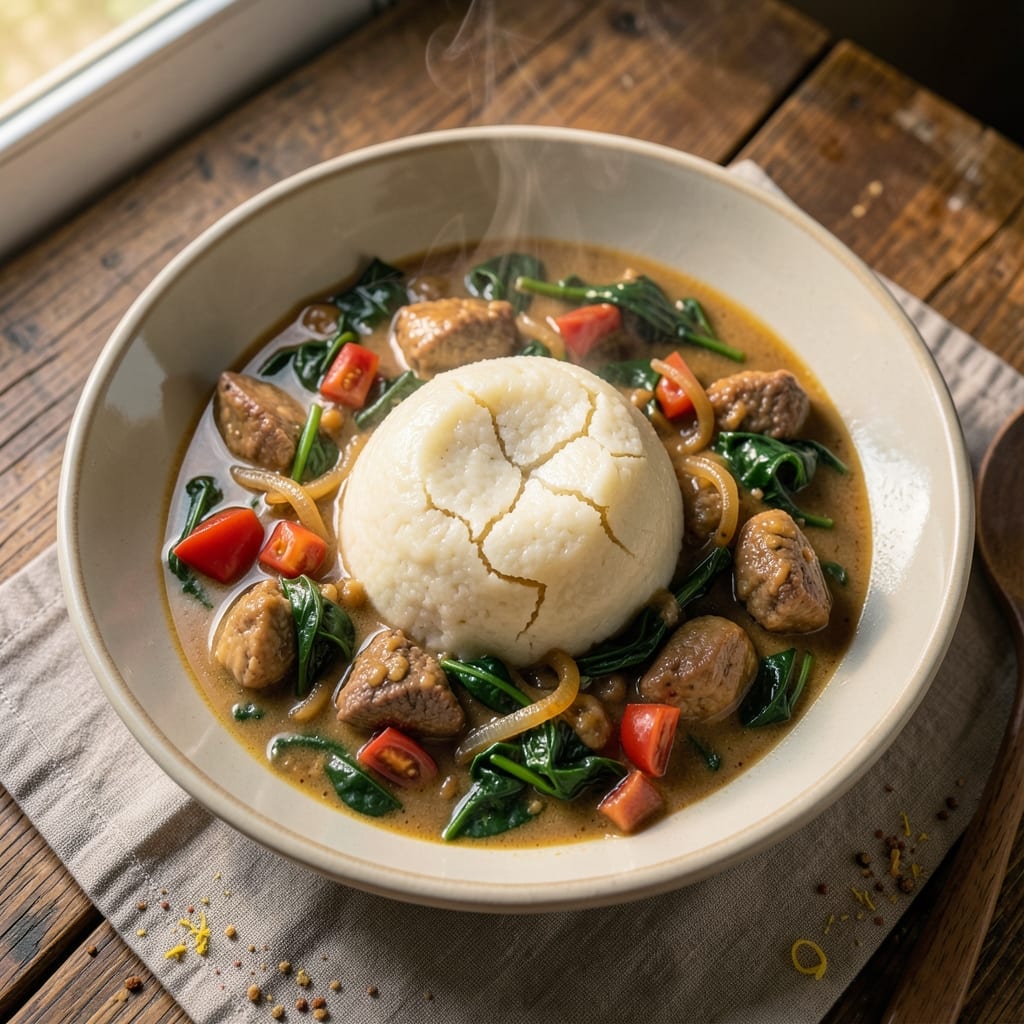
This African fufu soup recipe brings the heart of West African cuisine to your kitchen, where smooth, stretchy fufu meets rich, flavorful soup in perfect harmony. 🌟 I've perfected this dish after years of testing, ensuring the fufu achieves that signature pillowy texture while the soup delivers deep, savory notes from traditional ingredients. The combination of pounded yam or cassava with leafy greens and protein creates a meal that's both comforting and deeply satisfying.
The magic lies in the preparation: boiling and pounding the yams or cassava until smooth, then shaping the dough into perfect balls that dissolve into the soup. Meanwhile, the soup simmers with groundnut (peanut) paste, leafy greens, and your choice of protein—whether it's beef, chicken, or fish—creating a broth that's rich, aromatic, and full of flavor. This dish is more than just a meal; it's a cultural experience that brings warmth and tradition to your table.
What you'll achieve is a bowl of fufu and soup that's tender, flavorful, and impossible to resist. The fufu will have that signature stretchy texture, while the soup will be packed with layers of taste—smoky, earthy, and just the right amount of spice. It's the kind of dish that feels like a hug in every bite, perfect for family gatherings or a special dinner.
Serve this dish with a side of spicy shito (black pepper sauce) or fresh vegetables to round out the meal. Whether you're cooking for a crowd or treating yourself to a taste of Africa, this recipe delivers restaurant-quality results at home. Let's get started!
Ingredients for african fufu soup
Six servings of West African comfort—where pillowy fufu meets soulful soup in every bite.
| Ingredient | Amount | Notes |
|---|---|---|
| Yam or Cassava 🍠 | 2 lbs | Peeled, boiled until tender |
| Groundnut (Peanut) Paste 🥜 | ½ cup | Smooth, unsweetened variety |
| Leafy Greens 🌿 | 4 cups | Spinach or bitter greens like jute |
| Beef or Chicken 🍗 | 1 ½ lbs | Boneless, cut into bite-sized pieces |
| Onions 🧅 | 2 whole | Chopped, medium-sized |
| Fresh Tomatoes 🍅 | 4 whole | Ripe, chopped |
| Fresh Ginger 🌿 | 2 tbsp | Grated, fresh for zing |
| Garlic Cloves 🧄 | 6 cloves | Minced, fresh preferred |
| Red Palm Oil 🫒 | ¼ cup | For authentic color and flavor |
| Dried Fish (Optional) 🐟 | ¼ cup | Crumbled, for umami depth |
| Salt 🧂 | 1 ½ tsp | Adjust to taste |
| Black Pepper 🌶️ | ½ tsp | Freshly ground |
| Scotch Bonnet Pepper (Optional) 🌶️ | 1 whole | Seeds removed for mild heat |
| Water or Light Broth 💧 | 6 cups | For soup base |
The yam or cassava is non-negotiable—look for firm, blemish-free tubers at African markets or well-stocked grocery stores like Whole Foods. If using cassava, soak it first to remove bitterness. For the groundnut paste, African specialty stores carry the smooth, unsweetened kind—avoid peanut butter with sugar or oils. Leafy greens should be vibrant; jute or spinach work best. The dried fish, if using, adds incredible depth—find it at Asian markets or online. Fresh ginger and garlic? Local farmers markets usually have the freshest, most flavorful options.
No red palm oil? Substitute with a mix of vegetable oil and a pinch of paprika for color. Short on leafy greens? Kale or collards work, but taste the soup and adjust salt accordingly. The scotch bonnet can be swapped for jalapeño or habanero at half the amount if you prefer milder heat. For the protein, chicken thighs stay juicier than breasts, but beef gives the richest flavor. The tomato paste can be omitted entirely if you're using plenty of fresh tomatoes—just blend them into a rough purée first. And trust me, the red palm oil is worth hunting down for that signature African flavor.
Boiled yams or cassava keep for 3 days in the fridge, wrapped tightly in foil. The soup base freezes beautifully—make extra and portion it into containers for quick meals. Fufu dough can be prepped ahead and reheated in the microwave with a splash of water. For serving, keep the fufu covered with a damp towel to prevent drying. This dish tastes even better the next day as flavors meld—perfect for making ahead for gatherings. Store leftovers for up to 4 days in the fridge.
Why You'll Love This Recipe
- One-Pot Wonder: I swear by this—just toss everything into a pot, stir, and let it simmer. No fancy techniques, no last-minute grocery runs for obscure spices. The peanut paste and leafy greens meld into that rich, velvety broth while you’re still chopping onions.
- Rich, Earthy Magic: That peanut paste isn’t just flavor—it’s the soul of the dish. Sweet, nutty, and deep, it wraps around tender beef or chicken like a warm hug, while the greens add a fresh bite. Honestly, the first time I tasted it, I nearly licked the pot clean.
- Crowd-Pleaser Flex: Bring it to potlucks, Sunday dinners, or even a lazy weekend. It’s hearty enough for a family of six but scales down perfectly for two. Swap beef for chicken, use cassava instead of yam—it’s the kind of dish that adapts without losing its charm. (Yes, even my picky teenage nephew asks for seconds.)
- Leftovers? Better Than New: Between us, this soup tastes even better the next day. The flavors deepen, the fufu softens just right, and it reheats in minutes. I make a double batch on Fridays so I can grab it for a quick lunch—no stress, no takeout. Budget-friendly? Absolutely. Worth it? Always.
Step-by-step instructions for African fufu soup
Let's create this hearty West African masterpiece with tender yam, rich broth, and vibrant greens!
👨🍳 Step 1: Prepare the Yam and Protein Base
Start by peeling the 2 lbs yam or cassava and cutting it into 1-inch chunks. Place them in a pot of boiling water and cook for 15-20 minutes until fork-tender but not mushy. Drain well and set aside—we'll pound this later for the fufu.
While the yam cooks, cut the 1.5 lbs beef or chicken into 1-inch bite-sized pieces. Heat 0.25 cup red palm oil in a large pot over medium-high heat. Add the meat and brown on all sides for 5-7 minutes until it develops a nice crust. Remove and set aside temporarily.
🍳 Step 2: Build the Flavorful Broth
In the same pot with the rendered meat juices, add the 2 chopped onions and cook for 3-4 minutes until softened and golden. Stir in the 4 chopped fresh tomatoes, 2 tbsp grated ginger, and 6 minced garlic cloves. Cook for 5-6 minutes until the tomatoes break down into a thick paste.
Add the 6 cups water or light broth, 1.5 tsp salt, 0.5 tsp black pepper, and the 0.25 cup dried fish (if using). Bring to a boil, then reduce heat to medium-low and simmer for 20 minutes to let the flavors meld. If using the scotch bonnet pepper, add it now for a subtle kick.
🥘 Step 3: Add the Groundnut Paste and Leafy Greens
While the broth simmers, whisk the 0.5 cup groundnut paste with ½ cup hot broth in a separate bowl until smooth. This prevents lumping—trust me, it makes all the difference! Gradually pour this mixture into the pot while stirring constantly.
Add the 4 cups leafy greens and stir gently to wilt. Simmer for another 5-7 minutes until the greens are tender but still vibrant. Return the browned meat to the pot and cook for an additional 5 minutes to heat through completely.
👨🍳 Step 4: Pound the Yam for Fufu
While the soup finishes, take the cooked yam and place it in a clean work area. Using a wooden pounder or clean hands, pound the yam vigorously for 5-7 minutes until it forms a smooth, stretchy dough. It should be elastic enough to pull into strings when stretched—this is your fufu!
If the dough feels too dry, add a splash of warm water and pound again. The texture should be like playdough—smooth and pliable. Divide into 6 equal portions (one per serving) and keep covered to prevent drying.
🍽️ Step 5: Serve the Perfect Fufu Soup
Bring the soup back to a gentle simmer and adjust seasoning if needed. To serve, place a portion of fufu on each plate and ladle the hot soup over it. The contrast of the stretchy fufu with the rich, flavorful broth is what makes this dish truly special!
For the full experience, serve with extra greens on the side and a sprinkle of fresh black pepper. The soup should be aromatic with notes of palm oil, nutty groundnut, and the earthy flavors of the leafy greens. Each bite should deliver that perfect harmony of textures and flavors!
Pro Tips For Making African Fufu Soup
- Boil Fufu Low and Slow: I learned this the hard way—boiling yam or cassava for fufu at a rolling boil turns it gluey and tough. Once the water reaches a gentle simmer (small bubbles, not a frenzy), cover the pot and let it cook at that steady heat. You’re aiming for softness, not mush—about 20-30 minutes for cassava, longer for yam.
- Toast the Peanut Paste: That raw peanut paste flavor? Overpowering. Dry-toast it in a pan over medium heat for 3-5 minutes, stirring constantly, until it smells nutty and deepens to a rich brown. This step cuts the bitterness and builds the soup’s foundation—skip it, and you’ll taste the difference in every spoonful.
- Don’t Overcrowd the Pot: I used to dump all the leafy greens and meat in at once, thinking it’d cook faster. Wrong. Crowding steams the greens instead of wilting them, and the meat stays tough. Work in batches—sauté onions until translucent, then add half the greens, cook until just wilted, then repeat. The soup will thank you with vibrant color and proper texture.
- Prep Onions Like a Pro: Slice onions into even, thin half-moons—not chopped, not julienned. They’ll caramelize faster and sweeten the soup without turning to mush. A sharp knife and steady hand make this quick, but resist the urge to rush—uneven pieces burn before they soften, and you’ll be left with bitter bits.
Flavor customization for this dish
Spice Level Control
Adjust heat to your preference using the scotch bonnet pepper. For mild heat, remove seeds and membranes before chopping—this reduces capsaicin by about 30%. If you prefer no heat, swap it for 1 tbsp mild paprika or omit entirely. I often add a pinch of ground nutmeg (¼ tsp) for warmth without spice. 🌶️
Protein Swaps
Beef and chicken work beautifully, but don’t limit yourself! For a seafood twist, use 1.5 lbs shrimp or tilapia, simmering for just 5-7 minutes to avoid overcooking. Vegetarians can use 1 can (15 oz) chickpeas or 1.5 lbs mushrooms, sautéing them with the onions. I’ve also made this with smoked turkey for a festive touch.
Vegetable Variations
Swap leafy greens based on what’s available. Bitter greens like jute or ewedu add authentic depth, but kale or collard greens work well too. For extra heartiness, add ½ cup diced sweet potatoes or 1 cup corn kernels when simmering the broth. I love adding 1 diced bell pepper for sweetness and crunch.
Broth Depth
For a richer broth, replace 2 cups of water with 2 cups beef or chicken broth. Add 1 tbsp tomato paste for umami, or 1 tsp smoked paprika for smokiness. If you love umami, include 1 tbsp soy sauce or 1 tsp fish sauce (traditional in many West African soups). The broth should coat the back of a spoon—adjust thickness with water or broth as needed.
Fufu Texture Tweaks
For a firmer fufu, pound the yam 1-2 minutes longer and add just 1 tsp water if needed. For extra stretchiness, mix in 1 tbsp melted butter or oil while pounding. If you’re short on time, blend the boiled yam in a food processor for a quicker (though less traditional) version. The key is consistency—adjust with water until it holds shape when pinched.
Regional Flavor Boosters
Add 1 tsp ginger-garlic paste for a Nigerian-inspired kick. For Ghanaian-style richness, include ½ cup palm kernel oil instead of red palm oil. In Cameroon, a pinch of nutmeg and cloves elevates the dish. I often add 1 tsp dried thyme for a fragrant twist—it pairs beautifully with the groundnut paste.
Nutrition facts
Frequently asked questions
Can I make fufu without a wooden pounder?
While a wooden pounder creates the traditional texture, you can use a clean rolling pin, potato masher, or even a food processor. For best results, blend the boiled yam in a food processor until smooth, then knead it by hand for 2-3 minutes to develop elasticity. Add warm water as needed to achieve that signature stretchy consistency.
What's the best way to store leftover fufu?
Store leftover fufu in an airtight container with a damp paper towel on top to prevent drying. It keeps well in the fridge for 3 days. To reheat, microwave for 30 seconds with a splash of warm water, then knead gently. For longer storage, freeze portions for up to 1 month—thaw overnight in the fridge before reheating.
Why did my fufu turn out too dry?
Dry fufu usually happens from over-pounding or insufficient moisture. If your dough feels crumbly, simply add 1-2 teaspoons of warm water at a time while kneading until it becomes smooth and pliable. For prevention, keep the yam covered while boiling and pound it while still slightly warm for best results.
Can I make this soup without groundnut paste?
Yes, but the flavor will be different. Try substituting with ½ cup smooth peanut butter (unsweetened) or ¼ cup tahini mixed with 2 tbsp water to thin. For a nut-free option, use 1 tbsp tomato paste + 1 tbsp flour to thicken the broth. The groundnut paste adds that signature African richness, so if possible, track it down at specialty stores.
How do I know when the soup is done?
The soup is ready when the greens are tender but still vibrant, and the meat is fully cooked (165°F for poultry, 145°F for beef). Taste for seasoning—it should be rich but not overly salty. The broth should coat a spoon but still be pourable. Simmering for 30-40 minutes total usually achieves perfect balance.