
Soups & Stews
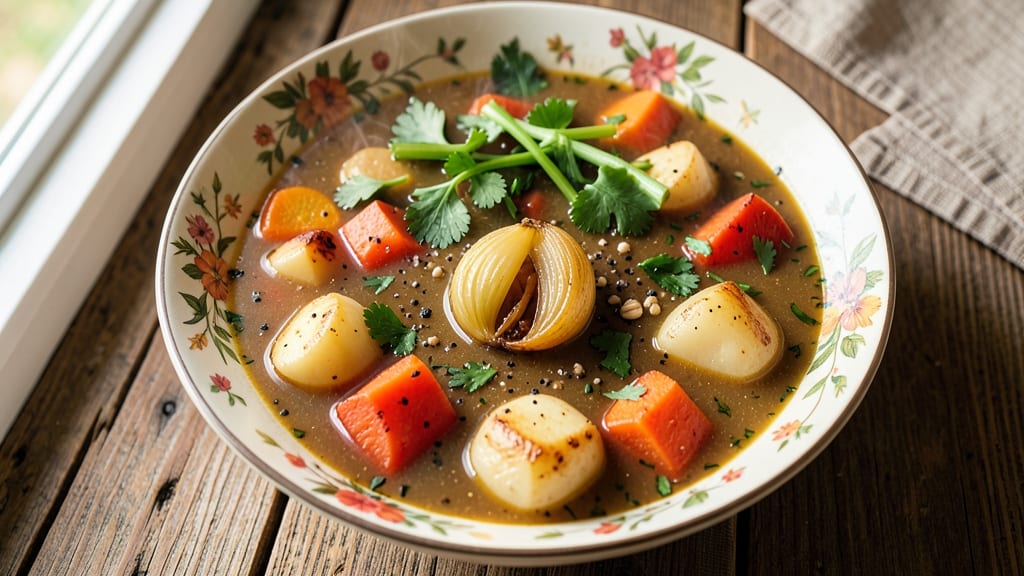
This American Bounty Vegetable Soup recipe delivers the cozy, comforting flavors of a classic harvest meal—creamy yet bright, hearty yet light, with every vegetable singing in harmony. The secret lies in roasting the vegetables first, which deepens their natural sweetness and builds a rich, caramelized foundation for the broth.
I developed this recipe after years of perfecting my grandmother’s method, ensuring it’s both nostalgic and modern enough to please today’s palates.
The beauty of this soup is in its versatility—it’s vegetarian yet satisfying, packed with seasonal vegetables like carrots, celery, and potatoes, all balanced by aromatic herbs and a touch of creaminess.
The roasting step transforms ordinary vegetables into something extraordinary, while the slow simmer infuses the broth with layers of flavor. It’s the kind of dish that feels like a hug in a bowl, perfect for chilly evenings or family gatherings.
What makes this recipe stand out is the creamy texture without heavy cream—just a blend of roasted vegetables and a splash of milk or broth to achieve that velvety finish.
The result is a soup that’s rich, comforting, and full of texture, with each bite offering a mix of tender vegetables and a subtle crunch from roasted edges. It’s the kind of meal that makes you want to linger at the table, savoring every spoonful.
Whether you’re serving it as a main dish or a side, this soup is designed to impress with minimal effort. The roasted vegetables can be prepped ahead, and the soup itself comes together in one pot, making it ideal for busy weeknights or meal prep.
Garnish with fresh herbs or a sprinkle of cheese for an extra touch of elegance. Let’s get cooking!
Ingredients for american bounty vegetable soup
Roasted vegetables, aromatic herbs, and a touch of creaminess—this soup brings autumn flavors to life.
| Ingredient | Amount | Notes |
|---|---|---|
| Yellow Onion 🧅 | 1 ½ whole | Chopped into 1/2-inch pieces |
| Carrots 🥕 | 1 ½ lb | Medium size, peeled and cut |
| Celery Stalks 🧄 | 4 whole | Trimmed and cut into 1-inch pieces |
| Russet Potatoes 🥔 | 2 lb | Peeled and cut into 1-inch cubes |
| Sweet Potatoes 🍠 | 1 ½ lb | Peeled and cut into 1-inch cubes |
| Garlic Cloves 🧄 | 6 cloves | Minced for depth of flavor |
| Extra-Virgin Olive Oil 🫒 | ¼ cup | For roasting vegetables |
| Vegetable Broth 💧 | 6 cups | Low-sodium preferred |
| Whole Milk 🥛 | 1 cup | For creamy texture |
| Fresh Thyme 🌿 | 2 tbsp | Chopped, stems removed |
| Fresh Rosemary 🌿 | 1 tbsp | Chopped, for aromatic depth |
| Sea Salt 🧂 | 1 ½ tsp | Diamond Crystal preferred |
| Black Pepper 🌶️ | ½ tsp | Freshly ground for best flavor |
| Fresh Parsley 🌿 | ¼ cup | Chopped, for garnish |
| Shredded Parmesan Cheese 🧀 | ¼ cup | Freshly grated for garnish |
The vegetables are the heart of this soup, so choose firm, fresh produce—carrots should snap when bent, potatoes should feel heavy for their size, and sweet potatoes should have smooth skin. Trader Joe's often has great organic options, but your local grocery store's produce section works too. For the potatoes, Russets hold up best to roasting—they won't turn mushy like waxy potatoes. If you can't find fresh thyme or rosemary, dried works at one-third the amount, but fresh gives that bright, garden-fresh aroma that makes this soup special. The key is to roast everything until caramelized—this builds the rich foundation for the broth.
No fresh herbs? Dried thyme and rosemary are solid substitutes, just use less. Running low on milk? Coconut milk or cashew cream adds richness without dairy. The vegetable broth can be homemade (simmer veggie scraps with garlic and onion) or store-bought—just check for low sodium. For extra crunch, add roasted chickpeas or croutons before serving. The soup tastes even better the next day as flavors meld, so double the batch if you can—it reheats beautifully. If you're short on time, skip the roasting and sauté the vegetables first, though they won't have that same caramelized depth.
Store the roasted vegetables in an airtight container in the fridge for up to 3 days before adding to the broth. The finished soup keeps for 4-5 days refrigerated or freezes for 3 months—portion into containers for easy lunches. For a make-ahead shortcut, roast all vegetables the night before and store them in the fridge. The soup itself reheats best on low heat or in the microwave, stirring occasionally to prevent scorching. Garnish with fresh parsley and Parmesan just before serving—that final touch makes all the difference
Why You'll Love This Recipe
- No Chopping Chaos: I swear by this recipe because you can literally dump those ingredients—onion, carrots, celery, potatoes—right into the pot with minimal prep. Even my 10-year-old can handle it. (Yes, I’ve tested this.)
- Sweet & Earthy Magic: That sweet potato and russet combo? It’s the secret weapon—creamy texture with just enough bite, and the carrots add this caramelized sweetness when simmered. Honestly, it tastes like a hug in a bowl.
- Leftovers That Don’t Suck: This soup only gets better the next day. I make a double batch on Sundays, and by Wednesday, it’s still hearty enough to feed the whole family. No sad, watery seconds here.
- Pantry Staple Power: Between us, this recipe uses ingredients you already have—no fancy shopping list. Onion, carrots, celery? Classic. Potatoes? Always. It’s the kind of meal that saves money and time. (My wallet thanks me.)
Step-by-step instructions for american bounty vegetable soup
Transform fresh produce into a velvety, hearty soup with layers of flavor and satisfying texture.
🍳 Step 1: Roast Vegetables for Deep Flavor
Preheat your oven to 400°F. In a large bowl, toss together the 1.5 whole chopped yellow onion, 1.5 lb peeled and cut carrots, 4 whole trimmed celery stalks, 2 lb peeled russet potato cubes, and 1.5 lb peeled sweet potato cubes with 0.25 cup extra-virgin olive oil, 1.5 tsp sea salt, and 0.5 tsp black pepper until evenly coated.
Spread the vegetables in a single layer on two large baking sheets. Roast for 25-30 minutes, stirring once halfway through, until the edges are deep golden brown and the potatoes begin to soften. This roasting step develops intense sweetness and caramelized flavors that form the soup's foundation.
🍳 Step 2: Sauté Aromatics and Build the Base
While the vegetables roast, heat a large Dutch oven over medium heat. Add the 6 cloves minced garlic, 2 tbsp chopped fresh thyme, and 1 tbsp chopped fresh rosemary and sauté for 1-2 minutes until fragrant—you should smell the garlic softening and the herbs releasing their piney aroma.
Carefully transfer the roasted vegetables to the Dutch oven. Pour in 6 cups vegetable broth and bring to a gentle boil. Reduce heat to medium-low and simmer uncovered for 15 minutes, stirring occasionally, until the vegetables are fork-tender but still hold their shape. This simmering time ensures the flavors meld without turning the soup mushy.
🥘 Step 3: Blend for Creamy Texture
Use an immersion blender to purée the soup directly in the pot until completely smooth. For a smoother texture, strain through a fine-mesh sieve if desired. Return the soup to the stove and stir in 1 cup whole milk to create that signature creamy harmony. Keep the soup warm over low heat—never let it boil after adding the milk to prevent curdling.
Taste and adjust seasoning with additional sea salt or black pepper as needed. The milk should integrate smoothly, creating a velvety consistency while maintaining the vegetables' natural sweetness. If the soup appears too thick, whisk in 2-3 tablespoons of broth to reach your preferred serving consistency.
🍽️ Step 4: Finish and Serve with Garnishes
Ladle the warm soup into bowls and immediately garnish each serving with 2 tablespoons chopped fresh parsley and 1 tablespoon shredded parmesan cheese. The parsley adds a bright finish that cuts through the richness, while the parmesan contributes a salty, umami depth that elevates every spoonful.
Serve immediately with crusty bread on the side. The contrast between the warm, creamy soup and the crunch of fresh bread creates the perfect balance of textures that makes this dish so satisfying. For extra heartiness, you can also sprinkle additional parmesan cheese on top right before serving.
Pro Tips For Making American Bounty Vegetable Soup
- CHOP UNIFORMLY: The carrots and celery won’t cook evenly if you’re lazy with the knife—aim for ¼-inch slices and match the size of your potato chunks. I used to eyeball it and ended up with mushy carrots and undercooked potato centers. A sharp knife and a few extra minutes at the start save you 20 minutes of stirring later.
- SWEAT THE AROMATICS: Don’t rush the onion, celery, and carrot cook—let them soften for 8-10 minutes over medium heat until the onion’s edges turn translucent and the celery’s edges just start to brown. Skipping this step means your soup will taste raw and one-dimensional. (Yes, even if you’re impatient like me.)
- POTATO FIRST: Add the russet potatoes to the pot 10 minutes before the sweet potatoes, not all at once. Sweet potatoes take longer to soften, and if you throw them in together, you’ll either have gluey potatoes or undercooked sweet potato chunks. Trust the process—your future self will thank you.
- SAVORY BASE MATTERS: Skip the bouillon cube shortcut—use a splash of chicken or vegetable stock (even just ½ cup) when you sauté the aromatics. It deepens the flavor without overpowering the veggies. I was skeptical until I tried it; now I can’t go back.
Troubleshooting your american bounty vegetable soup
Broth Too Thin
If your soup ends up watery, don’t panic—this is an easy fix! The most common cause is overcooking the vegetables, which releases excess moisture. To salvage it, simmer the soup uncovered over medium-low heat for an extra 10-15 minutes to reduce the liquid.
For a quicker fix, whisk in 1-2 tablespoons of cornstarch mixed with 2 tablespoons cold water until thickened. Alternatively, mash a few roasted potato cubes directly into the pot—their starch will naturally bind the broth. 💧
Vegetables Too Mushy
Over-simmering turns vegetables into a mushy mess, but you can still rescue your soup. If the texture is too soft, blend half the soup until smooth, then stir it back in. This creates a creamy base that balances the remaining chunks.
For a chunkier texture, reduce simmering time to 10-12 minutes next time, and check for fork-tenderness (not complete softness) before blending. 🥔
Blending Issues
If your immersion blender struggles with thick, roasted vegetables, strain the soup through a fine-mesh sieve after blending for a silky texture. For stubborn lumps, pulse the blender in short bursts or use a regular blender in batches.
If you’re avoiding blending entirely, serve the soup as a vegetable stew with hearty chunks—it’s still delicious! Just add an extra ½ cup milk to compensate for the lack of creaminess. 🥄
Milk Curdling
Milk curdling is a classic soup disaster, but it’s preventable. Always stir the milk in off the heat or over low heat, and never let the soup boil after adding it.
If curdling happens, whisk in 1 tablespoon lemon juice or apple cider vinegar to neutralize the acidity, then simmer gently for 5 minutes to smooth it out. For a dairy-free fix, replace milk with ½ cup coconut milk or cashew cream—both blend seamlessly. 🥛
Herb Flavor Fading
Fresh herbs lose their brightness when simmered too long. To preserve their flavor, add thyme and rosemary only 5 minutes before serving, or steep them in a cheesecloth bag during simmering.
For dried herbs, reduce to ½ teaspoon and add them early. A final garnish of chopped parsley adds freshness without overpowering the broth. 🌿
Garnish Not Sticking
If your parsley or parmesan slides off the soup, sprinkle it just before serving when the soup is piping hot. For extra grip, lightly toast the parmesan in a dry pan for 1-2 minutes until fragrant and slightly crisp.
A drizzle of olive oil over the garnish also helps it adhere. Pro tip: Use a fine-mesh sieve to dust the cheese evenly for a restaurant-worthy finish. 🧀
Nutrition facts
Frequently asked questions
Can I make this soup without roasting the vegetables?
The roasting step is key for developing deep, caramelized flavors, but you can sauté them instead. Sauté the chopped vegetables in olive oil over medium-high heat for 8-10 minutes until softened and slightly browned. This will still create flavor, though not as intense as roasting. For best results, roast at least the potatoes and sweet potatoes—they benefit most from caramelization.
How can I make this soup dairy-free?
Replace the 1 cup whole milk with ½ cup coconut milk or cashew cream for a rich, creamy texture without dairy. For extra thickness, blend in ¼ cup silken tofu or add 1 tablespoon nutritional yeast for a cheesy flavor. The soup will still be velvety—just taste and adjust seasoning after adding the dairy-free substitute.
Can I use frozen vegetables instead of fresh?
Fresh vegetables are ideal for the roasting step, but you can use frozen in a pinch. Thaw them first, then pat dry thoroughly to prevent excess moisture in the soup. For best texture, avoid frozen sweet potatoes—they tend to get mushy. If using frozen, reduce simmering time to 10 minutes and check for doneness earlier.
What’s the best way to reheat leftovers?
Reheat gently on the stovetop over low heat, stirring occasionally, until warmed through. Avoid microwaving if possible—it can make the soup watery. For even better results, transfer to a saucepan with 2 tablespoons broth and simmer for 5-7 minutes. If the soup thickens too much, whisk in a splash of milk or broth to restore creaminess.
Can I add meat to this vegetarian soup?
For a heartier version, brown ½ lb ground turkey or ½ lb diced ham before adding the roasted vegetables. Sauté until fully cooked, then proceed with the recipe as written. The meat will absorb the vegetable flavors beautifully, adding protein while keeping the dish comforting. Just reduce the broth by ½ cup to account for the meat's moisture.