
Soups & Stews
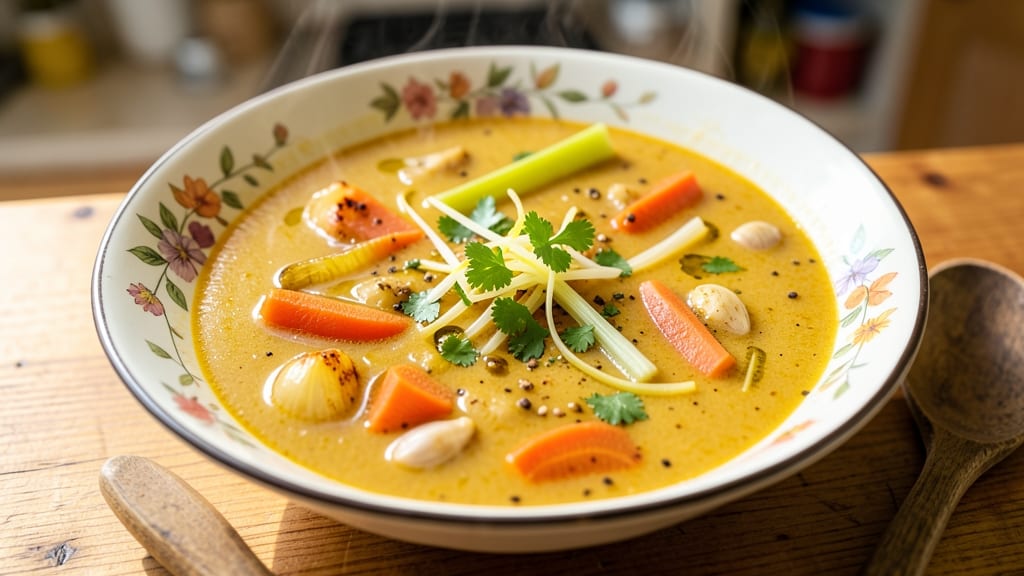
This anti-inflammatory vegetable soup transforms simple ingredients into a gut-healing elixir packed with turmeric, ginger, and leafy greens. The golden-hued broth simmers with anti-inflammatory spices that calm digestion and reduce joint discomfort—perfect for anyone seeking plant-powered nourishment.
I developed this recipe after years of testing immune-supportive meals, and the results speak for themselves: a velvety, flavorful soup that tastes as good as it makes you feel.
The secret lies in the vegetable-based broth, infused with fresh turmeric, ginger, garlic, and black pepper (the latter enhances curcumin absorption). Cruciferous vegetables like kale and broccoli add fiber and antioxidants, while tomatoes provide lycopene for added protection.
This isn’t just soup—it’s a medicinal meal designed to soothe inflammation from the inside out, all while delivering restaurant-quality depth in every spoonful.
What sets this apart is the blended texture—some chunks for satisfaction, some smoothness for easy digestion—paired with a garnish of fresh herbs that add brightness. The broth reduces to a rich, aromatic base, while the spices mellow into a warm, earthy harmony.
Whether you’re healing an upset stomach, supporting joint health, or simply craving a nourishing bowl, this soup delivers comfort and science-backed benefits in one simple recipe.
Ready in 45 minutes, it’s ideal for meal prep or an impromptu dinner. The flavors deepen overnight, making it even more potent the next day. Serve with crusty whole-grain bread to soak up every last drop of this anti-inflammatory powerhouse. Let’s get cooking—your body will thank you.
Ingredients for anti inflammatory vegetable soup
Golden-hued broth meets gut-soothing power in this anti-inflammatory vegetable soup.
| Ingredient | Amount | Notes |
|---|---|---|
| Yellow Onion 🧅 | 1 whole | Diced for aromatic base |
| Carrots 🥕 | 3 medium | Peeled and chopped into rounds |
| Celery Stalks 🌿 | 3 whole | Chopped for classic mirepoix |
| Fresh Turmeric Root 🧄 | 1 ½ tbsp | Freshly grated for maximum potency |
| Fresh Ginger Root 🌿 | 1 ½ tbsp | Freshly grated for zing |
| Garlic Cloves 🧄 | 4 cloves | Minced for deep flavor |
| Canned Tomatoes 🍅 | 1 can (14.5 oz) | Crushed or diced tomatoes |
| Coconut Milk 🥥 | 1 can (13.5 oz) | Full-fat for creaminess |
| Kale Leaves 🥬 | 4 cups | Chopped, stems removed |
| Broccoli Florets 🥦 | 2 cups | Fresh or frozen works |
| Vegetable Broth 💧 | 4 cups | Low-sodium preferred |
| Black Peppercorns 🌶️ | ½ tsp | Freshly ground for curcumin boost |
| Fresh Cilantro 🌿 | ¼ cup | Chopped for garnish |
| Lemon Juice 🍋 | 1 tbsp | Freshly squeezed for brightness |
| Olive Oil 🫒 | 2 tbsp | Extra-virgin for richness |
The turmeric and ginger are non-negotiable here—fresh roots from the produce section pack the most punch. Trader Joe's and Whole Foods carry organic options that work beautifully. If you can't find fresh turmeric, high-quality ground turmeric (like Frontier Co-op) will do in a pinch, but fresh is ideal. Look for ginger with smooth, taut skin—no wrinkles or soft spots. The kale and broccoli should be vibrant, not wilted, and the canned tomatoes? San Marzano if you're splurging, but any good-quality crushed tomatoes work. The coconut milk adds creaminess without dairy—full-fat is key for that velvety texture.
No fresh turmeric? Ground turmeric at double the amount gets you close, but the flavor won't be as complex. Swap the coconut milk for cashew cream (blend soaked cashews with water) if you're avoiding coconut. Short on kale? Spinach or Swiss chard works just as well—just reduce the cooking time. The vegetable broth can be homemade (simmer veggie scraps with herbs) or store-bought, but skip the high-sodium versions. For extra depth, add a pinch of smoked paprika or a dash of asafoetida (hing)—both are anti-inflammatory powerhouses. The black pepper isn't just for flavor; it boosts turmeric absorption by 2000%, so don't skip it.
This soup tastes even better the next day as the flavors meld—store in an airtight container for up to 5 days. For meal prep, double the batch and freeze portions in glass containers (they reheat better than plastic). To reheat, warm gently on the stove with a splash of broth—never microwave, or the texture gets gummy. The fresh cilantro and lemon juice should be added just before serving to keep them bright. If you're using frozen broccoli, no need to thaw—just toss it in raw. The soup thickens as it cools, so add a little extra broth if it's too thick when reheated.
Why You'll Love This Recipe
- Pantry-Friendly Base: I swear by this soup because it uses ingredients I always have—onions, carrots, celery—plus a few fresh roots that transform it. No fancy prep, just chop and simmer. The turmeric and ginger do all the heavy lifting for flavor and benefits.
- Golden-Ginger Warmth: That first spoonful? Pure satisfaction. The fresh ginger and turmeric create a deep, earthy warmth that lingers, while the caramelized onions add sweetness without extra sugar. It’s the kind of taste that makes you slow down and savor every bite.
- Meal Prep MVP: Between us, this soup is my secret weapon for busy weeks. Make a big batch on Sunday, and you’ve got lunch or dinner covered for days—even better the next day, if you can believe it. Freeze portions too; it’s my go-to when I’m too tired to cook.
- Budget-Boosting Magic: Celery, carrots, onions—these are the cheap staples that stretch into something extraordinary. Fresh ginger and turmeric might seem like a splurge, but a little goes a long way, and the health payoff makes it worth it. Honestly, it’s the most cost-effective way to eat well.
Step-by-step instructions for gut-healing turmeric and ginger vegetable soup
This vibrant soup brings together nature's most potent anti-inflammatory ingredients for a dish that's as nourishing as it is delicious.
Build the Aromatic Base
Heat the 2 tablespoons olive oil in a large pot over medium heat. Add the diced yellow onion, chopped carrots, and chopped celery stalks all at once. Cook for 5-6 minutes, stirring occasionally, until the vegetables soften slightly and the onion becomes translucent. This foundational mirepoix forms the flavor backbone of your soup.
Here's the thing—don't rush this step. You'll know it's ready when the vegetables release their natural juices and the mixture smells sweetly aromatic. This is where the magic begins, as these vegetables will infuse the entire soup with their earthy goodness. The longer they cook at this stage, the deeper their flavors will develop.
Incorporate the Anti-Inflammatory Powerhouses
Add the freshly grated turmeric root and freshly grated ginger root to the pot. Stir well to combine with the vegetables, then cook for 1-2 minutes until fragrant. The turmeric will release its signature golden hue, and you'll notice the aroma becoming more complex and slightly citrusy.
Next, add the minced garlic cloves and cook for another 30 seconds until the raw garlic smell dissipates and you're left with a sweet, nutty aroma. This is crucial because raw garlic can be harsh, but when properly cooked, it transforms into something truly delicious. The combination of turmeric, ginger, and garlic creates a powerful anti-inflammatory trio that will elevate your soup to therapeutic levels.
Develop the Flavor Foundation
Pour in the 1 can (14.5 oz) canned tomatoes and stir to combine with the vegetable mixture. Let it simmer for 5 minutes to allow the tomatoes to break down and release their juices. This step is where the sauce begins to form, creating a rich base for your soup.
Add the 4 cups vegetable broth and bring the mixture to a gentle boil. Once boiling, reduce the heat to medium-low and let it simmer uncovered for 15 minutes. This simmering time allows all the flavors to meld together beautifully. You'll notice the soup becoming thicker and more concentrated as the liquid reduces slightly. The aroma should be deeply comforting and complex, with layers of sweet vegetables, spicy ginger, and earthy turmeric.
Add the Leafy Greens and Cruciferous Vegetables
Stir in the chopped kale leaves and broccoli florets, making sure they're evenly distributed throughout the soup. Return to a gentle simmer and cook for 8-10 minutes until the kale is tender and the broccoli is bright green and cooked through. The kale should wilt completely and lose its tough texture, while the broccoli should remain crisp-tender with a slight bite.
Here's a pro tip: If you're using frozen broccoli, there's no need to thaw it first. Just add it directly to the pot—it will cook through beautifully along with the other vegetables. The key is to watch for doneness carefully. You want the greens to be tender but not mushy, as this will affect the overall texture of your soup.
Finish with Creamy Texture and Bright Flavors
Reduce the heat to low and stir in the 1 can (13.5 oz) coconut milk. The soup will immediately take on a velvety texture. Let it simmer gently for 3-4 minutes to allow the coconut milk to blend completely with the other ingredients. This step is where the soup transforms from hearty to luxurious, adding a subtle richness that balances the earthy flavors.
Finally, stir in the freshly ground black peppercorns and lemon juice. The pepper enhances the turmeric's anti-inflammatory properties, while the lemon juice adds a bright, refreshing note that cuts through the richness. Taste and adjust the seasoning if needed—you might want to add a pinch more salt if your broth wasn't low-sodium. The soup should be perfectly balanced, with each ingredient contributing its unique flavor.
Serve Warm and Enjoy
Ladle the soup into bowls and garnish each serving with chopped fresh cilantro. The cilantro adds a fresh, slightly citrusy note that complements all the other flavors beautifully. Serve immediately while the soup is hot, as the textures and temperatures are at their peak.
This soup is designed to be enjoyed as a complete meal. The combination of anti-inflammatory ingredients—turmeric, ginger, garlic, and leafy greens—works synergistically to support gut health and reduce inflammation. Each spoonful delivers not just delicious flavor, but also a powerful dose of healing properties that will nourish your body from within.
Pro Tips For Making Anti Inflammatory Vegetable Soup
- SWEEAT NOT ROAST ONIONS: I learned this the hard way—low and slow wins here. Sauté your yellow onion in olive oil over medium-low heat for 10-12 minutes until translucent but not browned. Roasting turns them bitter, and you want that sweet, mellow base for the soup’s depth.
- GRATE GINGER FINE: Skip the mincer if you’re in a hurry, but resist the urge to chop ginger roughly. A microplane or fine grater releases its oils and heat without fibrous chunks—just 1 teaspoon of fresh ginger, no more, or it’ll overpower the turmeric.
- DON’T BOIL THE TURMERIC: Add your fresh turmeric root after the soup is simmering, not at the start. Boiling it first leaches its anti-inflammatory compounds into the water, and you’ll lose that golden, earthy punch. Toss it in whole, then mash it lightly at the end.
- SAVE TIME WITH COLD WATER: Dump your chopped carrots and celery straight into ice water for 5 minutes before cooking. It stops them from bleeding starch, keeps the soup clear, and cuts down on the 20-minute simmer time—just drain well before adding to the pot.
Creative variations of this dish
Golden Turmeric Twist
Swap the standard turmeric for turmeric-infused coconut milk—simmer 1 tbsp fresh turmeric with 1 can coconut milk for 10 minutes before adding to your soup. This creates a deeper golden hue and richer flavor. I love using Native Forest organic coconut milk for its creamy texture. 🌟
Spicy Thai Fusion
Add 1 tbsp red curry paste (like Maesri) when sautéing the aromatics, plus 1 stalk lemongrass (bruised and sliced) and 1 tbsp fish sauce (use Red Boat for quality).
Finish with Thai basil instead of cilantro. The lemongrass infuses the broth with citrusy depth while the curry paste brings heat that complements the ginger beautifully.
Creamy Cauliflower Boost
Replace half the broccoli with 2 cups chopped cauliflower florets for a lower-carb option. Add ½ cup cashew cream (blend ¼ cup soaked cashews with ¼ cup water) instead of coconut milk.
The cauliflower adds a subtle sweetness while keeping the soup light yet satisfying. Perfect for those watching their carb intake but still wanting anti-inflammatory benefits.
Mediterranean Herb Version
Transform this into a Mediterranean-inspired soup by adding 1 tsp dried oregano, 1 tsp dried thyme, and ½ cup diced zucchini with the kale. Garnish with fresh parsley and a drizzle of extra-virgin olive oil instead of lemon juice.
The herbs add earthy complexity that pairs wonderfully with the turmeric and ginger.
Smoky Chipotle Kick
For a smoky twist, add 1 tsp adobo sauce (from canned chipotle peppers) when incorporating the tomatoes. Include ½ cup diced sweet potatoes for natural sweetness that balances the heat.
Top with avocado slices and a sprinkle of cotija cheese for a Mexican-inspired fusion that still keeps the anti-inflammatory focus through the turmeric and ginger base.
Protein-Packed Lentil
Boost this into a complete meal by adding 1 cup cooked lentils (or ½ cup dried lentils simmered directly in the soup for 20-25 minutes). The lentils add fiber and plant-based protein while maintaining the soup's gut-healing properties.
I recommend French green lentils for their firm texture that holds up well during cooking. 💪
Nutrition facts
Frequently asked questions
Can I make this soup without coconut milk?
For a dairy-free alternative, use ½ cup cashew cream (blend soaked cashews with water) or ¼ cup tahini thinned with broth. If you prefer a lighter texture, omit the creaminess entirely—the broth and blended vegetables will still provide anti-inflammatory benefits. The coconut milk adds richness, but the soup remains nourishing without it.
How do I know if my turmeric is potent enough?
Look for fresh turmeric root with a bright orange color and firm texture—no wrinkles or soft spots. When grated, it should release a vibrant yellow juice. If using ground turmeric, double the amount (use 1 tbsp instead of 1.5 tbsp fresh) and add ¼ tsp black pepper to maximize curcumin absorption. Fresh is always better, but quality ground turmeric works in a pinch.
Can I prep this soup ahead of time?
Yes! This soup tastes even better the next day as flavors deepen. Store in an airtight container in the fridge for up to 5 days. For freezing, portion into glass containers (plastic can absorb odors) and freeze for up to 3 months. Reheat gently on the stove with a splash of broth—never microwave, or the texture becomes gummy.
What if I don't have fresh ginger?
Use 1.5 tbsp ground ginger instead, but reduce the amount slightly to 1 tbsp since dried ginger is more concentrated. For extra potency, add ½ tsp ginger powder + ½ tsp fresh lemon juice to mimic the bright, zesty notes of fresh ginger. The flavor won’t be identical, but it’ll still deliver anti-inflammatory benefits.
Is this soup safe for those with nightshades sensitivities?
Yes! This recipe avoids nightshades (like tomatoes and peppers) if you swap the canned tomatoes for 4 cups extra vegetable broth and add ½ cup diced zucchini or 1 cup chopped mushrooms instead. The anti-inflammatory focus remains on turmeric, ginger, and leafy greens. Always check your broth label—some brands use tomato-based products.