
Soups & Stews
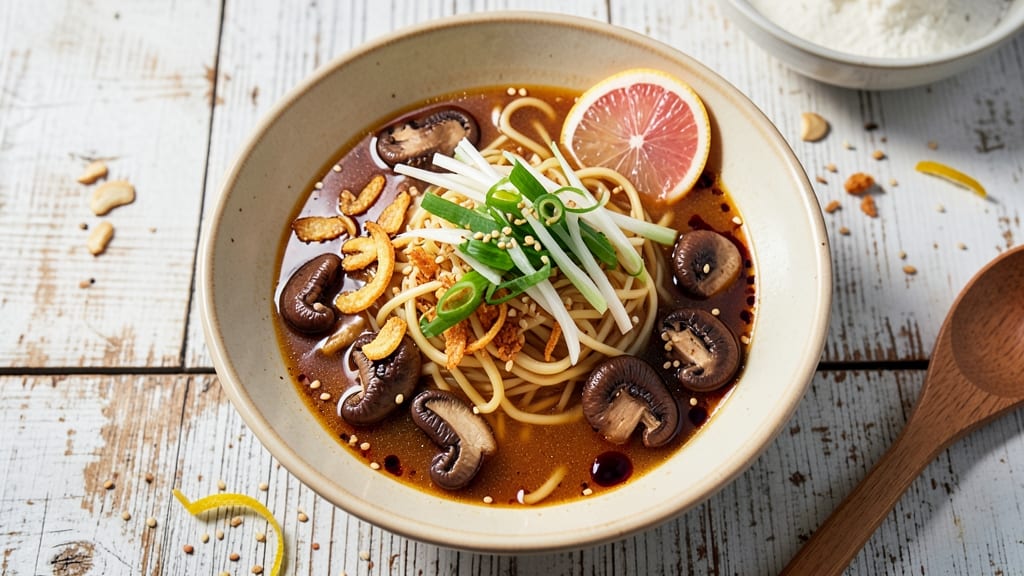
This Asian ramen noodle soup recipe delivers the perfect balance of rich umami broth, chewy noodles, and delicate egg ribbons—all in a single bowl.
The secret lies in a slow-simmered broth infused with aromatic spices, pork bones, and mushrooms, creating a depth of flavor that transforms simple ingredients into something extraordinary.
Whether you prefer a traditional pork-based broth or a lighter vegetable version, this recipe adapts effortlessly while maintaining that signature silky texture and complex taste.
The foundation of great ramen starts with the broth, where pork bones and mushrooms release their collagen and umami essence over hours of gentle simmering. Meanwhile, fresh ramen noodles cook just until they're tender yet retain their satisfying chew, while marinated soft-boiled eggs add a luxurious, silky contrast.
Every element comes together to create a bowl that's both comforting and refined—ideal for a cozy weeknight dinner or an impressive meal for guests.
What sets this recipe apart is its versatility: swap in miso paste for a tangy twist, use chicken or vegetable broth for lighter options, or add fresh herbs and chili oil for extra brightness.
The result is always a harmonious blend of textures and flavors, where each spoonful delivers layers of savory, creamy, and slightly spicy notes. The broth's richness pairs beautifully with the noodles' chewiness and the eggs' delicate yolk, making every bite feel like a culinary masterpiece.
Ready in about an hour, this ramen recipe proves that homemade can rival your favorite restaurant version—without the wait. The key is patience in building the broth and precision in cooking the noodles and eggs.
Once you master this technique, you'll never settle for instant ramen again. Let's get started on creating your perfect bowl.
Ingredients for asian ramen noodle soup
Rich broth, chewy noodles, and silky eggs—these core ingredients create restaurant-quality ramen at home.
| Ingredient | Amount | Notes |
|---|---|---|
| Pork Bones 🍖 | 2 lb | Marrow bones for richness |
| Dried Shiitake Mushrooms 🍄 | 8 whole | Rehydrated for umami depth |
| Fresh Ginger Root 🧅 | 2 tbsp | Grated, aromatic base |
| Garlic Cloves 🧄 | 6 cloves | Smashed for deep flavor |
| Green Onions 🧅 | 3 whole | White and green parts |
| Ramen Noodles 🍜 | 2 packages | Fresh or dried, 8oz each |
| Large Eggs 🥚 | 4 whole | Marinated for silky texture |
| Sesame Oil 🫒 | 1 tbsp | Toasted for aroma |
| Soy Sauce 🍶 | ½ cup | Light or dark preferred |
| Miso Paste 🧈 | 2 tbsp | White or red miso |
| Dried Chili Flakes 🌶️ | 1 tbsp | Adjust to taste |
| Vegetable Oil 🫒 | 2 tbsp | For egg cooking |
| Salt 🧂 | 1 tsp | Kosher or sea salt |
| Black Pepper 🌶️ | ½ tsp | Freshly ground |
| Sesame Seeds 🌿 | 1 tbsp | Toasted for garnish |
The pork bones are non-negotiable for that signature ramen depth. Look for marrow bones at specialty butchers or Asian markets—they release the most flavor. Costco often carries them pre-packaged, but if you're buying whole, ask for the knuckle or femur ends. Fresh shiitake mushrooms add umami, but dried work just as well—simply rehydrate in hot water for 20 minutes. The ginger and garlic? Freshly grated and smashed make all the difference. I always double-check my ginger has no mold spots before grating. For the noodles, fresh ramen cooks in minutes, while dried takes longer but stores better.
No pork bones? Chicken bones or vegetable broth work in a pinch, though flavor will differ. Substitute dried shiitake with cremini mushrooms, but soak them first. Short on miso? Soy sauce plus a dash of sugar mimics the tang. The eggs deserve special treatment—marinate them in soy sauce and sesame oil for 30 minutes before cooking. For extra heat, swap chili flakes for gochujang or sriracha. The sesame oil should smell nutty and toasted—if it's flat, grab a new bottle. And yes, you can use store-bought broth if you're short on time, but homemade is worth the effort.
Broth keeps for 5 days refrigerated or 3 months frozen—portion into ice cube trays for easy reheating. Cook noodles al dente and finish in the broth to soak up flavor. Eggs marinate best overnight, but 30 minutes works. Store marinated eggs in the fridge, submerged in their marinade. The sesame seeds toast in 2 minutes—keep a close eye to avoid burning. This dish tastes even better the next day as flavors meld. For meal prep, assemble components separately and combine when ready to eat.
Why You'll Love This Recipe
- Porky Perfection: The pork bones simmer into a velvety broth that’s rich but never greasy—no fancy techniques, just time and patience. Honestly, the first sip makes you forget it’s just a weeknight dinner.
- Mushroom Magic: Those dried shiitake mushrooms? They soak up flavor like sponges, then melt into the broth for an umami punch that’s ridiculously satisfying. No fancy powder needed—just hydration and magic.
- One-Pot Wonder: Throw everything in one pot—bones, mushrooms, ginger, garlic—and walk away. Twenty minutes later, you’ve got a steaming bowl with zero cleanup. (Yes, even on a Tuesday night.)
- Budget Comfort: Pork bones and dried mushrooms stretch this into a full meal for days—freeze leftovers or reheat for lunch. Between us, this is how I feed my family for under $10. No guilt, all flavor.
Step-by-step instructions for Asian ramen noodle soup
Here's the method for crafting a rich, umami-packed ramen broth with silky egg ribbons.
🔥 Step 1: Prepare the Broth Base
Start by placing the 2 lb pork bones in a large stockpot and covering them with cold water by about 2 inches. Bring to a boil over high heat, then immediately reduce to a gentle simmer for 30 minutes to remove impurities. Skim off any foam that rises to the surface with a ladle.
While the bones simmer, prepare the 8 whole dried shiitake mushrooms by removing stems and tearing caps into quarters. Add them to the pot along with the 2 tbsp grated fresh ginger root and 6 smashed garlic cloves. Return to a simmer for 1 hour, allowing the flavors to meld. The broth should develop a deep, aromatic aroma—this is your foundation for umami richness.
🍳 Step 2: Build Depth with Miso and Soy
After 1 hour, strain the broth through a fine-mesh sieve into a clean pot, discarding the solids. Return the broth to the stove and stir in the 2 tbsp miso paste and 0.5 cup soy sauce. Simmer gently for 20 minutes to allow the flavors to integrate fully. The broth should now have a rich, savory depth with a subtle sweetness from the miso.
Season with 1 tsp salt and 0.5 tsp black pepper, then add the 1 tbsp dried chili flakes for a subtle heat. Taste and adjust the seasoning—you want a balance of saltiness, umami, and a hint of spice. Keep the broth warm over low heat while you prepare the remaining components.
🥘 Step 3: Prepare the Silky Egg Ribbons
In a small bowl, whisk together the 4 whole large eggs with 1 tbsp sesame oil. Add 1 tbsp soy sauce and 1 tsp black pepper, mixing until fully combined. Heat 2 tbsp vegetable oil in a small non-stick skillet over medium-low heat until shimmering but not smoking.
Pour the egg mixture into the skillet, tilting to spread evenly. Cook for 2-3 minutes until the bottom is just set but still slightly runny on top. Use a spatula to gently fold the egg into ribbons, then transfer to a plate. The eggs should be silky and slightly custardy—this is the signature texture of proper ramen egg.
🍳 Step 4: Cook the Noodles and Assemble
Bring a separate pot of water to a rolling boil and cook the 2 packages ramen noodles according to package instructions until al dente. Drain and rinse briefly under cold water to stop the cooking process. Divide the noodles among 4 bowls, adding 1 silky egg ribbon to each.
Ladle the hot broth over the noodles and eggs, filling each bowl to about ¾ full. Garnish with 1 tbsp toasted sesame seeds and 1 whole green onion, sliced on the bias. The contrast of the silky egg against the rich broth and chewy noodles creates the perfect balance of textures.
⏰ Step 5: Serve Immediately for Maximum Flavor
Serve the ramen immediately while the broth is steaming hot. The noodles should be tender but still hold their shape, the egg ribbons should be silky and slightly runny, and the broth should coat the back of a spoon with a velvety texture. Each bite should deliver layers of umami from the pork broth, depth from the miso, and a subtle heat from the chili flakes.
For an enhanced experience, offer extra green onions and sesame seeds on the side so diners can customize their bowls. The aroma alone will draw everyone back for seconds—this is a soup that delivers on both flavor and satisfaction.
Pro Tips For Making Asian Ramen Noodle Soup
- BLANCH PORK BONES FIRST: I learned this the hard way—skipping the 10-minute blanch in boiling water before slow cooking leaves your broth cloudy and underwhelming. The initial boil removes impurities and surface grime that’ll otherwise turn your broth murky, no matter how long you simmer later.
- SOAK SHIITAKES 30 MINUTES: Dried shiitakes are the unsung heroes of ramen flavor, but they won’t release their umami if you toss them in dry. Soak them in hot (not boiling) water for 30 minutes before adding to the pot—this plumps them up and extracts their earthy depth without overpowering the broth.
- CRUSH GINGER ROOT, DON’T SLICE: Thin slices of ginger just float and fade into the background. Smash the whole knob with the flat side of a knife first, then slice—this releases more oils and aromatics that’ll perfume the broth as it simmers, not just sit at the bottom looking pretty.
- STRAIN BROTH LATE, NOT EARLY: I used to strain the broth after 2 hours, thinking I’d save time. Big mistake—the last 30 minutes of simmering is when collagen turns to gelatin, giving ramen its signature silkiness. Let it cook uncovered until the bones are bare, then strain. The wait is worth it.
Essential equipment for great asian ramen noodle soup
Broth Pot Essentials
Your stockpot is the heart of ramen-making—aim for a large, heavy-bottomed pot (I love my All-Clad 8-quart) to handle the 2 lb pork bones and 8 cups water without scorching. A fine-mesh sieve (like OXO Good Grips) is non-negotiable for straining broth cleanly.
For extra umami, add a pressure cooker (I use Instant Pot) to cut simmering time to 45 minutes instead of hours. 🔥
Egg Cooking Tools
Silky egg ribbons require precision—use a non-stick skillet (I prefer Mauviel M'Cook) and a heat-resistant spatula for folding. A small mixing bowl (like Pyrex 1-cup) holds the egg mixture perfectly.
For marination, a glass jar keeps eggs submerged in soy sauce and sesame oil. Pro tip: Chill the jar for 15 minutes before cooking to prevent cracking. 🥚
Noodle Prep Gear
Fresh ramen noodles need quick boiling—a medium saucepan (like Cuisinart MultiClad) with a wooden spoon prevents sticking. For dried noodles, a colander with large holes ensures proper draining. To stop cooking, rinse noodles under cold water using a fine-mesh strainer (like OXO Collapsible). 🍜
Garnish Must-Haves
Toast sesame seeds in a small dry skillet (I use Le Creuset) for 2 minutes until golden. Slice green onions with a sharp chef's knife (I swear by Wüsthof) and store extra in a glass jar in the fridge.
For chili oil, a small saucepan gently heats neutral oil with dried chili flakes—keep heat low to avoid burning. 🌶️
Storage Solutions
Broth freezes beautifully in silicone ice cube trays (I use OXO Good Grips)—transfer cubes to a ziplock bag for easy reheating. Cooked noodles store in an airtight container for 3 days, while marinated eggs keep in their glass jar submerged in marinade.
For leftovers, reheat broth on low heat and noodles in a steamer basket to maintain texture. ❄️
Nutrition facts
Frequently asked questions
Can I make this ramen vegetarian or vegan?
Replace pork bones with mushroom stems, kombu seaweed, or soy sauce-braised tofu for umami depth. Use vegetable broth and swap miso for a vegan miso paste. For the egg, try tofu or chickpea flour "egg" ribbons marinated in soy sauce and sesame oil. The texture will differ slightly, but the flavor remains rich and satisfying.
How do I fix broth that tastes too salty?
If your broth is over-salted, reduce it by 25-30% on medium-high heat to concentrate flavors. For a milder taste, add 1 cup hot water per quart of broth and adjust seasoning with a pinch of sugar or a splash of rice vinegar to balance. Never add fresh water directly—it dilutes the broth's depth.
What's the best way to store leftover ramen?
Store components separately for best results: broth in an airtight container for up to 5 days, noodles in the fridge for 3 days, and marinated eggs submerged in their marinade. Reheat broth gently on low heat and noodles in a steamer basket to avoid sogginess. Assemble fresh when ready to eat for optimal texture.
Why did my egg ribbons turn out rubbery instead of silky?
Rubbery eggs usually mean overcooking or too-high heat. Keep the pan on medium-low and cook for only 2-3 minutes until just set. Use a non-stick skillet and avoid stirring—fold gently with a spatula to create ribbons. Also ensure your eggs are room temperature before cooking.
Can I use instant ramen noodles in this recipe?
While possible, instant noodles lack the chewy texture of fresh or dried ramen. For a better result, use fresh ramen noodles (found in Asian markets) or high-quality dried ramen. If using instant, soak them in hot broth for 1-2 minutes instead of boiling to prevent mushiness. The flavor will still be delicious, though the texture will differ.