
Soups & Stews
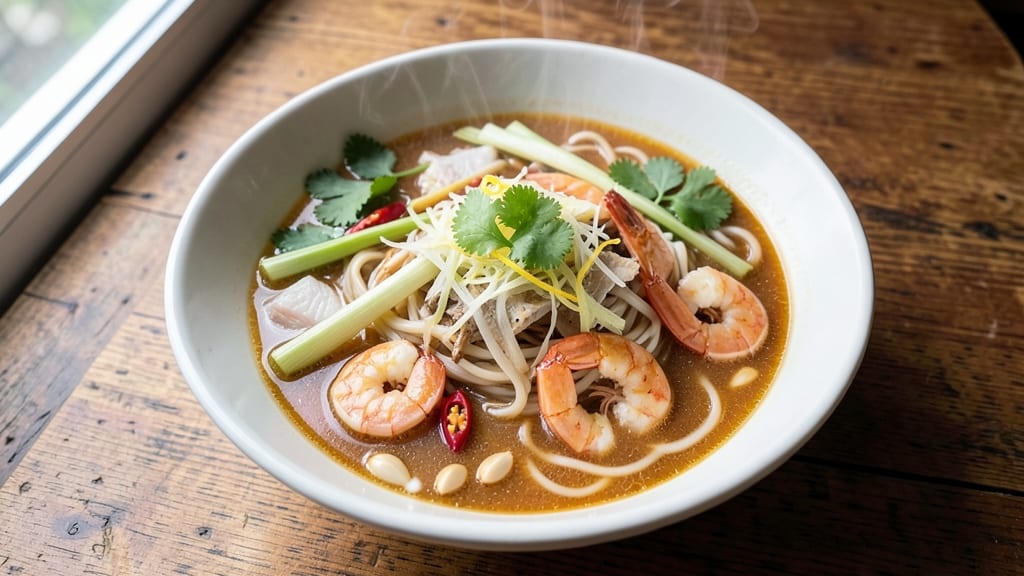
This Asian seafood noodle soup recipe delivers a symphony of fragrant lemongrass, spicy chili, and briny seafood in every steaming bowl—exactly what transforms a simple meal into a memorable experience.
The secret lies in a slow-simmered broth that balances sweet, sour, and umami notes, while tender shrimp, squid, and fish absorb the flavors effortlessly. I've perfected this recipe to be both restaurant-worthy and adaptable, whether you're serving a crowd or just craving comfort on a chilly evening.
The foundation is a rich, aromatic broth built with lemongrass, ginger, garlic, and chili, simmered until the flavors meld into something deeply satisfying. Unlike quick soups, this one rewards patience—each ingredient plays a role, from the miso paste that adds depth to the coconut milk that lends creaminess.
The proteins cook just until tender, ensuring they stay plump and flavorful, while rice noodles soak up the broth beautifully. Garnishes like fresh herbs, lime, and chili oil add brightness and a final touch of heat.
What makes this recipe special is its versatility—it works as a light lunch or hearty dinner, and you can adjust the spice level to suit your taste. The broth can be made ahead and reheated, making it perfect for meal prep.
By the time you're done, you'll have a bowl of soup that's fragrant, complex, and impossible to resist. The combination of textures—silky noodles, tender seafood, and crisp garnishes—creates a dining experience that feels both comforting and exciting.
Whether you're a home cook looking to impress or someone who simply loves seafood noodle soup, this recipe delivers restaurant-quality results with a few simple techniques. The key is balancing the flavors and letting the broth develop its depth over time.
Ready to create something extraordinary? Let's get started with the ingredients and instructions.
Ingredients for asian seafood noodle soup
Fragrant lemongrass, briny seafood, and silky noodles—just 17 ingredients for a bowl that feels like a hug.
| Ingredient | Amount | Notes |
|---|---|---|
| Lemongrass Stalks 🌿 | 3 whole | Bruised and cut into 2-inch pieces |
| Fresh Ginger 🧄 | 2 tbsp | Finely grated, aromatic |
| Garlic Cloves 🧄 | 6 cloves | Minced for depth of flavor |
| Red Chili Peppers 🌶️ | 2 whole | Thai or bird's eye, sliced |
| White Miso Paste 🧈 | 2 tbsp | For umami richness |
| Coconut Milk 🥥 | 1 cup | Full-fat for creaminess |
| Vegetable Broth 💧 | 4 cups | Low-sodium preferred |
| Rice Noodles 🍜 | 8 oz | Flat, medium-width |
| Shrimp 🦐 | 1 lb | Peeled, deveined, tails on |
| Squid 🦑 | ½ lb | Cleaned, bodies sliced |
| White Fish Fillets 🐟 | ½ lb | Cod or snapper preferred |
| Fish Sauce 🍶 | 1 tbsp | Red Boat preferred |
| Lime Juice 🍋 | 2 tbsp | Freshly squeezed |
| Fresh Cilantro 🌿 | ¼ cup | Chopped for garnish |
| Chili Oil 🌶️ | 1 tbsp | For final heat touch |
| Salt 🧂 | 1 ½ tsp | Adjust to taste |
| Sugar 🍯 | 1 tsp | Balances flavors |
Lemongrass is non-negotiable here—look for plump, pale stalks with no brown spots. Asian markets carry the best quality, but most grocery stores stock it too. Bruise the stalks with the side of your knife before cutting to release those amazing oils. Fresh ginger and garlic? Don't skimp—they're the flavor anchors. For chili, Thai bird's eye peppers pack the most heat, but dried red pepper flakes work if you're sensitive to spice. The miso paste should be white, not red—it's milder and sweeter, perfect for balancing the broth.
No shrimp? Scallops or mussels work beautifully—just adjust cooking time. Squid too pricey? Extra shrimp or fish fillets keep it delicious. Coconut milk can be swapped for light coconut milk or even cashew cream if you're watching calories. The fish sauce is essential—Red Boat is my go-to, but any good brand will do. For extra depth, toast the miso paste lightly in a dry pan before adding it to the broth. And if you can't find rice noodles, egg noodles or udon are solid stand-ins.
This broth tastes even better the next day—make a double batch and reheat gently. Store in airtight containers for up to 5 days or freeze for 3 months. The seafood cooks in minutes, so keep it cold until you're ready to add it. Garnishes like cilantro and chili oil should be added fresh—they're what makes it restaurant-worthy. For meal prep, cook the noodles separately and assemble bowls when ready to eat. Trust me, the first bite will be worth every minute.
Why You'll Love This Recipe
- Pantry-Friendly Base: I swear by this soup because it uses ingredients I already have—lemongrass, ginger, and miso—so no last-minute grocery runs. The miso paste alone adds that deep, savory backbone that makes it taste like a restaurant dish, even when I’m too tired to chop much.
- Umami Bomb: That white miso paste? It’s the secret weapon here. One spoonful transforms simple seafood into something rich and layered—like a warm hug in a bowl. The chili peppers add just enough heat to keep things interesting without overpowering.
- Lunchbox Hero: Between us, this soup is my go-to for meal prep. It reheats beautifully, and the flavors only get better the next day. Pack it in a thermos for work, or let your kids take it to school—it’s the kind of thing that disappears fast.
- Budget Booster: Seafood noodle soup doesn’t have to break the bank. Shrimp or scallops work just as well as pricier cuts, and the aromatics stretch the broth so every bite feels special. Honestly, it’s the kind of recipe that makes me feel like I’m splurging without actually spending much.
Step-by-step instructions for fragrant lemongrass seafood noodle soup
This aromatic broth comes together in layers—start with the fragrant base, then build to a rich, balanced soup.
Build the Lemongrass-Chili Broth Foundation
In a large pot, combine the 3 whole lemongrass stalks (bruised and cut into 2-inch pieces), 2 tablespoons finely grated fresh ginger, 6 minced garlic cloves, and 2 sliced whole red chili peppers. Let this aromatic bundle steep in 4 cups vegetable broth over medium-high heat for 10 minutes, stirring occasionally. You'll notice the broth turning a vibrant golden hue and filling your kitchen with that unmistakable lemongrass aroma.
After the initial simmer, add the 2 tablespoons white miso paste and stir until fully dissolved. The miso will deepen the umami profile, giving your soup that signature savory richness. Keep the broth at a gentle simmer—never a rolling boil—to prevent the lemongrass from becoming bitter. This foundational step is where all the magic begins, so don't rush it.
Infuse with Coconut Milk and Season
Reduce the heat to low and carefully pour in the 1 cup coconut milk, stirring gently to combine. The coconut milk should blend smoothly without curdling. Add the 1 teaspoon sugar and 1.5 teaspoons salt, stirring until dissolved. Taste the broth at this stage—it should be fragrant, slightly sweet, and deeply savory, with a hint of spicy warmth from the chilis.
If you find the broth needs more depth, add 1 tablespoon fish sauce now. This is your chance to balance flavors before adding the delicate seafood. Keep the broth at a gentle simmer for another 5 minutes to allow all the flavors to meld together. The coconut milk will create a velvety texture while maintaining the broth's aromatic complexity.
Prepare and Cook the Seafood
While the broth simmers, prepare the seafood. In a separate bowl, combine the 1 pound shrimp (peeled and deveined), 0.5 pound sliced squid, and 0.5 pound white fish fillets (cut into bite-sized pieces). Set aside. When the broth reaches a gentle simmer, carefully add the seafood in batches—shrimp first (they cook fastest), followed by squid, and finally the fish. Cook for 3-4 minutes until the shrimp turns opaque and the fish flakes easily with a fork.
Here's the thing—seafood cooks in seconds, so keep a close eye on it. The moment the shrimp turns pink and the fish becomes opaque, remove the pot from heat immediately. Overcooking will turn your delicate seafood rubbery, so timing is everything. Transfer the cooked seafood to a plate and tent with foil to keep warm while you finish the soup.
Finish with Noodles and Fresh Flavors
Bring the broth back to a gentle simmer and add the 8 ounces rice noodles, stirring gently to separate them. Cook for 3-4 minutes until the noodles are tender but still have a slight bite. They should be al dente—soft enough to eat but with some texture. Drain any excess liquid if needed, but aim to keep the soup slightly saucy.
Return the cooked seafood to the pot and stir in 2 tablespoons freshly squeezed lime juice and 1 tablespoon chili oil. The lime brightens the dish, cutting through the richness of the coconut milk, while the chili oil adds a final layer of heat. Taste and adjust seasoning—you might need a touch more salt or lime to balance the flavors perfectly. Ladle the soup into bowls and garnish with 0.25 cup chopped fresh cilantro for a pop of freshness.
Pro Tips For Making Asian Seafood Noodle Soup
- Bruise the Ginger: Slap that ginger against the cutting board with the flat side of your knife before slicing—it’ll release more oils and aroma. I used to just chop it normally, and the soup always tasted like it was missing something. Once I started bruising it, the ginger’s punch became undeniable.
- Simmer Lemongrass Low: Add the lemongrass stalks after the broth is boiling, then drop the heat to a gentle simmer. High heat burns the grass before it infuses, leaving you with bitter broth instead of bright, citrusy depth. Trust me, the soup will thank you.
- Toast the Chili First: Dry-toast the red chili peppers in a pan for 30 seconds before adding them to the broth. This deepens their flavor and mellows the raw heat—no more ending up with a soup that stings your lips. (Yes, even if you’re impatient like me.)
- Whisk Miso into Warm Broth: Temper the white miso paste by whisking it into a small cup of hot broth first, then pouring it back into the pot. Dumping it directly into cold or boiling liquid clumps it like cement, and you’ll end up with a grainy, uneven base. Smooth miso = smooth soup.
Pro cooking tips for this dish
Broth Clarification
For an ultra-clear, restaurant-quality broth, strain it through a fine-mesh sieve or cheesecloth after simmering. I like to double-strain for extra clarity—first through a sieve, then through cheesecloth lined with a bowl.
This removes all lemongrass fibers and ginger particles, leaving a silky, golden liquid. Pro tip: Use a large stainless steel pot for simmering to avoid any plastic flavors affecting your broth. 🌟
Seafood Timing
Seafood cooks in seconds, so work efficiently! Keep your broth at a gentle simmer (small bubbles) and add the shrimp first—they cook in just 1-2 minutes. Squid follows (about 2 minutes), then fish (3-4 minutes).
Use a timer to avoid overcooking. I like to set a separate timer for each protein type to keep everything perfectly tender. 💡
Noodle Perfection
Rice noodles cook faster than you think—3-4 minutes max in simmering broth. Test one noodle by biting into it: it should be soft but still slightly chewy.
Overcooking makes them mushy. For extra fluffiness, rinse them briefly under cold water before adding to the pot. This removes excess starch and prevents clumping. ✨
Lemongrass Tricks
Bruise lemongrass stalks by pounding them gently with the side of your knife before cutting. This releases essential oils for maximum flavor. For even more aroma, lightly toast the cut stalks in a dry pan for 30 seconds before adding to the broth.
Discard stalks after simmering—they're done serving their purpose. 🌿
Balancing Flavors
Taste your broth at each stage and adjust gradually. Need more depth? Add ½ teaspoon fish sauce. Too spicy? Balance with 1 teaspoon sugar or a splash of lime juice.
The coconut milk should create a velvety texture without curdling—stir gently when adding it to prevent separation. Trust your palate: small adjustments make all the difference. 💫
Equipment Must-Haves
Invest in a fine-mesh strainer for clear broth and a long-handled spoon for stirring without burning yourself. A thermometer helps maintain the ideal simmering temperature (185-200°F). For garnishes, keep fresh cilantro and lime wedges ready to serve. These tools make the process smoother and more professional. 🔥
Nutrition facts
Frequently asked questions
Can I use frozen seafood instead of fresh?
Frozen shrimp, squid, and fish work perfectly—just thaw them in the refrigerator overnight before cooking. For best results, pat them dry with paper towels to prevent excess moisture from diluting your broth. The texture will be just as tender when cooked properly.
How do I adjust the spice level for kids?
Remove the chili peppers entirely and reduce the chili oil to ½ teaspoon or omit it. For extra mildness, add a pinch of sugar to balance any remaining heat. Kids can still enjoy the fragrant broth and seafood—just skip the spicy components.
Can I make this soup vegetarian?
Yes! Swap seafood for mushrooms (shiitake or oyster) and tofu—cut into similar shapes for texture. Use vegetable broth instead of seafood-based broth and omit fish sauce. The miso paste will still provide that umami depth, and the coconut milk keeps it rich and satisfying.
Why does my broth look cloudy?
Cloudiness usually means undissolved starch from ginger or miso, or tiny lemongrass fibers. Strain the broth through a fine-mesh sieve or cheesecloth for crystal-clear results. For extra clarity, simmer the broth uncovered for 5 extra minutes to evaporate any excess moisture.
How do I store leftovers?
Store in airtight containers for up to 3 days in the fridge. Reheat gently on the stove with a splash of water to restore creaminess. For longer storage, freeze the broth (without noodles) for up to 3 months. Reheat seafood separately when ready to eat for best texture.