
Soups & Stews
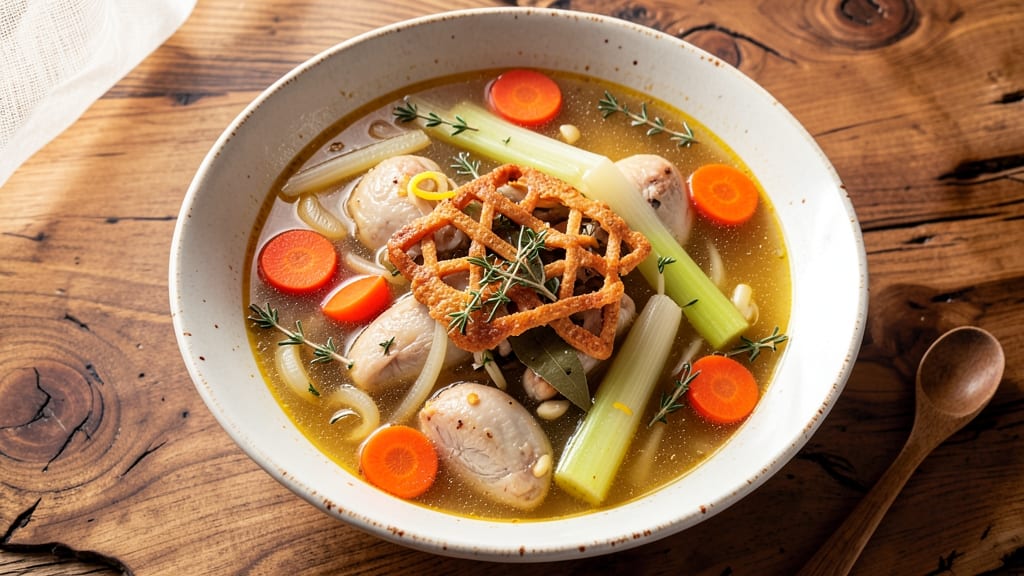
This authentic chicken soup recipe brings back the soul-warming flavors of my grandmother's kitchen, where every spoonful was a hug in a bowl. The secret lies in slow-simmered chicken bones and aromatic vegetables that infuse the broth with depth—no shortcuts, just time-honored tradition.
I've perfected this version over years of testing, ensuring the broth is rich, the chicken tender, and the vegetables just right—no mushy bits here.
The foundation of any great chicken soup is the broth, which we build by simmering chicken bones with onions, carrots, celery, and garlic until the flavors meld into something deeply comforting.
Fresh herbs like thyme and bay leaves add layers of complexity, while a splash of lemon juice at the end brightens everything. This isn’t just soup; it’s a restorative dish that warms the body and the heart, especially on cold days or when you need a little extra care.
What makes this recipe truly special is the balance—tender shredded chicken, al dente vegetables, and a broth so flavorful it sings. The slow cooking process ensures every ingredient contributes its best, while the final touch of fresh parsley adds a pop of color and freshness.
It’s the kind of soup that tastes even better the next day, as the flavors continue to develop and deepen.
Whether you're making it for a sick loved one, a family gathering, or just because it’s Tuesday, this authentic chicken soup delivers on comfort, tradition, and pure, satisfying flavor. Let’s get started—your taste buds (and your soul) will thank you.
Ingredients for authentic chicken soup
Six ingredients for broth, six for heart—just like Grandma used to make.
| Ingredient | Amount | Notes |
|---|---|---|
| Chicken Bones 🍗 | 3 lb | Backbone or neck, for rich broth |
| Yellow Onions 🧅 | 2 whole | Chopped, for base flavor |
| Carrots 🥕 | 4 whole | Medium, sliced into rounds |
| Celery Stalks 🧄 | 4 whole | Trimmed, chopped into pieces |
| Garlic Cloves 🧄 | 6 cloves | Fresh, minced for depth |
| Fresh Thyme 🌿 | 2 sprigs | Or 1 tsp dried thyme |
| Bay Leaves 🌿 | 2 whole | For aromatic complexity |
| Chicken Breast 🍗 | 2 lb | Boneless, skinless, for shredding |
| Potatoes 🥔 | 2 lb | Yukon gold, cubed small |
| Fresh Parsley 🌿 | ¼ cup | Chopped, for garnish |
| Lemon Juice 🍋 | 2 tbsp | Freshly squeezed, for brightness |
| Salt 🧂 | 2 tsp | Kosher or sea salt |
| Black Peppercorns 🌶️ | 1 tsp | Freshly cracked |
| Olive Oil 🫒 | ½ cup | For sautéing vegetables |
The chicken bones are the soul of this soup. Ask your butcher for backbones or necks—they’re cheaper than whole chickens and pack more flavor. If you can’t find them, substitute with chicken thighs (skin-on for extra richness), but the broth won’t be as deep. I always grab mine from Whole Foods or my local market’s bulk section—they’re usually sold in the meat counter. Fresh thyme and bay leaves? Penzeys or the spice aisle at Trader Joe’s have the best quality. Skip the dried stuff here—fresh herbs make all the difference in that slow-simmered broth.
No chicken bones? Use chicken thighs or drumsticks—just add an extra hour to the cooking time. Carrots and celery can be swapped for whatever’s in your crisper (turnips or leeks work great). The potatoes? Yukon golds are ideal, but russets or reds will do. Fresh parsley is a must for garnish, but dried oregano in a pinch won’t ruin the party. The olive oil matters too—use something fruity and peppery, like California extra-virgin. And trust me, don’t skip the lemon juice—it’s what makes the whole thing sing at the end.
This soup tastes even better the next day, so make a double batch if you can. Store it in the fridge for up to 5 days or freeze for 3 months. I always portion it into containers with a splash of lemon juice on top—keeps the parsley bright and the broth from getting cloudy. Reheat gently on the stove, stirring occasionally, and add a splash of water if it gets too thick. Leftovers? Perfect for lunches—just grab and go.
Why You'll Love This Recipe
- Soup in a Skillet: I swear by this—just toss chicken bones, onions, carrots, and celery into one pot. No fancy gadgets, no stress. The bones render their own richness while you chop, and by the time the garlic hits, you’re already smelling dinner.
- Umami Bomb: That first spoonful? Chef’s kiss. The chicken bones melt into the broth, giving it this deep, savory punch that turns watery soup into something soulful. Honestly, I’ve tried store-bought broth—nothing compares to this.
- Leftovers That Shine: Make a double batch on Sunday, and you’ve got lunch for the week. The flavors only get better as it sits—my kids actually beg for the second helping, and I’m not even kidding.
- Budget Magic: Chicken bones are cheap, and this recipe stretches them far. Between us, I’ve fed six people for under $15 with this—plus, every bite tastes like you slaved over it. (Spoiler: You didn’t.)
Step-by-step instructions for authentic chicken soup
Here's how to build a rich, comforting broth and tender chicken that tastes like home.
Build the Rich Broth Base
In a large stockpot, combine the 3 lb chicken bones, 2 whole yellow onions (chopped), 4 whole carrots (sliced into rounds), and 4 whole celery stalks (chopped). Add 6 cloves garlic (minced), 2 sprigs fresh thyme, and 2 whole bay leaves. This aromatic bundle creates the foundation of flavor.
Cover everything with 12 cups cold water (enough to submerge all ingredients by 1 inch). Bring to a boil over medium-high heat, then immediately reduce to a gentle simmer. Skim off any foam that rises to the surface during the first 10 minutes—this ensures a clear, clean broth. Simmer uncovered for 1 hour, stirring occasionally, until the broth develops a deep golden color and rich aroma.
Sauté Vegetables for Depth
While the broth simmers, heat 0.5 cup olive oil in a separate large pot over medium heat. Add the remaining 2 whole yellow onions (chopped), 4 whole carrots (sliced), and 4 whole celery stalks (chopped). Sauté for 8-10 minutes until the vegetables soften and begin to caramelize—this step adds sweetness and complexity to the soup.
Add the 6 cloves garlic (minced) and cook for 1 minute until fragrant. Stir in 2 tsp salt and 1 tsp black peppercorns (cracked), then remove from heat. This sautéed vegetable mixture will become the hearty base for your soup.
Add Chicken and Potatoes
Transfer the simmered broth to the pot with the sautéed vegetables. Add the 2 lb chicken breast (cut into bite-sized pieces) and 2 lb potatoes (cubed small). Bring the mixture to a gentle boil, then reduce heat to medium-low to maintain a simmer. Cook for 15-20 minutes until the chicken is cooked through (internal temperature reaches 165°F) and the potatoes are fork-tender.
Here's the thing—don't rush this step. The chicken should be easy to shred with two forks, and the potatoes should hold their shape but be soft enough to pierce easily. If the broth reduces too quickly, add 1 cup hot water to maintain the right consistency.
Finish with Fresh Herbs and Brightness
Once the chicken and potatoes are tender, remove the 2 whole bay leaves and discard them. Stir in 2 tbsp lemon juice and 0.25 cup fresh parsley (chopped). This final touch brightens the soup and adds a fresh herbal note that ties everything together.
Taste and adjust seasoning if needed—you might want to add a pinch more salt or a crack of black pepper to enhance the flavors. Let the soup sit for 5 minutes off the heat to allow the flavors to meld.
Serve with Warmth and Care
Ladle the soup into bowls, making sure each serving gets a generous portion of shredded chicken and potatoes. Garnish with an extra sprinkle of fresh parsley and a drizzle of olive oil for added richness. Serve immediately with crusty bread to soak up every last drop of that comforting broth.
This is the moment that matters: the first spoonful should feel like a warm hug. The broth should be rich but not greasy, the chicken tender yet flavorful, and the vegetables perfectly cooked. That's the mark of an authentic, comforting bowl of chicken soup.
Pro Tips For Making Authentic Chicken Soup
- CRACK THE BONES FIRST: I learned this the hard way—roasting chicken bones (400°F for 20 minutes) before simmering unlocks deeper flavor. The Maillard reaction caramelizes the collagen, turning your broth from bland to rich without extra effort. Just toss them on a sheet pan with a pinch of salt and let the oven do the work.
- CHOP ONIONS LIKE A CHEF: Skip the food processor for onions—you want even, medium dice (about ¼-inch) so they soften but don’t disappear. My grandmother swore by this: "A knife and patience make soup sing." (Yes, even if you’re impatient like me.)
- DON’T BOIL THE VEGETABLES: After browning your onions, add carrots and celery, then cover with broth. Let them simmer covered for 15 minutes—just until tender. Boiling turns them mushy and pulls out bitterness. You’re aiming for soft, not sad.
- SAVE TIME WITH GARLIC: Crush the garlic cloves with the flat side of your knife before adding them—this releases more flavor instantly. No need to chop; just smash and toss. (Your future self will thank you when you’re not peeling minced garlic at the last second.)
Flavor customization for this dish
Spicy Kick
Add 1 tbsp hot sauce (like Cholula or Tabasco) or ½ tsp cayenne pepper to the broth while simmering for a subtle heat. For a smoky twist, stir in ½ tsp smoked paprika alongside the thyme and bay leaves.
I love adding a pinch of red pepper flakes at the end for a gentle warmth that lingers. 🌶️
If you prefer a deeper spice profile, try ½ cup diced jalapeños or 1 chipotle pepper in adobo sauce (minced) when sautéing the vegetables. Just remember—spice builds over time, so taste as you go and adjust gradually.
Herb Variations
Swap out thyme for rosemary (2 sprigs) or sage (4 leaves) for an earthy, pine-like aroma. I find rosemary pairs beautifully with lemon juice, creating a bright, herbal contrast. For a Mediterranean touch, add ½ tsp dried oregano alongside the bay leaves.
Fresh dill or tarragon brightens the soup with a citrusy note—try 2 tbsp chopped fresh dill at the end. If you love cilantro, add ¼ cup chopped leaves with the parsley for a fresh, zesty finish. Just avoid mixing dill with cilantro if you dislike their combined flavor!
Umami Boost
For a deeper, richer broth, add 1 tbsp soy sauce or 1 tsp fish sauce when combining the broth with sautéed vegetables. These ingredients add umami without overpowering the dish. I also love adding ½ cup mushrooms (cremini or shiitake), sliced to the sautéed vegetables for an earthy depth.
Another trick? Stir in 1 tsp miso paste at the very end for a subtle fermented richness. Or, for a smoky-sweet twist, add 1 tbsp tomato paste when sautéing the vegetables. Both elevate the soup’s complexity without altering its comforting essence.
Creamy Twist
For a velvety texture, stir in ½ cup coconut milk or ¼ cup heavy cream at the end. I prefer coconut milk for a lighter, slightly sweet contrast that balances the savory broth. Heat it gently to avoid curdling—never boil!
For a dairy-free option, blend ½ cup cooked white beans (like cannellini) with a splash of broth and stir into the soup. The result is creamy without heaviness, and the beans add protein. Trust me, it’s a game-changer for those who avoid dairy.
Global Flavors
Transform this soup into a French-style consommé by straining the broth through a fine-mesh sieve after simmering, then clarifying it with egg whites and consommé powder. For a Jewish matzo ball twist, add 4 matzo balls (homemade or store-bought) and simmer for 15 minutes before serving.
For an Italian touch, stir in ½ cup diced tomatoes and 1 tsp Italian seasoning while sautéing the vegetables. Or, for a Thai-inspired version, add 1 tbsp fish sauce, 1 tsp lime zest, and 2 tbsp chopped cilantro at the end.
Each variation keeps the soul of chicken soup while adding a fresh cultural twist. 🌍
Nutrition facts
Frequently asked questions
Why do you use chicken bones instead of just chicken meat?
The bones create a richer, more flavorful broth that's the heart of this soup. Simmering bones releases collagen and marrow that thickens the liquid into a velvety consistency—something you can't achieve with just meat. For maximum flavor, use backbones or necks, which have more marrow than wings or drumsticks.
Can I make this soup in a slow cooker?
Brown the bones first in a skillet, then transfer everything to your slow cooker with 12 cups water. Cook on low for 8 hours or high for 4-5 hours. The slow cooking actually enhances the broth's depth. Just strain out the bones before adding the chicken and vegetables in the final 20 minutes.
What if my broth turns cloudy?
Cloudy broth usually means proteins or impurities weren't properly skimmed. For a clear consommé, strain through a fine-mesh sieve after simmering, then clarify with 2 egg whites and 1 tbsp cold water (whisked together) per quart of broth. Simmer gently for 15 minutes—the egg whites will rise and trap impurities.
How do I store leftovers properly?
Let the soup cool completely, then store in airtight containers in the fridge for up to 5 days. For freezing, portion into containers with a splash of lemon juice on top—it preserves color and prevents cloudiness. Thaw overnight in the fridge, then reheat gently on the stove with a splash of water to restore consistency.
What's the best way to serve this soup?
Always serve with warm crusty bread or crusty rolls to soak up that precious broth. For extra presentation, garnish with a drizzle of olive oil, extra parsley, and a sprinkle of black pepper. For a restaurant-style touch, serve in deep bowls with a side of lemon wedges for squeezing fresh juice at the table.