
Soups & Stews
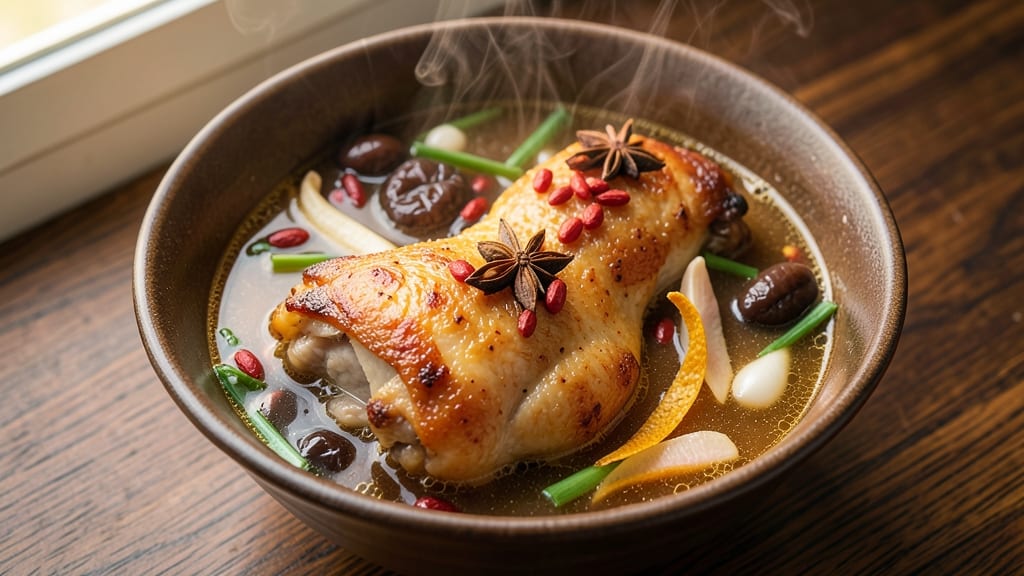
This authentic Chinese chicken soup recipe brings the comforting flavors of home to your kitchen, with star anise and dried tangerine peel creating a fragrant broth that tastes like a warm hug.
The secret lies in slow-simmering bone broth with traditional ingredients like goji berries and dried shiitake mushrooms, building layers of umami and sweetness that define this classic dish.
The recipe begins with stir-frying aromatic spices—ginger, garlic, and star anise—before adding chicken and vegetables for a deep, savory foundation. Unlike many Western adaptations, this version stays true to its roots by using authentic techniques, like simmering the broth just until the flavors meld without overcooking the ingredients.
The result is a soup that’s both nourishing and deeply flavorful.
By the end, you’ll have a steaming bowl of soup with tender chicken, chewy mushrooms, and bright, aromatic broth that’s perfect for cold days or when you need comfort. The dried tangerine peel adds a subtle citrus note, while goji berries contribute a gentle sweetness that balances the savory depth.
Every spoonful delivers the essence of Chinese home cooking.
This recipe is designed for home cooks who want restaurant-quality results without shortcuts—just follow the steps carefully, and you’ll achieve the same harmony of flavors found in traditional Chinese kitchens. Let’s get started on creating a bowl of warmth and tradition.
Ingredients for authentic chinese chicken soup
Authentic Chinese flavors start with these carefully selected ingredients for a soup that transports you to a bustling kitchen in Shanghai.
| Ingredient | Amount | Notes |
|---|---|---|
| Chicken Thighs 🍗 | 1 ½ lb | Bone-in, skin-on preferred |
| Dried Shiitake Mushrooms 🍄 | ½ oz | Rehydrated in hot water |
| Goji Berries 🍇 | 2 tbsp | Dried, rinsed if dusty |
| Star Anise Pods 🌟 | 2 whole | Whole, not ground |
| Dried Tangerine Peel 🍊 | 1 tbsp | Thin slices, organic preferred |
| Fresh Ginger 🧄 | 2 tbsp | Grated, peeled, organic |
| Garlic Cloves 🧄 | 6 cloves | Peeled, smashed slightly |
| Green Onions 🧅 | 3 whole | White and green parts separated |
| Bone Broth 💧 | 4 cups | Homemade or high-quality store-bought |
| Sesame Oil 🫒 | 1 tbsp | For finishing, not cooking |
| Dark Soy Sauce 🥄 | 1 tbsp | For depth of flavor |
| Salt 🧂 | 1 tsp | Diamond Crystal preferred |
| White Peppercorns 🌶️ | ½ tsp | Freshly ground |
| Cornstarch 🌾 | 1 tsp | For thickening broth |
The star anise and dried tangerine peel are non-negotiable for authentic flavor. Look for whole star anise pods at Asian markets—the ones sold in spice racks often contain fillers. Organic dried tangerine peel from Asian grocery stores ensures no pesticides or preservatives. Fresh ginger should smell vibrant and have a firm texture—no soft spots or sprouting. For goji berries, avoid the bright red ones (often dyed); natural ones are brownish-red. The bone broth is the foundation—homemade with chicken feet and necks delivers the deepest umami, but Kettle & Fire or Imagine brands are reliable shortcuts.
No star anise? Anise seeds or fennel seeds work in a pinch, but the flavor won't be identical. Dried shiitake mushrooms can be swapped for cremini mushrooms soaked in hot water, though they lack the earthy depth. Fresh ginger missing? Substitute with 1 tsp ground ginger, but you'll lose the aromatic complexity. The green onions should be washed thoroughly—dirt hides in the crevices. For sesame oil, toasted sesame oil adds more nuttiness than regular. The dark soy sauce is crucial—light soy sauce won't provide the same depth of flavor.
Store dried ingredients like star anise, tangerine peel, and goji berries in airtight containers away from light—they'll keep for 6-12 months. Fresh ginger lasts 2 weeks in the fridge, while garlic keeps 1 month in a cool, dark place. The chicken thighs can be prepped ahead—pat dry and refrigerate for up to 2 days before cooking. Leftover broth freezes beautifully for 3 months; portion it into ice cube trays for easy future use.
Why You'll Love This Recipe
- Pantry Magic: I swear by this soup because it turns shelf-stable treasures into gold. Those dried shiitake mushrooms? Just soak, slice, and boom—umami depth without hunting for fresh ones. Star anise and tangerine peel might sound fancy, but they’re my secret for that warm, citrusy aroma that hits you the second you lift the lid.
- Rich Without Effort: The chicken thighs melt into tender, flavor-packed bites while the broth builds depth from the mushrooms and goji berries. Honestly, the first time I tasted it, I thought, "This tastes like a restaurant soup—but I made it in my own kitchen." No fancy techniques, just time and those dried ingredients doing the heavy lifting.
- Weeknight Workhorse: This soup is my go-to when I’m swamped because it doubles as dinner and tomorrow’s lunch. The broth stays rich even reheated, and the goji berries add a chewy, sweet pop that kids (yes, even picky ones) actually eat. I’ll often make a big batch on Sundays and freeze portions—because nothing beats coming home to a ready meal.
- Budget-Friendly Luxury: Between us, this recipe stretches my grocery budget further than most takeout orders. Chicken thighs are cheaper than breasts, dried mushrooms last forever, and a single star anise pod flavors the whole pot. It’s the kind of dish where you get restaurant-quality taste without the markup—plus, the leftovers keep giving for days.
Step-by-step instructions for authentic Chinese chicken soup with star anise and dried tangerine peel
Master the layered flavors of traditional Chinese medicine-infused soup using precise techniques.
Prepare the Chicken and Aromatics for Maximum Flavor Extraction
Pat the 1.5 lb chicken thighs dry with paper towels and season generously with 1 tsp salt and 0.5 tsp freshly ground white peppercorns. The skin should be completely dry—this ensures crispy edges when cooked. Place the thighs in a cold pot and cover with 4 cups bone broth, bringing to a simmer over medium-high heat for 15 minutes.
While the chicken simmers, prepare the aromatic base: In a small bowl, combine the 2 whole star anise pods, 1 tbsp dried tangerine peel, 2 tbsp grated fresh ginger, and 6 smashed garlic cloves. Toast these aromatics in a dry skillet over low heat for 1-2 minutes until fragrant—this activates their essential oils. Immediately transfer them to the simmering broth along with the 0.5 oz rehydrated dried shiitake mushrooms (sliced) and 2 tbsp goji berries. The mushrooms should be plump after soaking in hot water for 20 minutes before adding.
Build the Broth with Layered Depth Through Controlled Simmering
Reduce heat to low and let the broth simmer uncovered for 30 minutes. This slow cook allows the chicken to tenderize while the aromatics infuse deeply. Skim any foam that rises to the surface—this ensures a clear, clean broth. After 30 minutes, carefully remove the chicken thighs and set aside to rest. The broth should now carry complex notes of star anise, citrus peel, and ginger.
Return the broth to a gentle simmer and add 1 tbsp dark soy sauce to deepen the umami profile. In a small bowl, whisk 1 tsp cornstarch with 2 tablespoons of the broth to create a slurry. Slowly ladle this back into the pot, stirring constantly for 2-3 minutes until the broth thickens slightly to a velvety consistency. This step is critical for achieving the signature body of authentic Chinese soups without sacrificing clarity.
Finish with Fresh Herbs and Essential Oil for Authentic Presentation
Shred the rested chicken thighs into bite-sized pieces, discarding skin and bones. Return the chicken to the pot and heat through for 3-4 minutes over low heat. The chicken should absorb the aromatic broth without re-cooking. Separate the 3 whole green onions into white and green parts, then add the whites to the pot for 2 minutes to infuse subtle onion sweetness. Remove the whites with a slotted spoon.
Just before serving, remove the pot from heat and stir in 1 tbsp sesame oil. This final touch adds a delicate nutty aroma and visual sheen to the soup. Ladle into bowls and garnish with the reserved green onion greens. The soup should present with a vibrant broth, tender chicken, and delicate herbs—each spoonful delivering the balanced harmony of star anise's licorice warmth, citrus peel's brightness, and ginger's spice.
Pro Tips For Making Authentic Chinese Chicken Soup
- Parboil Chicken First: I learned this the hard way—skipping the initial 5-minute boil in cold water leaves your chicken thighs rubbery. Use the skin-on thighs and let them simmer uncovered for 10 minutes after boiling to render fat, which actually flavors your broth better than you’d expect.
- Soak Shiitakes Properly: Dried shiitakes need a 20-minute soak in hot (not boiling) water to rehydrate fully, but don’t overdo it—they’ll turn to mush. Strain them, reserving the soaking liquid (it’s liquid gold for umami), then tear them into uneven pieces. The thicker stems add texture that disappears if you chop too finely.
- Toast Spices Low and Slow: Star anise and tangerine peel burn faster than you’d think. Sauté them in dry oil over medium-low heat for 30 seconds until fragrant, then immediately add broth—high heat turns them bitter. I was skeptical until I tried it: the aroma locks in, and the soup tastes deeper without any bitterness.
- Add Goji Berries Late: Tossing goji berries in at the start turns them to mush. Instead, add them with the chicken in the final 10 minutes of simmering—they’ll plump up just enough to stay chewy and release their sweetness without dissolving. (Yes, even if you’re impatient like me.)
Pro cooking tips for this dish
Aromatic Base Toasting
Toast your star anise pods, dried tangerine peel, and ginger-garlic mixture in a dry skillet over low heat for 1-2 minutes—this unlocks their essential oils and builds depth. I use a 10-inch nonstick skillet to ensure even heating.
Watch closely to avoid burning, as charred aromatics will make the broth bitter. The moment you detect that warm, citrusy aroma, transfer everything immediately to the broth. 🌟
Low-and-Slow Simmer
Simmer the broth uncovered at low heat for 30 minutes—this is where the magic happens. The gentle heat allows the chicken to tenderize while the aromatics infuse deeply. I skim any foam that rises with a fine-mesh strainer, which keeps the broth crystal clear.
Never rush this step; patience is key to authentic flavor development. The broth should smell like a spice market by the end. ⏰
Cornstarch Slurry
Thicken the broth with a cornstarch slurry (1 tsp cornstarch + 2 tbsp broth) for that signature velvety texture. Whisk it vigorously to avoid lumps, then ladle it back into the pot while stirring constantly over medium-low heat.
Heat for just 2-3 minutes—any longer and the starch will turn gummy. This technique, called "velouté," is essential for achieving the right mouthfeel without making the soup heavy. 💫
Chicken Resting
Let the chicken rest for 5 minutes after removing it from the broth—this prevents it from turning rubbery when shredded. I use a clean cutting board and two forks to pull the meat apart into bite-sized pieces.
Discard the skin and bones; they’ve done their job. The rested chicken will absorb the aromatic broth beautifully when returned to the pot. 🍗
Green Onion Technique
Separate the green onions into white and green parts—this is a pro move. Add only the white parts to the pot for 2 minutes to infuse subtle sweetness, then remove them with a slotted spoon.
The green parts are reserved for garnishing, adding a fresh pop of color and crunch. This two-step process ensures you get both flavor and presentation right. ✨
Sesame Oil Finish
Stir in 1 tbsp sesame oil off the heat just before serving—this adds a delicate nutty aroma without overpowering the broth. I drizzle it in a slow, zigzag motion to distribute it evenly.
The oil should float on top, creating a shimmering sheen. This final touch elevates the dish from good to restaurant-quality. 🫒
Nutrition facts
Frequently asked questions
Can I use chicken breast instead of thighs for this authentic Chinese chicken soup?
While chicken breast is leaner, it's not ideal for this soup as it can become dry and rubbery during the long simmer. For best results, stick with bone-in, skin-on thighs—they stay juicy and add rich flavor to the broth. If you must use breast, marinate it in 1 tbsp soy sauce and 1 tbsp Shaoxing wine for 30 minutes before cooking to help retain moisture.
What can I substitute if I don't have star anise?
Star anise is key for authenticity, but you can use 1/2 tsp anise seeds or 1/2 tsp fennel seeds as a substitute. For a closer flavor, combine 1/4 tsp ground cinnamon with 1/4 tsp ground cloves—though the taste won't be identical. The dried tangerine peel is harder to replace; its citrusy aroma is essential for balance.
How do I adjust the recipe for a larger group?
Double all ingredients and use a 6-8 quart pot for proper simmering space. For 8 servings, use 3 lb chicken thighs, 8 cups bone broth, and increase aromatics proportionally. Keep the simmering time the same (30 minutes) to avoid overcooking—just use a larger pot to maintain gentle bubbling.
Why does my soup taste bitter?
Bitterness often comes from overcooking the aromatics or using too much star anise. Toast spices lightly (just until fragrant) and remove them after 30 minutes of simmering. Balance flavors by adding 1 tsp sugar or 1 tsp goji berries to sweeten the broth. Avoid using dark soy sauce in excess—it can add bitterness too.
Can I make this soup ahead of time?
Yes! This soup actually tastes better the next day as flavors meld. Store in an airtight container in the fridge for up to 3 days or freeze for 3 months. Reheat gently on the stove, adding 1-2 tbsp water if the broth thickens too much. The cornstarch slurry may need re-whisking after reheating.