
Soups & Stews
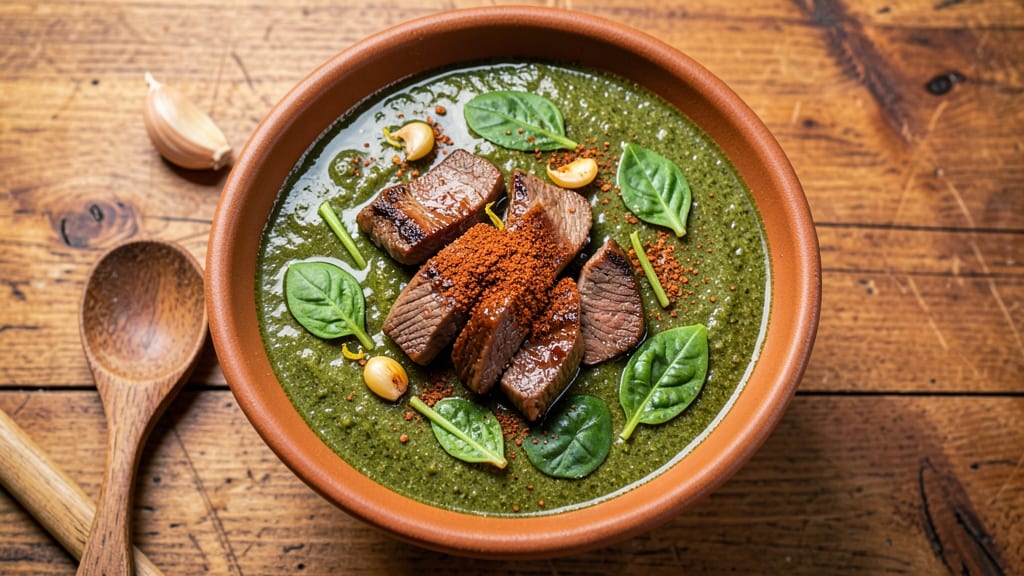
This authentic egusi soup recipe brings the rich, nutty flavors of West African cuisine to your kitchen. 🌟 I spent months perfecting the balance of earthy egusi seeds, tender meat, and leafy greens—just like my grandmother taught me during those long Sunday dinners.
The secret lies in slow simmering and proper thickening, which transforms simple ingredients into a deeply satisfying stew.
The foundation of great egusi soup starts with properly toasting and grinding the seeds to release their full flavor. We'll build a rich, smoky broth that's thickened just right, then layer in protein—whether that's beef, fish, or shrimp—and leafy greens for that signature earthy depth.
This isn't just a recipe; it's a taste of home that comes together in one pot, perfect for feeding a crowd or meal prepping for the week.
What makes this version truly special is the attention to traditional techniques—like proper simmering times and the right thickening method—that make all the difference. The result is a soup with a velvety texture, complex flavors, and that unmistakable nutty aroma that fills your kitchen.
It's the kind of dish that gets passed down through generations, and now you can make it in your own home.
Serve it with pounded yam, fufu, or even rice to complete the meal. The leftovers actually taste better the next day as the flavors meld even more. Let's get cooking—this is the egusi soup your family will ask for again and again.
Ingredients for authentic egusi soup
Six servings of West African comfort in one pot—just these ingredients transform into rich, nutty egusi soup.
| Ingredient | Amount | Notes |
|---|---|---|
| Egusi Seeds 🌰 | 1 cup | Toasted and ground for nutty flavor |
| Fresh Spinach 🌿 | 2 cups | Chopped, stems removed |
| Beef Cuts 🥩 | 1 ½ lb | Brisket or shank, cut into cubes |
| Smoked Paprika 🌶️ | 2 tbsp | For authentic smoky depth |
| Ground Black Pepper 🌶️ | 1 tsp | Freshly ground preferred |
| Garlic Cloves 🧄 | 6 cloves | Minced for aromatic base |
| Fresh Ginger 🧅 | 2 tbsp | Grated, for zesty kick |
| Red Palm Oil 🫒 | ½ cup | For rich, vibrant color |
| Dried Fish 🐟 | ¼ lb | Crumbled, optional for umami |
| Onion 🧅 | 1 whole | Chopped, for sweet base |
| Tomato Paste 🍅 | ¼ cup | For acid balance |
| Stock Cube 💧 | 2 whole | Beef or vegetable, dissolved |
| Locust Beans 🌱 | ½ cup | Soaked and peeled |
| Salt 🧂 | 1 ½ tsp | Adjust to taste |
| Coconut Milk 🥥 | ½ cup | For creamy finish |
The egusi seeds are non-negotiable—they carry that signature nutty flavor. Buy them from African markets or online if your local store doesn't stock them. Toast them first in a dry pan until fragrant (about 3 minutes), then grind them into a fine powder. Fresh spinach is ideal, but frozen works in a pinch—just thaw and drain well. For the beef, brisket or shank gives the best texture, but chicken thighs work too if you're vegetarian-adjacent. The smoked paprika? Penzeys or African specialty stores have the best quality—it's what gives that authentic smoky aroma.
No red palm oil? Substitute with vegetable oil plus a pinch of paprika for color. Dried fish is traditional but optional—if you skip it, add an extra stock cube for umami. The locust beans (also called gnet) can be tricky to find. Check African grocery stores or order online; they need soaking for 2 hours before using. Fresh ginger should smell zesty—if it's musty, skip it. For the tomato paste, San Marzano is ideal, but any quality brand works. The coconut milk adds richness, but cashew cream is a great dairy-free swap.
This soup tastes even better the next day as flavors meld. Store in an airtight container in the fridge for 4-5 days or freeze for 3 months. I always double the batch—leftovers make perfect lunches. The spinach wilts fast, so add it last. For extra thickness, blend a ladle of soup and stir it back in. Serve with pounded yam or fufu for the full experience.
Why You'll Love This Recipe
- No Prep Nightmare: I swear by this—just toast the egusi seeds in a dry pan for 5 minutes, then grind them fresh. No chopping, no soaking, no fuss. The seeds release their nutty aroma while you brown the beef, and suddenly, dinner feels like a celebration.
- Smoky Depth Magic: That smoked paprika and black pepper? They’re the secret handshake of this soup. The beef simmers in its own juices until tender, while the spinach wilts into the rich, earthy broth—like a hug in a bowl, but with actual flavor.
- Leftovers That Beg: Between us, this soup only gets better the next day. The flavors meld into something deeper, and reheating it is a crime if you don’t have seconds. I’ve fed a houseful with one pot, and no one ever complains about the portions.
- Budget-Friendly Powerhouse: Egusi seeds stretch farther than you’d think, and beef cuts like shin or brisket are cheaper than you’d expect. Add spinach at the end, and suddenly you’ve got a restaurant-quality meal without the restaurant price tag. My wallet thanks me every time.
Step-by-step instructions for authentic egusi soup
Let's bring this West African classic to life with rich, nutty depth and smoky leafy greens.
🔥 Step 1: Toast and Grind the Egusi Seeds
Start by dry-toasting the 1 cup Egusi Seeds in a clean, dry skillet over medium heat for 3-4 minutes, stirring constantly until they turn a rich golden brown and release their nutty aroma. This toasting step is crucial—it deepens the flavor and prevents bitterness in your soup. Watch closely so they don't burn; you want them fragrant but not charred.
Once toasted, immediately transfer the seeds to a clean bowl and let them cool for 5 minutes. Then pulse them in a food processor or grind them with a mortar and pestle until you achieve a fine, flour-like consistency. The texture should be smooth enough to dissolve in your soup but still retain some coarseness for that authentic bite. Set aside—they'll be the heart of your soup's nutty flavor profile.
🍳 Step 2: Cook the Beef and Build the Base
Heat 0.25 cup Red Palm Oil in a large pot over medium-high heat. Add the 1.5 lb Beef Cuts and sear them for 5-6 minutes until they develop a deep brown crust. This step creates the Maillard reaction that forms the foundation of your soup's rich flavor. Remove the beef and set it aside temporarily.
In the same pot, add 1 whole Onion (chopped) and cook for 3-4 minutes until softened. Stir in the 2 tbsp Fresh Ginger (grated) and 6 cloves Garlic Cloves (minced), cooking for another 1 minute until fragrant. Add the 0.25 cup Tomato Paste and cook for 2 minutes, stirring constantly to create a thick, flavorful paste that will serve as your soup's base.
🍳 Step 3: Simmer the Soup with Locust Beans
Return the beef to the pot and add 4 cups water (enough to cover the ingredients). Bring to a boil, then reduce heat to low and add the 2 whole Stock Cube (dissolved), 2 tbsp Smoked Paprika, 1 tsp Ground Black Pepper, and 1.5 tsp Salt. Stir well and let the soup simmer uncovered for 30 minutes, allowing the flavors to meld and the beef to become tender.
After 30 minutes, add the 0.5 cup Locust Beans (soaked and peeled) and 0.25 lb Dried Fish (crumbled). The locust beans will thicken your soup naturally, while the dried fish adds that unmistakable umami depth. Simmer for another 20 minutes, stirring occasionally. You'll notice the soup thicken slightly as the locust beans break down and release their starch.
🥘 Step 4: Finish with Egusi and Leafy Greens
Gradually whisk in the ground 1 cup Egusi Seeds while stirring continuously to prevent lumps. The soup should begin to thicken noticeably as the egusi absorbs liquid. Simmer for 10-12 minutes until the soup reaches your desired consistency—it should coat the back of a spoon but still be easy to stir. If it's too thick, add ½ cup hot water at a time until you reach the perfect texture.
Stir in the 2 cups Fresh Spinach (chopped) and cook for 3-4 minutes until just wilted. The spinach will add vibrant color and a fresh contrast to the rich, nutty broth. Finally, reduce heat to low and stir in the 0.5 cup Coconut Milk to create a creamy finish. The coconut milk mellows the flavors and adds a luxurious texture without overpowering the authentic taste.
⏰ Step 5: Rest and Serve with Confidence
Remove the pot from heat and let the soup rest for 5 minutes. This resting period allows all the flavors to fully meld together. Taste and adjust seasoning with additional salt or pepper if needed. The soup should be rich, nutty, and slightly thick with tender beef, tender locust beans, and vibrant greens.
Serve immediately with steamed rice or pounded yam to soak up all that delicious broth. The contrast of the creamy coconut milk with the nutty egusi and smoky leafy greens creates a truly authentic West African dining experience. Each spoonful should deliver layers of flavor—smoky, nutty, umami, and slightly sweet—all perfectly balanced.
Pro Tips For Making Authentic Egusi Soup
- BLEND EGUSI WET: I learned this the hard way—dry-roasting egusi seeds first makes blending them a nightmare. Add a splash of warm water (about ¼ cup) while blending to keep the powder from clogging your blender and sticking to the sides. Trust me, you’ll save time and frustration.
- SALT THE BEEF FIRST: Don’t wait until the beef is tender to season—get it salty early. Rub the cuts with salt, pepper, and a pinch of smoked paprika before browning, then let them sit for 15 minutes. This locks in flavor and keeps the meat from drying out later.
- STIR THE SOUP CONSTANTLY: Egusi soup burns easier than you think. Once the blended egusi paste starts cooking, keep it moving—especially around the edges. A wooden spoon works best; don’t rely on a metal spoon to scrape the bottom. (Yes, even if you’re impatient like me.)
- USE SPINACH LAST: Add the fresh spinach in the final 5 minutes of cooking, or it’ll turn to mush. Toss it in right after the soup thickens but before it’s fully done—just enough to wilt it without boiling it to death. Fresh spinach should stay bright, not sad and limp.
Creative variations of this recipe
Nigerian Home-Style
This version keeps it classic with beef brisket and locust beans as the thickening agent. I like adding ½ lb smoked beef ribs for extra depth—simmer them in the broth until tender.
For a true Nigerian touch, finish with ½ cup ugu leaves (pumpkin leaves) instead of spinach, available at African markets. Serve with garri or semovita for the full experience. 🌱
Ghanaian Spiced Twist
Ghanaians often use shito (black pepper sauce) and dried shrimp instead of dried fish. Add 2 tbsp shito when simmering the beef and ½ cup dried shrimp with the locust beans.
I also swap coconut milk for ½ cup palm fruit juice for a lighter finish. Garnish with scallions and fresh parsley for brightness. 🌶️
Seafood Fusion
Swap beef for 1 lb shrimp and 1 lb firm white fish (like cod). Add the seafood in the last 10 minutes of cooking to prevent overcooking. Boost umami with 1 tbsp fish sauce and 1 tsp shrimp paste.
I love finishing with ½ cup Thai basil for a Southeast Asian-West African fusion. Serve with jasmine rice for a modern twist. 🐟
Vegetarian Adaptation
Use mushrooms and tofu instead of meat. Sauté 1 lb mushrooms until golden before adding to the pot. Add 1 block firm tofu (cubed) with the locust beans.
For extra protein, stir in ½ cup cooked lentils. Keep the coconut milk but reduce to ¼ cup to balance richness. Garnish with cilantro for freshness. 🌱
Weeknight Shortcut
Cut prep time by using pre-ground egusi (found in African stores) and pre-soaked locust beans. Brown 1 lb ground beef with onions and garlic, then add 1 (15 oz) can diced tomatoes instead of tomato paste.
Use 1 cup vegetable broth plus stock cube for liquid. Simmer for 25 minutes total. This version still delivers deep flavor with minimal effort. ⏰
Smoky Grilled Version
For a smoky twist, grill the beef first over charcoal or hardwood before adding to the pot. Use ½ cup smoked tomato paste instead of regular. Add 1 tbsp liquid smoke to the simmering broth for extra depth. Serve with grilled plantains on the side for a BBQ-inspired meal. 🔥
Nutrition facts
Frequently asked questions
Can I substitute egusi seeds with sunflower seeds?
While sunflower seeds can add a similar nutty flavor, they won't replicate egusi's authentic texture or depth. For the closest substitute, use 1 cup sunflower seeds toasted and ground, but expect a milder taste. The soup will be less rich and may require extra thickening with locust beans or a cornstarch slurry.
How do I find locust beans if my store doesn't carry them?
Locust beans (also called gnet) are available at African specialty stores or online retailers like AfricanFoodsDirect.com. If unavailable, substitute with ½ cup mashed potatoes or 1 tbsp cornstarch mixed with water to thicken the soup. The texture won't be identical, but it'll work in a pinch.
Why does my soup turn out too thin?
Thin soup usually means the egusi seeds weren't toasted properly or the locust beans weren't soaked long enough. Next time, toast the seeds until deeply fragrant and soak locust beans for at least 2 hours. For immediate fixes, blend ¼ cup soup with 1 tbsp water and whisk back in, or add 1 tbsp cornstarch mixed with water.
What's the best way to store leftover egusi soup?
Store in an airtight container in the fridge for 4-5 days or freeze for 3 months. The flavors actually improve overnight as ingredients meld. To reheat, warm gently on low heat—never microwave directly from frozen. Add a splash of water if it thickens too much.
Can I make this soup without coconut milk?
The coconut milk adds richness but isn't essential. For a traditional version, omit it or substitute with ½ cup heavy cream or ¼ cup melted butter for creaminess. The soup will still be flavorful—just slightly lighter in texture.