
Soups & Stews
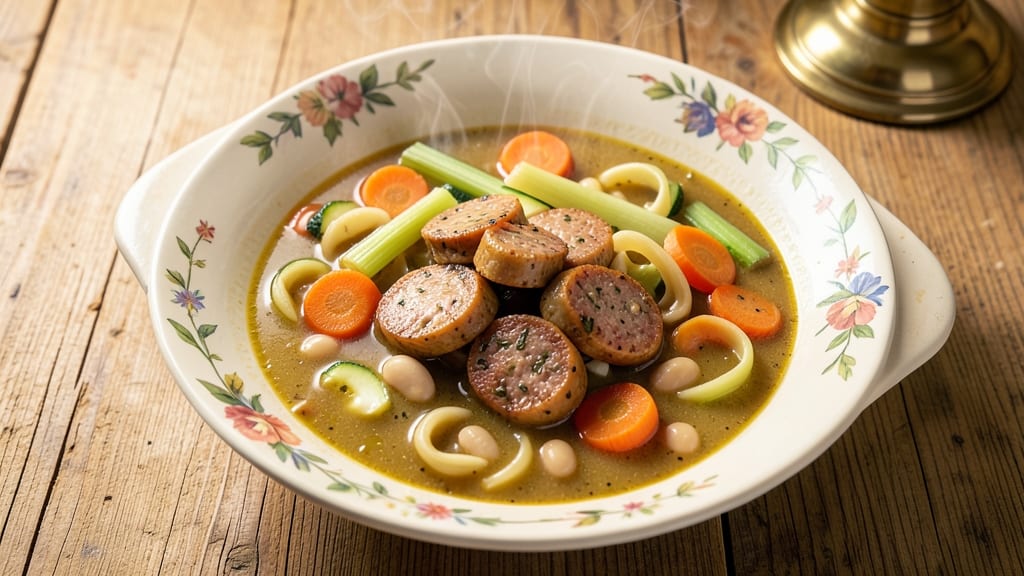
This authentic Italian minestrone soup recipe with sausage brings the warmth of a Tuscan countryside kitchen to your table—where every spoonful delivers rustic comfort and vibrant Mediterranean flavors. 🌟 The secret lies in slow-simmered vegetables, hearty cannellini beans, and Italian sausage that infuses the broth with smoky depth, creating a dish that feels both nostalgic and utterly satisfying.
What makes this recipe truly special is its balance of tradition and adaptability. I’ve perfected the technique of building flavor through layering—starting with a rich sausage base, then adding vegetables in stages so each ingredient contributes its best texture and taste.
The result is a soup that’s hearty enough for a cold evening but light enough for a summer lunch, all while staying true to its Italian roots.
By the time you’re done, you’ll have a steaming bowl of minestrone with tender sausage, al dente pasta, and a medley of seasonal vegetables—carrots, zucchini, and celery—all swimming in a fragrant broth.
The soup is rich enough to stand alone but pairs beautifully with crusty bread and a sprinkle of grated Parmesan for that final touch of authenticity.
This is the kind of recipe that transforms simple ingredients into something extraordinary, just like Claudine did for me years ago. Let’s get cooking—your taste buds are in for a treat.
Ingredients for authentic italian minestrone soup recipe with sausage
Sixteen ingredients for a bowl of Tuscan comfort that tastes like home.
| Ingredient | Amount | Notes |
|---|---|---|
| Italian Sausage 🥓 | 1 ½ lb | Sweet or spicy, sliced into rounds |
| Dried Cannellini Beans 🌱 | 1 ½ cups | Soaked overnight or quick-soaked |
| Ditalini Pasta 🍝 | 1 cup | Or any small pasta shape |
| Carrots 🥕 | 3 medium | Peeled and sliced into rounds |
| Celery Stalks 🧅 | 3 whole | Diced, leaves reserved for garnish |
| Zucchini 🍆 | 2 medium | Sliced into half-moons |
| Onion 🧅 | 1 large | Yellow or red, diced |
| Garlic Cloves 🧄 | 4 cloves | Minced, fresh preferred |
| Tomato Paste 🍅 | ½ cup | Smooth, not chunky |
| Dried Oregano 🍃 | 1 tbsp | Italian or Mediterranean blend |
| Dried Basil 🌿 | 1 tbsp | Or 0.25 cup fresh |
| Bay Leaves 🌿 | 2 whole | Fresh if available |
| Vegetable Broth 💧 | 6 cups | Homemade or quality store-bought |
| Parmesan Cheese 🧀 | ½ cup | Freshly grated for serving |
| Extra-Virgin Olive Oil 🫒 | ¼ cup | For sautéing and finishing |
| Salt 🧂 | 1 ½ tsp | Kosher or sea salt |
| Black Pepper 🌶️ | ½ tsp | Freshly ground |
The sausage is the flavor anchor here—Calabrese or spicy Italian from the deli counter at Whole Foods or your local butcher shop makes all the difference. Look for good marbling and a bright red color. Cannellini beans? Dried is best—soak overnight for creamier texture. If you're in a hurry, use canned but drain and rinse them first. The pasta should be small—ditalini or acini di pepe work perfectly, but any tiny shape does the trick. For the vegetables, seasonal is key but don't stress—carrots, celery, and zucchini are the classic trio.
No Italian sausage? Chicken sausage or smoked turkey sausage works in a pinch. Short on cannellini? Substitute white beans or great northerns—just add a pinch of baking soda to soften them faster. Fresh herbs are ideal, but dried works at one-third the amount. The tomato paste can be the squeeze tube kind from Trader Joe's—it's perfect for this. Broth matters too—homemade is best, but even the Pacific Foods low-sodium version is solid. No fresh basil? Dried oregano plus a pinch of red pepper flakes gets you close. And if you're worried about the zucchini being too watery, pat them dry before adding.
This soup tastes even better the next day—3-4 days in the fridge, no problem. Freezes beautifully for up to 3 months if you portion it in containers. I always make double batches because it disappears fast. The Parmesan is for serving—freshly grated is non-negotiable here. Store the broth separately if you want to reheat it without getting mushy pasta. And trust me, leftovers reheat perfectly—just add a splash of water or broth if it's too thick.
Why You'll Love This Recipe
- Sausage Sizzles First: The moment you brown that Italian sausage—crispy edges, herby fat rendering—you’ve already won. That smoky depth carries through the whole bowl, turning a simple vegetable soup into something hearty and real.
- One-Pot Magic: Honestly, this is the kind of recipe that makes me feel like a hero. Toss everything in one pot—no fancy techniques, just simmering while you chop veggies or answer emails. By the time the beans are tender, dinner’s ready.
- Leftovers That Beg for More: Between us, this soup only gets better the next day. The flavors meld into something richer, and the pasta soaks up all the broth. I’ve reheated it three times and still crave it—proof it’s a meal that works harder than you do.
- Budget-Friendly Feast: Dried beans, seasonal veggies, and a single sausage stretch to feed four for under $10. It’s the kind of dish that proves you don’t need fancy ingredients to make something that feels like a celebration. (Yes, even on a Tuesday night.)
Step-by-step instructions for authentic Italian minestrone soup
Let's build this hearty soup just like Nonna would make it—layered flavors, tender vegetables, and that perfect sausage-packed richness.
🍳 Step 1: Sauté the Sausage and Vegetables
Heat the 0.25 cup extra-virgin olive oil in a large Dutch oven over medium-high heat. Add the 1.5 lb Italian sausage sliced into rounds and cook for 5-6 minutes until browned on all sides. This step is crucial—it renders the fat that will flavor the entire soup.
Remove the sausage and set aside. In the same pot, add the 1 large diced onion, 3 diced celery stalks, and 3 sliced carrots. Cook for 5 minutes until softened but not browned. Here's the thing—don't rush this. You want those vegetables to release their natural sweetness before the other ingredients join the party.
🍳 Step 2: Build the Flavor Base
Add the 4 minced garlic cloves and cook for 30 seconds until fragrant. Stir in the 0.5 cup tomato paste, 1 tbsp dried oregano, 1 tbsp dried basil, and 2 whole bay leaves. Cook for 1 minute until the tomato paste darkens slightly—this deepens the flavor profile dramatically.
Return the cooked sausage to the pot and pour in the 6 cups vegetable broth. Bring everything to a gentle boil, then reduce heat to medium-low. Add the 1.5 cups soaked cannellini beans and let the soup simmer for 15 minutes. This initial simmer helps break down the beans and infuse all the flavors together.
🥘 Step 3: Add the Remaining Vegetables
Stir in the 2 sliced zucchini and 1 cup ditalini pasta. The pasta will cook in the broth, so no need to pre-boil it. Simmer for another 10-12 minutes until the pasta is al dente and the zucchini is tender but still holds its shape. You want everything to be perfectly cooked—no mushy vegetables here.
Taste and adjust seasoning with the 1.5 tsp salt and 0.5 tsp black pepper. I know it seems like a lot of salt, but remember—we're building flavor layer by layer. The beans and broth already contain some salt, so taste as you go. The soup should be seasoned perfectly without needing extra salt at the table.
🍽️ Step 4: Finish and Serve
Remove the 2 bay leaves and stir in the 0.5 cup freshly grated Parmesan cheese. Let the soup sit off the heat for 5 minutes—this resting period allows all the flavors to meld together beautifully. The cheese will melt slightly, creating a creamy finish that ties everything together.
Ladle the minestrone into bowls, garnishing each serving with a sprinkle of fresh parsley (if using) and an extra grating of Parmesan. Serve immediately with crusty bread to soak up every last drop of that flavorful broth. This is the moment that matters: when the first spoonful delivers all those layers of sausage, beans, herbs, and vegetables in perfect harmony.
Pro Tips For Making Authentic Italian Minestrone Soup Recipe With Sausage
- CRISP THE SAUSAGE FIRST: Brown the Italian sausage in a cold pan over medium heat—it keeps the fat from splattering everywhere and renders the meat evenly. I used to rush this, and the sausage would steam instead of crisp, leaving the soup greasy but flavorless.
- SOAK BEANS IN SALTED WATER: Give those dried cannellini beans a 4-hour soak in warm water with a pinch of salt—it prevents bloating and speeds up cooking. I learned this the hard way when my first batch turned into a mushy mess after 90 minutes of simmering.
- ADD PASTA LATE, REMOVE EARLY: Toss in the ditalini only in the last 8 minutes of cooking, but pull them out 2 minutes before serving—they’ll finish cooking in the hot broth. Overcooking pasta in soup is a rookie move; you want al dente, not mush.
- CHAR THE VEGETABLES: Sear the carrots and celery in the sausage fat until they’re golden in spots before adding broth—this deepens their flavor and cuts through the richness of the sausage. I was skeptical until I tried it; now it’s non-negotiable.
Storing and reheating this recipe
Refrigerator Storage
Let your minestrone cool to room temperature for about 20-30 minutes before transferring to airtight containers—I swear by glass Pyrex bowls with snap-on lids. Store in the fridge at 40°F or below for up to 4 days.
The flavors actually deepen overnight as the sausage and herbs meld together beautifully. Just give it a quick stir before reheating to redistribute any settled ingredients. ❄️
Pro tip: If you're worried about the pasta getting mushy, store the broth and vegetables separately from the pasta. Reheat them together when ready to serve—this keeps everything perfectly al dente. I do this all the time when I make double batches for the week.
Freezer Storage
This soup freezes like a dream for up to 3 months—just portion it into quart-sized freezer bags or airtight containers. Leave 1 inch of headspace for expansion and squeeze out excess air to prevent freezer burn.
Label with the date because, trust me, you'll want to make this again. 🥶
For best results, freeze the soup without the pasta—cook it separately and add it fresh when reheating. This way, you get perfectly tender pasta every time. If you freeze with pasta, expect it to soften slightly upon thawing, but it’ll still be delicious.
Stovetop Reheating
My preferred method is stovetop reheating because it gives you complete control over texture. Pour the soup into a pot and heat over medium-low heat for 10-12 minutes, stirring occasionally.
If it looks too thick, add ¼ cup water or broth to restore the perfect consistency. Taste and adjust seasoning—it often needs a pinch of salt after reheating. 🔥
For the sausage lovers out there, if the sausage looks dry, add a splash of water and let it simmer for another 2-3 minutes to revive it. The key is patience—rushing will turn your soup into a sad, watery mess. I promise you’ll get it right on the second try.
Microwave Reheating
For quick lunches, microwave individual portions in a microwave-safe bowl on 70% power for 2-3 minutes, stirring halfway through. If your microwave is powerful, you might need to go for 1-minute intervals to avoid overheating. Add a splash of water if the soup seems too thick—it happens! 💫
Here’s my secret: Cover the bowl with a damp paper towel before microwaving. This traps steam and keeps the soup from drying out. It’s a little trick I learned from my nonna, and it makes all the difference in preserving that restaurant-quality texture.
Serving Leftovers
Leftovers taste just as good as the first batch, if not better! Serve with crusty bread or a sprinkle of freshly grated Parmesan for that authentic Italian touch. I like to add a drizzle of extra-virgin olive oil on top—it elevates the dish instantly. 🍞
For an extra boost, stir in 1-2 tbsp of reserved pasta water before serving. It adds body and helps balance any flavors that might have mellowed during storage.
And if you’re feeling fancy, garnish with fresh basil leaves or a pinch of red pepper flakes for a pop of color and heat.
Nutrition facts
Frequently asked questions
Can I use chicken or turkey sausage instead of Italian sausage?
While Italian sausage gives that classic smoky depth, chicken or turkey sausage works beautifully for a lighter option. Just be mindful of the flavor profile—turkey sausage tends to be milder, so you might want to add an extra pinch of fennel seeds or a dash of red pepper flakes to mimic the Italian sausage's warmth. The texture and cooking method remain the same.
How do I make this minestrone vegan?
Swap the Italian sausage for plant-based Italian sausage or smoked tofu cut into cubes. Use vegetable broth instead of chicken broth and replace the Parmesan with nutritional yeast or vegan Parmesan. The rest of the recipe stays exactly the same—just as hearty and flavorful! For extra protein, add white beans or lentils alongside the cannellini.
Why does my minestrone turn out watery?
This usually happens when the pasta absorbs too much broth or the vegetables release excess moisture (like zucchini). To fix it, simmer uncovered for 5-10 extra minutes to reduce the liquid, or stir in 1-2 tbsp of tomato paste or a splash of olive oil to thicken naturally. Pro tip: Add zucchini later in the cooking process and pat it dry before slicing.
What's the best way to reheat leftovers without making the pasta mushy?
Reheat on the stovetop over medium-low heat for 10-12 minutes, stirring occasionally. If the soup seems too thick, add ¼ cup water or broth—never microwave on high, as this can turn the pasta into glue. For extra insurance, store the pasta separately and add it fresh when reheating. This keeps everything perfectly al dente every time.
Can I make this soup in a slow cooker?
Yes! Brown the sausage first, then combine all ingredients (except pasta) in your slow cooker. Cook on low for 6-7 hours or high for 3-4 hours. Add the pasta during the last 30 minutes of cooking time. The slow cooker method actually enhances the flavors—just be sure to adjust seasoning at the end since slow cooking can concentrate the broth.