
Soups & Stews
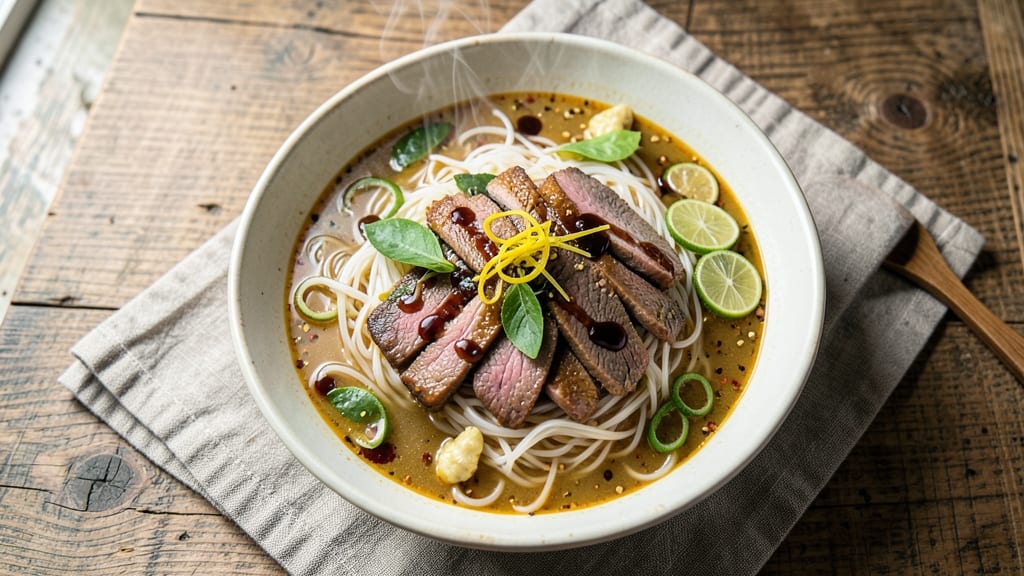
This authentic Thai beef noodle soup brings the vibrant flavors of Bangkok to your kitchen with its fragrant lemongrass and kaffir lime broth. The secret lies in balancing sour, spicy, and umami notes—just like street vendors in Thailand do—while keeping the process simple enough for home cooks.
I've perfected this recipe over years of testing, ensuring every spoonful delivers that perfect harmony of aromatics and tender beef.
The broth is the heart of this dish, simmered low and slow with lemongrass, galangal, and kaffir lime leaves to infuse deep, citrusy flavor. Thin rice noodles soak up the rich broth while tender slices of beef—marinated in fish sauce and garlic—add depth.
The result is a bowl that's both comforting and invigorating, with just the right kick from chili and bright tang from lime.
What makes this recipe truly authentic is the attention to traditional techniques, like blooming spices in hot oil and adjusting seasoning to taste. The noodles are served just shy of al dente, so they soften perfectly in the hot broth.
Garnishes like fresh herbs, lime wedges, and crushed peanuts add texture and freshness, turning each bowl into a customizable masterpiece.
Whether you're serving this for a cozy weeknight dinner or a special gathering, it's a dish that feels like a hug—warm, aromatic, and full of character. The best part?
It's easier to make than you think, with steps designed to let the flavors shine without overwhelming complexity. Let's get started on this fragrant journey.
Ingredients for authentic thai beef noodle soup
These aromatic ingredients bring Bangkok's street food flavors to your kitchen with just a few key staples.
| Ingredient | Amount | Notes |
|---|---|---|
| Thin Rice Noodles 🍜 | 8 oz | Rice vermicelli or pad thai noodles |
| Thinly Sliced Beef 🥩 | 1 ½ lb | Sirloin or flank steak, marinated |
| Lemongrass 🌿 | 4 stems | Bruised and cut into 2-inch pieces |
| Galangal 🌿 | 3 inches | Peeled and sliced thinly |
| Kaffir Lime Leaves 🍋 | 6 whole | Bruised slightly for aroma |
| Fish Sauce 🍶 | ½ cup | Red Boat preferred |
| Garlic Cloves 🧄 | 8 cloves | Minced for marinade |
| Thai Bird's Eye Chilies 🌶️ | 6 whole | Adjust for heat preference |
| Fresh Lime Juice 🍋 | ¼ cup | From 2-3 limes |
| Vegetable Oil 🫒 | ½ cup | For blooming spices |
| Coconut Milk 🥥 | 1 can (13.5 oz) | Full-fat for creaminess |
| Fresh Cilantro 🌿 | ½ cup | Chopped for garnish |
| Crushed Peanuts 🥜 | ¼ cup | For topping |
| Sugar 🍚 | 2 tbsp | Or coconut sugar |
| Salt 🧂 | 1 tsp | To taste |
Lemongrass and galangal are the soul of this soup—look for fresh, vibrant stalks at Asian markets or the international aisle. Thai Kitchen or 99 Ranch Market usually carry them, but if you can't find galangal, ginger works in a pinch (though it's not the same). Bruise the lemongrass with the side of your knife before cutting—this releases the oils for maximum flavor. For the beef, sirloin or flank steak is ideal since they slice thinly. If you can't find bird's eye chilies, substitute Thai chilies or serrano peppers, but go easy—they pack serious heat.
No fish sauce? Soy sauce plus a splash of coconut aminos mimics the umami, though it won't be identical. The coconut milk should be full-fat—Thai Kitchen brand is my go-to, but any canned full-fat works. For the noodles, rice vermicelli or pad thai noodles are perfect, but if you can only find udon, cook them first and add them to the bowl separately. The kaffir lime leaves are non-negotiable for authenticity, but if you can't find them, lime zest plus a bay leaf adds a similar citrusy depth. And trust me on the sugar—it balances the sour and salty flavors beautifully.
This broth keeps well—3-4 days in the fridge or 3 months frozen. I always make extra and freeze it in portions for quick meals. For the beef, marinate it overnight if possible, but even 30 minutes makes a difference. The noodles soften fast, so keep them in warm water until ready to serve. Garnishes like cilantro and peanuts should go on right before eating—cilantro wilts fast, and peanuts add crunch. Double the batch if you're feeding a crowd—it disappears quickly!
Why You'll Love This Recipe
- I swear by this: just slice the beef paper-thin, pound the lemongrass and galangal (yes, it’s worth the bruises), and toss everything in one pot. The noodles cook in minutes while you stir—no chopping mountains of veggies or last-minute scrambling.
- No-Fuss Prep: I swear by this: just slice the beef paper-thin, pound the lemongrass and galangal (yes, it’s worth the bruises), and toss everything in one pot. The noodles cook in minutes while you stir—no chopping mountains of veggies or last-minute scrambling.
- Umami Bomb: That first sip? Chef’s kiss. The galangal and kaffir lime leaves give it a bright, herbal punch, while the beef—seared just right—melts into tender, rich strands. Honestly, it’s the kind of flavor that makes you pause mid-bite, even on a Tuesday.
- Leftover Goldmine: This soup actually tastes better the next day. I make a double batch on Sundays—store it in the fridge, and by Wednesday, the broth deepens, the noodles soften perfectly, and suddenly you’ve got a zero-effort lunch for the week.
Step-by-step instructions for authentic Thai beef noodle soup
Here's how to create a restaurant-quality Thai beef noodle soup with bold flavors and perfect balance.
Prepare the Aromatic Base
Heat the 0.5 cup vegetable oil in a large pot over medium heat. Add the 8 cloves garlic cloves and 6 whole Thai Bird's Eye Chilies (keep whole for easier removal) and cook for 30 seconds until fragrant but not browned. This quick bloom releases their essential oils without burning.
Add the 4 stems lemongrass (cut into 2-inch pieces) and 3 inches galangal (sliced thinly). Stir for 1 minute until the galangal softens slightly and the lemongrass releases its citrusy aroma. You'll see the galangal turn translucent—that's your signal it's ready for the next step.
Build the Fragrant Broth
Increase heat to medium-high and add the 1.5 lb thinly sliced beef. Sear for 2-3 minutes until the beef loses its raw color and begins to brown. This step creates depth of flavor through the Maillard reaction.
Pour in 1 can (13.5 oz) coconut milk and 0.5 cup fish sauce. Add 2 tbsp sugar and 1 tsp salt, then bring to a gentle simmer. Add 6 whole kaffir lime leaves (bruised slightly) and 0.25 cup fresh lime juice. Simmer uncovered for 20 minutes until the beef is tender but not falling apart.
Finish and Prepare the Noodles
Remove the beef from the broth and set aside. Strain the broth through a fine-mesh sieve to remove all solids, pressing gently on the kaffir lime leaves and galangal to extract maximum flavor. Return the broth to the pot and keep warm over low heat.
Soak the 8 oz thin rice noodles in hot water for 8-10 minutes until pliable but still slightly firm. Drain and rinse briefly with cold water to stop cooking. This prevents them from becoming mushy when added to the hot broth later.
Assemble and Serve
Divide the cooked noodles among bowls. Ladle the hot broth over the noodles, then top with the sliced beef. The beef should be tender enough to eat with a fork but still hold its shape.
Garnish each serving with 0.5 cup fresh cilantro and 0.25 cup crushed peanuts. The peanuts add a delightful crunch that contrasts beautifully with the silky broth. Serve immediately with extra lime wedges on the side for brightness.
Adjust and Enjoy
Taste the soup and adjust seasoning if needed. You might need a little more fish sauce for saltiness or lime juice for acidity. The balance should be complex—sweet, salty, sour, and spicy all working together.
This authentic Thai beef noodle soup delivers the perfect harmony of flavors. The lemongrass and kaffir lime create that signature aromatic depth, while the coconut milk and fish sauce provide rich, savory sweetness. Each bowl should be packed with tender beef, fragrant broth, and satisfying textures.
Pro Tips For Making Authentic Thai Beef Noodle Soup
- CHAR THE GALANGAL FIRST: I learned this the hard way—roasting the galangal (peeled, sliced) over a gas flame for 30 seconds until fragrant before adding it to the broth makes a real difference. The char deepens the earthy aroma without overpowering, and it releases oils that infuse the soup’s base. (Yes, even if you’re impatient like me—just don’t burn it.)
- SLICE BEEF AGAINST THE GRAIN: Thinly sliced beef is key, but the cut matters more than you’d think. Slice against the grain and at a 45-degree angle for maximum tenderness—this isn’t just about even cooking, it’s about texture. If your beef curls up while cooking, it’s too thick; aim for paper-thin slices, then stack them like lasagna before adding to the broth.
- BOIL NOODLES IN BROTH, NOT WATER: Dumping pre-cooked rice noodles into boiling water is a rookie move. Instead, add them directly to the finished broth just before serving—they absorb flavor instantly and won’t turn mushy. Pro move: Toss them in a handful at a time so they float freely, not clump.
- USE LEMONGRASS STALKS, NOT JUICE: I was skeptical until I tried it: bruise the lemongrass stalks with the side of your knife (not chopping, just crushing) before adding them to the broth. This releases the citrusy oils without bitterness, and the stalks can be fished out later. Skimping on fresh lemongrass is the fastest way to make your soup taste flat.
Creative variations of this dish
Spicy Tom Yum Twist
Transform this recipe into a Tom Yum-inspired version by doubling the Thai Bird's Eye Chilies to 12 whole chilies and adding 1 tbsp fish sauce to the broth for extra tang.
Swap the coconut milk for 1 cup chicken or beef stock and finish with 2 tbsp lime juice for a sharper, hotter profile. I love adding 1 tbsp shrimp paste (kapi) for umami depth—just toast it in the oil with the garlic. 🌶️
Creamy Tom Kha Fusion
For a Tom Kha-style variation, increase the coconut milk to 1.5 cans and add 1 cup mushrooms (shiitake or straw) to the broth. Reduce the fish sauce to 0.3 cup and add 1 tsp palm sugar for a sweeter, milder balance.
Garnish with extra cilantro and lime wedges—this version feels cozy and comforting. 🍄
Vegetarian Swap
Replace the beef with 1 lb mushrooms (oyster or shiitake) and 1 block firm tofu (pressed and cubed). Use soy sauce instead of fish sauce and add 1 tbsp miso paste for depth. The noodles will still soak up the fragrant broth beautifully, and the texture contrast works perfectly. 🌱
Herb-Forward Version
Boost the freshness by adding 1 bunch Thai basil (or regular basil) and 1 cup bean sprouts to each bowl. Toss the basil in hot oil for 10 seconds before serving to release its aroma.
For extra greens, stir 1 cup baby spinach into the broth during the last 2 minutes of cooking. 🌿
Regional Adaptations
In Northern Thailand, add 1 tsp coriander seeds (toasted and ground) to the broth for nutty warmth. For a Southern touch, include 1 stalk lemongrass and 1 tbsp tamarind paste to deepen the sour notes. Each region balances flavors differently—experiment to find your favorite! 🗺️
Make-Ahead Garnishes
Prep garnishes ahead: Crush peanuts in a plastic bag with a rolling pin and store in an airtight container for up to 1 week. Chop cilantro and store in the fridge with a damp paper towel for 3 days.
Keep lime wedges in a sealed container—they stay fresh longer this way. Freshness matters most for these bright toppings! ✨
Nutrition facts
Frequently asked questions
What's the best cut of beef for this Thai noodle soup?
Use sirloin or flank steak for the most authentic texture—thinly sliced, they cook quickly and stay tender. Avoid tougher cuts like chuck; they won't hold up well in the broth. If you can't find these, top round works in a pinch, but marinate it longer (at least 2 hours).
Can I substitute any of the aromatic ingredients?
Yes, but with trade-offs: Replace galangal with ginger (though it's milder), and use lime zest + bay leaf if kaffir lime leaves are unavailable. For lemongrass, no perfect substitute exists—its citrusy aroma is irreplaceable. The broth will still taste good, but the depth of flavor will differ slightly.
How do I adjust the spice level for kids or sensitive eaters?
Remove the Thai Bird's Eye Chilies entirely and reduce fish sauce to 0.3 cup. Add a pinch of sugar (up to 1 tbsp) to balance any residual heat. For extra mildness, strain the broth through a fine sieve to remove all spice particles. Serve with plain noodles on the side for customization.
Why does my broth taste bitter?
Bitter broth usually means the galangal or lemongrass cooked too long or the heat got too high. Always simmer gently—never boil—and remove aromatics immediately after straining. If it's already bitter, add 1 tbsp sugar or 1 tsp palm sugar to sweeten, then finish with extra lime juice to cut through the bitterness.
Can I make this soup in an Instant Pot?
Sauté the garlic and chilies, then add all broth ingredients and pressure cook for 15 minutes on high. Quick-release the pressure, then strain and finish as directed. The Instant Pot speeds up cooking, but the flavors will still develop beautifully. Just reduce the simmering time to 10 minutes after pressure cooking.