
Soups & Stews
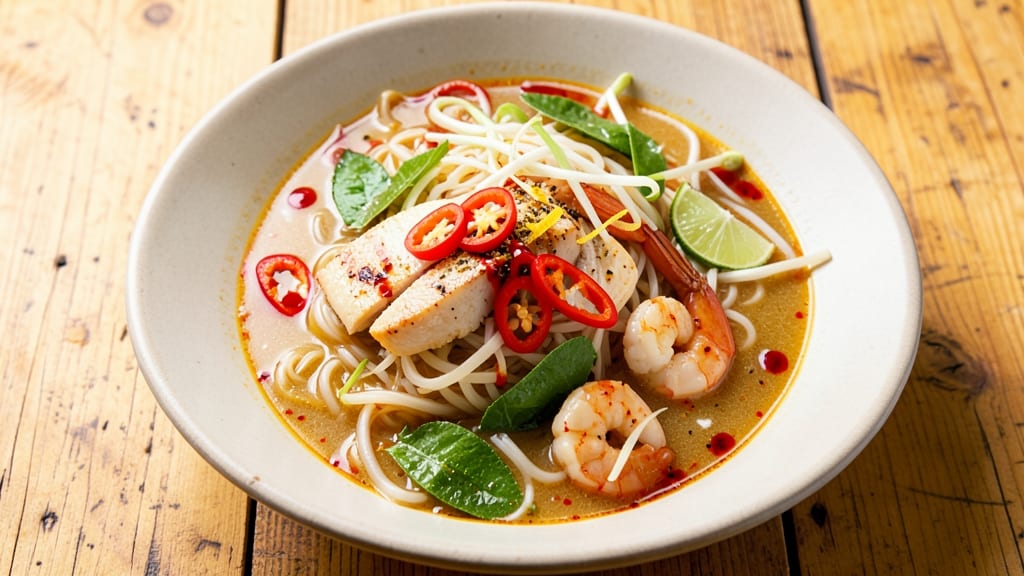
This authentic Thai noodle soup recipe brings the aromatic soul of Bangkok to your kitchen with its signature fragrant lemongrass and kaffir lime broth. The secret lies in balancing sweet, sour, spicy, and umami flavors—just like street vendors in Thailand do—while keeping the preparation approachable for home cooks. I've perfected this version over years of testing, ensuring every spoonful delivers that perfect harmony of textures and tastes.
The broth is the heart of this dish, where lemongrass, galangal, and kaffir lime leaves infuse the coconut milk with their signature citrusy, herbal notes. For the protein, I recommend shrimp or chicken—both cook quickly in the simmering broth—while rice noodles soak up the rich flavors perfectly.
What makes this recipe truly authentic is the layering of aromatics: toasting the spices before simmering unlocks their full potential, creating a depth you won't find in instant versions.
By the time you're done, you'll have a steaming bowl of golden broth with tender protein, delicate noodles, and a garnish of fresh herbs and lime that brightens every bite. The balance of heat from chili and sweetness from palm sugar creates that addictive Thai flavor profile.
This is the kind of soup that feels like a hug—warm, comforting, and full of complex flavors that keep you coming back for more.
The beauty of this recipe is its flexibility: swap in tofu for a vegetarian version, adjust the spice level to your taste, or add your favorite proteins like pork or squid.
Once you master this base, you can experiment with different regional variations while keeping that authentic Thai soul intact. Let's get cooking!
Ingredients for authentic thai noodle soup
The aromatic soul of Thailand starts with these 15 ingredients—lemongrass, galangal, and kaffir lime lead the way.
| Ingredient | Amount | Notes |
|---|---|---|
| Lemongrass Stalks 🌿 | 4 whole | Bruised and cut into 2-inch pieces |
| Galangal Slices 🍃 | 3 pieces | About 3-inch slices, peeled |
| Kaffir Lime Leaves 🍋 | 4 whole | Torn into rough pieces |
| Coconut Milk 🥥 | 1 ½ cups | Full-fat for creaminess |
| Chicken or Shrimp 🍗🦐 | 1 lb | Boneless, skinless preferred |
| Rice Noodles 🍜 | 8 oz | Flat or round, uncooked |
| Red Curry Paste 🌶️ | 2 tbsp | Store-bought or homemade |
| Fish Sauce 🍶 | 2 tbsp | Red Boat preferred |
| Palm Sugar 🍯 | 2 tbsp | Or light brown sugar |
| Chili Paste 🔥 | 1 tbsp | Adjust for spice preference |
| Garlic Cloves 🧄 | 4 cloves | Minced for aromatic boost |
| Shallots 🧅 | 2 whole | Thinly sliced, about 1/4 cup |
| Fresh Thai Basil Leaves 🌿 | ¼ cup | For garnish, stems removed |
| Lime Wedges 🍋 | 2 whole | For serving |
| Salt 🧂 | 1 tsp | To taste, adjust as needed |
The aromatic trio—lemongrass, galangal, and kaffir lime—are non-negotiable for that authentic Thai soul. Thai markets or specialty stores like H Mart are your best bet for fresh galangal and kaffir lime leaves (they look like oversized lime leaves). If you can't find galangal, ginger works in a pinch, though it won't be exactly the same. Lemongrass should be vibrant green with no brown spots—bruise the stalks before adding to release those citrusy oils. For coconut milk, Thai Kitchen brand is my go-to (it's affordable and creamy), but avoid the 'light' versions—they're watered down. The Red Boat fish sauce is a splurge worth making—it's the real deal with no fishy aftertaste.
No shrimp? Chicken or tofu work perfectly—just adjust cooking time (tofu needs 3-4 minutes less). Running low on palm sugar? Light brown sugar or coconut sugar are great swaps, but palm sugar has that caramelized depth. The chili paste can be adjusted—start with less if you're sensitive to heat, but trust me, you'll want more. For the curry paste, Maesri or Mae Ploy brands are my favorites, but any quality red curry paste will do. Don't skip toasting the spices in coconut oil—it builds layers of flavor you won't get otherwise. And if you're using pre-made rice noodles, soak them in warm water for 10-15 minutes before adding to the broth (they cook fast!).
This soup tastes even better the next day as flavors meld—make a double batch and freeze portions for 3 months. Store the broth separately from the noodles in the fridge (they absorb flavors differently). For leftovers, reheat gently on low heat, adding a splash of water or coconut milk to keep it creamy. The lime wedges and Thai basil should be added fresh right before serving—they brighten up every bowl. Garnish with crushed peanuts or bean sprouts if you're feeling fancy, but honestly, the broth and herbs are the stars.
Why You'll Love This Recipe
- No Chopping Chaos: I swear by this—just bruise the lemongrass and galangal with the side of a knife, no dice needed. The kaffir lime leaves? Tear them right off the stem and toss in whole. Five minutes of prep, and you’re already halfway to that rich, fragrant broth simmering away.
- Umami Bomb: That first sip? Chef’s kiss. The galangal and lemongrass team up for a citrusy punch, while the coconut milk smooths it out like a velvet glove. Add shrimp, and it’s briny-sweet perfection—no heavy spices, just pure, balanced flavor that hits all the right notes.
- Weeknight to Party: Same soup, different vibes. Toss it together for a lazy Tuesday night with rice noodles, or dress it up with crispy shallots and fresh herbs for your book club’s potluck. Honestly, it’s the one dish that works for both my pajamas and my best linen napkins.
- Leftovers That Don’t Suck: Unlike takeout that turns sad after day two, this soup improves with time. The flavors meld even deeper, and the broth gets richer—perfect for reheating or packing for work. Between us, I’ve had it cold the next day with a squeeze of lime, and it was still amazing. (Yes, even on a Tuesday.)
Step-by-step instructions for authentic Thai noodle soup
Here's how to build that fragrant, aromatic broth that defines Thai noodle soup.
Build the Fragrant Broth Base
In a large pot, combine the 4 whole lemongrass stalks (bruised and cut into 2-inch pieces), 3 pieces galangal slices, 4 whole kaffir lime leaves (torn), and 1.5 cups coconut milk. Bring to a gentle simmer over medium heat. This aromatic trio forms the soul of your soup - their essential oils will infuse the broth with that signature Thai complexity.
Let this mixture simmer uncovered for 10 minutes, allowing the flavors to meld together. You'll notice the broth develop a pale golden hue and an intoxicating citrusy aroma. This is where the magic happens - the galangal's peppery bite, lemongrass's citrusy brightness, and kaffir lime's floral notes combine to create the perfect aromatic foundation.
Develop the Flavor Layers
Add the 2 tbsp red curry paste, 1 tbsp chili paste, 2 tbsp fish sauce, 2 tbsp palm sugar, 4 cloves minced garlic, and 2 whole shallots (thinly sliced). Stir continuously for 2-3 minutes until the curry paste dissolves completely and the mixture becomes fragrant. You want to see the garlic turn translucent and the shallots begin to soften slightly.
This is where the umami and sweetness balance comes together. The fish sauce adds saltiness, the palm sugar provides natural sweetness, and the chili paste brings the heat. The curry paste contains dried shrimp and spices that will deepen the flavor profile. Taste the broth now - it should be complex but not overpowering. Adjust with additional fish sauce for saltiness or palm sugar for sweetness if needed.
Cook the Protein to Perfection
Add your choice of 1 lb chicken or shrimp to the simmering broth. For chicken, cook for 10-12 minutes until the meat is fully cooked through and tender. For shrimp, cook for just 3-4 minutes until they turn pink and opaque. The broth should be hot enough to cook the protein thoroughly but not so hot that it boils vigorously.
Here's the thing - you want the protein to absorb some of that incredible broth flavor. For chicken, look for meat that pulls away from the bone easily. For shrimp, they should curl slightly when done. Remove the protein and set aside, keeping the broth warm but not boiling.
Prepare the Noodles and Assemble
Bring a separate pot of water to a boil and add the 8 oz rice noodles. Cook according to package instructions (usually 3-5 minutes) until they're just tender but still slightly chewy. Drain and rinse briefly with cold water to stop the cooking process immediately. The noodles should be pliable but not mushy.
Divide the cooked noodles among 4 bowls. Ladle the hot broth over the noodles, making sure each portion gets an equal share of the aromatic liquid. The broth should be hot enough to cook the noodles slightly more as they absorb the liquid, creating that perfect al dente texture.
Finish with Fresh Herbs and Garnish
Return the cooked protein to the bowls, arranging it attractively over the noodles. Add the 0.25 cup fresh Thai basil leaves, scattering them evenly over each serving. The basil should be bright green and fresh - this is where the final layer of flavor comes in.
Complete each bowl with 2 lime wedges for serving. The acidity of the lime will cut through the richness of the coconut milk and balance the flavors. Serve immediately while the noodles are hot and the broth is steaming. This dish is all about the contrast of temperatures and textures - the hot broth against the cool lime, the tender noodles against the crisp basil.
Pro Tips For Making Authentic Thai Noodle Soup
- Bruise the Galangal: I learned this the hard way—slicing galangal too thin and expecting it to release flavor like ginger. Instead, give it a good whack with the flat side of your knife before cutting, or even freeze it for 10 minutes first. That cracked texture makes the broth sing without overpowering the rest.
- Simmer, Don’t Boil: High heat turns coconut milk into a greasy mess. After adding the broth base, drop the heat to a bare simmer—just enough to see tiny bubbles at the edges. I used to rush this, and the soup ended up thick and cloying instead of silky.
- Toast the Kaffir Lime: Skip the dried leaves and use fresh—tear them into rough pieces and toast them in the pot for 30 seconds with the galangal and lemongrass. The aroma changes completely, like the difference between black and green tea. (Yes, even if you’re impatient like me.)
- Reserve the Last Coconut Milk: Stir in just enough coconut milk to coat the noodles, then finish with a splash of reserved broth. This keeps the soup from turning into a creamy puddle while still giving that rich finish. I was skeptical until I tried it—now I can’t go back.
Creative variations of these flavors
Vegetarian Pad Thai
Swap the shrimp or chicken for 14 oz firm tofu pressed and cubed, plus ½ cup mushrooms for umami depth. Use 3 tbsp soy sauce instead of fish sauce and add 1 tbsp tamari for extra richness.
Toss the tofu and mushrooms in 1 tbsp toasted sesame oil before adding to the broth. Garnish with crushed peanuts and extra lime for that classic Pad Thai finish. 🌱
Spicy Tom Yum Noodle
Transform this into a fiery Tom Yum noodle by doubling the chili paste to 2 tbsp and adding 1 stalk lemongrass and 2 slices galangal to the broth. Stir in 1 tbsp shrimp paste (optional but authentic) and finish with 1 tsp lime zest and extra Thai basil.
Use vermicelli noodles instead of rice noodles for a lighter texture. 🌶️
Coconut Curry Noodle
For a creamy twist, blend ½ cup coconut milk with 1 tbsp red curry paste and 1 tsp turmeric to make a smooth sauce. Stir this into the broth along with 1 cup chicken stock for depth.
Add 1 cup bell peppers and ½ cup bamboo shoots for texture. Top with fresh cilantro and lime. 🥥
Regional Northern Style
For a less common but equally delicious variation, use 1 tbsp fermented soybean paste (tauco) instead of fish sauce and add 1 tsp coriander seeds toasted and ground.
Include 1 stalk scallions and ½ cup fermented radish for that Northern Thai tang. Serve with pickled mustard greens on the side. 🗺️
Protein Swaps
Need variety? Try pork shoulder for rich flavor (cook 20 minutes until tender), squid for oceanic notes (cook 2 minutes until opaque), or chicken livers for a luxurious touch (sear first, then simmer 5 minutes). Each adds a unique texture and depth to the broth. 🍗
Herb Variations
Swap Thai basil for cilantro and mint for a fresher take, or add Thai holy basil for a more traditional aroma. For heat lovers, toss in bird's eye chili slices at the end. Garnish with crushed peanuts or toasted sesame seeds for crunch. 🌿
Nutrition facts
Frequently asked questions
What's the difference between Thai noodle soup and Pad Thai?
This recipe focuses on a traditional Thai noodle soup like Pad See Ew or Kuay Teow Reua, featuring a rich coconut milk-based broth with tender protein and rice noodles. Pad Thai, on the other hand, is a stir-fried noodle dish with a tangy tamarind sauce, crushed peanuts, and bean sprouts—no broth involved. The soup version emphasizes aromatic herbs and layered flavors, while Pad Thai is more about texture contrast.
Can I make this soup without coconut milk?
For a lighter version, replace the coconut milk with 1 cup chicken or vegetable stock and add 1 tbsp fish sauce for umami. If you want creaminess without coconut, blend ½ cup cashew butter with ½ cup stock for a neutral alternative. Just note the flavor profile will be less rich and slightly more savory. The key is balancing the broth's depth with your chosen substitute.
How do I adjust the spice level for picky eaters?
Start by reducing the chili paste to ½ tbsp instead of 1 tbsp. For extra mild, omit the chili paste entirely and add ½ tsp sugar to balance any residual heat from the curry paste. Always taste the broth before adding protein—you can adjust with more palm sugar or a splash of lime juice to refresh the flavors. The beauty of this recipe is its flexibility!
What's the best way to store leftovers?
Store the broth and protein separately from the noodles in airtight containers for up to 3 days in the fridge. To reheat, warm the broth first, then add the noodles and protein for 1-2 minutes until hot. For longer storage, freeze the broth (without noodles) for up to 3 months. The noodles are best eaten fresh, but you can reheat them separately in hot water.
Why does my broth taste flat after simmering?
Flat broth usually means the aromatics weren't toasted enough or the broth simmered too vigorously. Always start with a gentle simmer (small bubbles) and let the broth develop flavor uncovered for 10 minutes before adding protein. For extra depth, lightly toast the curry paste in coconut oil for 1 minute before adding to the broth. Fresh ingredients make a huge difference—use the most aromatic galangal and kaffir lime leaves you can find!