
Soups & Stews
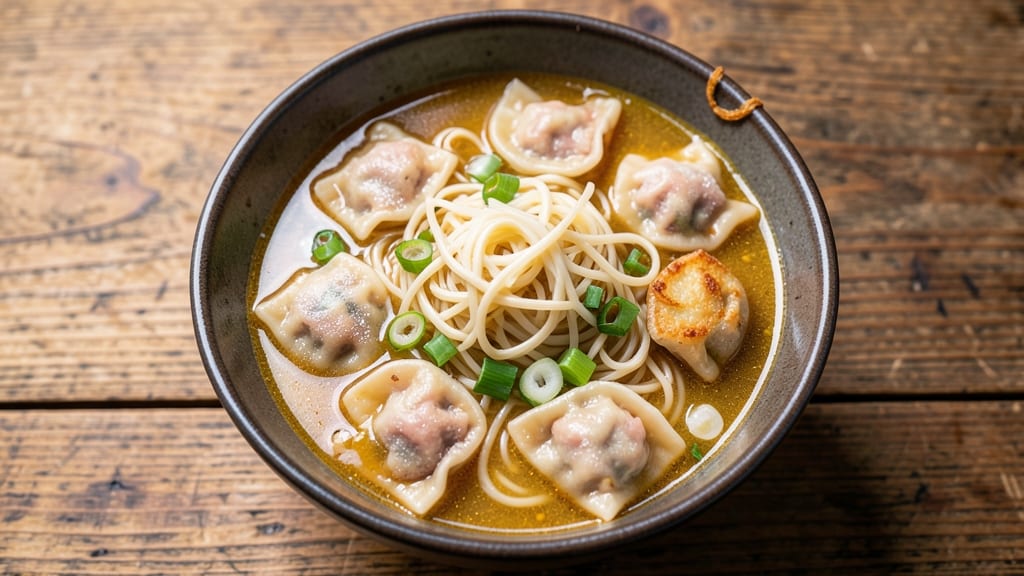
This authentic wonton noodle soup recipe delivers the comforting, restaurant-quality experience you crave after a long day. 🌟 The secret lies in a rich, silky broth infused with aromatic spices and slow-cooked pork bones, balanced by delicate wonton wrappers filled with tender pork and seasoned to perfection.
Every spoonful transports you to a bustling Chinese noodle shop, where the steam rises from steaming bowls of golden broth and pillowy dumplings.
The foundation of any great wonton noodle soup is the broth—deep, flavorful, and perfectly clear. We start with a blend of pork bones, chicken stock, and traditional spices like star anise and cinnamon, simmered for hours to develop layers of umami and warmth.
Meanwhile, the wonton wrappers get their signature texture from a touch of oil in the dough, ensuring they remain tender yet sturdy enough to hold their fillings without breaking.
Once assembled, the soup comes together in a harmonious balance of textures and flavors: the silky broth cradles the pillowy wontons, while the chewy noodles add substance.
Topped with fresh cilantro, crisp green onions, and a drizzle of chili oil, each bowl becomes a masterpiece of comfort food—rich, aromatic, and deeply satisfying. This is the kind of dish that warms the soul and brings people together.
Perfect for a cozy night in or a gathering with friends, this recipe stays true to its roots while being approachable for home cooks. The key is patience—letting the broth develop its depth and the wontons achieve their signature texture.
Once you taste the result, you’ll understand why this dish has been a staple in Chinese households for generations.
Ingredients for authentic wonton noodle soup
Six bowls of restaurant-quality wonton noodle soup start with these aromatic ingredients.
| Ingredient | Amount | Notes |
|---|---|---|
| Pork Bones 🍖 | 3 lb | Marbled, cut into large pieces |
| Chicken Stock 🍲 | 6 cups | Homemade or high-quality store-bought |
| Wonton Wrappers 🍜 | 24 pieces | Square or round, store-bought or homemade |
| Ground Pork 🐷 | 1 ½ lb | Lean, finely ground |
| Green Onions 🧅 | 1 whole | Thinly sliced, white and green parts |
| Garlic Cloves 🧄 | 6 cloves | Minced, fresh preferred |
| Star Anise 🌟 | 2 whole | For aromatic depth |
| Cinnamon Sticks 🌿 | 2 whole | For warm spice notes |
| Dried Shiitake Mushrooms 🍄 | 4 whole | Rehydrated, sliced |
| Sesame Oil 🫒 | 1 tbsp | For finishing aroma |
| Soy Sauce 🍶 | ½ cup | Light or dark, for umami |
| Oyster Sauce 🍜 | ¼ cup | For rich depth |
| Wonton Noodles 🍜 | 1 lb | Fresh or dried, cut into 3-inch pieces |
| Fresh Cilantro 🌿 | ¼ cup | Chopped, for garnish |
| Chili Oil 🌶️ | ¼ cup | For heat and finish |
| Salt 🧂 | 2 tsp | Diamond Crystal preferred |
| White Pepper 🌶️ | ½ tsp | Freshly ground |
The pork bones are non-negotiable—they build the soup's silky texture and deep umami. Look for marbled bones at your local Asian market or butcher shop; Costco often carries them pre-packaged. If you can't find them, chicken bones work in a pinch, but the pork gives that authentic richness. Refrigerate them in a sealed bag until ready to use—no need to prep ahead. The dried shiitake mushrooms should be plump and dark; Trader Joe's has a great bulk bin option. Soak them for 20 minutes before slicing, or they'll never rehydrate properly.
No wonton wrappers? Fresh egg noodles can stand in, but they won't be as delicate. The ground pork can be swapped for chicken or shrimp if you're avoiding pork, though the flavor will shift slightly. Short on star anise? One bay leaf works in a pinch, but it lacks that signature anise warmth. For the soy sauce, Kikkoman or Lee Kum Kee are reliable brands—avoid the low-sodium versions, as they lack depth. The oyster sauce should be thick and glossy; Hoisin sauce can replace it at half the amount if you're in a bind, but it won't be as rich.
Broth keeps for 5 days in the fridge or 3 months frozen—portion it into containers before freezing for easy reheating. The wonton wrappers and noodles are best used fresh, but you can prep the fillings ahead and store them in the fridge for 2 days. Garnishes like cilantro and green onions should be added fresh just before serving—they wilt fast when cooked. For leftovers, chili oil and extra sesame oil can revive the flavors if the soup tastes flat after reheating.
Why You'll Love This Recipe
- Pork Bones = Rich Magic: Honestly, the moment those pork bones hit the pot, you’re already winning. The slow simmer unlocks layers of umami that store-bought broth can’t touch—deep, savory, and almost worth the mess. (Between us, I keep a bag of them frozen for lazy Sundays.)
- Wrappers in Minutes: No rolling dough, no fuss—just fold, pleat, and drop. Those wonton wrappers turn into crispy, chewy pockets of joy with zero effort. My kids think it’s a craft project; I think it’s genius.
- Leftovers That Beg Repeat: This soup tastes better the next day. The broth thickens, the flavors marry, and suddenly you’ve got a freezer-friendly meal that feeds the office or a sick friend. (Pro tip: Double the wrappers—trust me.)
- Budget-Friendly Comfort: Ground pork stretches far, pork bones are cheap, and stock freezes like a dream. You’re feeding a crowd for pennies, and everyone leaves happy. My wallet and my mom both approve.
Step-by-step instructions for authentic wonton noodle soup
Here's how to craft a bowl that captures the soul of Chinese street food—rich broth, tender pork, and delicate wontons.
🔥 Step 1: Render Pork Bones for Deep Flavor
Start by searing the 3 lb pork bones in a large pot over medium-high heat for 8-10 minutes until they turn a deep golden brown. This caramelization builds the foundation for your soup's complexity. I press the bones firmly against the pot to ensure even browning—don't rush this step.
Once browned, add 6 cups chicken stock, 2 tsp salt, and 0.5 tsp white pepper. Bring to a boil, then reduce heat to low and skim off any foam that rises to the surface. This skimming ensures a crystal-clear broth later. The bones should simmer gently for 45 minutes, partially submerged in the liquid. Here's the thing—you want the bones to release their collagen slowly, creating that signature silky texture.
🍳 Step 2: Build the Aromatic Broth
After the initial simmer, add the 6 cloves minced garlic, 2 whole star anise, 2 whole cinnamon sticks, and 4 rehydrated dried shiitake mushrooms (sliced). The mushrooms should be soaked in hot water for 20 minutes before adding to prevent them from absorbing too much broth flavor. Stir everything together and let it simmer uncovered for 1 hour. You'll notice the broth gradually deepens in color and develops an incredible aroma—this is where the magic happens.
I like to check the broth every 15 minutes during this time. If it reduces too much, add a splash of hot water to maintain the proper consistency. The star anise and cinnamon will infuse the broth with warm, spicy notes that balance the richness of the pork. When the broth smells like a bustling Chinese kitchen, you're on the right track.
👨🍳 Step 3: Prepare the Wonton Filling
While the broth simmers, make the wonton filling by combining 1.5 lb ground pork, 0.5 cup soy sauce, and 0.25 cup oyster sauce in a bowl. Mix thoroughly with your hands until the pork changes color and becomes sticky. This mixture should be cohesive enough to hold its shape when wrapped—if it's too dry, add 1 teaspoon water at a time until it reaches the right consistency.
Here's a pro tip: I always chill the filling for 15 minutes before wrapping. This makes it easier to handle and prevents the wrappers from sticking. Take 24 wonton wrappers and place 1 teaspoon filling in the center of each. Dip your finger in water, moisten the edges of the wrapper, and pleat into a square shape, sealing tightly. The goal is to create an airtight package that won't fall apart during cooking.
🥘 Step 4: Cook the Wontons and Noodles
Bring a separate pot of water to a rolling boil and cook the 1 lb wonton noodles for 2-3 minutes until al dente. Drain and set aside. In the same pot (or a clean one), boil the wontons in batches for 3-4 minutes until they float to the surface. This indicates they're fully cooked—don't overcook or they'll become rubbery. Remove with a slotted spoon and set aside.
Strain the broth through a fine-mesh sieve to remove the pork bones, aromatics, and mushrooms. Discard the solids and return the broth to the pot. Add the cooked noodles and wontons, along with the 1 whole sliced green onions (white and green parts). Simmer gently for 2 minutes to heat everything through without breaking the noodles.
🍽️ Step 5: Finish and Serve with Confidence
Ladle the hot soup into bowls, arranging the wontons and noodles attractively. Drizzle each serving with 1 tablespoon sesame oil and 1 tablespoon chili oil, then garnish with 1 tablespoon chopped fresh cilantro. The contrast between the fragrant broth, tender pork, and crisp green garnishes makes each bite unforgettable.
Here's the moment that matters: serve immediately while the broth is steaming hot. The aroma alone will transport you to a bustling Chinese noodle shop. I like to pair this with a side of pickled vegetables to cut through the richness and balance the flavors. Every spoonful should deliver layers of umami from the broth, the savory-sweet pork filling, and the delicate texture of the wontons—this is what makes it authentic.
Pro Tips For Making Authentic Wonton Noodle Soup
- Blanch Pork Bones First: I learned this the hard way—skipping the quick blanch in hot water for 2 minutes removes blood and impurities that’ll cloud your stock later. Rinse them well afterward, and trust me, your broth will taste cleaner and richer when you finally simmer those bones.
- Use Cold Stock for Wonton Cooking: Dump your wonton wrappers into cold stock, not boiling—otherwise, they’ll stick together like glue. Let the broth heat up around them, and they’ll cook evenly without clumping. (Yes, even if you’re impatient like me.)
- Don’t Overwork the Ground Pork: Handle the pork filling just until combined—overmixing makes it dense and tough. My grandmother swore by this, and she was right: keep it loose, and your wontons stay tender when they hit the broth.
- Char the Green Onions: Toss chopped green onions in a dry pan for 30 seconds until fragrant—this adds a smoky depth that store-bought garnishes miss. Sprinkle them in at the end, and your soup will taste like a proper Chinese takeout, not a shortcut.
Common mistakes when making your authentic wonton noodle soup
Overcooking Wontons
One of the biggest mistakes is overcooking the wontons, which turns them from pillowy to rubbery. The moment they float to the surface after 3-4 minutes of boiling, they're ready—no more!
I've ruined many batches by leaving them in too long, thinking they needed extra time. Trust the float test and remove them immediately. 🔥
Skipping the Broth Skimming
Failing to skim the foam during the initial broth simmer means cloudy, off-flavored soup. That foam contains impurities that can make your broth murky. I always use a fine-mesh skimmer and work quickly to remove as much as possible during the first 15 minutes of simmering.
This step is non-negotiable for that crystal-clear, restaurant-quality broth.
Using Cold Wonton Wrappers
Cold wonton wrappers are nearly impossible to work with—they crack and stick together. Always bring your wrappers to room temperature for 10-15 minutes before assembling. I keep them covered with a damp towel to prevent drying while they warm up. This simple step makes the wrapping process smooth and frustration-free.
Neglecting the Broth's Simmer Time
Rushing the broth's simmer time means weak flavor. The broth needs that full 1 hour of gentle simmering to develop its depth. I've learned this the hard way—cutting corners here results in broth that's bland and lacks that signature umami.
Patience is key; the longer it simmers, the richer it becomes.
Overfilling the Wontons
Packing too much filling into each wonton wrapper makes them burst open during cooking. I measure exactly 1 teaspoon of filling per wrapper and press it into a compact disc shape.
This ensures they seal properly and maintain their shape. A good rule of thumb is to leave about ½ inch of space around the edges before sealing.
Adding Garnishes Too Early
Fresh garnishes like cilantro and green onions should go on right before serving—they wilt dramatically when cooked. I always hold back these toppings until the very last moment. The contrast between the hot soup and fresh, crisp garnishes is what makes each bowl feel special and authentic. 🌿
Nutrition facts
Frequently asked questions
Can I make this wonton noodle soup vegetarian?
You can adapt it, but it won't be authentic! Replace pork bones with mushroom stems or kelp for umami, and use tofu or mushrooms for the wonton filling. Swap oyster sauce for vegetarian soy sauce and add seaweed to the broth. The texture and flavor will differ, but it's a tasty alternative.
How do I store leftovers?
Store broth separately in an airtight container for 5 days in the fridge or 3 months frozen. Reheat gently on the stove. For wontons and noodles, keep them submerged in broth to prevent sticking. Reheat leftovers for 2-3 minutes—never microwave dry noodles or they'll turn mushy.
What's the secret to pillowy wontons?
Three things: 1 teaspoon filling per wrapper (no more!), sealing tightly with water, and cooking for exactly 3-4 minutes until they float. Chill the filling for 15 minutes before wrapping to prevent sticking. The oil in the wrappers creates that signature tenderness when cooked properly.
Can I use store-bought wonton wrappers?
Store-bought wrappers work perfectly—they're pre-oiled for that authentic texture. Look for square or round wrappers at Asian markets or the international aisle. For extra authenticity, choose ones labeled "wonton skin" rather than "dumpling wrappers." They're thinner and more delicate.
Why does my broth look cloudy?
Cloudy broth usually means you didn't skim the foam during the initial 15 minutes of simmering. The foam contains impurities that make broth murky. Also, check your ingredients—using cold water or adding aromatics too late can cause cloudiness. For a crystal-clear result, strain through a fine-mesh sieve after simmering.