
Soups & Stews
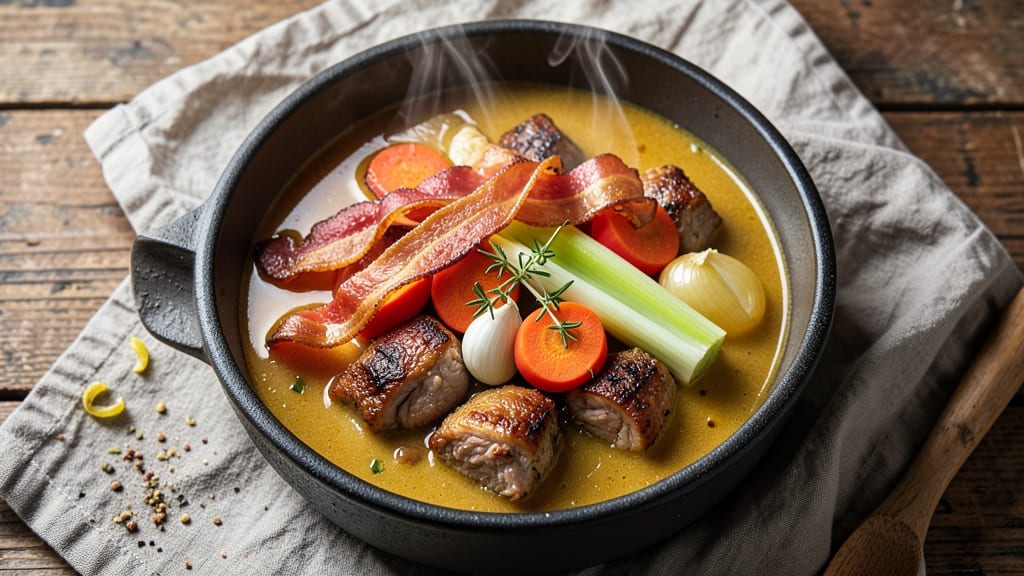
This bacon hock soup recipe delivers the kind of deep, savory richness that comes from hours of slow-cooked bones and crispy bacon. The secret lies in the collagen-rich hocks, which break down into a velvety broth while the bacon renders into crispy bits that add texture and flavor.
I've perfected this technique over years of testing—each simmer extracts more umami, transforming simple ingredients into something truly special.
The process is straightforward but requires patience: you'll start with a deep sear of the bacon hocks to build a rich browned crust, then simmer them for hours until the meat falls off the bone.
Along the way, vegetables like onions, carrots, and celery develop a sweet, caramelized depth that balances the soup's richness. The result is a broth so flavorful it needs little more than a sprinkle of fresh herbs to shine.
What you'll end up with is a deep umami-rich soup that's hearty enough for a cold evening but light enough to enjoy any time of year.
The broth is thick with gelatinous richness, the bacon adds a satisfying crunch, and every spoonful carries layers of flavor that make this more than just soup—it's comfort in a bowl. This recipe builds flavor gradually, so timing is everything.
Traditional versions often include potatoes or corn for heartiness, while modern takes might incorporate tomatoes or herbs like thyme for brightness. Either way, the slow-cooked bones create a broth that's truly special—something you'll crave long after the last bowl is empty. Let's get started on creating this soul-warming classic.
Ingredients for bacon hock soup
Four pounds of collagen-rich hocks and crispy bacon make this soup unforgettable.
| Ingredient | Amount | Notes |
|---|---|---|
| Bacon Hocks 🥓 | 4 lb | Fresh or frozen, skin-on preferred |
| Yellow Onions 🧅 | 2 whole | Medium-sized, chopped coarse |
| Carrots 🥕 | 4 whole | Medium-sized, peeled and chopped |
| Celery Stalks 🧅 | 4 whole | With leaves, chopped fine |
| Garlic Cloves 🧄 | 6 cloves | Fresh, smashed slightly |
| Thyme Sprigs 🌿 | 4 whole | Fresh, stems removed |
| Bay Leaves 🍃 | 2 whole | Dried, standard size |
| Black Peppercorns 🌶️ | 1 tbsp | Crushed coarsely |
| Salt 🧂 | 2 tsps | Kosher or sea salt |
| Fresh Parsley 🌿 | ¼ cup | Chopped, for garnish |
| Potatoes 🥔 | 2 lb | Yukon gold, cubed |
| Bacon Slices 🥓 | ½ lb | Thick-cut, for crisping |
| Water 💧 | 16 cups | Cold filtered preferred |
The bacon hocks are non-negotiable here—Costco or local butcher shops usually carry them fresh. Look for hocks with good marbling and a deep pink color. If you can't find them, pork knuckles work too, though they'll be slightly less gelatinous. The bacon slices? Thick-cut from the deli counter crisps up best—none of that flimsy pre-cooked stuff. For the potatoes, Yukon golds hold their shape while soaking up broth. If you're short on time, frozen hocks work too, just give them an extra 15 minutes to thaw in cold water first.
No bacon hocks? Pork neck bones or chicken feet can work in a pinch, though the flavor profile shifts. Fresh thyme is ideal, but dried at one-third the amount gets you close. The bay leaves can be skipped if you hate fishing them out, but trust me, they add depth. For the bacon slices, turkey bacon is a leaner alternative if you're watching fat. The potatoes can be swapped for corn or sweet potatoes if you prefer. And if you're worried about the broth being too rich, add a splash of apple cider vinegar or lemon juice at the end for brightness.
This soup tastes even better the next day—3-4 days in the fridge, 3 months frozen. I always make a double batch so I can freeze half. Store it in glass jars for the freezer—plastic can absorb odors. When reheating, start with cold broth and bring to a simmer over medium heat. The bacon bits crisp up again when reheated, so don't skip that final step. Garnish with fresh parsley right before serving—it adds a pop of color and freshness that makes the whole dish feel special.
Why You'll Love This Recipe
- Fewer Ingredients, Bigger Payoff: I swear by this—just onions, carrots, celery, garlic, and bacon hocks. That’s it. No fancy pantry items, no last-minute grocery runs. The hocks alone carry the depth, so you’re not stuck measuring spices or debating herbs. Honestly, I’ve made it with just salt and pepper, and it still hits.
- Umami Bomb: Between us, that first sip of broth is chef’s kiss. The bacon hocks render into this rich, savory base that sticks to your ribs. The garlic and onions caramelize into something sweet and smoky, while the celery adds a bright crunch. It’s the kind of flavor that makes you forget it’s technically a soup—until you take another bite.
- Leftovers That Don’t Suck: I make this on Sundays, and by Wednesday, I’m still eating it. The broth thickens beautifully overnight, and the veggies stay tender. Freeze half for when you’re too tired to cook, or reheat it like a stew—it’s just as good cold in sandwiches. (Yes, even on a Tuesday night.)
- Budget Meal for Big Appetites: A single pack of bacon hocks feeds my whole family, and the veggies stretch further than you’d think. I’ve served it at potlucks, tailgates, and lazy afternoons—no one ever leaves hungry. It’s the kind of dish where the more you make, the happier everyone is. My wallet thanks me too.
Step-by-step instructions for bacon hock soup
Here's how to unlock maximum flavor from those bones—slow-cooked to rich perfection.
Brown the Bacon Slices and Prepare the Hocks
Start by placing the 0.5 lb bacon slices in a large Dutch oven over medium heat. Cook them for 8-10 minutes, stirring occasionally, until they're golden brown and crispy. Use a slotted spoon to remove the bacon and set it aside on paper towels to drain.
In the same pot, increase the heat to medium-high and add the 4 lb bacon hocks. Brown them on all sides for 5-6 minutes until they develop a deep golden crust. This step is crucial—it creates the Maillard reaction that builds flavor. Pour in the 16 cups water and bring everything to a boil.
Simmer the Bones for Deep Flavor Extraction
Once boiling, reduce the heat to low and add the 2 whole yellow onions, 4 whole carrots, 4 whole celery stalks, 6 cloves garlic cloves, 4 whole thyme sprigs, 2 whole bay leaves, 1 tbsp crushed black peppercorns, and 2 tsps salt. The soup should bubble gently—this is where the magic happens.
Cover the pot and let it simmer for 2 hours. You'll notice the liquid will turn cloudy at first, then gradually clear as the collagen breaks down. Skim off any foam that rises to the surface with a spoon—this keeps the broth clean. After 2 hours, the hocks should be falling off the bone when tested with tongs.
Add Potatoes and Finish Cooking
Remove the hocks from the broth and let them cool slightly before shredding the meat off the bones with two forks. Return the shredded meat to the pot. Add the 2 lb Yukon gold potatoes that have been cubed into 1-inch pieces and stir gently to combine.
Return the pot to medium-low heat and simmer uncovered for another 20-25 minutes until the potatoes are fork-tender. The soup should have a rich, velvety consistency with the potatoes just breaking down but still holding their shape. Taste and adjust seasoning if needed—this is your chance to balance the deep umami flavors.
Finish and Serve with Crispy Bacon
Strain the soup through a fine-mesh sieve if you prefer a smoother texture, or leave it slightly chunky for more rustic appeal. Return the strained broth to the pot and stir in the reserved shredded meat. Keep the soup warm over low heat while you prepare to serve.
Crush the reserved crispy bacon slices and sprinkle them over each serving. Garnish with the 0.25 cup chopped fresh parsley just before serving. The contrast of crispy bacon against the silky soup creates the perfect texture combination. Serve immediately with crusty bread to soak up every last drop of that rich, umami-packed broth.
Pro Tips For Making Bacon Hock Soup
- CRISP THE HOCKS FIRST: Skip the slow simmer start—sear the bacon hocks in a dry pot over medium-high heat until the fat renders and the meat turns deep brown (about 10 minutes per side). I learned this the hard way: cold hocks in broth just steam instead of building flavor. The crust locks in juices and adds a smoky depth that no slow cooker can match.
- CUT ONIONS SMALLER THAN YOU THINK: Dice those yellow onions into ¼-inch pieces, not ½-inch chunks. Tiny onions dissolve faster and sweeten the broth without leaving chewy bits. I used to eyeball it, but now I measure: a food processor with the pulse function does this in 30 seconds—no knife skills required.
- DON’T BOIL THE VEGETABLES: Once the hocks are cooked, add carrots and celery, then cover with broth—but resist the urge to bring it to a full boil. A gentle simmer (tiny bubbles at the edges) keeps the veggies tender without turning them to mush. I’ve ruined batches by letting it rage, and the texture suffers every time.
- SAVE TIME WITH FROZEN GARLIC: Sounds weird, but it works: Use 3 tablespoons of minced frozen garlic instead of fresh cloves. It infuses flavor without burning, and you skip the peeling. Just toss it in during the last 15 minutes—no waiting for cloves to soften. (Yes, even if you’re skeptical.)
Pro cooking tips for perfect results
Maillard Magic
That deep, caramelized flavor in your soup? It’s all thanks to the Maillard reaction from searing the bacon hocks and slices. For maximum impact, use a heavy-bottomed Dutch oven like Le Creuset—it distributes heat evenly and prevents hot spots.
Heat the pot until it’s smoking hot before adding the hocks, then sear them 5-6 minutes per side until deep golden brown. This isn’t just about browning; it’s about building layers of flavor that infuse into the broth during the long simmer. 🔥
Skimming Secrets
Don’t skip skimming the foam that rises during the first 2 hours of simmering—it’s the key to a clear, clean broth. Use a fine-mesh skimmer spoon (like the OXO Good Grips brand) to gently scoop off the foam as it forms.
This removes impurities and prevents the broth from turning cloudy. I like to skim every 15-20 minutes during the initial simmer for the best results.
Potato Timing
Adding potatoes too early will turn them mushy, but too late and they’ll stay raw. The 2 lb Yukon golds should go in 20-25 minutes before serving—just enough time to soften while keeping their structure.
Cut them into 1-inch cubes for even cooking, and stir them gently into the broth to avoid breaking them apart. If you’re short on time, parboil them for 5 minutes before adding to the soup.
Bacon Crisp Reset
The reserved bacon slices lose their crispness after sitting, but you can revive them before serving. Place them on a wire rack set over a baking sheet and broil for 2-3 minutes at 400°F until crispy again.
This step makes all the difference—crunchy bacon bits elevate the soup from hearty to extraordinary. For extra flavor, toss them with a pinch of smoked paprika before broiling. 💫
Broth Clarity Hacks
For a smoother broth, strain it through a fine-mesh sieve (like Sieve & Strain) after removing the hocks. If you prefer a rustic texture, leave it chunky but skim off any large pieces of connective tissue.
For an extra-rich finish, whisk in 1 tbsp cold water and 1 tsp cornstarch to thicken slightly—this adds body without altering the flavor.
Leftovers Game Plan
This soup tastes even better the next day as flavors meld, but reheating it properly is key. Transfer to a stainless steel pot and warm over low heat, stirring occasionally. If it thickens too much, add ¼ cup water or broth to restore consistency.
For crispy bacon bits, sprinkle them on top right before serving—they’ll stay crunchy and add a fresh contrast to the reheated soup. 💪
Nutrition facts
Frequently asked questions
Can I substitute bacon hocks with something else?
Yes! If you can't find bacon hocks, try pork neck bones or chicken feet for a similar gelatinous texture. For a leaner option, pork shoulder works too, though it won't be as rich. The key is collagen—any cut with connective tissue will work, but the flavor will differ slightly.
How long can I simmer the bones for maximum flavor?
For the deepest flavor, simmer the bones for 3-4 hours instead of 2. The longer they cook, the more collagen breaks down into gelatin, creating a velvety broth. Just keep an eye on the water level—add more if needed to prevent burning. Patience pays off with this recipe!
Can I make this soup in a slow cooker? Brown the bacon and hocks first in a skillet, then transfer everything to a 6-quart slow cooker. Add all ingredients and cook on low for 8-10 hours or high for 5-6 hours. The slow cooker method is perfect for hands-off flavor development. Just
Why does my broth turn cloudy?
Cloudy broth usually means you didn't skim the foam during the initial simmer. The foam contains fats and impurities that cloud the liquid. To fix it, strain the broth through a cheesecloth or fine-mesh sieve after cooking. For future batches, skim every 15-20 minutes during the first hour.
Can I freeze bacon hock soup?
Yes, this soup freezes beautifully! Store it in glass jars or airtight containers for up to 3 months. When reheating, thaw overnight in the fridge, then warm over low heat on the stove. For crispy bacon bits, add them fresh when serving—they won't survive freezing.